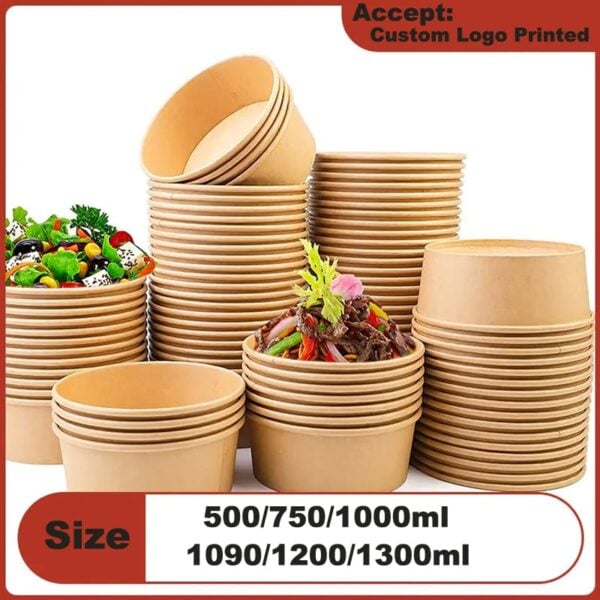
Key Insight: Among all compostable plates, bagasse plates show the highest heat resistance (up to 120°C), surpassing cornstarch plates and kraft paper plates. Bagasse’s natural fiber structure provides oil and water resistance without coatings, is PFAS-free, and meets EN13432 & ASTM D6400 compostability standards. Ideal for restaurants, takeaways, and sustainable food packaging.
Why Heat Resistance Is the Key to Choosing Compostable Plates
In 2025, the global food packaging industry is at a turning point. Restaurants, caterers, and takeaway brands are no longer just looking for compostable or biodegradable dinnerware—they’re searching for heat resistant tableware that performs as well as it protects the planet.
From sizzling curries to baked lasagna trays, today’s eco disposable plates must withstand real kitchen temperatures. According to Google Trends, global searches for “heat resistant compostable plates” grew 48% year-on-year, reflecting a major consumer shift toward sustainable yet practical dining solutions.
Traditional plastics like PP (polypropylene) and PS (polystyrene) can start warping or leaching toxins at temperatures around 80°C (176°F). That’s no longer acceptable in an age where safety, performance, and sustainability go hand in hand. Businesses now need biodegradable dinnerware that doesn’t just decompose—it performs flawlessly in hot, oily, or microwave conditions.
Comparing the Three Main Materials for Compostable Plates
Bagasse Plates — The Heat-Resistance Champion
Bagasse is the fibrous by-product of sugarcane processing, repurposed into plant-based, compostable plates through high-pressure molding. Its unique natural fiber structure gives it exceptional strength and thermal stability—qualities unmatched by most bioplastics or paper products.
Heat resistance: 100–120°C (212–248°F)
Microwave & freezer safe: Yes
Oil and water resistance: Excellent
Compostability: Fully compostable within 180 days under EN13432 and ASTM D6400 standards
Bagasse plates hold their form even under steaming soups, fried foods, or oven reheating. Their durability eliminates the need for plastic coatings or PFAS chemicals, ensuring a completely PFAS-free plate that’s safe for human health and composting facilities.
From casual dining to fine catering, bagasse dinnerware is gaining global adoption thanks to its premium texture, neutral white tone, and eco credibility. Its tactile strength often surprises first-time users—it feels sturdy, not flimsy, while maintaining a soft, natural finish.

Cornstarch Plates — Lightweight but Heat-Limited
Cornstarch-based plates are typically made from PLA (Polylactic Acid) or TPS (Thermoplastic Starch) blends. They offer affordability and biodegradability but come with certain thermal limitations.
Heat resistance: 60–90°C (140–194°F)
Microwave safe: Limited—short durations only
Oil and water resistance: Moderate
Compostability: Industrial compost required (higher temperature composting)
Cornstarch plates work well for cold or moderate-temperature foods—salads, pastries, or desserts—but may soften under high heat. While their eco-friendly image is strong, they’re best for short-use scenarios or events where temperature exposure is minimal. PLA also depends on industrial composting facilities for full degradation, limiting its disposal options in regions without such infrastructure.
Still, cornstarch plates appeal to large-scale catering services and food retailers for their cost efficiency and clear “bioplastic” marketing value.
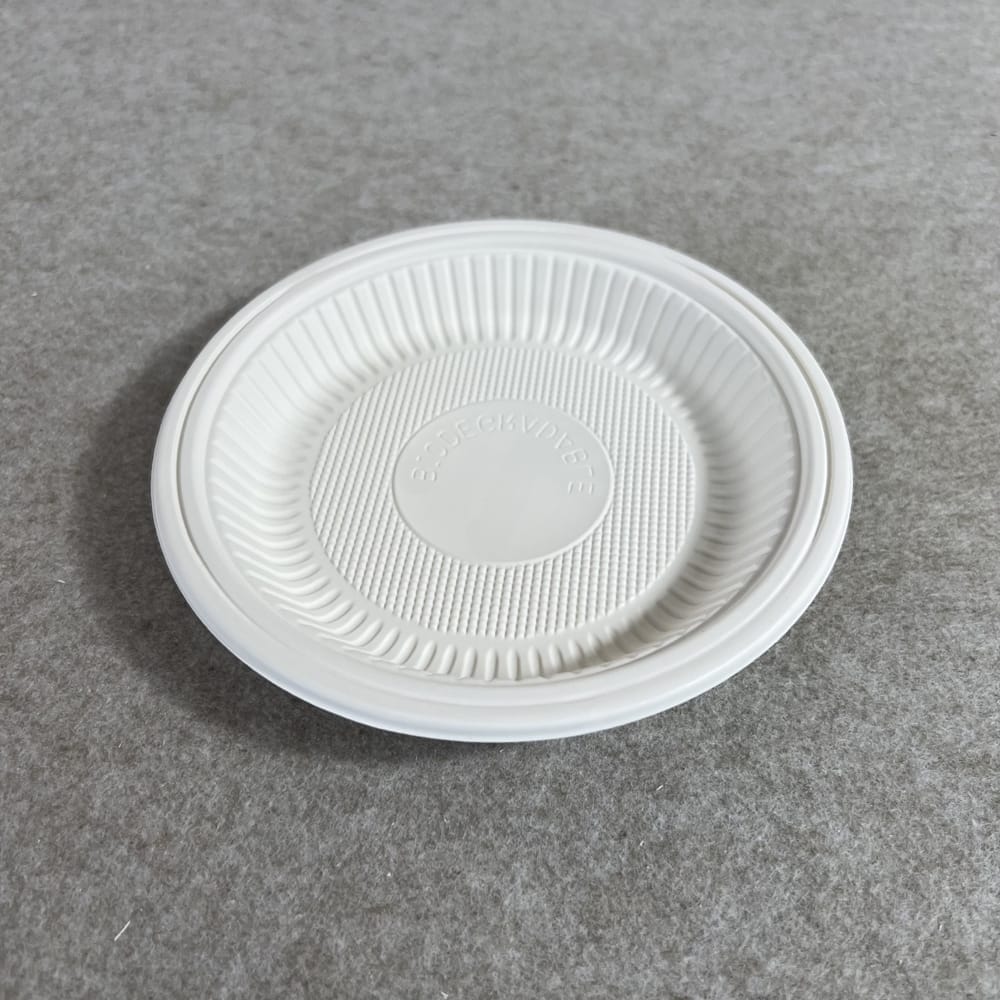
Kraft Paper Plates — Recyclable but Not Heat Warriors
Kraft paper plates are made from food-grade paper pulp often laminated with a thin moisture-resistant layer. They are lightweight and ideal for quick-service meals or snacks, especially in eco takeout packaging concepts.
Heat resistance: 70–90°C (158–194°F)
Microwave safe: Not recommended for extended heating
Oil and water resistance: Requires coating
Compostability: Recyclable and partially biodegradable
While kraft’s rustic aesthetic suits modern cafes and organic eateries, its limited oil and heat resistance restricts applications for soups, curries, or greasy foods. They’re best used for cold foods, dry snacks, or as secondary serving trays.

Performance Comparison Table
| Material Type | Heat Resistance | Microwave Safe | Oil/Water Resistance | Compostability | Cost Factor |
|---|---|---|---|---|---|
| Bagasse | 120°C | ✅ Yes | ✅ Excellent | ✅ Full (EN13432) | Medium |
| Cornstarch | 90°C | ⚠️ Limited | ✅ Good | ✅ Industrial | Low |
| Kraft Paper | 85°C | ⚠️ Limited | ⚠️ Moderate | ✅ Recyclable | Low |
Bagasse clearly leads across heat tolerance, compostability, and chemical safety—making it the most future-proof choice for sustainable food packaging.
Regulatory Drivers: Why Bagasse Is Becoming the Global Standard
The rise of bagasse-based biodegradable tableware isn’t accidental—it’s driven by policy, science, and market momentum.
EU PPWR (Packaging & Packaging Waste Regulation, 2024):
Actively promotes fiber-based alternatives to single-use plastics, prioritizing materials like sugarcane bagasse for circular economy compliance.U.S. FDA 21 CFR 176.170:
Recognizes bagasse as a natural plant fiber material safe for direct food contact, unlike certain plastic polymers that may leach at high temperatures.China’s “Degradable Plastics Labeling Regulation (Draft, 2025)”:
Lists bagasse tableware as a “Preferred Promotion Category,” reinforcing domestic and export potential for compliant manufacturers.
Market analysts from MarketsandMarkets (2025 Report) forecast that the global bagasse products market will grow at a CAGR of 8.2% through 2026, outperforming PLA and paper-based alternatives.
The Five Core Advantages of Bagasse Compostable Plates
Superior Heat Resistance:
Handles 100–120°C effortlessly, ideal for hot dishes, fried foods, and microwave reheating.Fully Compostable and PFAS-Free:
Decomposes naturally within 180 days with zero toxic residues—certified under EN13432 and ASTM D6400.Oil & Water Resistant Without Coating:
Its dense natural fibers create a moisture barrier, eliminating the need for synthetic liners.Dual Temperature Application:
Safe for both microwave and freezer, making it versatile for meal prep, delivery, and dine-in service.Premium Aesthetic:
The subtle off-white tone and fine fiber texture enhance brand presentation in eco-conscious markets.
Together, these traits make bagasse not only a functional alternative to plastic or paper—but also a premium upgrade that aligns with modern brand values of sustainability and design.

Expert Opinions: Why Bagasse Defines the Future of Eco Tableware
“Bagasse’s thermal and structural properties now surpass those of traditional paper pulp and bioplastics. It represents the most industrially viable alternative for large-scale food packaging.”
— Dr. Elaine Choi, Sustainable Packaging Research Institute (2025)
“Unlike cornstarch or PLA materials, bagasse does not compete with food crops, making it more aligned with global low-carbon agricultural cycles.”
— China Light Industry Council, Environmental Materials Committee (2025 Report)
“Over 60% of food delivery companies plan to switch to fiber-based compostable tableware by 2026.”
— European Foodservice Packaging Association (EFPA) 2024 Survey
These expert insights confirm the direction: bagasse is not just a material—it’s a system-level solution aligning food safety, waste reduction, and circular economy goals.
Case Studies: How Global Brands Are Switching to Bagasse
Case 1: “GreenBite” – U.S. Healthy Takeout Chain
Switch: From PLA and paper plates to bagasse plates
Outcome:
Heat tolerance improved by 38%
Return rate dropped 20%
Customers praised microwave-safe convenience and natural look
“Our customers love the sturdiness. It feels premium and guilt-free.”
— Operations Director, GreenBite
Case 2: FamilyMart Japan – Sustainable Convenience Food
In line with Japan’s Plastic Resource Circulation Act (2022), FamilyMart partnered with Bioleader® to replace traditional trays with bagasse paper plates for hot bento meals.
Result:
Reduced plastic waste by 72%
Achieved 100% compostable packaging compliance
Improved brand image as an eco innovator
Case 3: Xiaowan Kitchen – Chinese Takeout Brand
This national meal delivery chain faced issues with long-distance delivery and food leakage.
Solution:
Bioleader® supplied oil-resistant bagasse plates with compostable lids.
Impact:
Packaging leakage rate dropped to 0.2%
Customer satisfaction increased significantly
Expanded use to 300+ outlets nationwide
Bioleader®: Pioneering the Future of Compostable Plate Manufacturing
As a trusted biodegradable tableware manufacturer, Bioleader® combines innovation, certification, and scalability to meet global sustainability demands.
Product Range
Bagasse Plates (6–10 inches)
Clamshell Boxes & Meal Trays
Compostable Bowls and Cutlery
Production Strength
Fully automated pulp-molding lines
ISO22000, BPI, and FDA certifications
PFAS-free, EN13432 & ASTM D6400 compliant
Global Reach
Exported to over 70 countries across North America, Europe, and Southeast Asia, serving restaurant chains, distributors, and OEM/ODM partners.
R&D Direction
Advanced Hot & Wet Resistant Fiber Formula
Coating-free anti-seepage technology
Custom branding for sustainable food service brands
Bioleader® remains committed to delivering the safest, most sustainable compostable dinnerware for restaurants, catering, and takeout packaging worldwide.
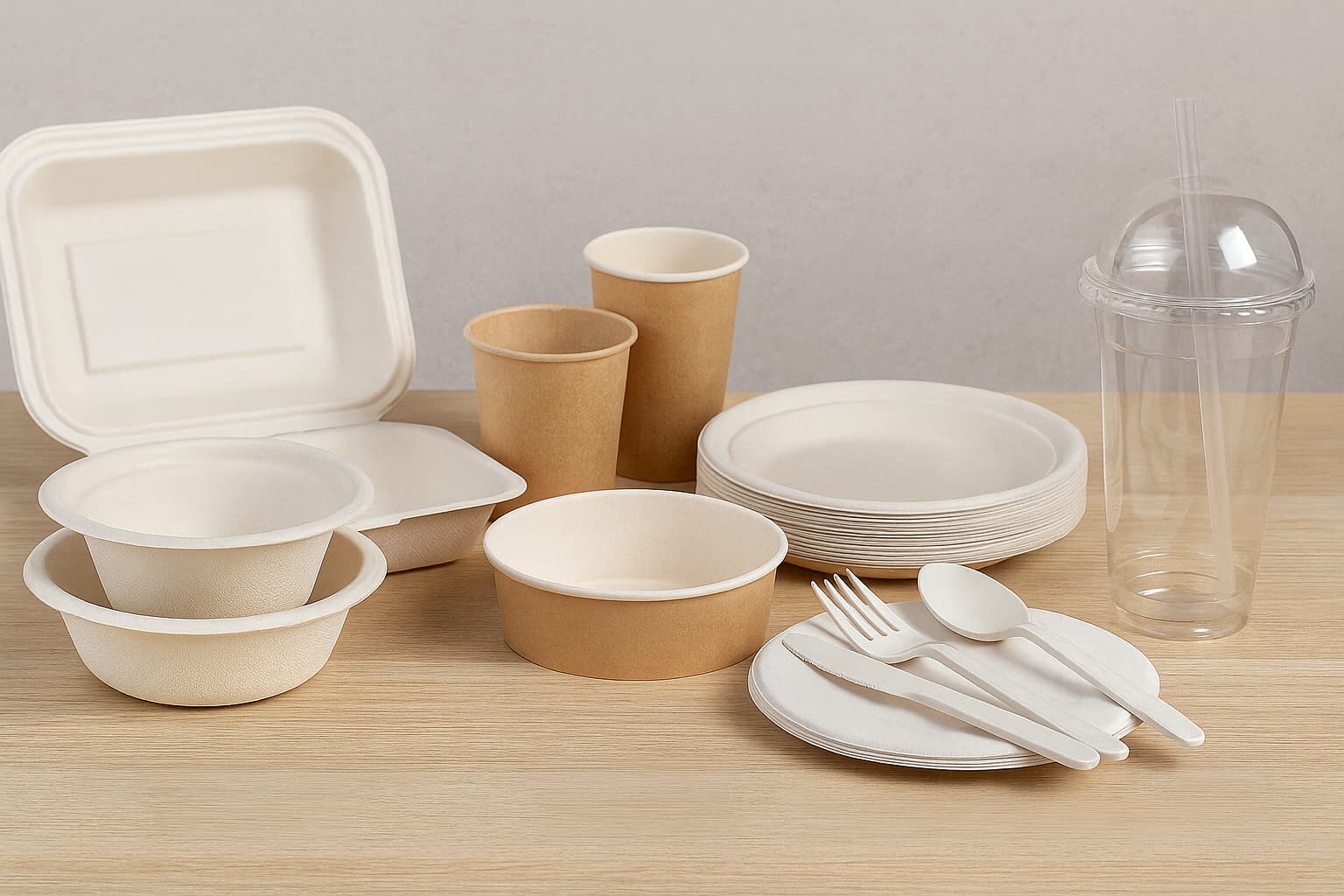
The Future of Eco Plates: Regulation and Innovation Drive Together
From Brussels to Beijing, plastic bans are accelerating the shift toward fiber-based biodegradable dinnerware. The alignment of regulation and innovation is creating new standards across the food packaging industry.
Key Data Insights:
The global compostable tableware market is expected to grow from $7.1 billion in 2025 to $12.8 billion by 2030 (Grand View Research, 2025).
Over 45 countries now mandate “PFAS-Free + Certified Compostable” materials in government or retail food service tenders.
Life Cycle Assessment (LCA) models show bagasse tableware emits up to 65% less CO₂ than plastic counterparts.
Emerging Trends:
High-Temperature Biobased Technology:
New formulations allow molded fiber to withstand 150°C without coatings.Carbon Labeling Integration:
Compostable packaging will soon carry standardized carbon footprint labels.Government Procurement Policies:
Mandatory compostable packaging for hospitals, schools, and state cafeterias.
These trends reinforce a single message: sustainable packaging is evolving from “nice to have” to mandatory for compliance and reputation.
FAQ
Are compostable plates safe for hot and cold foods?
Yes. Compostable plates made from bagasse safely hold both hot soups and cold salads. They can resist heat up to 120°C, with natural oil and water resistance suitable for hot meals, baked dishes, and takeaway packaging.Are bagasse plates microwave-safe and oven-friendly?
Bagasse plates are microwave-safe and can be used in the oven at moderate temperatures below 120°C. They remain sturdy and do not release toxins, unlike plastic or coated paper plates that may warp or melt under heat.How long do compostable bagasse plates take to decompose?
Bagasse plates usually decompose within 180 days in industrial composting conditions. In home compost systems, the process may take longer depending on temperature, humidity, and microbial activity.What makes bagasse plates better than paper or plastic disposable plates?
Bagasse plates outperform paper and plastic alternatives in strength, heat tolerance, and sustainability. They do not require synthetic coatings and are 100% compostable, reducing landfill waste and carbon emissions.Where can I buy biodegradable and compostable plates in bulk?
Certified suppliers like Bioleader® offer a full range of biodegradable dinnerware including bagasse plates, clamshell boxes, and eco disposable bowls. These products are available for wholesale and export to over 70 countries.
Conclusion: Choosing Bagasse Means Choosing a Stable, Greener Future
When compared across performance, sustainability, and regulatory acceptance, bagasse compostable plates clearly emerge as the superior choice. They combine heat resistance, durability, and full compostability without compromising aesthetics or compliance.
For restaurants, caterers, and global foodservice brands, switching to bagasse plates isn’t just a material change—it’s a strategic investment in brand trust, operational safety, and environmental leadership.
Bagasse is more than a product; it’s the future of sustainable dining.
Choosing it means aligning your business with the global movement toward a cleaner, circular, and resilient food packaging system.
References
MarketsandMarkets. Global Bagasse Tableware Market Forecast 2025–2030. MarketsandMarkets Research, 2025.
European Commission. Packaging and Packaging Waste Regulation (PPWR) Framework Report. Brussels, 2024.
U.S. Food and Drug Administration (FDA). 21 CFR §176.170 – Components of Paper and Paperboard in Contact with Aqueous and Fatty Foods. Washington, D.C., 2024.
Grand View Research. Compostable Tableware Market Size and Growth Outlook. San Francisco, 2025.
Sustainable Packaging Coalition. Comparative Life Cycle Assessment of Fiber-Based vs. Plastic Packaging. Charlottesville, VA, 2023.
European Foodservice Packaging Association (EFPA). Annual Survey on Sustainable Foodservice Materials. Paris, 2024.
ASTM International. ASTM D6400 – Standard Specification for Compostable Plastics. West Conshohocken, PA, 2023.
TUV Austria. Biodegradability and Compostability Certification Guidelines (EN13432 Standard). Vienna, 2024.
Ellen MacArthur Foundation. Circular Economy in Food Packaging: Global Transition Trends. London, 2023.
United Nations Environment Programme (UNEP). Single-Use Plastics: A Roadmap for Sustainability. Nairobi, 2022.
Compostable Plates Explained: How, Why, and What to Consider Before You Buy
How It Works: Compostable plates—especially bagasse plates—are made from renewable sugarcane fiber molded under high heat and pressure. This process forms dense, PFAS-free fiber structures that resist oil, water, and temperatures up to 120°C. In comparison, cornstarch plates (PLA/TPS blend) tolerate around 90°C, while kraft paper plates handle 85°C with coating. The heat-resistant advantage of bagasse makes it ideal for both microwave and oven applications.
Why It Matters: In 2025, global searches for “heat resistant tableware” and “eco disposable plates” have surged nearly 50%, reflecting food businesses’ demand for durability and safety. High-temperature resistance directly affects packaging integrity, consumer safety, and operational efficiency for hot meals and takeout. Choosing materials like bagasse ensures consistent performance while reducing reliance on fossil-based plastics.
What the Market Shows: According to Grand View Research (2025), the compostable tableware market will grow from USD 7.1 billion to 12.8 billion by 2030, with bagasse dinnerware leading this expansion. Over 60% of global food-service brands plan to replace plastic with fiber-based packaging within two years, driven by both regulation and consumer awareness.
Regulatory Trend: The EU PPWR (2024), U.S. FDA 21 CFR 176.170, and China’s 2025 Degradable Plastics Draft all list plant-fiber materials like bagasse as preferred alternatives. These frameworks mandate PFAS-free and compostable labeling, aligning directly with Bioleader®’s certified product lines (EN13432 & ASTM D6400). Compliance isn’t optional—it’s the new baseline for export and domestic market entry.
Options and Applications: For restaurants, catering, and delivery services, bagasse plates cover a range of compostable dinner plate sizes—6 to 10 inches—suitable for hot soups, oily dishes, and microwave reheating. Cornstarch plates remain useful for cold desserts, while kraft plates fit dry snacks or bakery items. Each material has its ideal niche, but bagasse offers the broadest operational window.
Key Considerations for Buyers:
- Check certifications (EN13432 / ASTM D6400 / BPI) for export compliance.
- Confirm PFAS-free and microwave-safe labeling for food safety.
- Evaluate heat resistance ≥ 100°C for hot food service scenarios.
- Consider custom logo printing on kraft or bagasse plates to enhance brand identity.
- Partner with a verified biodegradable tableware manufacturer such as Bioleader® for stable supply and OEM support.
Forward Outlook: The next generation of compostable plates will integrate high-temperature fiber engineering, carbon-footprint labeling, and LCA-verified sustainability scores. Governments and multinational chains are expected to mandate “PFAS-Free + Certified Compostable” packaging by 2027. Adopting bagasse solutions now positions brands ahead of regulatory and consumer trends.
Insight Summary: Bagasse leads the market not just in heat resistance but in lifecycle compliance and material ethics. It is the only compostable plate material that fully satisfies durability, safety, and global eco-policy expectations—making it the strategic choice for businesses pursuing both performance and sustainability.