Quick Summary:
PFAS-free packaging in 2025 is no longer an optional sustainability feature—it is a global compliance requirement driven by new regulations across the EU, U.S., Canada, and Asia. Verifying PFAS-free status requires more than supplier declarations; buyers must understand coating sources, raw material traceability, TOF and LC-MS/MS testing, and shipment-level audits to ensure true regulatory conformity.
Executive Summary: Why PFAS-Free Compliance Has Become a Global Obligation
By 2025, PFAS-free packaging is no longer a sustainability preference—it has become a regulatory requirement, a corporate liability issue, and a procurement standard demanded by global F&B brands, hospitality groups, airline caterers, national education systems, and healthcare institutions. As more jurisdictions implement bans, restrictions, and mandatory declarations on per- and polyfluoroalkyl substances (PFAS), the packaging industry is facing one of the most significant compliance shifts of the decade.
What makes 2025 uniquely important is the convergence of three forces:
Regulatory enforcement: The European Union, United States, Canada, Australia, and dozens of APAC markets are strengthening PFAS controls simultaneously.
Corporate governance accountability: Major quick-service restaurant chains and retailers now require PFAS-free declarations for all private-label packaging.
Supply chain transparency: Buyers are expected not only to purchase PFAS-free materials but to demonstrate traceability across coatings, paper mills, additives, and manufacturing partners.
This article does not revisit basic PFAS definitions or high-level buying questions already covered in other guides. Instead, it focuses on deep compliance verification, regulatory obligations, technical testing, supply chain audits, and risk-management frameworks required to confirm PFAS-free status with confidence.
What “PFAS-Free Packaging” Really Means Under 2025 Global Compliance Standards
In 2025, “PFAS-free packaging” is no longer defined by simple marketing claims or supplier declarations. Instead, the term describes food-contact materials that contain no intentionally added PFAS and show no detectable fluorinated compounds when screened through TOF (Total Organic Fluorine) analysis and confirmed by LC-MS/MS laboratory testing.
Under global regulatory frameworks—such as the EU’s PPWR and REACH restrictions, U.S. state-level PFAS bans, and emerging APAC chemical-safety policies—PFAS-free packaging must demonstrate:
No intentionally added fluorinated chemicals in coatings, binders, barrier agents, or wettability treatments
No PFAS residues introduced through upstream processes such as paper-mill coatings, recycled fiber contamination, or lamination adhesives
Material-level conformity, verified through documented testing and traceable raw-material declarations
Product Categories That Fall Under PFAS-Free Packaging Requirements
PFAS-free compliance applies to all food-contact packaging formats, including:
Bagasse clamshells, trays, plates, and bowls
Kraft paper bowls, soup cups, takeaway boxes, and salad containers
Paper lids and molded fiber lids
Laminated or coated paperboard packaging using aqueous or water-based barrier coatings
PLA and CPLA cutlery with non-fluorinated additives
Paper bags, wraps, sleeves, and grease-resistant liners
Multi-layer disposable meal containers are used for hot, oily, or acidic foods
Unlike traditional definitions focused only on coating formulations, the 2025 compliance-driven definition covers:
the entire supply chain,
all layers of a packaging structure,
and the full material lifecycle, from fiber sourcing to finishing processes.
This definition forms the foundation for auditing, risk screening, and shipment-level verification practices required by global buyers.

The 2025 PFAS Regulatory Landscape: A Compliance Map Across Major Markets
Global PFAS oversight is accelerating at unprecedented speed. Exporters operating in 2025 need to understand that PFAS restrictions are not uniform; they differ by region, chemical category, detection threshold, and enforcement method. Below is a regulatory map highlighting the most influential markets food-packaging businesses must navigate.
European Union – PPWR and REACH: The World’s Strictest PFAS Framework
With the finalization of the EU Packaging and Packaging Waste Regulation (PPWR) and ongoing REACH restrictions, Europe now enforces the strictest PFAS rules globally.
Key obligations include:
Severe limitations on PFAS in all food-contact materials (FCM)
Mandatory disclosure of chemical substances in coating or barrier layers
Full traceability from raw material to finished goods
Import bans for packaging containing intentionally added PFAS
Fines and rejection at EU borders for non-compliant shipments
For exporters to Europe, PFAS-free packaging is not optional—it is an entry requirement.
United States – State-by-State PFAS Bans That Influence National Supply Chains
The U.S. has no single federal PFAS law; instead, states drive enforcement. By 2025, the following regions will have fully or partially banned PFAS in food packaging:
California (AB1200)
New York
Washington
Colorado
Minnesota
Maine (also enforces mandatory reporting)
Two definitions are critical:
Intentionally added PFAS
PFAS detectable through testing (TOF, LC-MS/MS)
Most states treat both as restricted. Therefore, U.S.-based brands increasingly require documentation from suppliers proving the absence of PFAS across all layers, including coatings.
Canada, Australia, and New Zealand – Accelerating Restriction Programs
These regions are aligning with EU principles and moving toward:
National PFAS phase-out roadmaps
Restrictions on PFAS-treated paperboard and molded fiber
Mandatory reporting for FCM chemicals
Increased pre-market scrutiny for imported food packaging
This shift pushes suppliers to adopt transparent, PFAS-free coating technologies.
Asia-Pacific (Japan, Korea, Singapore) – Rapid Regulatory Alignment
APAC regulation historically lagged behind Europe and the U.S., but that gap is closing fast.
Japan is tightening controls on PFHxS and related compounds.
Korea is expanding chemical reporting obligations for food-contact materials.
Singapore has updated the environmental pollutant list and is monitoring PFAS migration in imported food packaging.
Because Asia is a global manufacturing hub, these changes have a significant impact on international supply chains.

The Hidden Layers of PFAS Risk in Packaging Supply Chains
One of the biggest misunderstandings in PFAS compliance is assuming that PFAS comes only from coating on the finished package. In reality, PFAS contamination can originate from multiple stages across the supply chain. Export buyers often fail to detect these hidden layers until a shipment fails laboratory tests.
Paper Mills and Coating Providers
Many PFAS risks originate upstream, not at the factory producing the final packaging.
Examples include:
Paper mills using fluorinated oil-resistant additives
Suppliers substituting PFAS-based coatings without disclosure
Mills with outdated equipment contaminated by previous PFAS-treated batches
If a manufacturer relies on multiple paper mills, PFAS levels may vary between batches, causing compliance inconsistency.
Composite and “Eco-Looking” Materials
Some products appear environmentally friendly but use PFAS to stabilize the structure or improve barrier properties. Examples:
Bamboo fiber + PP blends
Recycled paperboard with fluorinated strengthening agents
Starch-based products reinforced with PFAS for heat resistance
These items can legally be marketed as “eco” but still fail PFAS compliance tests.
Outsourcing and Repackaging Risks
Trading companies and non-integrated suppliers may:
Source from multiple factories
Swap raw material suppliers frequently
Repackage goods while losing traceability
This creates a strong risk of inconsistent PFAS levels between shipments.
The Technical Side: How PFAS Is Actually Detected in Packaging
Compliance cannot rely on declarations alone. Modern PFAS testing uses sophisticated analytical methods that detect PFAS even at extremely low concentrations.
Total Organic Fluorine (TOF) Screening
TOF is the most efficient first-line screening method.
Detects total fluorine content
Identifies potential PFAS presence
Fast, cost-effective, and ideal for shipment-level checks
Recommended for large-volume importers
A positive TOF result does not specify which PFAS are present but indicates that further testing is required.

LC-MS/MS for Targeted PFAS Detection
Liquid chromatography–mass spectrometry (LC-MS/MS) is the gold standard for confirming PFAS-free status.
It can detect:
PFOS
PFHxS
Fluorotelomer substances
Dozens to hundreds of PFAS compounds
This test is essential for exporting to Europe and high-regulation U.S. states.
FTIR for Polymer and Coating Identification
FTIR (Fourier-transform infrared spectroscopy) does not detect PFAS directly but is critical for:
Identifying coating compositions
Detecting hidden synthetic polymers
Confirming the absence of fluorinated barrier layers
FTIR is particularly important for kraft bowls, paper lids, and laminated food containers.
Why Rapid Tests Are Not Enough
Portable PFAS test kits on the market often claim instant results. However:
They do not detect a wide range of PFAS compounds
They cannot distinguish between organic/inorganic fluorine
They produce false negatives
They are not accepted for regulatory compliance
Only accredited laboratory methods can certify PFAS-free status.
The Compliance Workflow: How Companies Verify PFAS-Free Packaging in 2025
Building a PFAS-free procurement system is no longer optional. Companies must adopt structured, multi-stage verification frameworks that protect them from legal, brand, and operational risks.
Step 1 — Pre-Screen Materials and Coatings
Start with:
Reviewing coating type (water-based, aqueous dispersion, biopolymer)
Confirming no fluorinated additives are used
Checking the paper mill’s PFAS declaration
This screening prevents high-risk materials from entering the evaluation pipeline.
Step 2 — Validate Supplier Transparency
Supplier validation involves:
Reviewing complete SDS documentation
Examining coating-source traceability
Evaluating raw-material substitution policies
Checking annual compliance history
Factories unwilling to disclose coating suppliers or paper mills are red flags.
Step 3 — Third-Party Laboratory Testing
Before approving a supplier:
Conduct TOF screening
Confirm with LC-MS/MS targeted testing
Ensure the test covers regulatory-priority PFAS compounds
Accredited labs should include:
Test methodology
Detection limits
Chemical panel tested
Sample chain-of-custody documentation
Step 4 — Shipment-Level Random Verification
Even approved suppliers require batch-level controls.
Importers should:
Randomly test containers from each shipment
Verify coating consistency
Maintain a PFAS-free shipment log
Reject any batch with unexplained fluorine readings
Step 5 — Annual Compliance Review
Compliance should be revisited every 12 months to account for:
New regulations
Raw material changes
Manufacturing upgrades
Updated coatings
Emerging PFAS detection requirements
Red Flags: Warning Signs of Non-Compliance
Companies must be vigilant toward indicators of PFAS risk:
“PFAS-Free” claims without TOF or LC-MS/MS reports
Extremely high oil-resistance ratings (KIT 10–12) without material disclosure
Certificates from unrecognized laboratories
SDS statements using vague language such as “fluoro-chemical additives not declared”
Market prices are drastically below the reasonable manufacturing cost
Each red flag significantly increases compliance risk.

Case Examples of PFAS Compliance Actions
U.S. Quick-Service Chains
Several major QSR brands have replaced PFAS-coated wrappers and bowls with molded fiber and water-based coated alternatives due to state-level enforcement.
European Organic Grocers
Retailers in Germany, France, and the Netherlands have shifted to bagasse and PFAS-free kraft solutions as part of sustainability commitments.
Education and Healthcare Systems
Schools, hospitals, and catering contractors worldwide now require PFAS-free declarations for all food packaging, driven by public health concerns.
Why PFAS-Free Doesn’t Require Compromising Performance
A major misconception is that PFAS-free packaging must sacrifice grease resistance, heat stability, or durability. Modern materials and design strategies deliver strong performance without fluorinated chemicals.
Water-Based Coatings
The most advanced coating systems provide:
Grease resistance
Moisture control
Heat stability
without requiring PFAS-based chemistry.
Naturally Resistant Fibers
Bagasse, in particular, offers:
Natural oil resistance
Structural rigidity
Heat tolerance
Compostability
without the need for synthetic barriers.
Engineered Layered Structures
Packaging designers now use multi-layer forming and hot-pressing to achieve strength and oil resistance with natural fibers alone.
Bioleader®’s PFAS-Free Compliance Framework
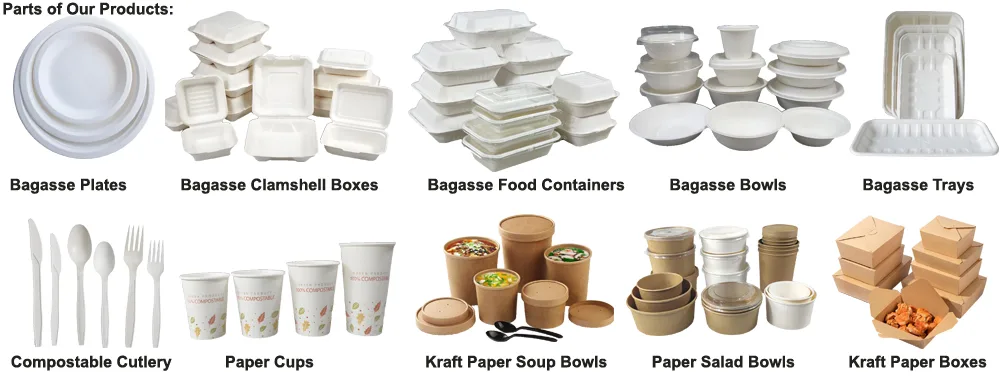
Bioleader® supports global buyers with a robust PFAS-free assurance system that includes:
Water-based coated kraft paper salad bowls and soup containers
CPLA cutlery made from crystallized biopolymers
Third-party verified TOF and LC-MS/MS testing
Transparent supply chain documentation
ODM/OEM support for PFAS-free product customization
This integrated compliance framework ensures buyers meet 2025 and upcoming 2026+ regulatory requirements.
Final Recommendations for Global Buyers
As PFAS regulation becomes universal, companies must adopt:
A proactive compliance mindset
Standardized PFAS testing protocols
Transparent supplier reporting systems
Shipment-level verification
Long-term supplier partnerships built on traceable materials
PFAS-free packaging is now a global standard, not a trend. Businesses that invest in compliance today will reduce legal risk, strengthen brand trust, and meet the expectations of regulators and customers worldwide.
FAQ
1. How can buyers confirm whether food packaging is truly PFAS-free
To verify PFAS-free status, buyers must review coating documentation, request TOF screening, confirm LC-MS/MS test reports, and require batch-level traceability from the paper mill to the finished product.
2. What testing methods are most accurate for identifying PFAS in packaging
The most reliable methods are total organic fluorine (TOF) screening for rapid detection and LC-MS/MS targeted analysis for identifying specific PFAS compounds across hundreds of regulated chemical categories.
3. Why PFAS regulations vary between the EU, United States, and Asia
Each market uses different legal definitions, reporting thresholds, and enforcement structures. The EU applies strict PFAS restrictions under PPWR and REACH, while the U.S. enforces state-level bans, and Asia is aligning through progressive chemical-safety policies.
4. What are the main supply-chain risks that cause PFAS contamination
Key risks include undisclosed fluorinated coatings from paper mills, recycled paperboard with PFAS residues, multi-factory sourcing inconsistencies, and outdated equipment contaminated from previous PFAS-treated production runs.
5. How businesses can maintain PFAS compliance for long-term operations
Companies should implement annual supplier audits, shipment-level PFAS testing, coating-source verification, accredited laboratory partnerships, and a documented PFAS-free compliance framework aligned with evolving global regulations.
References
Assessment of PFAS in Food-Contact Materials – J. Hartman, Environmental Safety Review, 2024
Fluorine Analysis in Packaging Substrates – L. Cheng, Materials Testing Journal, 2025
Global Trends in PFAS Regulation and Enforcement – M. Rossi, International Policy Quarterly, 2024
Oil-Resistance Coatings and PFAS-Free Innovations – S. Patel, Packaging Chemistry Insights, 2025
Comparative Study of TOF and LC-MS/MS in PFAS Detection – K. Harding, Analytical Methods Report, 2024
Migration Behavior of PFAS Under Food-Contact Conditions – E. Fernandez, Food Safety Science, 2023
Supply-Chain Transparency for Non-Fluorinated Packaging – D. Nakamura, Global Manufacturing Review, 2024
PFAS Testing Performance: Multi-Lab Validation Report – R. Williams, LabTech Compliance Bulletin, 2025
Deep Insights: How PFAS-Free Packaging Works and What Compliance Requires in 2025
How PFAS-Free Packaging Fits Into Global Compliance:
PFAS-free packaging aligns with the regulatory shift toward safer, non-fluorinated food-contact materials. Compliance depends on verifying the absence of fluorinated coatings across every layer of the supply chain—from paper mills to barrier coatings and final production. Companies that integrate structured testing and supplier transparency can confidently meet EU, U.S., and APAC standards.
Why Compliance Matters Beyond Sustainability:
The 2025 regulatory wave positions PFAS-free as a legal requirement, not a marketing label. Enforcement authorities now reject shipments containing detectable PFAS, while major retailers demand documented conformity. PFAS-free decisions therefore protect market access, reduce legal exposure, and strengthen brand safety credentials across all customer-facing segments.
What True PFAS-Free Verification Involves:
Verification requires a multi-layered process:
screening raw materials for fluorinated additives,
auditing coating suppliers,
applying TOF analysis for fast screening,
and confirming results with LC-MS/MS for targeted detection.
This approach validates not only the finished product but also the upstream materials influencing compliance outcomes.
Options for Achieving PFAS-Free Performance Without Fluorinated Chemicals:
Modern solutions include water-based barrier coatings,
naturally oil-resistant fibers such as molded bagasse,
advanced aqueous dispersion technologies,
and engineered fiber structures.
Each option supports grease resistance, heat durability, and structural stability without relying on prohibited fluorinated substances.
Key Considerations for Buyers Managing PFAS Compliance in 2025:
Compliance requires selecting suppliers capable of documenting coating origins,
maintaining traceability for each batch,
providing accredited laboratory test reports,
and supporting shipment-level verification.
Buyers should prioritize supply partners with transparent raw-material governance, robust lab-testing infrastructure, and proven regulatory readiness.
Strategic Outlook for 2025 and Beyond:
As global rules tighten, PFAS-free packaging will set the baseline for all food-service segments—from QSR chains to delivery platforms, airports, and public institutions.
Businesses that implement PFAS compliance frameworks early will benefit from regulatory resilience, reduced re-testing costs, and stronger consumer trust in long-term sustainability programs.