Sushi packaging has a more demanding job than simply holding food. A tray must keep sushi neatly arranged, allow customers to see the product, resist moisture from rice and chilled ingredients, fit its lid accurately, survive takeaway handling, support retail display and still make commercial sense at scale.
For B2B buyers, two increasingly common fiber-based options are kraft paper sushi trays with clear PET lids and sugarcane bagasse sushi trays. Both can work for sushi, sashimi, rolls, deli food and chilled takeaway meals, but they solve the packaging problem differently.
Quick Summary: Kraft paper sushi trays with clear PET lids are especially strong for supermarket display, grab-and-go sushi, custom branding and applications where food visibility matters. Bagasse trays provide a molded-fiber alternative that may better support compostability-oriented packaging programs and broader hot-and-cold foodservice use. The better choice depends on food presentation, lid type, moisture resistance, delivery conditions, customization, waste-management goals and total packaging cost.
Key decision rule: Choose sushi packaging as a complete system. A good tray decision combines food visibility + structural stability + lid fit + moisture control + branding + logistics + end-of-life requirements. Material alone does not determine which tray is better.
What Does Good Sushi Packaging Actually Need to Do?
Sushi is a chilled, presentation-sensitive food. Unlike a burger or a bowl of noodles, much of its commercial value is communicated visually before the package is opened. The colors of salmon, tuna, avocado, rice, sauces and garnishes are part of the product presentation.
For this reason, buyers should evaluate sushi packaging against several practical requirements:
- Food visibility: Can shoppers clearly see rolls, sashimi, nigiri and garnishes before purchase?
- Tray rigidity: Does the base remain flat when lifted, stacked or handled during service?
- Lid fit: Does the lid close consistently without pressing against the sushi?
- Moisture resistance: Can the tray handle condensation, rice moisture, sauces and short holding periods?
- Stacking: Can packaged sushi be stacked for preparation, chilled display and short-distance delivery?
- Brand presentation: Can the package support printed logos, labels, QR codes or private-label artwork?
- Distribution efficiency: Are carton dimensions, pieces per carton and container-loading efficiency acceptable?
- End-of-life strategy: Does the complete tray-and-lid combination fit the buyer’s recycling, composting or plastic-reduction objective?
The right material therefore depends on the sales channel. A sushi chain serving takeaway customers may prioritize branding and presentation, while a supermarket may prioritize product visibility and shelf consistency. A sustainability-led foodservice program may give more weight to molded fiber and compostability criteria.
What Is a Kraft Paper Sushi Tray with a Clear PET Lid?
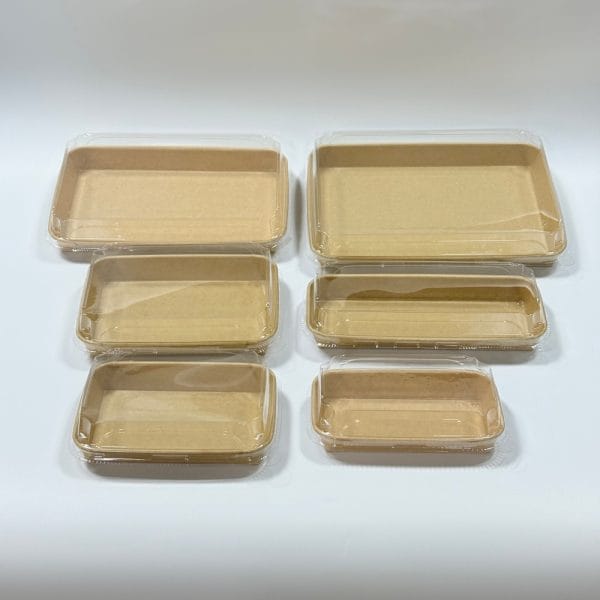
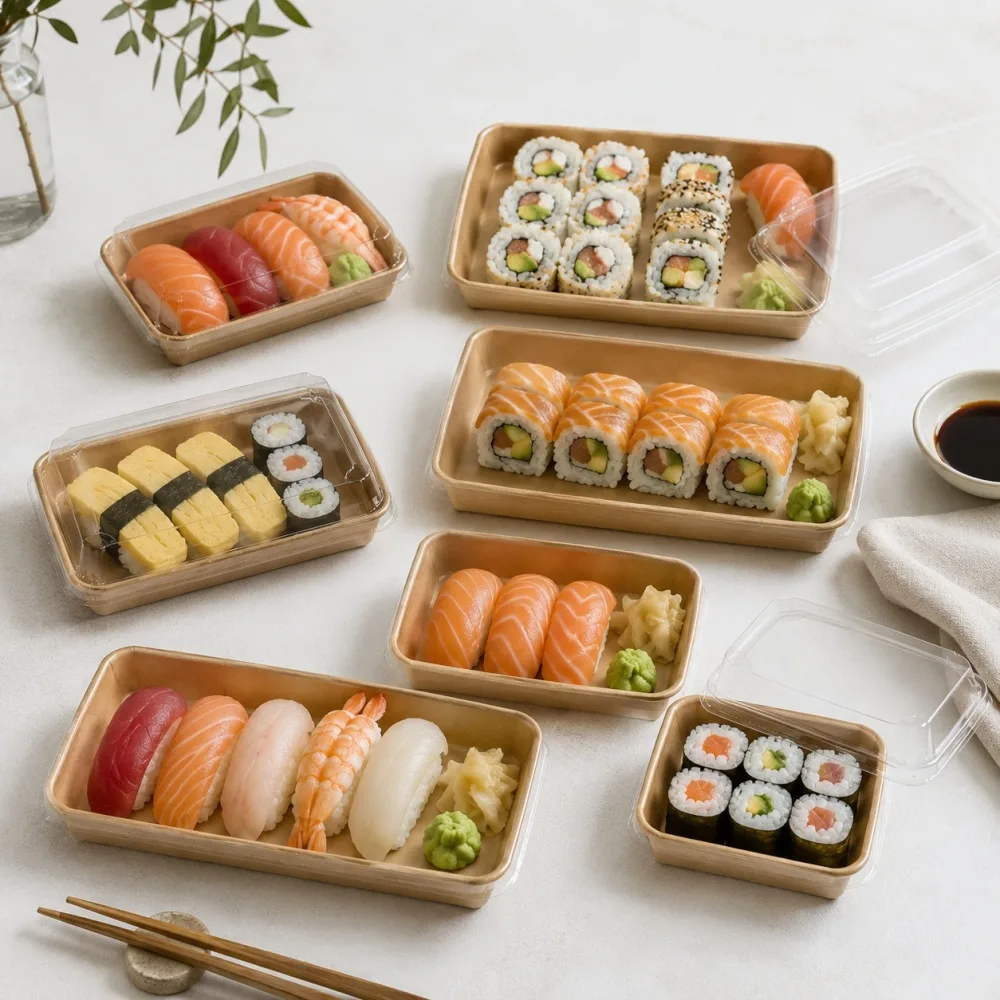
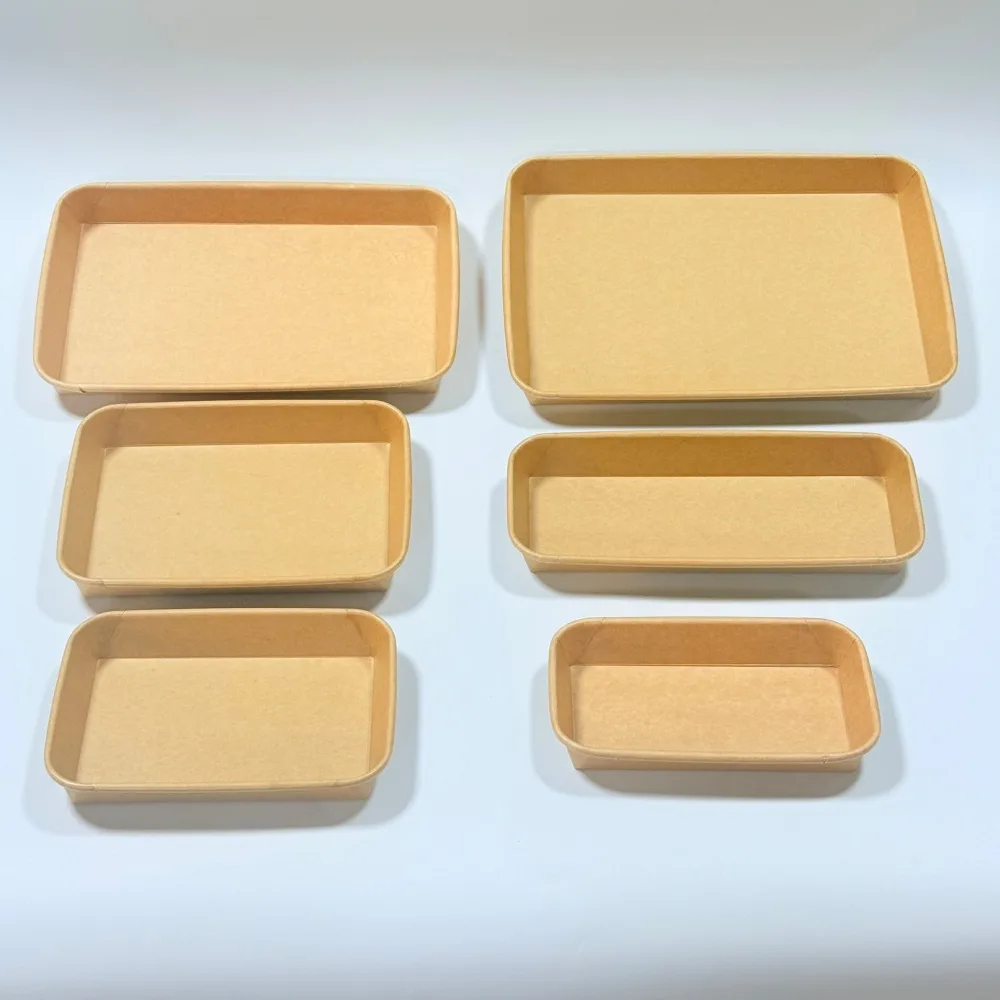
A kraft paper sushi tray is a formed paperboard base designed to present sushi and other chilled foods on a relatively flat surface. Bioleader®’s current kraft paper sushi tray with clear PET lid uses 300gsm or 320gsm kraft paperboard with a single PE coating and a matching transparent PET dome lid.
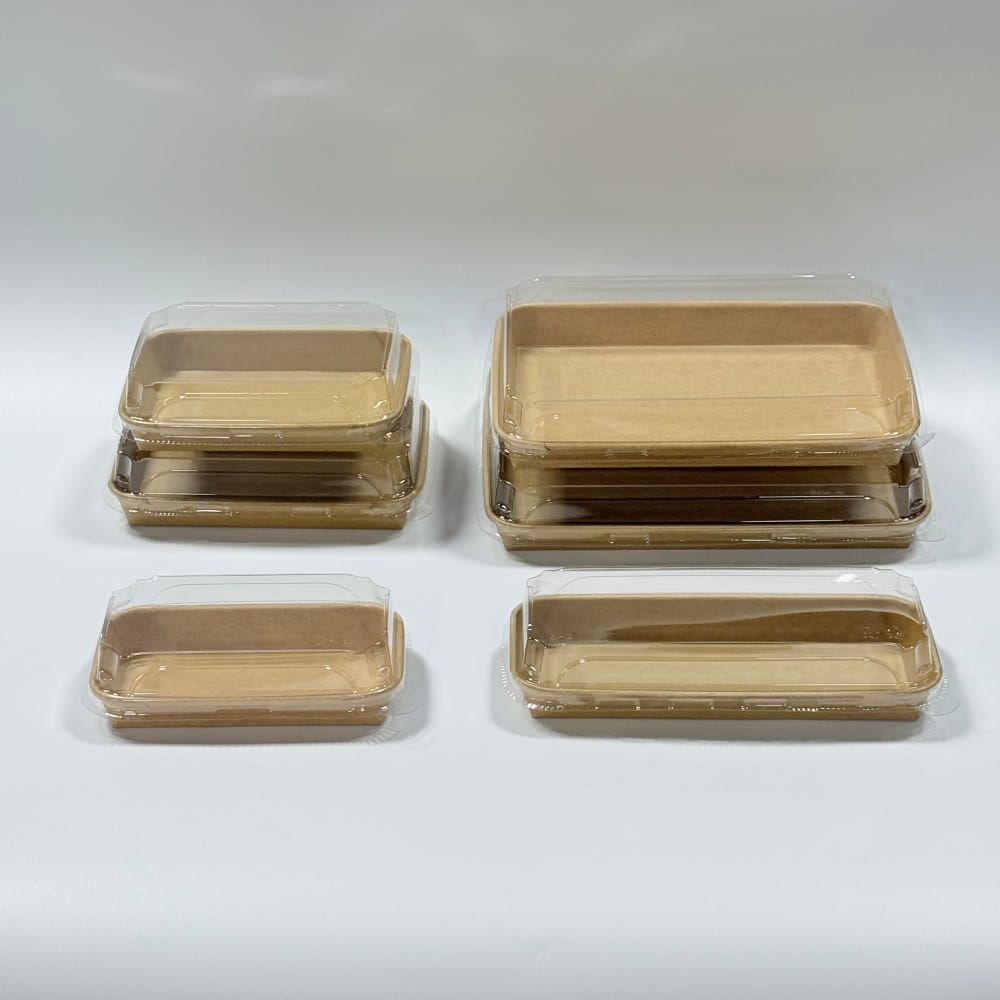
The product family includes multiple tray sizes for small roll portions, regular sushi sets, sashimi combinations, deli meals and larger party-style packs. The clear PET lid is a major part of the system because it allows customers to inspect the food without opening the package.
Why Kraft Paper Works Well for Retail Sushi
Kraft paperboard provides a flat, visually clean base with a natural brown appearance. This can work particularly well for sushi because the neutral background does not compete heavily with the food itself.
The paperboard structure can also support custom branding. A restaurant chain, private-label supermarket program or foodservice distributor may use logos, labels, QR codes, color blocks or seasonal graphics to create a recognizable packaging system across several tray sizes.
Buyers considering a wider range of paper takeaway formats can also review Bioleader®’s kraft paper food boxes to compare how paperboard structures are used across different takeaway and delivery applications.
Manufacturer insight: The clear lid is not simply an accessory. For sushi, the lid is part of the merchandising system. A transparent PET dome helps make the food visible on chilled shelves and grab-and-go counters while the kraft base provides the structural and branding surface underneath.
What Is a Bagasse Sushi Tray?
Bagasse trays are molded-fiber food containers manufactured from sugarcane fiber. Instead of forming a flat paperboard sheet into a tray, the material is molded into its final three-dimensional shape.
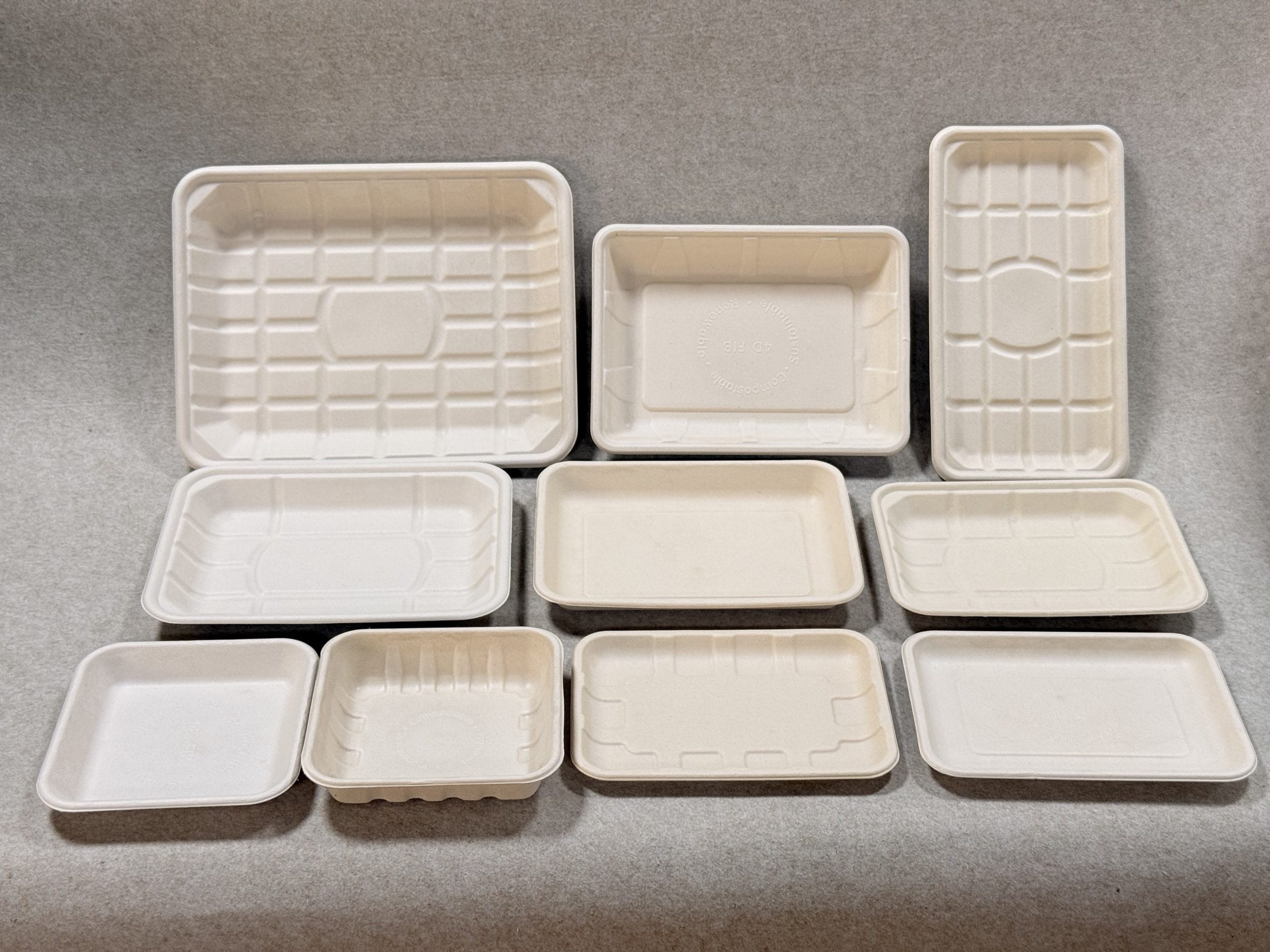
Bioleader® supplies a broad range of sugarcane bagasse trays for foodservice, takeaway, deli meals, catering and sushi applications. The range includes shallow trays, deeper food trays and formats designed to work with matching lids.
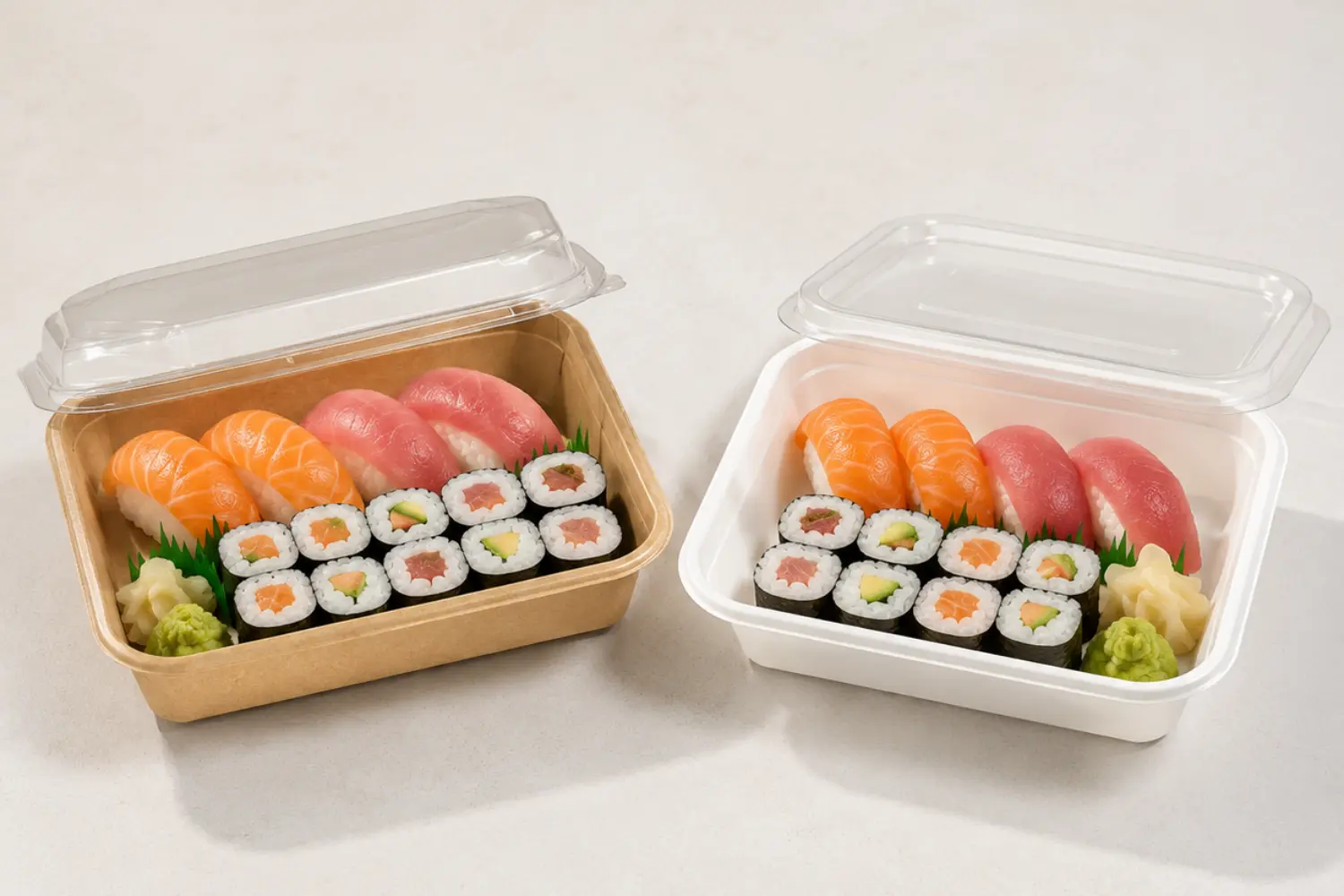
For buyers specifically seeking sushi packaging, Bioleader® also offers a bagasse sushi tray with lid as a molded-fiber alternative to the kraft paperboard format.
Why Bagasse Appeals to Sustainability-Led Programs
Bagasse provides a fiber-based molded structure and can support compostability-oriented packaging strategies when the specific product, lid configuration, certification and local waste-management system support that claim.
It can also be used across a wider foodservice portfolio, which may be useful for buyers who want the same material family for sushi, side dishes, prepared meals, snacks and other takeaway foods.
However, molded fiber should not be selected simply because it sounds more sustainable. Structural consistency, lid fit, surface finish, oil and water resistance, denesting and export packing still need to be evaluated. Bioleader® discusses these issues in its Sugarcane Bagasse Tableware Quality Control Guide.
Kraft Paper vs Bagasse Sushi Trays: Side-by-Side Comparison
| Buyer Factor | Kraft Paper Sushi Tray + Clear PET Lid | Bagasse Sushi Tray |
|---|---|---|
| Food visibility | Excellent when paired with a clear PET dome lid. | Depends on the matching lid configuration. |
| Supermarket display | Strong fit for chilled shelves, grab-and-go and visible retail presentation. | Suitable where molded-fiber presentation fits the retail concept. |
| Tray surface | Flat paperboard surface with a clean retail appearance. | Molded-fiber surface with a natural fiber texture. |
| Custom printing | Strong advantage for logos, color graphics, QR codes and multi-size branding systems. | Customization is different and often relies more on embossing, labeling, sleeves or external branding components. |
| Moisture barrier | Standard Bioleader® kraft sushi tray uses a PE-coated paperboard structure. | Depends on molded-fiber formulation, food conditions and product specification. |
| Cold sushi use | Very well suited to chilled sushi, sashimi and retail display. | Suitable when tray and lid configuration match the application. |
| Broader hot-food versatility | Depends on paper structure, coating and product design. | Bagasse can support a broad range of prepared-food applications when the SKU is approved for the intended use. |
| Compostability positioning | Standard PE-coated tray plus PET lid should not be treated as a fully compostable packaging system. | Stronger potential when the complete product configuration and certification support compostability claims. |
| Brand appearance | Natural kraft look with strong printing potential. | Natural molded-fiber appearance. |
| Best fit | Sushi chains, supermarkets, grab-and-go counters, branded takeaway and retail display. | Fiber-focused foodservice programs, sustainability-led projects and broader molded-fiber packaging systems. |
Which Tray Gives Better Sushi Presentation?
For sushi, presentation is not a secondary packaging feature. It directly influences how the food is perceived before purchase.
A transparent lid can reveal:
- Roll arrangement and portion count.
- Fish color and freshness appearance.
- Sashimi layout.
- Garnishes and sauces.
- Premium ingredients.
- Combination-set organization.
This gives the kraft-paper-plus-PET format an important advantage in environments where customers select the product visually.
Retail presentation judgment: If product visibility is one of the main purchasing criteria, a kraft paper tray with a properly fitted clear PET lid is usually the stronger starting point. Bagasse becomes more attractive when fiber composition and end-of-life strategy carry more weight than maximum product visibility.
Which Is Better for Supermarket Sushi Counters?
Supermarket sushi packaging has to perform differently from restaurant tableware. Products may be prepared in batches, moved to refrigerated displays, stacked during replenishment, labeled with barcodes and handled several times before the shopper purchases them.
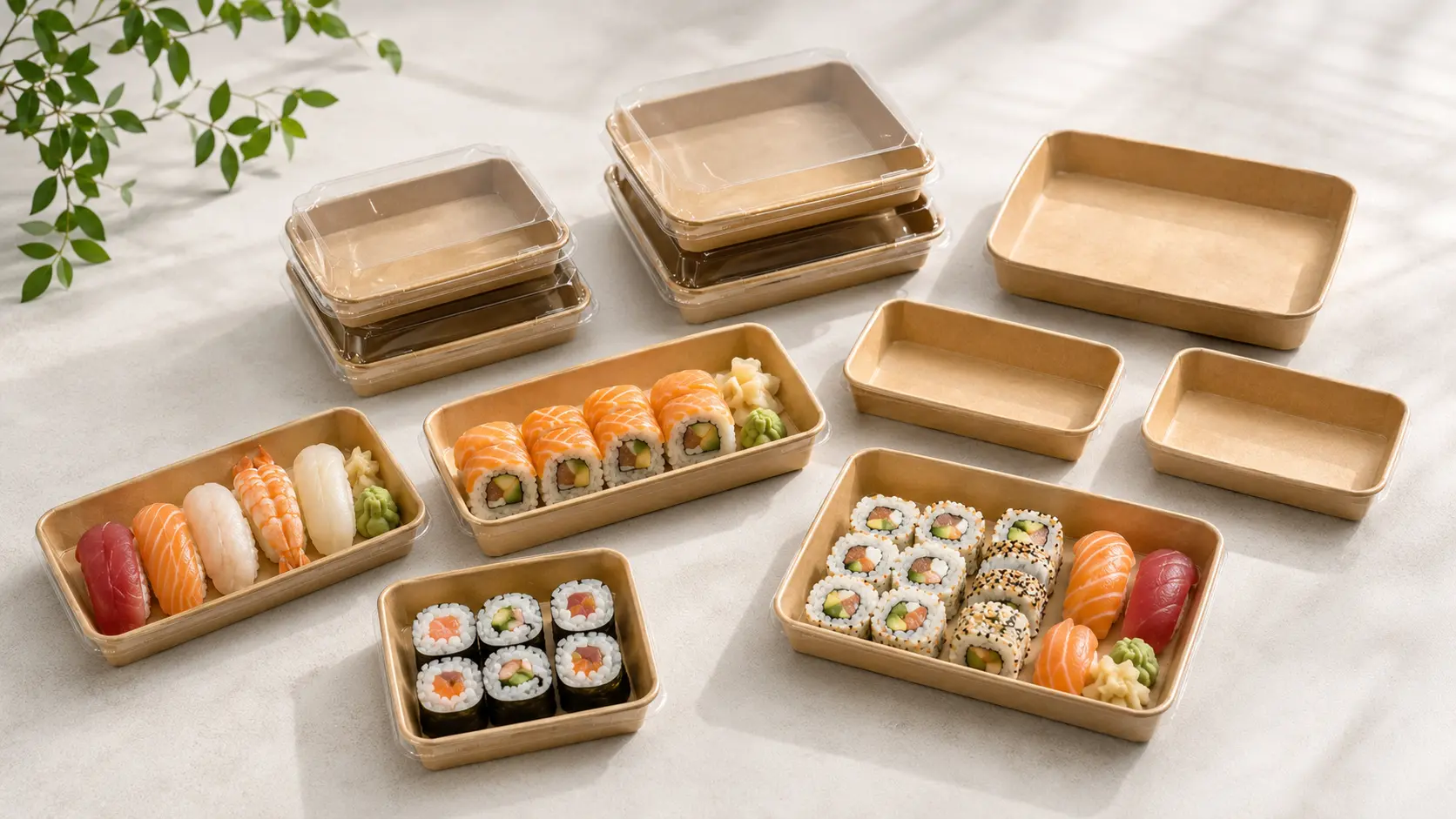
For this environment, buyers should prioritize:
- Clear product visibility.
- Consistent lid fit.
- Flat presentation.
- Easy stacking.
- Multiple portion sizes.
- Barcode and labeling space.
- Carton efficiency.
- Rapid staff handling.
Kraft paper sushi trays with transparent PET lids perform particularly well when the supermarket wants customers to see the food clearly without opening the pack. The same packaging family can also support different portion sizes under one visual branding system.
For retailers already using broader paperboard packaging systems, Bioleader®’s paper food packaging solutions provide additional options for bowls, cups, food boxes and takeaway formats that can be coordinated with a wider private-label program.
Which Is Better for Takeaway and Delivery?
Takeaway and delivery change the decision. The tray is no longer sitting mainly on a chilled shelf; it must survive bagging, movement, vehicle vibration and customer handling.
Both kraft paper and bagasse trays can work, but buyers should evaluate the complete pack rather than the base material alone.
Kraft Paper Sushi Tray for Delivery
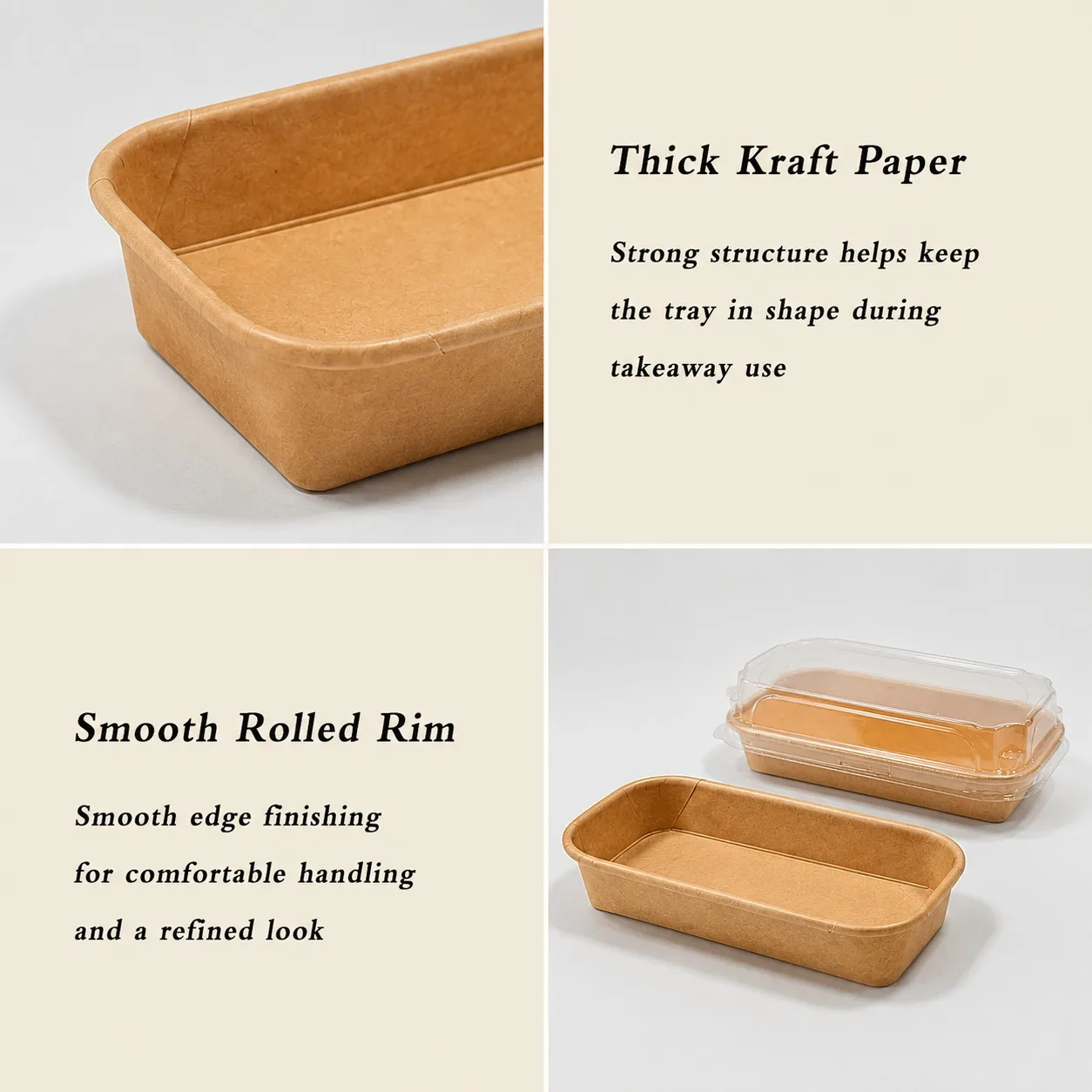 | 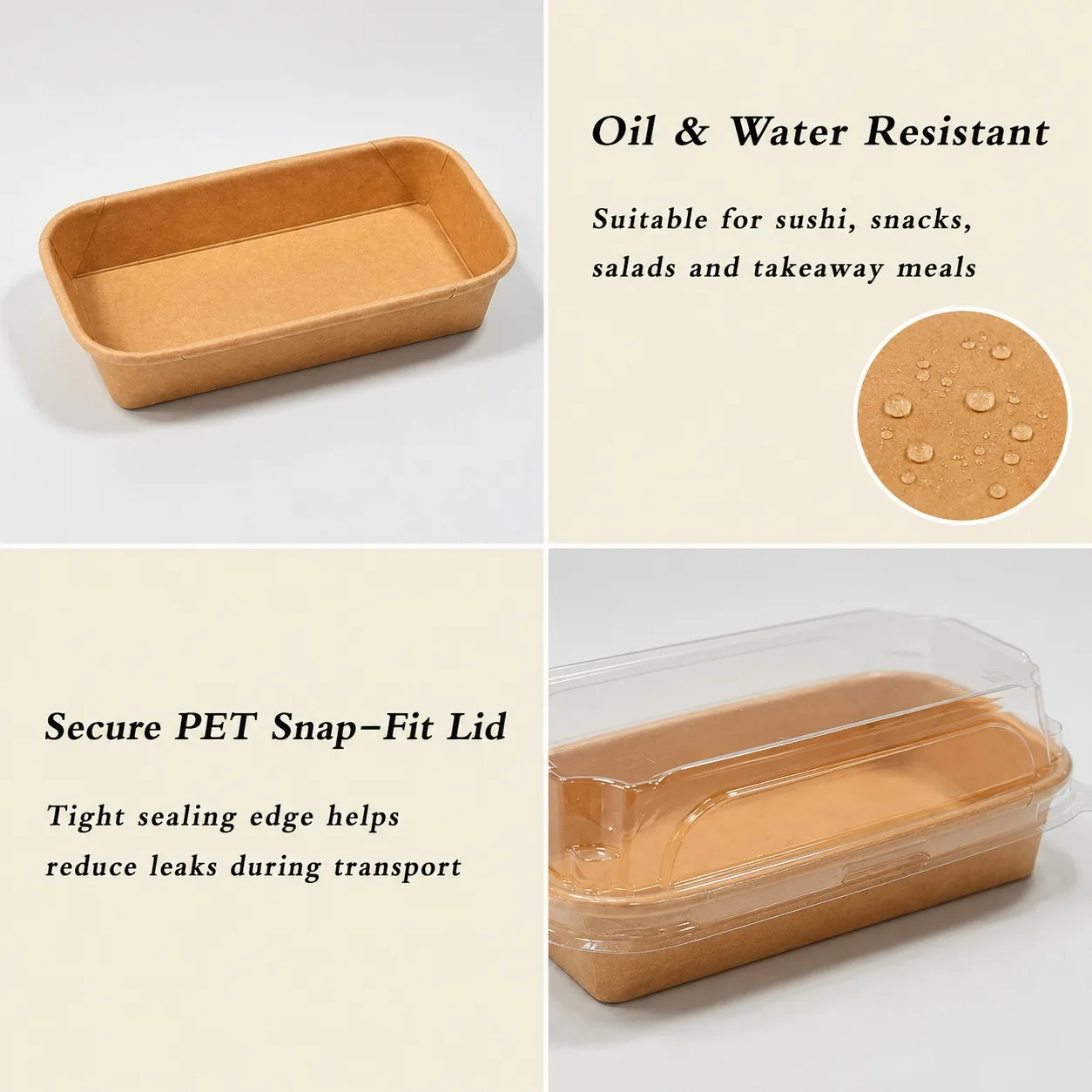 |
The advantages are mainly presentation, lid visibility and a relatively flat base. This is useful for branded sushi restaurants that want the meal to arrive looking similar to the way it left the counter.
The buyer should still verify:
- Tray-to-lid locking strength.
- Whether the lid flexes during stacking.
- Whether sushi contacts the lid.
- How the package behaves when tilted.
- Condensation after chilled holding.
- How sauces are packed separately.
Bagasse Sushi Tray for Delivery
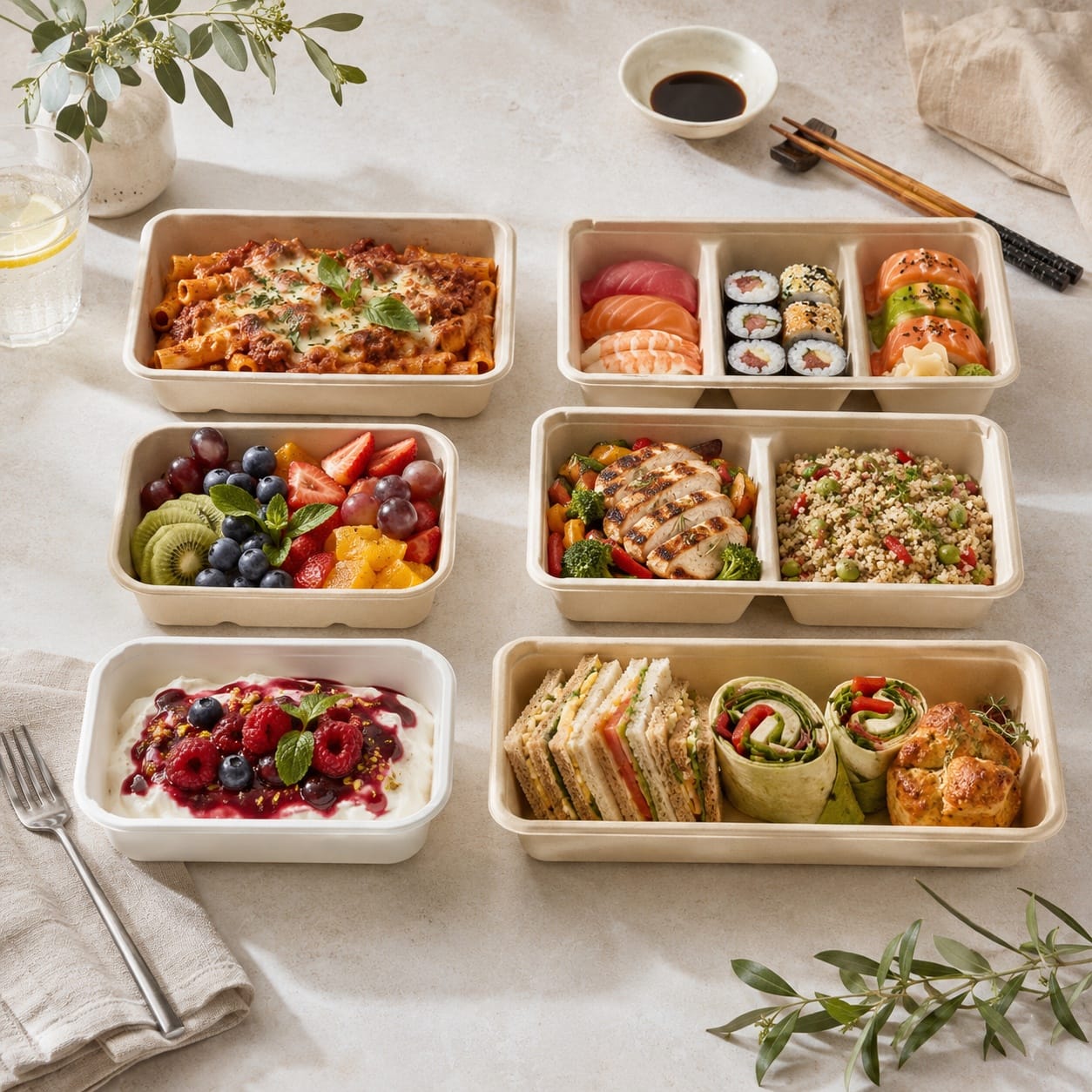
Molded fiber can provide a firm tray structure and may fit businesses already using bagasse for other takeaway meals. However, the actual performance must be checked at SKU level, especially lid compatibility, stacking and surface performance with moist or oily food.
 |  |
Recommended Sushi Packaging Sample Test
- Pack the exact sushi set planned for commercial use.
- Close the production lid, not a substitute lid.
- Hold the package under the expected chilled condition.
- Stack several loaded packs as they would be handled in the restaurant or supermarket.
- Place the packs in the actual delivery bag or retail carton.
- Simulate short-distance delivery movement.
- Check lid movement, tray deformation, food shifting, condensation and presentation.
- Repeat the test with several samples rather than approving one visually perfect piece.
Which Material Is Better for Custom Branding?
Kraft paperboard has a clear advantage when the tray itself is intended to carry printed brand graphics.
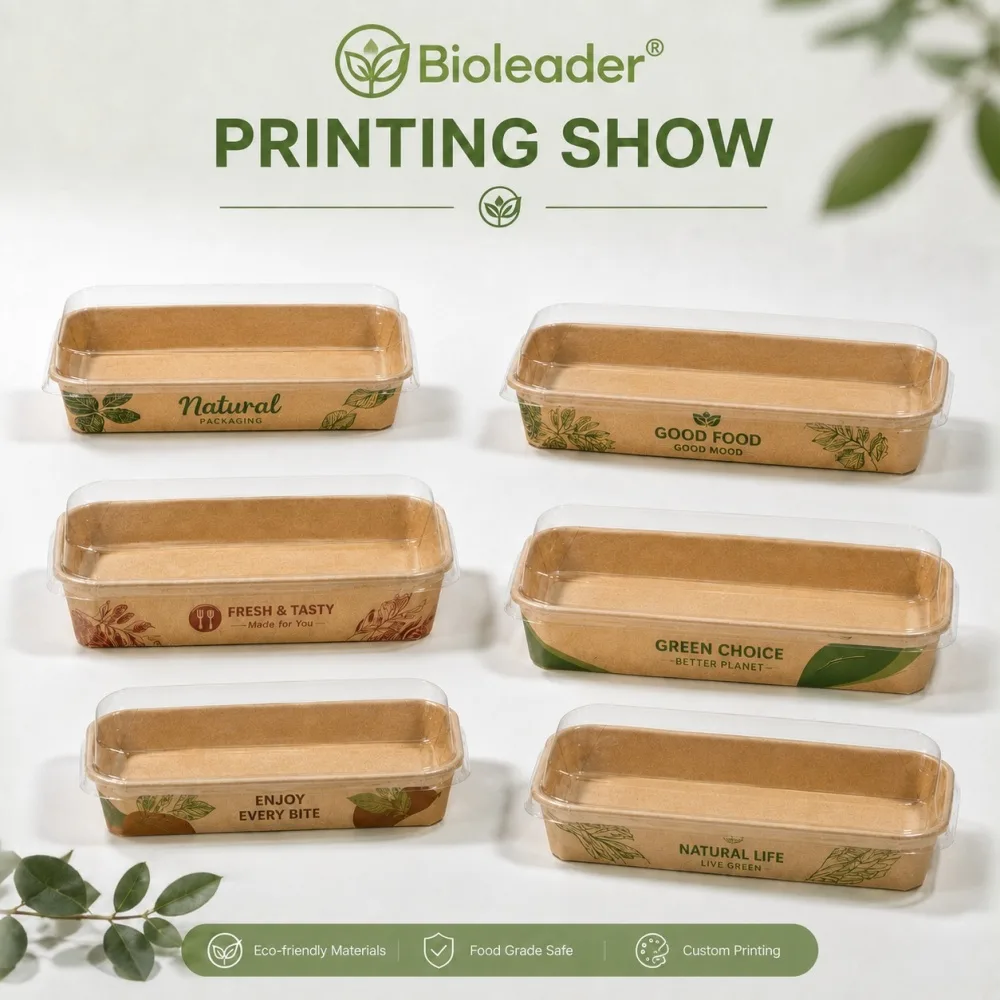
Possible branding elements include:
- Restaurant or supermarket logos.
- One- or multi-color artwork.
- QR codes.
- Product-family graphics.
- Seasonal campaigns.
- Private-label designs.
- Different artwork across multiple tray sizes.
Kraft paper creates a warm, natural appearance, but its brown substrate changes how printed colors appear. Light colors and low-contrast graphics may look different from the same artwork printed on white paperboard.
Bioleader® explains the broader relationship between paper color, artwork and production in its guide to custom logo printing on paper food packaging. Although cups and bowls use different converting processes from sushi trays, the same purchasing principle applies: artwork should be evaluated together with the substrate rather than designed in isolation.
Manufacturer insight: Buyers often evaluate custom packaging on a computer screen. The factory has to evaluate it on the actual kraft board. Before mass production, logo contrast, background color, print coverage and the printable area should be checked against the real tray dieline.
Does Kraft Paper Automatically Mean Compostable?
No. This is one of the most important sustainability distinctions for buyers.
The standard Bioleader® kraft sushi tray uses paperboard with a single PE coating and a clear PET lid. It should therefore be described as a paper-based tray with a plastic barrier coating and PET lid, not automatically as a fully compostable sushi package.
Its real end-of-life route depends on:
- The tray coating.
- The lid material.
- Food contamination after use.
- Local fiber-recycling capability.
- Whether the tray and lid are separated.
- Local collection and sorting rules.
This broader principle is also explained in Bioleader®’s guide to paper food boxes for takeaway and delivery: the sustainability of fiber-based packaging depends on food performance and realistic end-of-life handling, not simply on the word “paper.”
Does Bagasse Automatically Mean the Whole Sushi Package Is Compostable?
Not necessarily. The bagasse tray base may be designed for compostability, but the complete package still has to be evaluated.
A buyer should verify:
- The exact bagasse SKU.
- Whether the relevant compostability documentation matches that product.
- The material of the matching lid.
- Whether labels, films or other accessories change the end-of-life claim.
- Whether the target market has an appropriate composting route.
Claim warning: “Paper-based,” “fiber-based,” “biodegradable” and “compostable” are not interchangeable terms. Procurement specifications should describe the actual tray, coating, lid and applicable certification rather than relying on a broad environmental label.
Kraft vs Bagasse Sushi Tray Cost: What Should Buyers Actually Compare?
Unit price alone does not show the total packaging cost.
The kraft sushi tray cost structure may include:
- Paperboard.
- Barrier coating.
- Printing.
- Die cutting and tray forming.
- Clear PET lid.
- Inner packing and cartons.
- Export loading.
The bagasse tray cost structure is different:
- Sugarcane fiber and pulp preparation.
- Molded-fiber forming.
- Drying and trimming.
- Surface or grease-resistance requirements.
- Matching lid.
- Packing and export loading.
For this reason, professional buyers should compare cost per complete usable set, not only tray-body price.
Include Logistics in the Comparison
Shipping can materially change the result for high-volume food packaging. A tray with a slightly lower unit price may not be cheaper after carton volume and container loading are considered.
Before choosing between kraft and bagasse, request:
- Pieces per carton.
- Carton dimensions.
- Tray and lid packing method.
- CBM per carton.
- Estimated 20ft or 40HQ loading quantity.
- Whether lids are packed separately.
- Pallet requirements if applicable.
For buyers comparing paperboard packaging economics more broadly, Bioleader® also covers material, coating, food performance and procurement considerations in its guide to kraft paper food containers.
Kraft Paper vs Bagasse Sushi Tray Decision Matrix
| Priority | Better Starting Point | Why |
|---|---|---|
| Maximum sushi visibility | Kraft + clear PET lid | Transparent lid makes food highly visible for customers. |
| Supermarket chilled display | Kraft + clear PET lid | Strong presentation, flat base and clear merchandising. |
| Custom printed branding | Kraft paper tray | Paperboard provides a practical printable branding surface. |
| Natural molded-fiber appearance | Bagasse tray | Molded sugarcane fiber provides a distinct fiber-based appearance. |
| Compostability-oriented packaging program | Bagasse, subject to full-pack verification | Bagasse can support a stronger compostability pathway when tray, lid and certification align. |
| Multi-size branded sushi program | Kraft sushi tray range | Multiple tray sizes can share coordinated retail branding. |
| Broader molded-fiber foodservice system | Bagasse tray | The same material family can be used across multiple food types and tray formats. |
| Lowest total cost | Project-specific | Compare tray, lid, printing, MOQ, cartons, loading and freight together. |
Commercial judgment: For sushi chains and supermarkets where food visibility, premium presentation and brand printing are major priorities, kraft paper sushi trays with clear PET lids are often the more commercially practical option. For buyers building a molded-fiber or compostability-oriented foodservice system, bagasse trays may be the stronger direction.
What Should Importers Check Before Bulk Ordering Sushi Trays?
Buyer Checklist
- Tray dimensions: Confirm internal usable space, not only outside dimensions.
- Lid height: Check whether premium rolls, sashimi or toppings touch the lid.
- Lid fit: Test several samples for consistent locking and alignment.
- Food layout: Confirm the number of rolls, nigiri or sashimi pieces the tray must display.
- Barrier performance: Test with the actual rice, sauces and chilled holding conditions.
- Stacking: Load and stack finished packs, not empty trays only.
- Branding: Confirm kraft color, logo contrast, label area and printing method before production.
- Material claim: Specify paperboard, coating, bagasse composition and lid material separately.
- Compliance: Request food-contact and other relevant documentation for the exact SKU and destination market.
- MOQ: Confirm whether MOQ applies per size, per artwork or per printed design.
- Packing: Review pcs/CTN, carton size and lid packing arrangement.
- Container loading: Compare total landed logistics rather than unit price alone.
How Bioleader® Helps Buyers Select Sushi Packaging
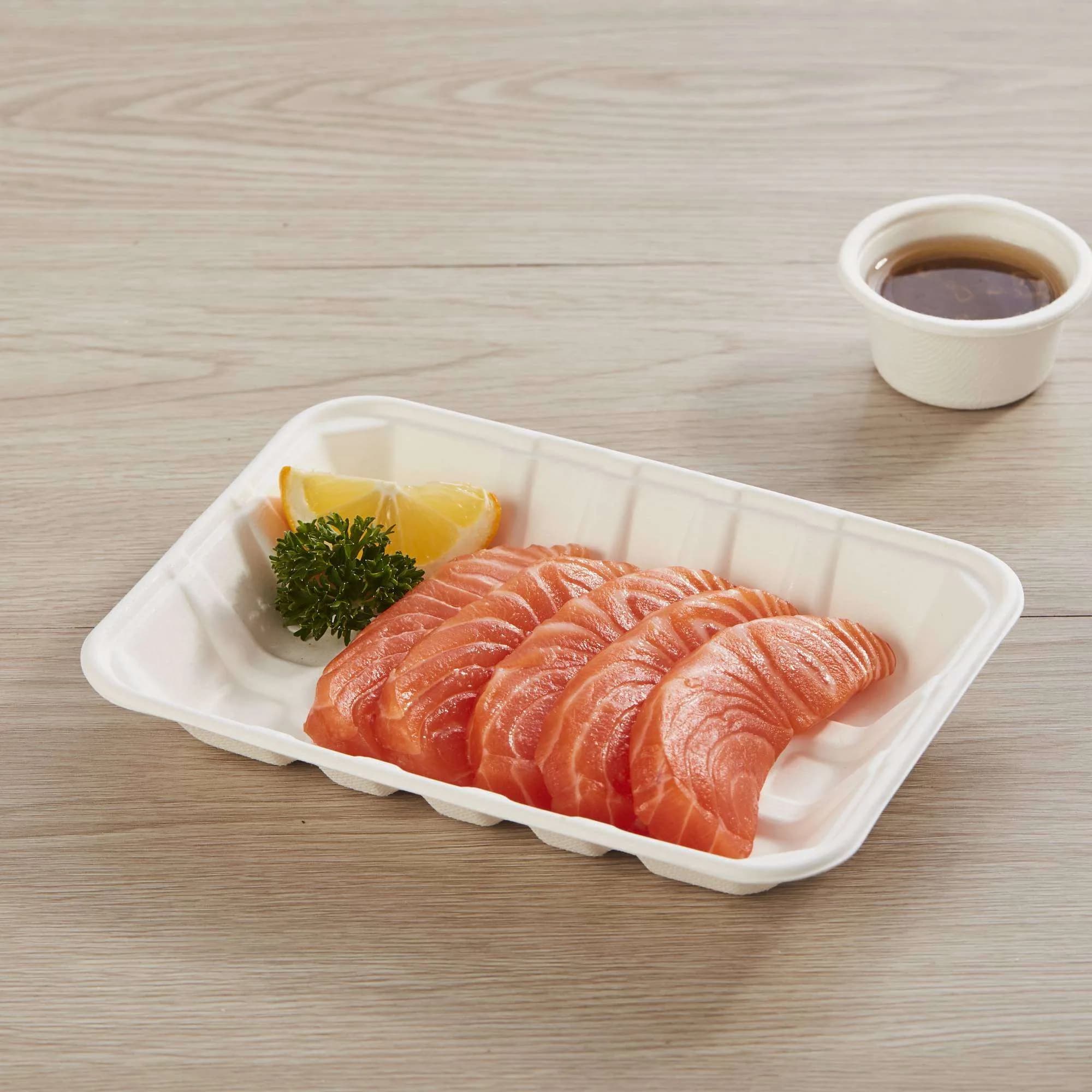
Bioleader® supports both kraft paperboard and molded bagasse packaging, allowing buyers to compare two different packaging systems rather than being forced into one material.
 |  |
 |  |
For a typical sushi packaging project, the evaluation sequence is:
- Confirm the sales channel — sushi restaurant, supermarket, delivery platform, catering or distributor.
- Define the food layout — roll count, sashimi arrangement, portion size and garnish height.
- Choose the packaging direction — kraft paper tray with clear PET lid or molded bagasse tray.
- Check lid compatibility — fit, height, stacking and product visibility.
- Review branding requirements — printing, labels, QR codes, private-label artwork and carton marking.
- Test the actual food — moisture, holding time, refrigeration and short-distance delivery conditions.
- Confirm documentation — food-contact and material documentation relevant to the selected SKU.
- Compare packing and loading — carton quantity, CBM, container loading and freight impact.
- Approve samples before bulk production — especially when several tray sizes or custom branding are involved.
This approach helps restaurants, importers, distributors and supermarket buyers select packaging based on real operating conditions rather than choosing only by material appearance.
Final Recommendation: Kraft Paper or Bagasse for Sushi Packaging?
Neither kraft paper nor bagasse is automatically the best sushi tray for every buyer.
Kraft paper sushi trays with clear PET lids are particularly strong when the commercial priority is food visibility, supermarket display, premium presentation, multiple size options and custom branding. This makes them a practical choice for sushi chains, supermarkets, grab-and-go counters, restaurants and branded takeaway programs.
Bagasse sushi trays become more attractive when buyers want a molded-fiber packaging system, broader foodservice versatility or a stronger compostability-oriented material strategy. The complete tray-and-lid configuration still needs to be verified before making environmental claims.
The strongest sourcing decision is therefore not “paper or bagasse?” It is: Which tray system protects the sushi, presents it clearly, fits the lid, survives distribution, supports the brand and matches the buyer’s end-of-life strategy at an acceptable total cost?
Bioleader® can help B2B buyers compare tray size, material structure, lid configuration, printing, sample performance, carton packing and export loading before bulk production.
FAQ: Kraft Paper vs Bagasse Sushi Trays
Is a kraft paper sushi tray better than a bagasse sushi tray?
It depends on the application. Kraft paper trays with clear PET lids are particularly strong for visible retail sushi, supermarket shelves, branded takeaway and multi-size packaging programs. Bagasse trays may be a better fit for molded-fiber foodservice programs and buyers prioritizing a compostability-oriented material strategy.
Why are clear PET lids popular for sushi packaging?
Sushi is a highly visual food, so a clear lid allows customers to inspect rolls, sashimi, nigiri, garnishes and portion size before purchase. This is especially valuable for supermarket chilled displays, grab-and-go counters and restaurant takeaway. Buyers should still test lid fit, stacking and condensation under actual service conditions.
Are kraft paper sushi trays compostable?
Not automatically. Bioleader®’s standard kraft sushi tray uses PE-coated paperboard with a clear PET lid, so the complete pack should not automatically be described as compostable. Disposal depends on coating, lid material, food contamination and local collection and recycling infrastructure.
Are bagasse sushi trays compostable?
Bagasse tray bases can support compostability-oriented packaging when the specific SKU and applicable certification support the claim. However, buyers must also check the lid, labels and other packaging components. The end-of-life claim should apply to the complete configuration being purchased rather than the bagasse base alone.
Which sushi tray is better for supermarket display?
Kraft paper trays with clear PET dome lids are often a strong choice because the transparent lid provides high product visibility while the paperboard base offers a clean presentation and branding surface. Bagasse trays can also work in supermarket programs where molded fiber better matches the retailer’s material strategy.
Can kraft sushi trays be custom printed?
Yes. Kraft paperboard can support logos, brand graphics, QR codes, labels and private-label designs. Buyers should evaluate color contrast on the actual brown kraft substrate because printed colors may appear different from the same artwork shown on a white computer screen or white paperboard.
What should buyers test before ordering sushi trays in bulk?
Test the actual sushi portion, lid fit, tray rigidity, refrigeration, moisture, stacking, short-distance transport and final presentation. For custom projects, buyers should also approve artwork, material structure, carton packing, pieces per carton and export loading before mass production.