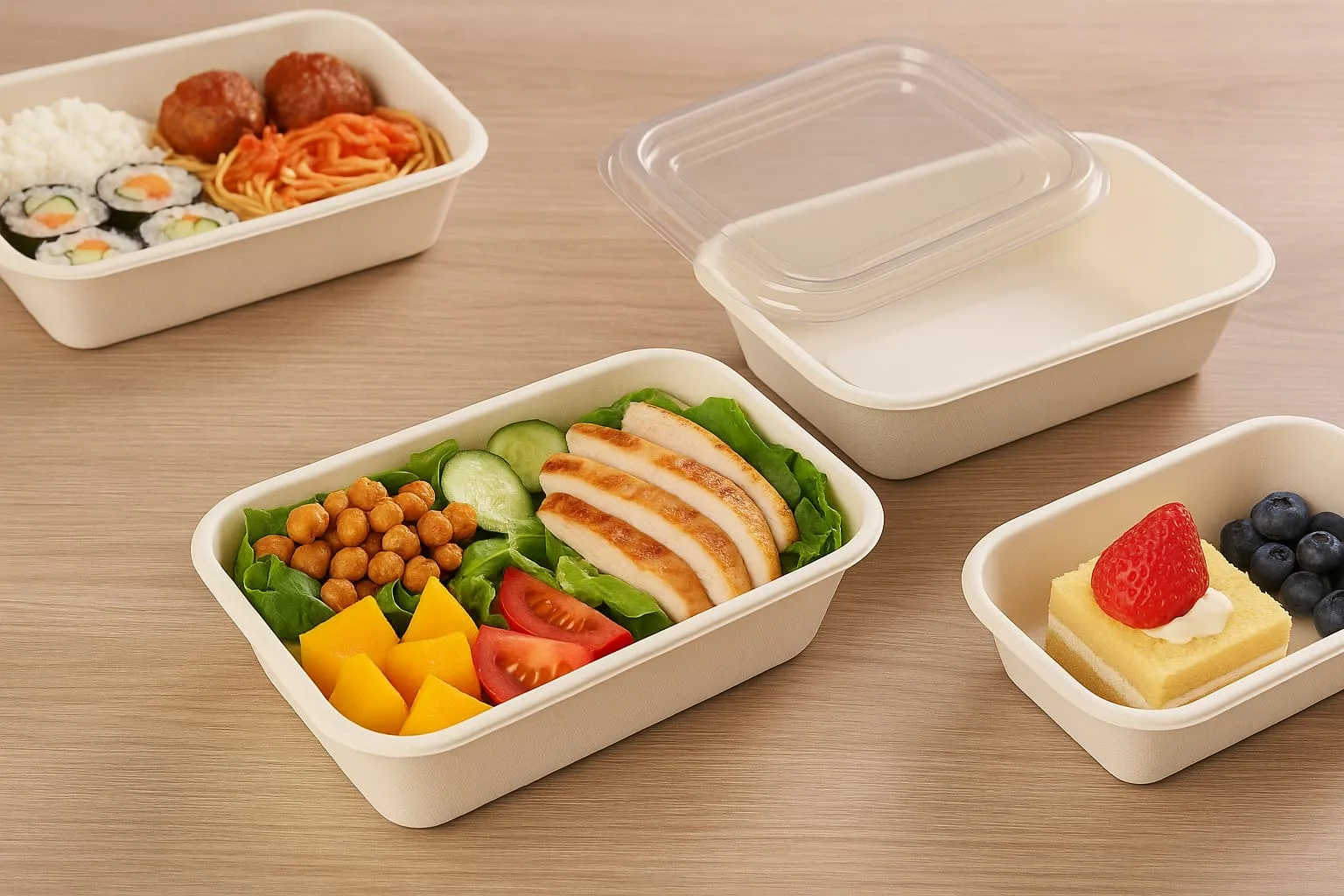










Упаковка для суши выполняет более сложную задачу, чем просто удержание пищи. Лоток должен аккуратно удерживать суши, позволять покупателям видеть продукт, противостоять влаге от риса и охлажденных ингредиентов, точно подходить к крышке, выдерживать обращение при доставке, поддерживать розничную выкладку и при этом оставаться коммерчески целесообразным в масштабе.
Для B2B-покупателей двумя все более распространенными вариантами на основе волокна являются крафт-бумажные лотки для суши с прозрачными крышками PET и лотки для суши из жома сахарного тростника. Оба варианта могут подойти для суши, сашими, роллов, деликатесных продуктов и охлажденных блюд на вынос, но они решают проблему упаковки по-разному.
Краткое резюме: Крафт-бумажные лотки для суши с прозрачными крышками PET особенно хороши для выкладки в супермаркетах, суши на вынос, индивидуального брендирования и применений, где важна видимость продукта. Лотки из жома представляют собой альтернативу из формованного волокна, которая может лучше поддерживать программы упаковки, ориентированные на компостирование, и более широкое использование в общепите для горячих и холодных блюд. Лучший выбор зависит от презентации блюда, типа крышки, влагостойкости, условий доставки, кастомизации, целей управления отходами и общей стоимости упаковки.
Ключевое правило принятия решения: Выбирайте упаковку для суши как комплексную систему. Хорошее решение по лотку сочетает видимость продукта + структурную стабильность + посадку крышки + контроль влаги + брендирование + логистику + требования к утилизации. Сам по себе материал не определяет, какой лоток лучше.
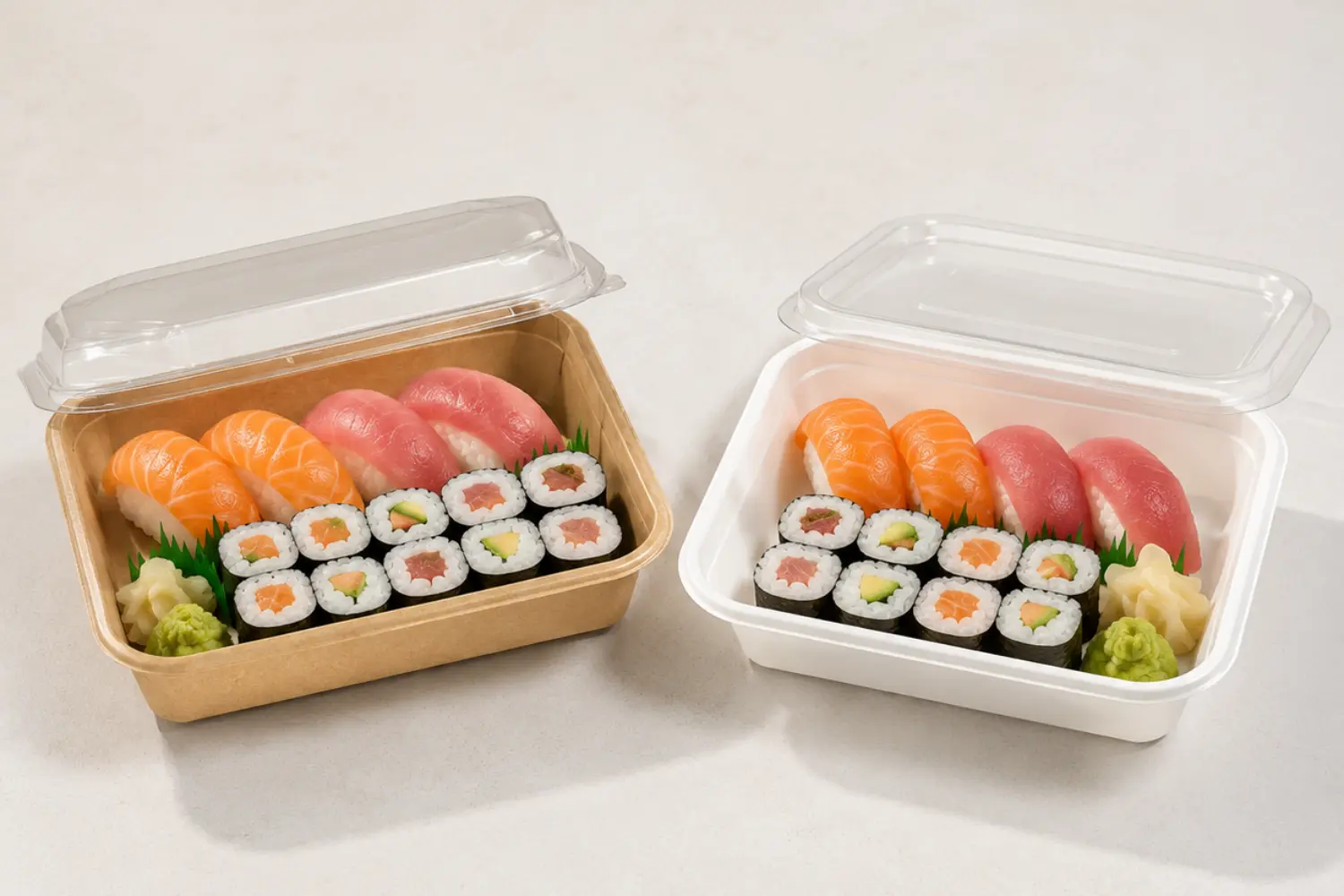
Что на самом деле должна обеспечивать хорошая упаковка для суши?
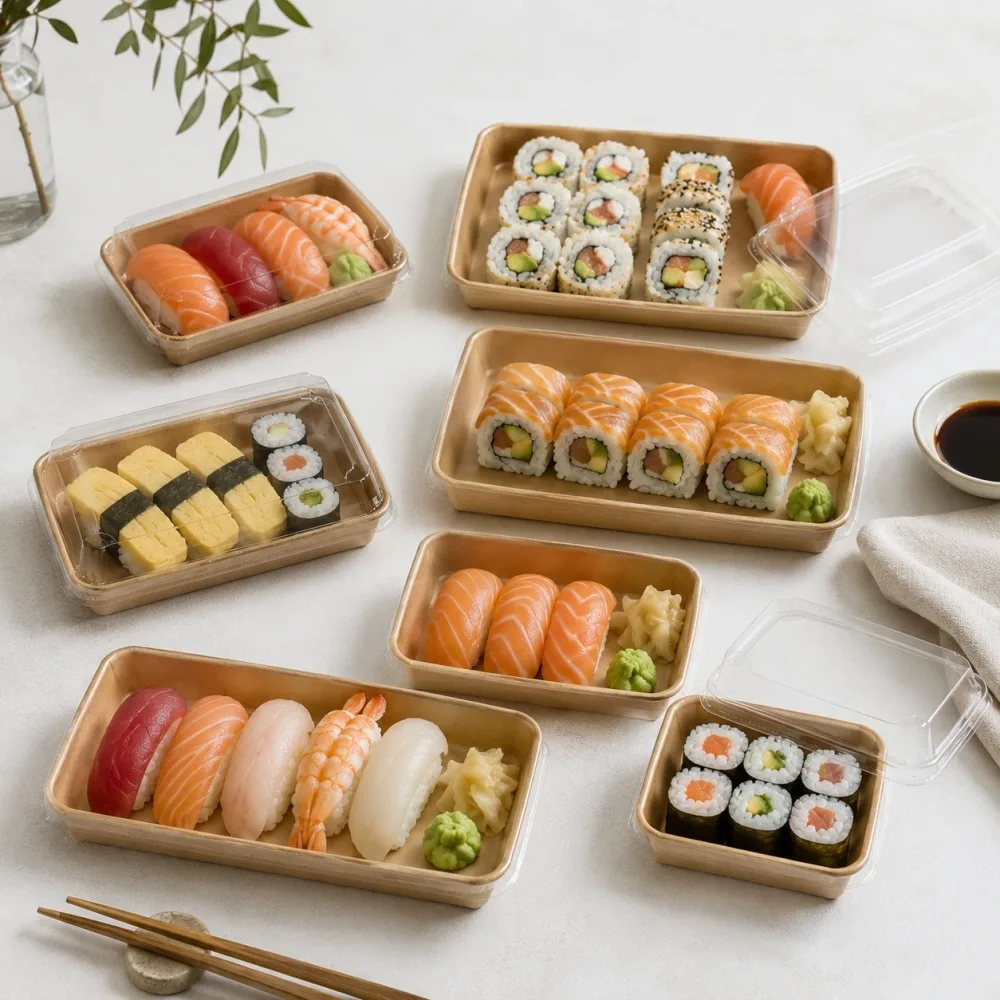
Суши — это охлажденный продукт, чувствительный к презентации. В отличие от бургера или миски с лапшой, значительная часть его коммерческой ценности передается визуально до того, как упаковка будет открыта. Цвета лосося, тунца, авокадо, риса, соусов и гарниров являются частью презентации продукта.
По этой причине покупателям следует оценивать упаковку для суши по нескольким практическим требованиям:
- Видимость продукта: Могут ли покупатели четко видеть роллы, сашими, нигири и гарниры до покупки?
- Жесткость лотка: Остается ли основание плоским при подъеме, штабелировании или обращении во время обслуживания?
- Посадка крышки: Закрывается ли крышка стабильно, не прижимая суши?
- Влагостойкость: Выдерживает ли лоток конденсат, влагу от риса, соусы и короткие периоды хранения?
- Штабелирование: Можно ли штабелировать упакованные суши для приготовления, охлажденной выкладки и доставки на короткие расстояния?
- Брендовая презентация: Поддерживает ли упаковка печатные логотипы, этикетки, QR-коды или художественное оформление под собственной торговой маркой?
- Эффективность дистрибуции: Приемлемы ли размеры картонных коробок, количество штук в коробке и эффективность загрузки контейнера?
- Стратегия утилизации: Соответствует ли комбинация лотка и крышки целям покупателя в области переработки, компостирования или сокращения использования пластика?
Таким образом, правильный материал зависит от канала продаж. Сеть суши-ресторанов, обслуживающая клиентов на вынос, может уделять первостепенное внимание брендингу и презентации, в то время как супермаркет может уделять первостепенное внимание видимости продукта и стабильности на полке. Программа общественного питания, ориентированная на устойчивое развитие, может придавать большее значение формованному волокну и критериям компостируемости.
Что такое крафт-бумажный лоток для суши с прозрачной крышкой PET?
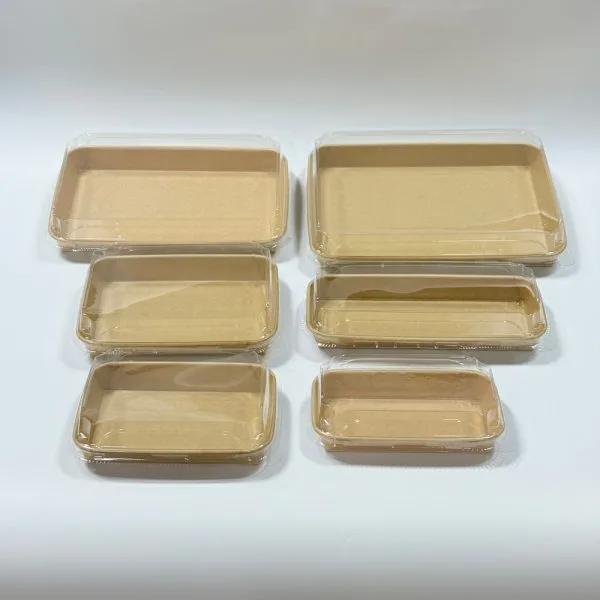
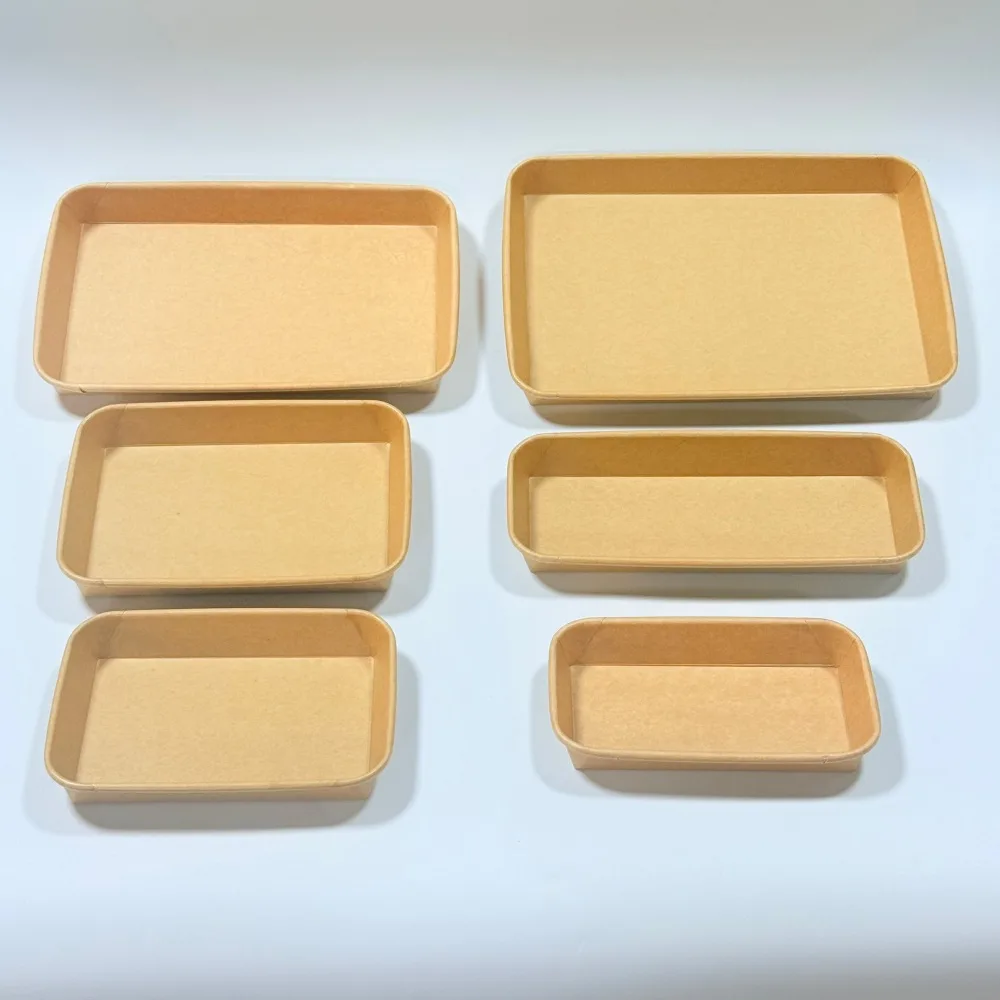
Крафт-бумажный лоток для суши — это основа из формованного картона, предназначенная для презентации суши и других охлажденных продуктов на относительно плоской поверхности. Текущий крафт-бумажный лоток для суши с прозрачной крышкой PET использует крафт-картон плотностью 300 г/м² или 320 г/м² с одинарным покрытием PE и соответствующей прозрачной куполообразной крышкой PET.
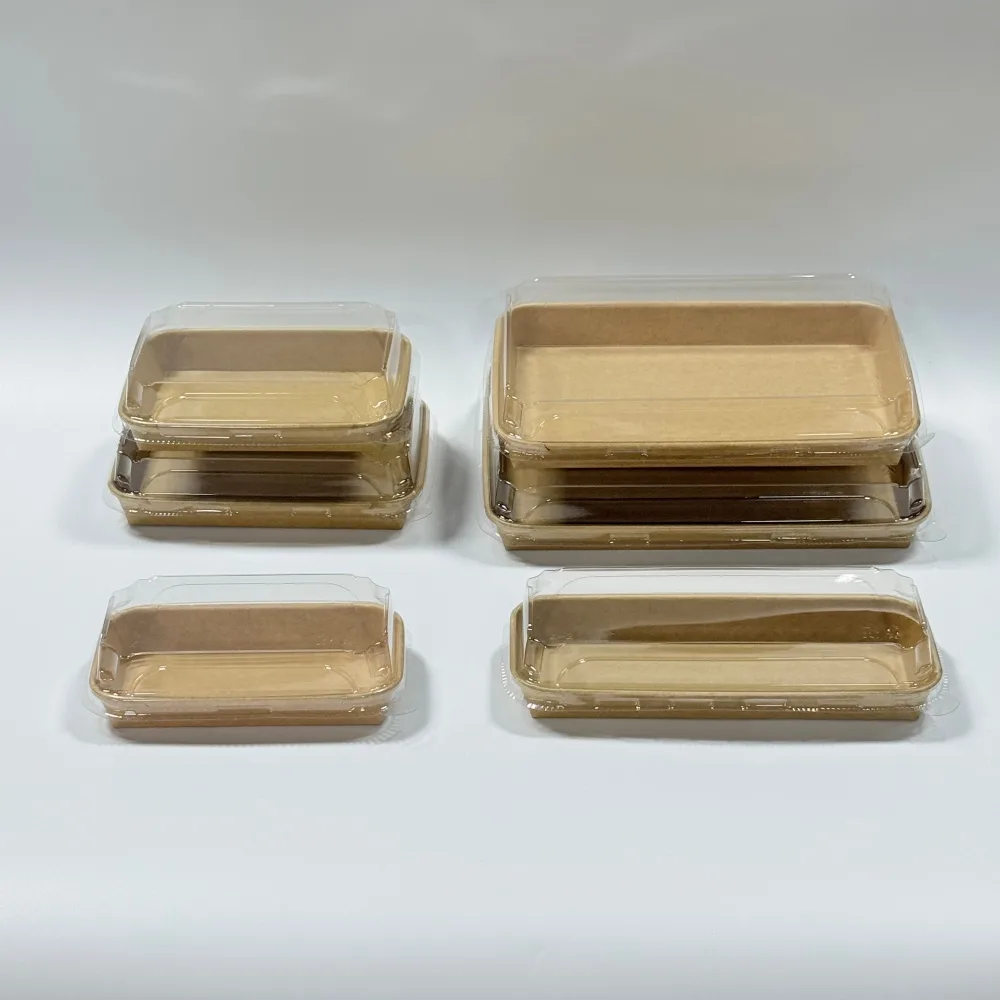
Линейка продуктов включает несколько размеров лотков для небольших порций роллов, стандартных наборов суши, комбинаций сашими, деликатесных блюд и более крупных упаковок для вечеринок. Прозрачная крышка PET является важной частью системы, поскольку позволяет покупателям осматривать продукт, не открывая упаковку.
Почему крафт-бумага хорошо подходит для розничных суши
Крафт-картон обеспечивает плоскую, визуально чистую основу с естественным коричневым видом. Это может особенно хорошо работать для суши, потому что нейтральный фон не сильно конкурирует с самим продуктом.
Структура картона также может поддерживать индивидуальное брендирование. Сеть ресторанов, программа супермаркета под собственной торговой маркой или дистрибьютор общественного питания могут использовать логотипы, этикетки, QR-коды, цветовые блоки или сезонную графику для создания узнаваемой системы упаковки для нескольких размеров лотков.
Покупатели, рассматривающие более широкий ассортимент бумажных форматов на вынос, также могут ознакомиться с крафт-бумажными коробками для еды от Bioleader®, чтобы сравнить, как структуры из картона используются в различных применениях на вынос и доставке.
Мнение производителя: Прозрачная крышка — это не просто аксессуар. Для суши крышка является частью системы мерчандайзинга. Прозрачный купол PET помогает сделать продукт видимым на охлаждаемых полках и прилавках grab-and-go, в то время как крафт-основа обеспечивает структурную и брендовую поверхность под ним.
Что такое лоток для суши из жома?
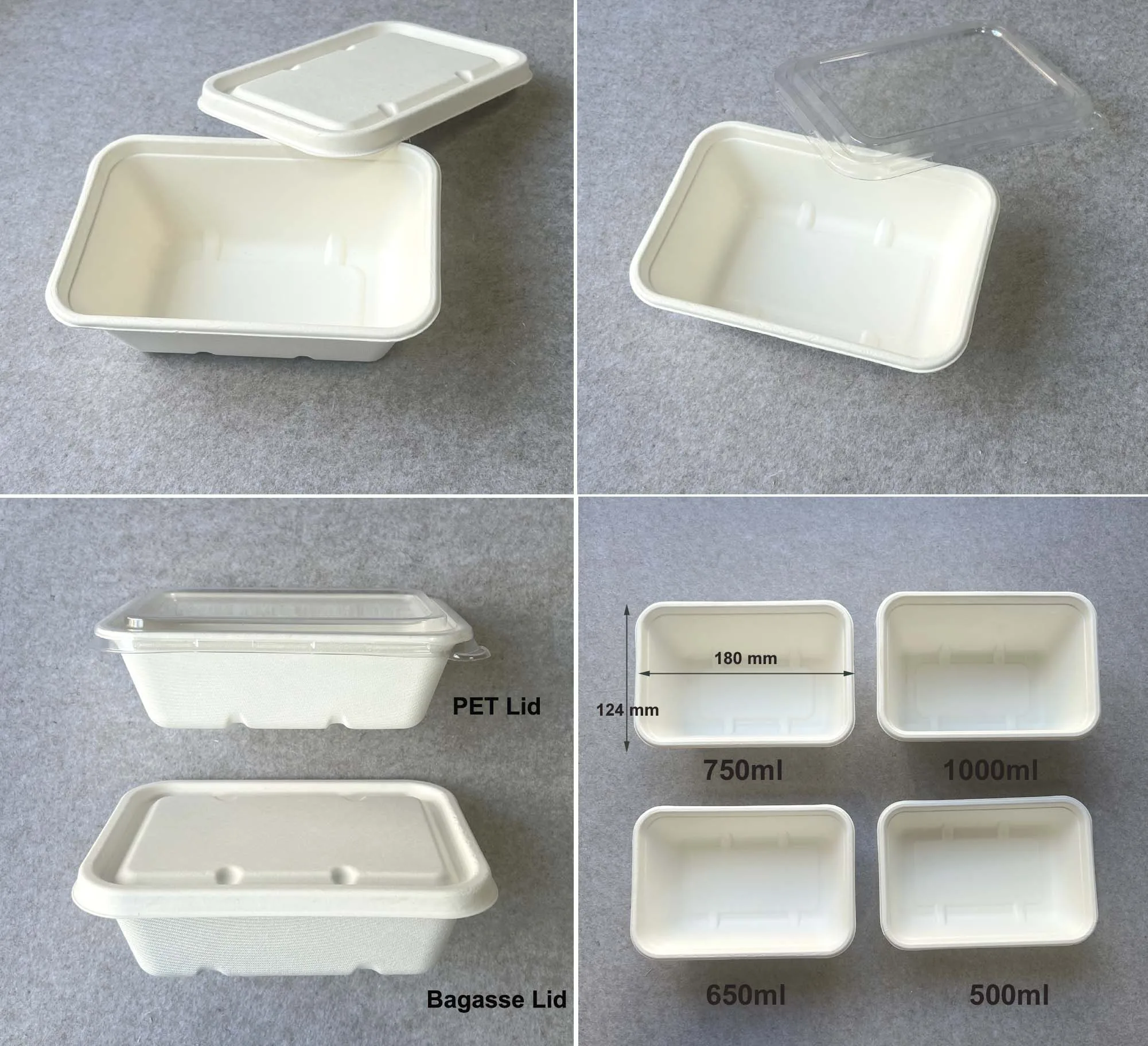
Лотки из жома — это контейнеры для пищевых продуктов из формованного волокна, изготовленные из волокна сахарного тростника. Вместо формирования плоского картонного листа в лоток, материал формуется в конечную трехмерную форму.
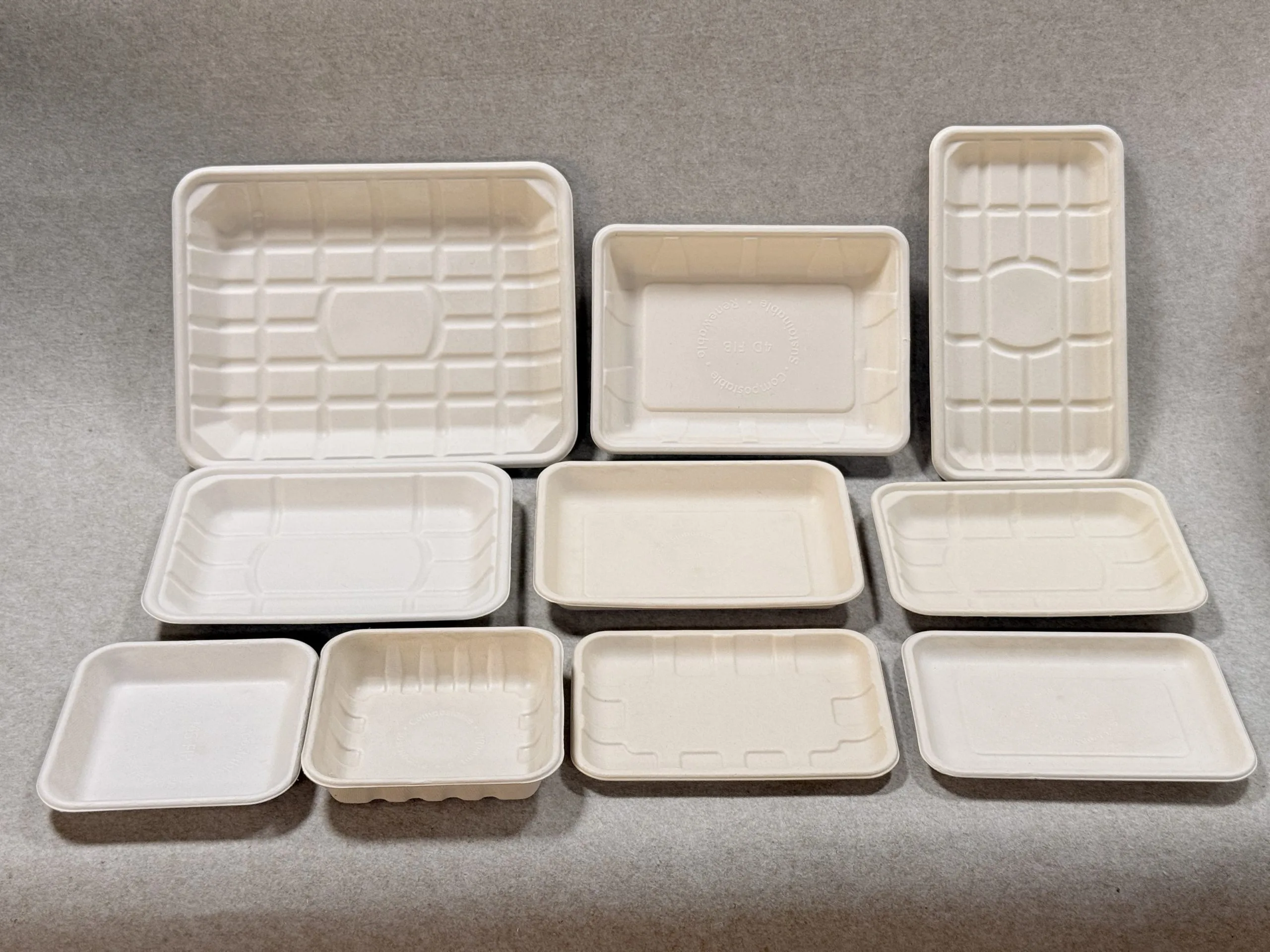
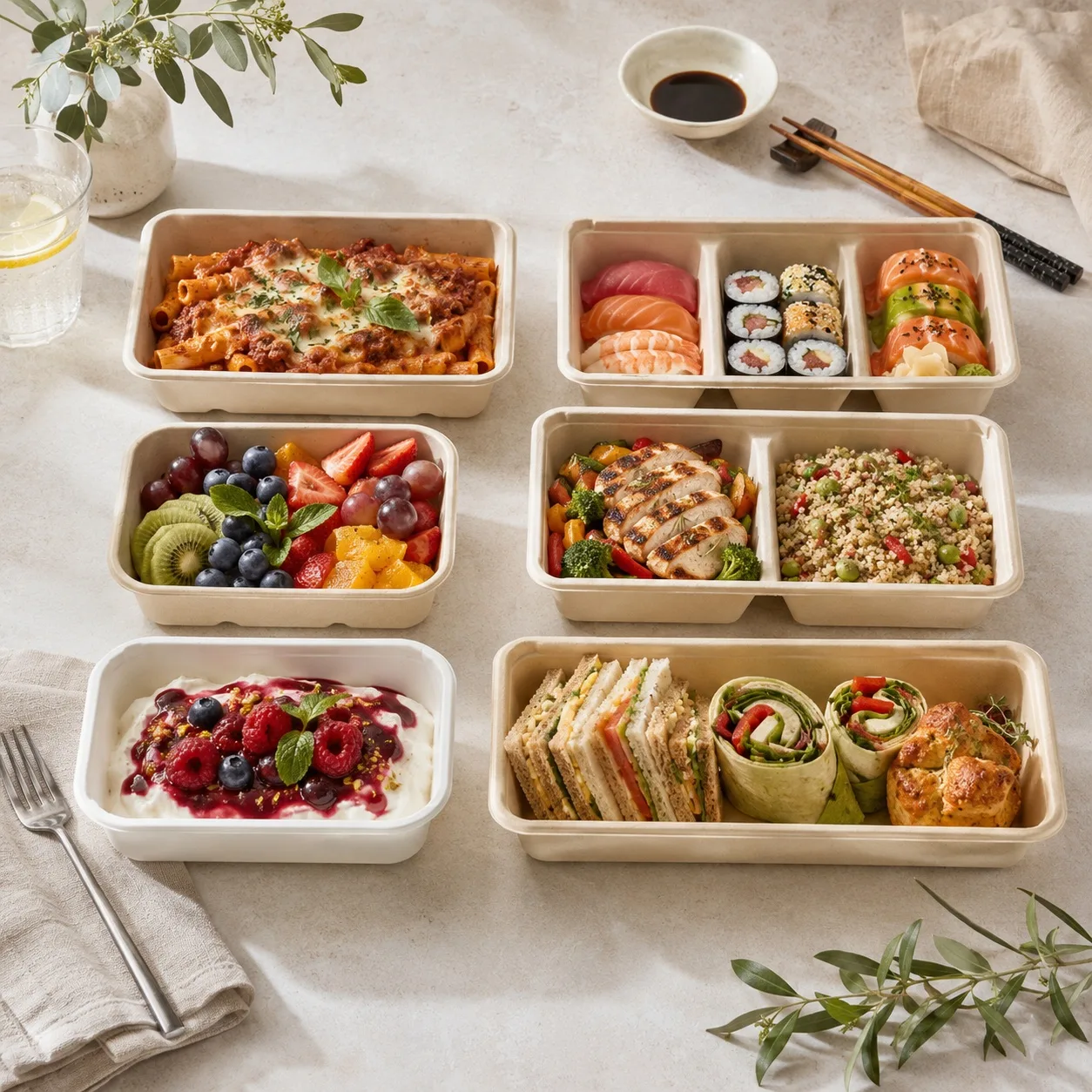
Bioleader® поставляет широкий ассортимент разработаны для удовлетворения строгих требований упаковки продуктов в супермаркетах. для общественного питания, на вынос, деликатесных блюд, кейтеринга и суши. Ассортимент включает неглубокие лотки, более глубокие лотки для еды и форматы, предназначенные для работы с подходящими крышками.
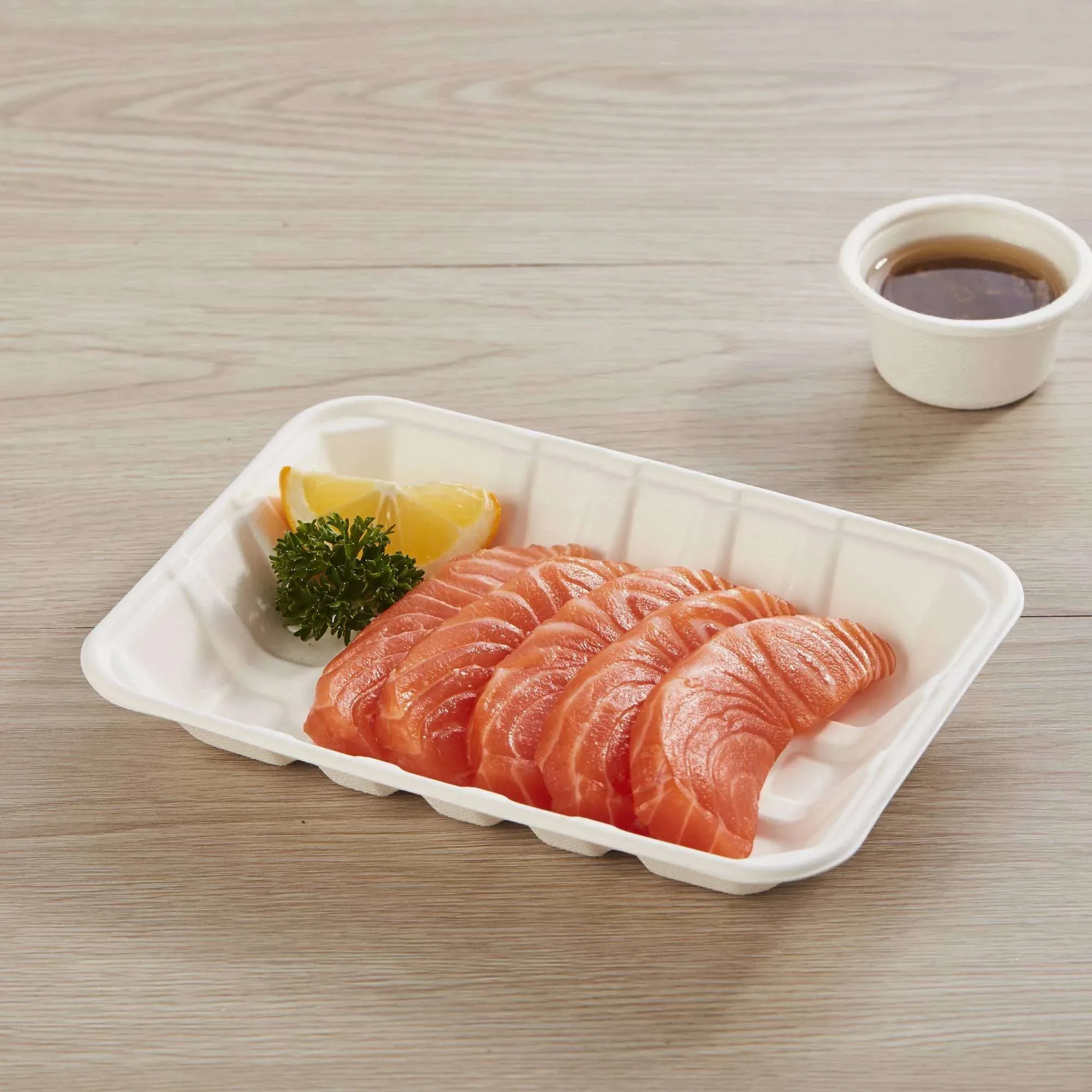
Для покупателей, специально ищущих упаковку для суши, Bioleader® также предлагает лоток для суши из жома с крышкой как формованно-волокнистая альтернатива формату крафт-картона.
Почему багасса привлекает программы, ориентированные на устойчивое развитие
Багасса обеспечивает формованную структуру на основе волокна и может поддерживать стратегии упаковки, ориентированные на компостируемость, когда конкретный продукт, конфигурация крышки, сертификация и местная система управления отходами подтверждают это утверждение.
Его также можно использовать в более широком ассортименте продукции для общественного питания, что может быть полезно для покупателей, которые хотят использовать один и тот же семейство материалов для суши, гарниров, готовых блюд, закусок и других блюд на вынос.
Однако формованное волокно не следует выбирать только потому, что оно звучит более экологично. Структурная целостность, посадка крышки, качество поверхности, масло- и влагостойкость, разделение при выемке и экспортная упаковка все еще требуют оценки. Bioleader® обсуждает эти вопросы в своем Руководство по контролю качества посуды из жома сахарного тростника.
Крафт-бумага против багассовых лотков для суши: сравнительный анализ
| Фактор для покупателя | Крафт-бумажный лоток для суши + прозрачная крышка PET | Лоток для суши из жома сахарного тростника |
|---|---|---|
| Видимость продукта | Отлично в сочетании с прозрачной купольной крышкой PET. | Зависит от конфигурации соответствующей крышки. |
| Витрина супермаркета | Отлично подходит для охлаждаемых полок, формата «возьми и иди» и розничной презентации. | Подходит там, где презентация из формованного волокна соответствует концепции розничной торговли. |
| Поверхность лотка | Ровная картонная поверхность с чистым розничным видом. | Поверхность из формованного волокна с естественной текстурой волокна. |
| Индивидуальная печать | Явное преимущество для логотипов, цветной графики, QR-кодов и многоразмерных систем брендирования. | Кастомизация отличается и чаще опирается на тиснение, этикетки, рукава или внешние компоненты брендинга. |
| Влагостойкий барьер | Стандартный крафт-лоток для суши Bioleader® использует структуру из картона с покрытием PE. | Зависит от состава формованного волокна, условий хранения продукта и спецификации продукта. |
| Использование для холодных суши | Очень хорошо подходит для охлажденных суши, сашими и розничной демонстрации. | Подходит, когда конфигурация лотка и крышки соответствует применению. |
| Более широкая универсальность для горячих блюд | Зависит от структуры бумаги, покрытия и дизайна продукта. | Багасса может поддерживать широкий спектр применений для готовых блюд, если SKU одобрен для предполагаемого использования. |
| Позиционирование компостируемости | Стандартный лоток с покрытием PE плюс крышка PET не следует рассматривать как полностью компостируемую упаковочную систему. | Более сильный потенциал, когда полная конфигурация продукта и сертификация поддерживают заявления о компостируемости. |
| Внешний вид бренда | Натуральный крафтовый вид с высоким потенциалом печати. | Натуральный вид формованного волокна. |
| Наилучшее соответствие | Сети суши-ресторанов, супермаркеты, прилавки «возьми и иди», брендированные заведения на вынос и розничная торговля. | Программы общественного питания, ориентированные на волокно, проекты, ориентированные на устойчивое развитие, и более широкие системы упаковки из формованного волокна. |
Какой лоток обеспечивает лучшую презентацию суши?
Для суши презентация не является второстепенной характеристикой упаковки. Она напрямую влияет на то, как продукт воспринимается до покупки.
Прозрачная крышка может показать:
- Расположение роллов и количество порций.
- Цвет рыбы и внешний вид свежести.
- Раскладку сашими.
- Гарниры и соусы.
- Премиальные ингредиенты.
- Организацию комбинированных наборов.
Это дает формату «крафт-бумага плюс PET» важное преимущество в средах, где покупатели выбирают продукт визуально.
Оценка розничной презентации: Если видимость продукта является одним из основных критериев покупки, крафт-бумажный лоток с правильно подобранной прозрачной крышкой PET обычно является более сильной отправной точкой. Багасса становится более привлекательной, когда состав волокна и стратегия конечного использования имеют больший вес, чем максимальная видимость продукта.
Что лучше для суши-прилавков в супермаркетах?
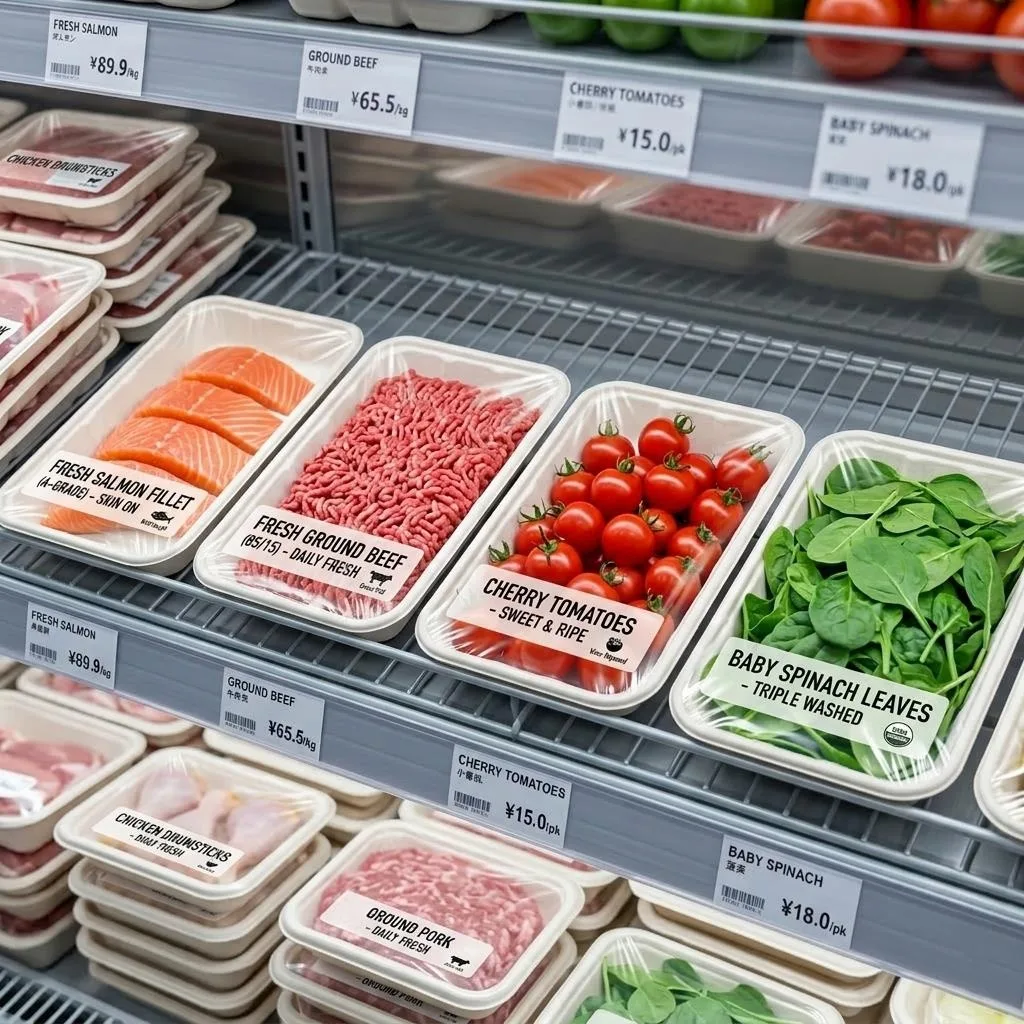
Упаковка суши для супермаркетов должна работать иначе, чем посуда для ресторанов. Продукция может готовиться партиями, перемещаться в охлаждаемые витрины, штабелироваться при пополнении запасов, маркироваться штрих-кодами и обрабатываться несколько раз до того, как покупатель приобретет ее.
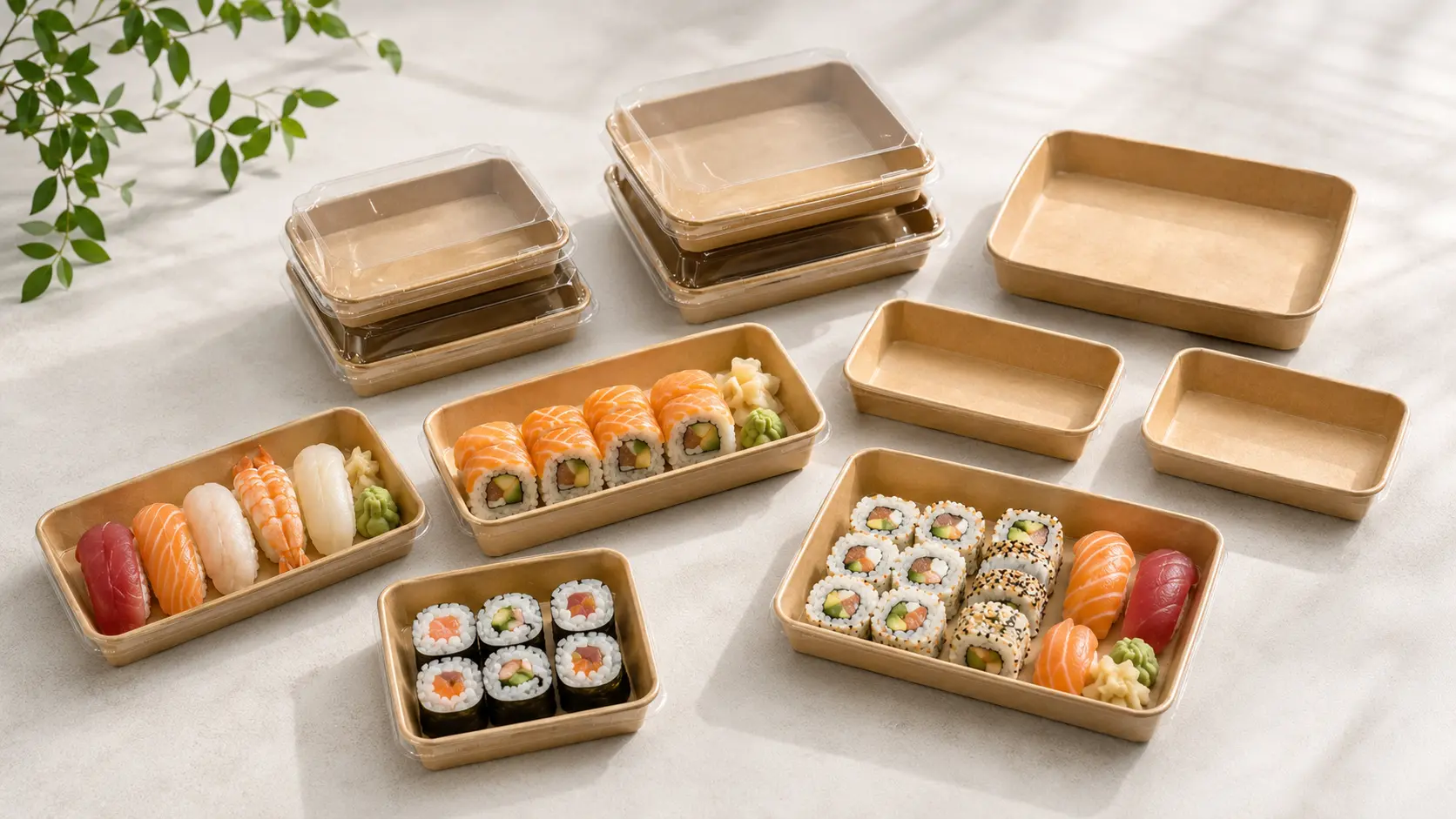
В таких условиях покупателям следует отдавать приоритет:
- Четкая видимость продукта.
- Надежная посадка крышки.
- Плоская подача.
- Легкая штабелируемость.
- Несколько размеров порций.
- Место для штрих-кода и маркировки.
- Эффективность картонной упаковки.
- Быстрая обработка персоналом.
Лотки для суши из крафт-бумаги с прозрачными крышками PET особенно хорошо подходят, когда супермаркет хочет, чтобы покупатели четко видели продукт, не открывая упаковку. Та же линейка упаковки может также поддерживать различные размеры порций в рамках единой системы визуального брендинга.
Для ритейлеров, уже использующих более широкие системы упаковки из картона, решения Bioleader® по упаковке пищевых продуктов из бумаги предоставляют дополнительные возможности для мисок, стаканов, коробок для еды и форматов на вынос, которые можно координировать с более широкой программой частных марок.
Что лучше для выноса и доставки?
Вынос и доставка меняют решение. Лоток больше не находится в основном на охлаждаемой полке; он должен выдерживать упаковку в пакет, движение, вибрацию транспортного средства и обращение покупателя.
И крафт-бумага, и багасса могут работать, но покупателям следует оценивать всю упаковку, а не только основной материал.
Лоток для суши из крафт-бумаги для доставки
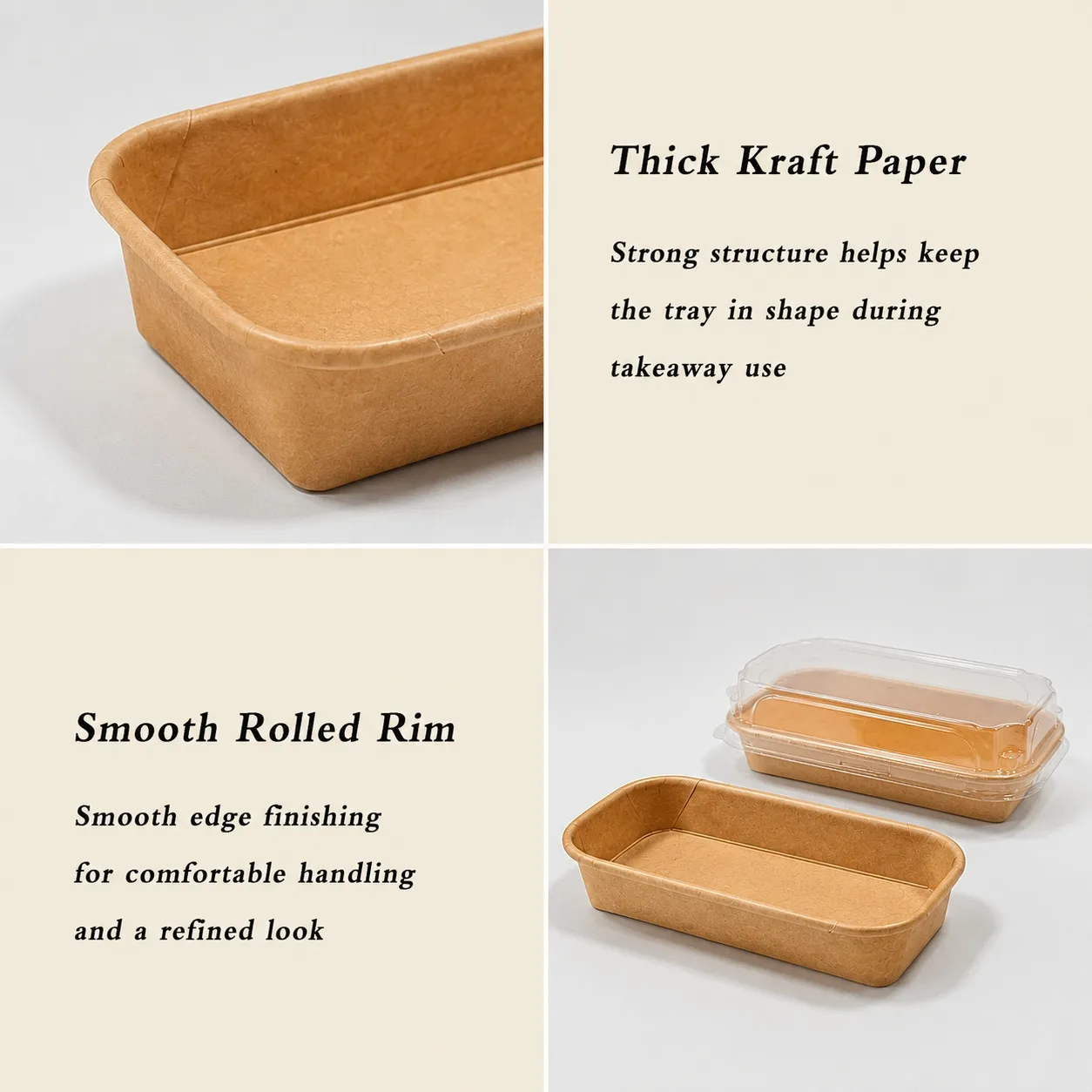 | 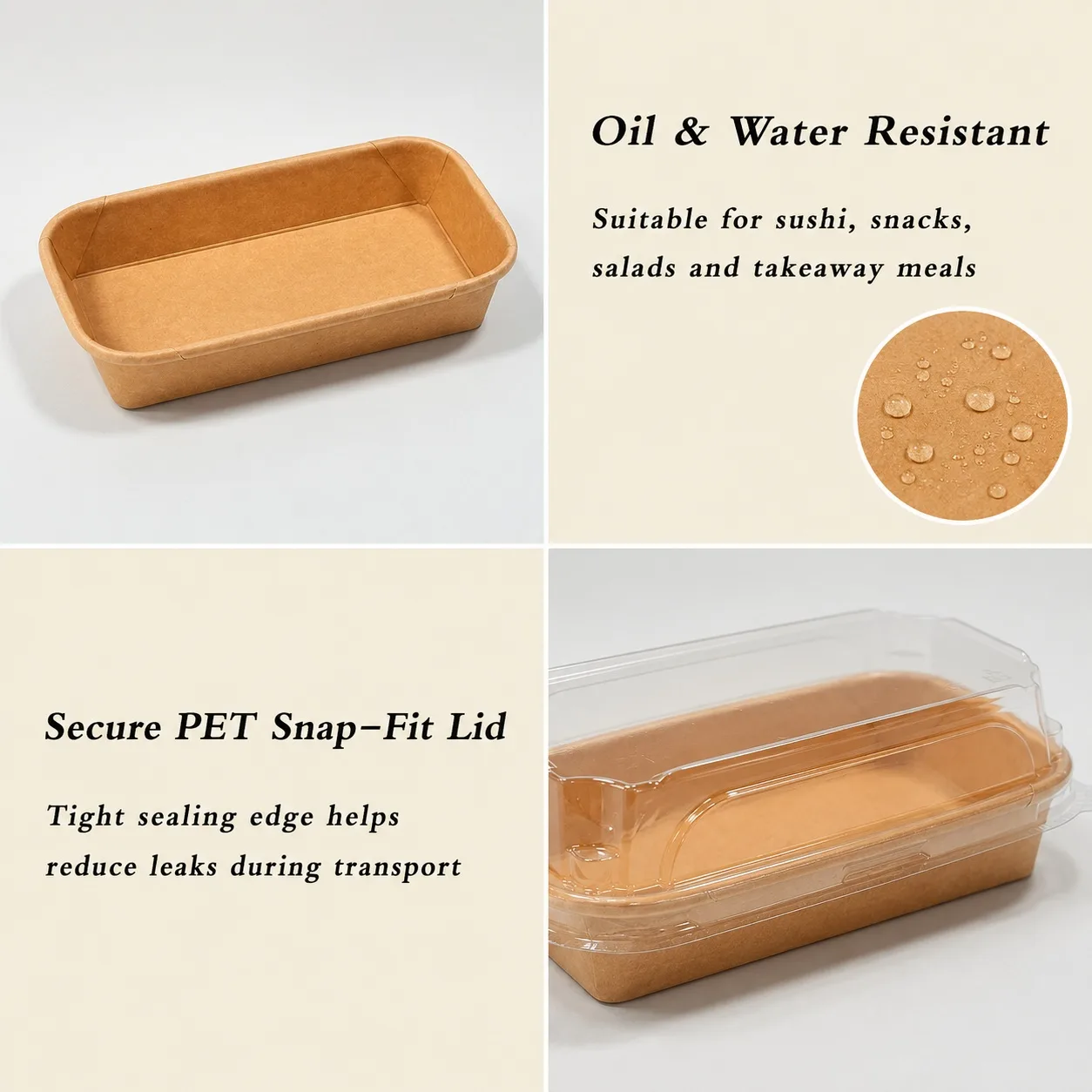 |
Преимущества заключаются в основном в презентации, видимости крышки и относительно плоском основании. Это полезно для брендированных суши-ресторанов, которые хотят, чтобы блюдо прибывало похожим на то, как оно покинуло прилавок.
Покупателю все же следует проверить:
- Прочность фиксации лотка и крышки.
- Гнется ли крышка при штабелировании.
- Соприкасается ли суши с крышкой.
- Как ведет себя упаковка при наклоне.
- Конденсат после хранения в охлажденном виде.
- Как соусы упаковываются отдельно.
Лоток для суши из багассы для доставки
Формованное волокно может обеспечить прочную структуру лотка и может подойти предприятиям, уже использующим багассу для других блюд на вынос. Однако фактические характеристики должны быть проверены на уровне SKU, особенно совместимость крышки, штабелируемость и характеристики поверхности при контакте с влажной или маслянистой пищей.
 |  |
Рекомендуемый тест образца упаковки для суши
- Упакуйте точный набор суши, запланированный для коммерческого использования.
- Закройте производственной крышкой, а не заменителем.
- Выдержите упаковку в ожидаемых охлажденных условиях.
- Сложите несколько загруженных упаковок так, как они будут обрабатываться в ресторане или супермаркете.
- Поместите упаковки в фактический пакет для доставки или розничную картонную коробку.
- Имитируйте движение при короткой доставке.
- Проверьте движение крышки, деформацию лотка, смещение пищи, конденсат и презентацию.
- Повторите тест с несколькими образцами, а не одобряйте один визуально идеальный экземпляр.
Какой материал лучше для индивидуального брендинга?
Крафт-картон имеет явное преимущество, когда сам лоток предназначен для нанесения печатной графики бренда.
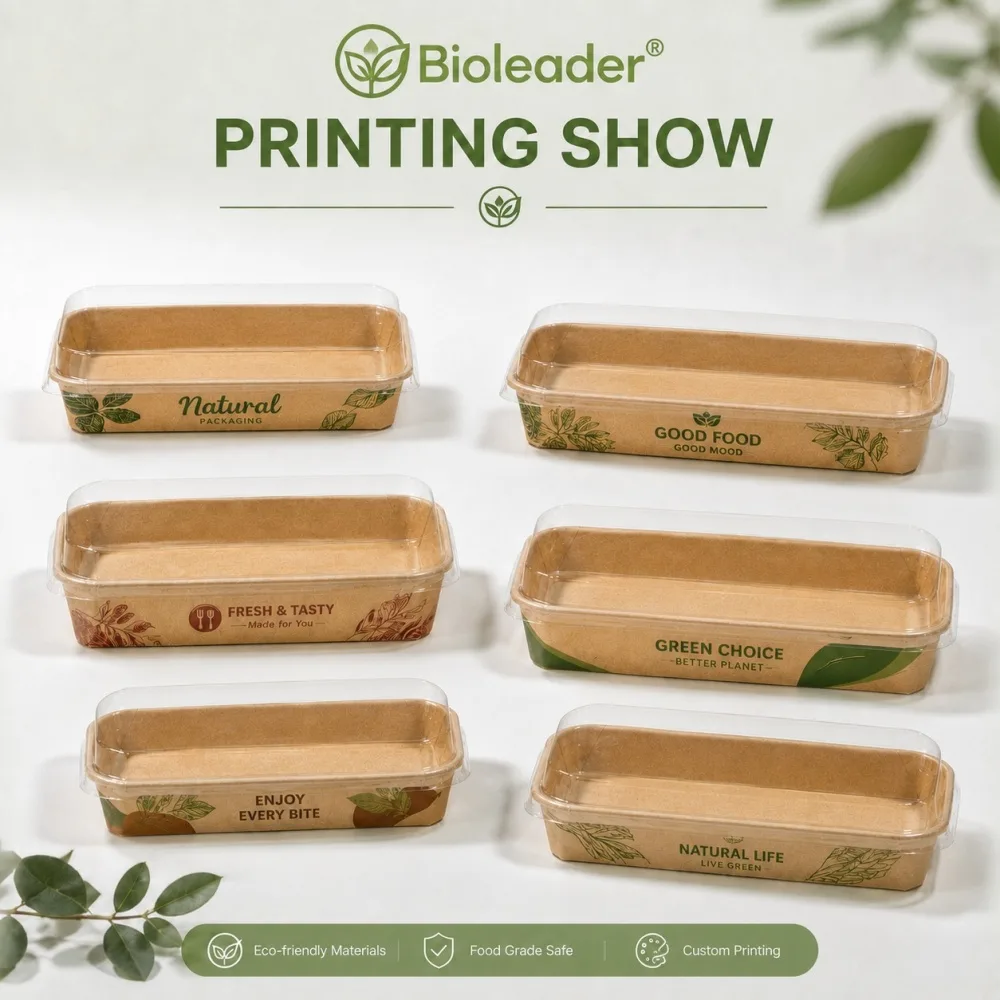
Возможные элементы брендинга включают:
- Логотипы ресторана или супермаркета.
- Одно- или многоцветное изображение.
- QR-коды.
- Графика семейства продуктов.
- Сезонные кампании.
- Дизайны частных марок.
- Разные изображения для нескольких размеров лотков.
Крафт-бумага создает теплый, естественный вид, но ее коричневая основа меняет восприятие печатных цветов. Светлые цвета и графику с низким контрастом могут выглядеть иначе, чем то же изображение, напечатанное на белом картоне.
Bioleader® объясняет более широкую взаимосвязь между цветом бумаги, изображением и производством в своем руководстве по индивидуальная печать логотипа на бумажной упаковке для пищевых продуктов. Хотя стаканы и миски используют другие технологические процессы, чем лотки для суши, тот же принцип закупки применим: макет должен оцениваться вместе с подложкой, а не разрабатываться изолированно.
Мнение производителя: Покупатели часто оценивают индивидуальную упаковку на экране компьютера. Фабрика должна оценивать ее на реальном крафт-картоне. Перед массовым производством контраст логотипа, цвет фона, площадь печати и область печати должны быть проверены на реальной высечке лотка.
Означает ли крафт-бумага автоматически компостируемость?
Нет. Это одно из самых важных различий в устойчивости для покупателей.
Стандартный крафтовый лоток для суши Bioleader® использует картон с одинарным покрытием PE и прозрачной крышкой PET. Поэтому его следует описывать как лоток на бумажной основе с пластиковым барьерным покрытием и крышкой PET, а не автоматически как полностью компостируемую упаковку для суши.
Его реальный путь утилизации зависит от:
- Покрытия лотка.
- Материала крышки.
- Загрязнения пищевыми продуктами после использования.
- Возможностей местной переработки волокна.
- Разделяются ли лоток и крышка.
- Местных правил сбора и сортировки.
Этот более широкий принцип также объясняется в руководстве Bioleader® по бумажным коробкам для еды на вынос и доставку: устойчивость упаковки на основе волокна зависит от характеристик при контакте с пищей и реалистичного обращения с отходами, а не просто от слова “бумага”.”
Означает ли багасса автоматически, что вся упаковка для суши компостируемая?
Не обязательно. Основа лотка из багассы может быть спроектирована для компостирования, но полный пакет все равно должен быть оценен.
Покупатель должен проверить:
- Точный SKU багассы.
- Соответствует ли документация по компостируемости этому продукту.
- Материал подходящей крышки.
- Изменяют ли этикетки, пленки или другие аксессуары заявление о конце жизненного цикла.
- Существует ли на целевом рынке соответствующий маршрут компостирования.
Предупреждение о заявлениях: “На бумажной основе”, “на основе волокна”, “биоразлагаемый” и “компостируемый” — не взаимозаменяемые термины. Технические спецификации закупки должны описывать фактический лоток, покрытие, крышку и применимую сертификацию, а не полагаться на широкую экологическую маркировку.
Стоимость лотков для суши из крафта и багассы: что на самом деле следует сравнивать покупателям?
Цена за единицу сама по себе не показывает общую стоимость упаковки.
Структура стоимости крафтового лотка для суши может включать:
- Картон.
- Барьерное покрытие.
- Печать.
- Высечку и формовку лотка.
- Прозрачную крышку PET.
- Внутреннюю упаковку и картонные коробки.
- Экспортную загрузку.
Структура стоимости лотка из багассы иная:
- Волокно сахарного тростника и подготовка пульпы.
- Формовка из формованного волокна.
- Сушка и обрезка.
- Требования к поверхности или устойчивости к жиру.
- Подходящая крышка.
- Упаковка и экспортная загрузка.
По этой причине профессиональные покупатели должны сравнивать стоимость полного готового комплекта, а не только цену самого лотка.
Включите логистику в сравнение
Доставка может существенно изменить результат для крупнообъемной упаковки для пищевых продуктов. Лоток с немного более низкой ценой за единицу может не оказаться дешевле после учета объема коробок и загрузки контейнера.
Прежде чем выбирать между крафтом и багассой, запросите:
- Количество штук в картонной коробке.
- Размеры картонной коробки.
- Способ упаковки лотков и крышек.
- CBM на картонную коробку.
- Расчетное количество загрузки 20ft или 40HQ.
- Упаковываются ли крышки отдельно.
- Требования к паллетам, если применимо.
Для покупателей, сравнивающих экономику упаковки из картона в более широком смысле, Bioleader® также рассматривает вопросы материалов, покрытий, эксплуатационных характеристик и закупок в своем руководстве по крафт-бумажные контейнеры для пищевых продуктов.
Матрица решений: крафтовая бумага против лотков для суши из багассы
| Приоритет | Лучшая отправная точка | Почему |
|---|---|---|
| Максимальная видимость суши | Крафт + прозрачная крышка PET | Прозрачная крышка делает еду хорошо видимой для покупателей. |
| Охлаждаемая витрина супермаркета | Крафт + прозрачная крышка PET | Привлекательная презентация, плоское основание и четкая выкладка товара. |
| Индивидуальный брендинг с печатью | Лоток из крафт-бумаги | Картон обеспечивает практичную поверхность для нанесения печати. |
| Натуральный внешний вид формованного волокна | Пищевой лоток из багассы сахарного тростника | Формованное волокно из сахарного тростника обеспечивает отчетливый внешний вид на основе волокна. |
| Программа упаковки, ориентированная на компостируемость | Багасса, при условии полной проверки упаковки | Багасса может обеспечить более сильный путь к компостированию, когда лоток, крышка и сертификация согласованы. |
| Программа брендированных суши-лотков разных размеров | Ассортимент крафтовых лотков для суши | Несколько размеров лотков могут иметь единый розничный брендинг. |
| Более широкая система формованного волокна для общественного питания | Пищевой лоток из багассы сахарного тростника | Тот же семейство материалов может использоваться для различных типов продуктов и форматов лотков. |
| Наименьшая общая стоимость | Зависит от проекта | Сравнивайте лоток, крышку, печать, MOQ, картонные коробки, загрузку и фрахт вместе. |
Коммерческое суждение: Для сетей суши и супермаркетов, где видимость продукта, премиальная презентация и брендинг с печатью являются основными приоритетами, крафтовые лотки для суши с прозрачными крышками PET часто являются более коммерчески практичным вариантом. Для покупателей, строящих систему общественного питания на основе формованного волокна или ориентированную на компостируемость, лотки из багассы могут быть более перспективным направлением.
Что импортерам следует проверить перед массовым заказом лотков для суши?
Контрольный список для покупателя
- Размеры лотка: Подтвердите внутреннее полезное пространство, а не только внешние размеры.
- Высота крышки: Проверьте, касаются ли премиальные роллы, сашими или топпинги крышки.
- Посадка крышки: Протестируйте несколько образцов на согласованность фиксации и выравнивания.
- Раскладка продуктов: Подтвердите количество роллов, нигири или кусочков сашими, которые должен вмещать лоток.
- Барьерные свойства: Тестируйте с реальным рисом, соусами и условиями охлажденного хранения.
- Штабелирование: Загружайте и штабелируйте готовые упаковки, а не только пустые лотки.
- Брендирование: Подтвердите цвет крафта, контраст логотипа, область для этикетки и метод печати до начала производства.
- Заявление о материале: Укажите отдельно картон, покрытие, состав багассы и материал крышки.
- Соответствие требованиям: Запросите документацию о контакте с пищевыми продуктами и другие соответствующие документы для конкретного SKU и целевого рынка.
- MOQ: Уточните, применяется ли MOQ для каждого размера, каждого макета или каждого печатного дизайна.
- Упаковка: Проверьте количество штук в коробке, размер коробки и схему укладки крышек.
- Загрузка контейнера: Сравнивайте общую стоимость с учетом логистики, а не только цену за единицу.
Как Bioleader® помогает покупателям выбирать упаковку для суши
Bioleader® поддерживает как крафтовый картон, так и формованное багассовое волокно, что позволяет покупателям сравнивать две разные упаковочные системы, а не быть ограниченными одним материалом.
 |  |
 |  |
Для типичного проекта упаковки суши последовательность оценки следующая:
- Определите канал продаж — суши-ресторан, супермаркет, платформа доставки, кейтеринг или дистрибьютор.
- Определите раскладку продуктов — количество роллов, расположение сашими, размер порции и высоту гарнира.
- Выберите направление упаковки — крафтовый бумажный лоток с прозрачной крышкой PET или формованный багассовый лоток.
- Проверьте совместимость крышки — посадка, высота, штабелируемость и видимость продукта.
- Рассмотрите требования к брендированию — печать, этикетки, QR-коды, макеты для частных марок и маркировка коробок.
- Протестируйте с реальным продуктом — влажность, время хранения, охлаждение и условия доставки на короткие расстояния.
- Подтвердите документацию — документация по контакту с пищевыми продуктами и материалам, соответствующая выбранному SKU.
- Сравните упаковку и загрузку — количество коробок, CBM, загрузка контейнера и влияние на стоимость перевозки.
- Утвердите образцы перед массовым производством — особенно если задействовано несколько размеров лотков или индивидуальное брендирование.
Такой подход помогает ресторанам, импортерам, дистрибьюторам и покупателям из супермаркетов выбирать упаковку на основе реальных условий эксплуатации, а не только по внешнему виду материала.
Итоговая рекомендация: крафтовая бумага или багасса для упаковки суши?
Ни крафтовая бумага, ни багасса не являются автоматически лучшим лотком для суши для каждого покупателя.
Крафтовые бумажные лотки для суши с прозрачными крышками PET особенно сильны, когда коммерческий приоритет — видимость продукта, витрина супермаркета, премиальная презентация, множество вариантов размеров и индивидуальное брендирование. Это делает их практичным выбором для сетей суши, супермаркетов, отделов готовой еды, ресторанов и программ брендированной еды на вынос.
Багассовые лотки для суши становятся более привлекательными, когда покупатели хотят систему упаковки из формованного волокна, более широкую универсальность для общепита или более сильную стратегию материалов, ориентированную на компостирование. Полная конфигурация лотка и крышки все еще должна быть проверена перед заявлениями об экологичности.
Поэтому самое сильное решение о закупке — это не “бумага или багасса?” Оно звучит так: Какая система лотков защищает суши, представляет их четко, подходит к крышке, выдерживает дистрибуцию, поддерживает бренд и соответствует стратегии конечного использования покупателя при приемлемой общей стоимости?
Bioleader® может помочь B2B-покупателям сравнить размер лотка, структуру материала, конфигурацию крышки, печать, характеристики образцов, упаковку в коробки и экспортную загрузку перед массовым производством.
Часто задаваемые вопросы: крафтовая бумага против багассовых лотков для суши
Крафтовый бумажный лоток для суши лучше, чем багассовый?
Это зависит от применения. Крафтовые бумажные лотки с прозрачными крышками PET особенно сильны для видимой розничной продажи суши, полок супермаркетов, брендированной еды на вынос и программ с несколькими размерами. Багассовые лотки могут лучше подойти для программ общественного питания из формованного волокна и покупателей, которые отдают приоритет стратегии материалов, ориентированной на компостирование.
Почему прозрачные крышки PET популярны для упаковки суши?
Суши — это очень визуальная еда, поэтому прозрачная крышка позволяет покупателям осмотреть роллы, сашими, нигири, гарниры и размер порции перед покупкой. Это особенно ценно для охлаждаемых витрин супермаркетов, отделов готовой еды и ресторанной еды на вынос. Покупателям все равно следует тестировать посадку крышки, штабелируемость и конденсат в реальных условиях эксплуатации.
Компостируются ли крафтовые бумажные лотки для суши?
Не автоматически. Стандартный крафтовый лоток для суши Bioleader® использует картон с покрытием PE и прозрачной крышкой PET, поэтому полную упаковку не следует автоматически описывать как компостируемую. Утилизация зависит от покрытия, материала крышки, загрязнения пищевыми продуктами и местной инфраструктуры сбора и переработки.
Компостируются ли багассовые лотки для суши?
Основы из багассы могут поддерживать упаковку, ориентированную на компостирование, когда конкретный SKU и применимая сертификация подтверждают это заявление. Однако покупатели также должны проверить крышку, этикетки и другие компоненты упаковки. Заявление о конечном использовании должно относиться к полной конфигурации, которая закупается, а не только к основе из багассы.
Какой лоток для суши лучше для витрины супермаркета?
Крафтовые бумажные лотки с прозрачными купольными крышками PET часто являются сильным выбором, потому что прозрачная крышка обеспечивает высокую видимость продукта, а картонная основа предлагает чистую презентацию и поверхность для брендирования. Багассовые лотки также могут работать в программах супермаркетов, где формованное волокно лучше соответствует стратегии материалов ритейлера.
Можно ли нанести индивидуальную печать на крафтовые лотки для суши?
Да. Крафтовый картон может поддерживать логотипы, фирменную графику, QR-коды, этикетки и дизайны для частных марок. Покупателям следует оценивать цветовой контраст на фактической коричневой крафтовой подложке, потому что напечатанные цвета могут отличаться от того же макета, показанного на белом экране компьютера или белом картоне.
Что покупателям следует тестировать перед заказом лотков для суши оптом?
Протестируйте фактическую порцию суши, посадку крышки, жесткость лотка, охлаждение, влажность, штабелируемость, транспортировку на короткие расстояния и финальную презентацию. Для индивидуальных проектов покупателям также следует утвердить макет, структуру материала, упаковку в коробки, количество штук в коробке и экспортную загрузку перед массовым производством.