

Quick Summary: What the EU Bamboo-zling Action Actually Means
The EU did not ban every product made from bamboo. Operation Bamboo-zling targeted plastic food-contact materials that contained bamboo powder, bamboo fiber or other unauthorised plant-based additives while often being marketed as “natural,” “eco-friendly,” “compostable” or “bamboo” tableware.
- The coordinated EU action involved 21 countries and ran for one year, ending in April 2022.
- Authorities recorded 748 cases: 644 products found on the EU market and 104 goods rejected at the border.
- 580 of the 644 products found on the EU market were sold, sometimes exclusively, online.
- The regulatory problem was not “bamboo” itself. It was the use of unauthorised bamboo and other plant fillers inside plastic food-contact materials covered by Regulation (EU) No 10/2011.
- Solid bamboo articles and genuine fiber-based materials are different material systems and should not be confused with bamboo-filled plastics.
Products sold as “bamboo cups,” “bamboo fiber plates” or “plant-based tableware” can look more natural than conventional plastic. That appearance does not tell an importer what the structural material actually is.
In the products targeted by the European Union’s Bamboo-zling enforcement action, bamboo powder or other ground plant material was used as a filler inside a plastic matrix. The finished product was therefore still a plastic food-contact material, even when the packaging emphasized bamboo, natural fibers or environmental claims.
This distinction remains relevant in 2026 because the coordinated action has ended, but national competent authorities continue controls. The underlying EU food-contact rules also remain in force.
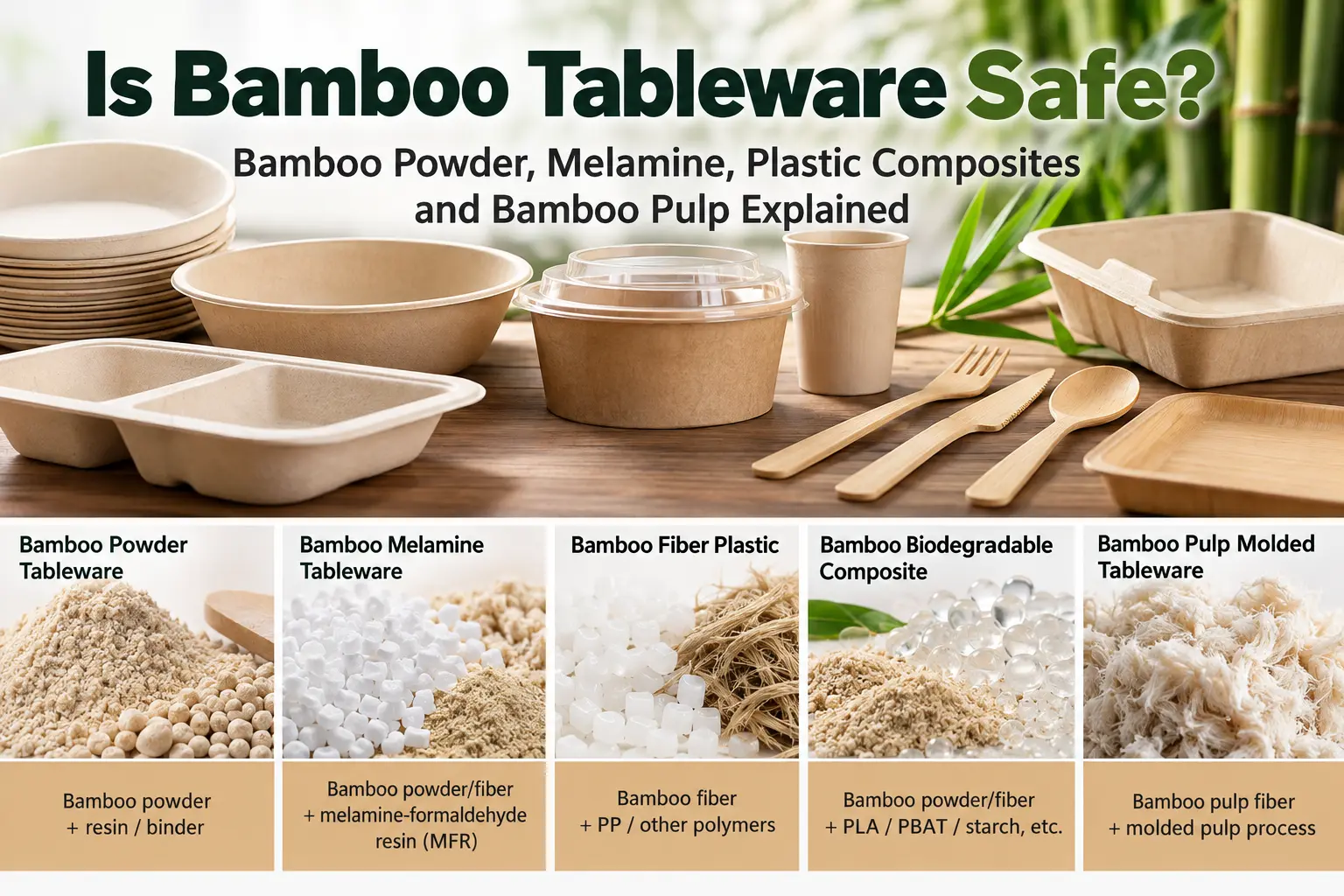
Material scope matters: Bamboo-filled melamine or other plastic composites should not be confused with solid bamboo utensils or bamboo-pulp molded products. For a detailed breakdown of bamboo powder, bamboo melamine, bamboo fiber plastic, biodegradable composites and bamboo pulp, see Is Bamboo Tableware Safe?

1. What Was Operation Bamboo-zling?
Operation Bamboo-zling was a coordinated enforcement action led by the European Commission together with the EU Food Fraud Network, national food-safety authorities and customs authorities. Its purpose was to stop the illegal import, trade and advertising of plastic food-contact materials containing bamboo or other unauthorised plant-based additives.
The coordinated action lasted one year and ended in April 2022. It involved 21 participating countries. The end of the coordinated reporting period did not make the affected products legal: the European Commission states that competent national authorities continue surveillance and enforcement.
The Official Results
| Official Finding | Result | What It Means for Importers |
|---|---|---|
| Total notified cases | 748 cases | The issue was large enough to trigger coordinated EU-level enforcement. |
| Products found on the EU market | 644 cases | Controls were not limited to customs; products already being sold were also targeted. |
| Goods rejected at the EU border | 104 cases | Material composition can become an import-control issue before products enter the market. |
| Products sold online | 580 of the 644 market products | Online listings and environmental marketing claims do not replace regulatory documentation. |
| Main source noted by the Commission | A majority of illegal products came from China | Chinese exporters serving the EU need particularly clear material declarations and SKU-level compliance evidence. |
The coordinated action ended; the legal issue did not. EU authorities can still identify, withdraw or reject plastic food-contact materials containing unauthorised bamboo or other plant-based additives.
A More Accurate Timeline
| Period | Development | Why It Matters |
|---|---|---|
| 2019 | EFSA updated its assessment of untreated wood flour and fibers used as additives in plastic food-contact materials. | EFSA concluded that plant-derived fillers cannot simply be assumed to be inert; composition, processing and migration require appropriate assessment. |
| May 2021–April 2022 | The EU coordinated Bamboo-zling enforcement action operated across 21 participating countries. | Authorities targeted plastic FCMs containing unauthorised bamboo and other plant-based additives. |
| November 2022 | The European Commission published detailed Q&A information and results from the action. | The Commission clarified the difference between illegal bamboo-filled plastic FCMs and articles genuinely made from bamboo. |
| 2022–2026 | The coordinated action ended, but Member State authorities continued controls. | Importers should not treat Bamboo-zling as an expired or historical-only issue. |
| 2026 | Food-contact packaging is also operating under the application of the EU Packaging and Packaging Waste Regulation (PPWR), including PFAS restrictions from 12 August 2026. | PPWR adds packaging requirements but does not replace the EU food-contact-material rules that underpinned Bamboo-zling. |
2. Why Was Bamboo Powder in Plastic Foodware a Legal Problem?
The key regulation is Commission Regulation (EU) No 10/2011 on plastic materials and articles intended to come into contact with food.
Plastic food-contact materials covered by the Regulation can only use substances permitted under the applicable framework. Bamboo powder and the other plant-based fillers targeted during Bamboo-zling were not authorised for this use under the Union list.
That means the central legal problem was not that regulators considered every natural fiber dangerous. The problem was more specific:
an unauthorised plant material was intentionally incorporated into a plastic food-contact structure.
Why “Natural” Is Not a Regulatory Category
A plant can contain many naturally occurring low-molecular-weight substances. Grinding a plant into powder and incorporating it into a polymer does not automatically establish that those constituents are inert or that their migration into food has been assessed.
EFSA’s 2019 scientific opinion on untreated wood flour and fibers is relevant here. EFSA concluded that wood itself could not simply be considered inert and that safety depends on factors such as species, origin, processing, treatment and migration. EFSA stated that this case-by-case logic also applies to other plant materials.
For an importer, this leads to a simple rule:
A natural ingredient does not bypass food-contact-material law. If bamboo powder is added to a plastic food-contact material, the finished structure must comply with the rules applicable to that plastic material and its intentionally added substances.
3. Bamboo-Plastic Foodware Is Not the Same as Solid Bamboo
This distinction is essential because “bamboo tableware” can describe several unrelated material systems.
| Product Type | Typical Structure | How It Should Be Evaluated |
|---|---|---|
| Solid bamboo cutlery or utensils | Natural bamboo forms the structural body | Not the bamboo-filled plastic targeted by Bamboo-zling; general food-contact safety requirements still apply. |
| Bamboo pulp molded fiber | Cellulose fibers form an interlocked molded-fiber structure | Evaluate fiber composition, additives, coatings, barriers and finished-product food-contact requirements. |
| Bamboo powder + melamine-formaldehyde resin | Bamboo is filler inside an MFR plastic matrix | This is the type of structure that generated major EU regulatory and migration concerns. |
| Bamboo fiber + PP or another polymer | Plant fiber is incorporated into a plastic matrix | Still a plastic composite; the plant content does not turn the polymer into a non-plastic material. |
| Bamboo + biodegradable polymer blend | Bamboo filler combined with PLA, PBAT, starch or another polymer system | Food-contact compliance and compostability must be verified separately for the complete formulation. |
For a full material-level analysis, including production methods, binders and heat-use questions, refer to Bioleader®’s bamboo tableware safety guide.
If the purchasing decision is between genuine bamboo products and molded sugarcane fiber rather than bamboo-plastic composites, see the separate comparison of Bamboo vs. Sugarcane Bagasse Tableware.
4. What Are the Food-Safety Concerns?
The European Commission identifies accelerated degradation of certain plastic structures as one concern when unauthorised bamboo or other ground plant fillers are incorporated. In melamine-formaldehyde resin products, degradation can contribute to migration of melamine and formaldehyde into food.
What the EU Actually Found
The often-quoted migration figures in this case need careful interpretation.
The European Commission documented one bamboo-fiber coffee-cup sample manufactured in China in which laboratory testing detected melamine migration at 3.5 times and formaldehyde migration at 25 times the applicable maximum permitted levels.
Those numbers describe a documented sample. They should not be presented as the migration rate of every bamboo-plastic product.
What BfR Says About Melamine-Formaldehyde Tableware
The German Federal Institute for Risk Assessment (BfR) explains that melamine-formaldehyde resin is a hard plastic and that fillers are used to obtain desired material properties. Bamboo fibers were among the alternative fillers used in products marketed as “bamboo ware.”
BfR reports that melamine-formaldehyde tableware can release melamine and formaldehyde under demanding use conditions and that very hot foods can increase the relevance of migration. From BfR’s perspective, MFR tableware is not suitable for contact with hot liquid foods such as coffee, soup or infant formula and should not be used in microwave ovens.
Risk wording matters: The European Commission does not describe normal use of every bamboo-labelled product as an acute poisoning event. Its concern is that continual exposure to elevated migration levels can create a health concern. Buyers should therefore evaluate the exact product structure rather than using either “bamboo is toxic” or “bamboo is natural, so it is safe” as a shortcut.
5. The Legal Framework Importers Should Understand
| Rule | What It Covers | Relevance to Bamboo-Plastic Foodware |
|---|---|---|
| Regulation (EC) No 1935/2004 | General EU framework for materials and articles intended to come into contact with food | Food-contact materials must not transfer constituents to food in amounts that could endanger health or cause unacceptable changes. |
| Regulation (EU) No 10/2011 | Specific rules for plastic food-contact materials | Plastic FCMs must follow the applicable Union list and migration requirements. The bamboo fillers targeted by Bamboo-zling were not authorised for this use. |
| Commission Regulation (EC) No 2023/2006 | Good Manufacturing Practice for food-contact materials | Manufacturing, quality assurance, quality control and documentation must be managed under GMP requirements. |
| Regulation (EU) 2025/40 — PPWR | Packaging and packaging waste requirements | Applies additional packaging rules. From 12 August 2026, food-contact packaging is also subject to PPWR PFAS concentration limits. PPWR does not replace Regulation (EU) No 10/2011. |
Food-Contact Compliance Is Not the Same as Compostability
This was one of the weaknesses in many older discussions about bamboo-plastic products. Food-contact safety and compostability are separate questions.
EN 13432, ASTM D6400 or a compostability certification does not replace EU food-contact compliance. Likewise, passing a food-contact migration test does not automatically prove that a product is compostable.
Buyers evaluating biodegradable packaging should keep four separate questions apart:
- Is the material legally suitable for food contact?
- Does the finished product meet the claimed compostability standard?
- Will the destination-market composting system accept that product category?
- Does the product meet other packaging requirements such as PFAS restrictions?
For the difference between certification and real disposal infrastructure, see Bioleader®’s analysis of compostable packaging and composting facility acceptance.
6. Importer Compliance Checklist for Bamboo and Plant-Filled Foodware
Before approving a supplier or sample, check the following:
- Identify the complete material structure. “Bamboo fiber” is not enough. Ask whether the structural matrix is melamine-formaldehyde resin, PP, PLA, another polymer, solid bamboo or molded pulp.
- Determine whether bamboo is the body material or only a filler. This changes the regulatory pathway.
- Request formulation-level information. Confirm the polymer, resin, filler, pigments, additives, coatings and relevant functional treatments.
- Check the applicable EU food-contact rules. For plastic FCMs, verify that intentionally added substances comply with Regulation (EU) No 10/2011.
- Request the appropriate Declaration of Compliance where required. Documentation should be linked to the supplied material and product rather than a generic factory certificate.
- Review migration testing against the intended use. A cold-food test does not automatically support repeated contact with hot coffee, soup or oily food.
- Verify the exact SKU. The sample, test report and mass-produced product should use the same material structure.
- Check the marketing claims separately. “Natural,” “bamboo,” “plant-based,” “plastic-free,” “biodegradable” and “compostable” describe different properties.
- For packaging placed on the EU market, review PPWR requirements. This includes the food-contact packaging PFAS restrictions applicable from 12 August 2026.
7. What Should Buyers Use Instead of an Undefined “Bamboo Composite”?
The answer is not that every foodservice application should move to one replacement material. The safer procurement approach is to use a material whose structure, use conditions and compliance pathway can be clearly identified.
Solid Bamboo and Properly Specified Bamboo Products
The European Commission itself distinguishes plastic FCMs containing unauthorised bamboo additives from products made genuinely from bamboo. Solid bamboo cutlery and other natural bamboo articles therefore should not be placed in the same category as bamboo powder mixed into plastic.
Buyers should still examine coatings, adhesives, surface treatments, food-contact conditions and destination-market requirements.
Sugarcane Bagasse Molded Fiber
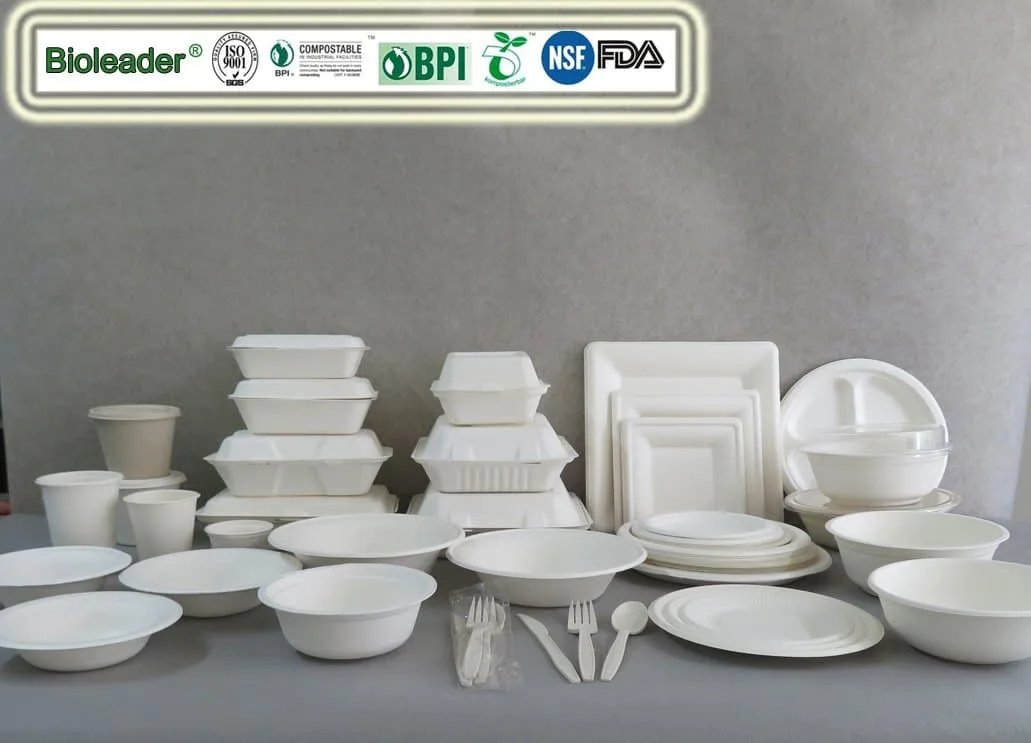
Sugarcane bagasse tableware uses pulp molding to form plates, bowls, trays and food containers from plant fiber. The structural body does not require a conventional plastic resin matrix simply to hold loose plant powder together.
That does not mean every bagasse product is automatically compliant with every food-contact, PFAS or compostability requirement. Buyers should still verify the exact barrier formulation, food-contact documentation, temperature conditions and finished SKU.
Paper and Other Fiber-Based Food Packaging
Paperboard, molded fiber and other cellulose-based packaging may provide clearer material pathways for applications where buyers want to reduce reliance on conventional plastic bodies. Coatings, laminations, printing inks and barrier systems still need to be evaluated as part of the finished food-contact structure.
PLA and Other Bioplastics
PLA is a plastic material even though its feedstock can be bio-based. It can be suitable for selected food-packaging applications, especially lower-temperature and cold-use formats, but buyers should not treat “bio-based,” “food-contact compliant” and “compostable” as interchangeable claims.
For compostability and market-specific regulatory requirements, see Bioleader®’s global compostable packaging regulations guide.
Bioleader® Material Selection Approach
For export projects, Bioleader® recommends identifying the structural material before comparing price or environmental claims. Bagasse molded fiber, paper packaging and other material systems should be evaluated against the intended food, temperature, barrier requirement, end-of-life claim and destination-market documentation. A plant-based name should never substitute for a complete technical specification.
8. What PPWR Changes in 2026 — and What It Does Not
The EU Packaging and Packaging Waste Regulation, Regulation (EU) 2025/40, now forms an important additional layer of packaging compliance.
From 12 August 2026, food-contact packaging placed on the EU market is subject to PPWR limits for per- and polyfluoroalkyl substances (PFAS). This is particularly relevant for grease-resistant food packaging and molded-fiber barrier systems.
However, PPWR should not be used to rewrite the Bamboo-zling issue.
PPWR does not say that all food packaging must be compostable to enter the EU market, and it does not make unauthorised bamboo-filled plastics compliant. Bamboo-plastic legality remains a food-contact-material issue under the relevant EU FCM framework, while PPWR adds separate packaging requirements.
Buyers working with molded-fiber or other food packaging should separately review PFAS-free food packaging requirements and the wider EU PPWR compliance roadmap.
9. What Operation Bamboo-zling Means for the Eco Tableware Industry
The most important lesson is not that bamboo is a bad material. It is that environmental positioning cannot replace material disclosure.
A food-contact product can contain a renewable ingredient and still be a plastic composite. A product can look natural without being plastic-free. A material can be bio-based without being compostable. And a compostability certificate cannot correct an unauthorised food-contact formulation.
For manufacturers, importers and distributors, the commercial implications are straightforward:
- Material names need to become technical specifications.
- Food-contact evidence needs to match the finished SKU.
- Online marketplace descriptions should not be treated as compliance documents.
- Environmental claims should describe properties that can actually be demonstrated.
- Destination-market regulations should be checked before mass production and shipment.
Manufacturer Insight
For export orders, “contains bamboo” is not a useful approval specification. A buyer should know whether the product is solid bamboo, bamboo pulp, bamboo powder in melamine resin, bamboo fiber in PP, or another composite. Only after the structure is clear can the buyer evaluate food-contact documents, heat conditions, compostability claims, PFAS requirements and import risk.
10. Buyer Decision: How to Avoid Another Bamboo-zling Problem
The purchasing lesson from Bamboo-zling is broader than one material.
If a supplier markets tableware as “eco,” “natural,” “plant fiber,” “bamboo,” “wheat straw,” “rice husk” or another plant-based composite, buyers should not approve the item from the marketing name alone.
Ask three questions first:
- What forms the structural body of the product?
- What substances have been intentionally added to that structure?
- What product-specific evidence supports food contact, environmental and destination-market claims?
If those questions cannot be answered clearly, the material specification is not ready for commercial approval.
Operation Bamboo-zling was not a ban on bamboo itself. It was an enforcement response to plastic food-contact materials containing unauthorised bamboo and other plant fillers, often accompanied by misleading environmental claims.
For EU buyers in 2026, the correct response is not simply to replace the word “bamboo” with another green material label. Buyers should identify the full structure, verify food-contact compliance, separate compostability from safety, check PPWR requirements where relevant, and require documentation that matches the finished SKU.
Bioleader® supports international foodservice buyers sourcing clearly specified molded-fiber, paper and compostable packaging systems with material, application and destination-market requirements defined before sample approval.
Frequently Asked Questions About EU Bamboo-Plastic Foodware
What is Operation Bamboo-zling?
Operation Bamboo-zling was a one-year EU coordinated enforcement action targeting plastic food-contact materials containing unauthorised bamboo and other plant-based additives. Twenty-one countries participated. The coordinated action ended in April 2022, but EU Member State authorities continue controls on products that do not comply with applicable food-contact-material rules.
Did the EU ban all bamboo tableware?
No. The EU action specifically targeted plastic food-contact materials containing unauthorised bamboo or other plant-based additives. Products genuinely made from bamboo, such as solid bamboo cutlery, are a different material category. They still need to comply with applicable general food-contact requirements, but they should not be confused with bamboo powder mixed into plastic resin.
Why is bamboo powder not allowed as a filler in EU plastic food-contact materials?
The bamboo fillers targeted during Bamboo-zling were not authorised under the Union list applicable to plastic food-contact materials under Regulation (EU) No 10/2011. Natural plant origin does not automatically prove safety. Plant composition, processing and migration need to be assessed rather than assuming the material is inert.
Can bamboo-plastic tableware release melamine or formaldehyde?
Some bamboo-filled melamine-formaldehyde products have shown excessive migration. The European Commission documented one bamboo-fiber coffee-cup sample in which melamine migration reached 3.5 times and formaldehyde 25 times the applicable maximum permitted levels. These figures relate to a specific tested sample and should not be generalized to every bamboo-labelled product.
How can an importer tell whether a bamboo product contains plastic?
Visual inspection can provide clues but is not enough for commercial approval. Importers should request a full material declaration showing whether the product is solid bamboo, bamboo pulp, melamine-formaldehyde resin, PP, PLA or another polymer system. The resin or structural matrix matters more than the percentage of bamboo printed on the packaging.
What documents should EU importers request?
Importers should request the material composition, relevant Declaration of Compliance where required, migration test reports appropriate to the intended use, information on additives and coatings, SKU-level traceability and evidence supporting any compostability or environmental claims. Documentation should correspond to the actual product being supplied rather than a generic factory certificate.
Does EN 13432 certification make bamboo-plastic tableware legal for food contact?
No. EN 13432 addresses packaging recoverable through composting and biodegradation under specified conditions. It does not replace food-contact-material requirements. A product must independently meet the applicable food-contact rules, and any compostability claim should be supported separately for the finished article.
Does the EU PPWR change the Bamboo-zling rules?
PPWR adds packaging requirements but does not replace the EU food-contact framework that applies to bamboo-filled plastics. From 12 August 2026, food-contact packaging is also subject to PPWR PFAS concentration limits. Buyers therefore need to evaluate food-contact composition, packaging regulation and environmental claims as separate compliance layers.
What alternatives can foodservice buyers consider?
The correct alternative depends on the application. Options can include genuine bamboo products, bamboo-pulp or other molded-fiber packaging, sugarcane bagasse, paper-based food packaging and properly specified bioplastics. Buyers should compare temperature, food type, barrier requirements, end-of-life claims and destination-market documentation instead of selecting materials only from an “eco-friendly” label.
References
- European Commission — Bamboo-zling: EU Enforcement Action on Plastic Food Contact Materials Made of Bamboo Powder.
- European Parliament and Council — Regulation (EC) No 1935/2004 on Materials and Articles Intended to Come into Contact with Food.
- European Commission — Commission Regulation (EU) No 10/2011 on Plastic Materials and Articles Intended to Come into Contact with Food.
- European Commission — Commission Regulation (EC) No 2023/2006 on Good Manufacturing Practice for Food-Contact Materials.
- EFSA Panel on Food Contact Materials, Enzymes and Processing Aids — Update of the Risk Assessment of “Wood Flour and Fibres, Untreated” (FCM No 96), EFSA Journal, 2019.
- German Federal Institute for Risk Assessment (BfR) — Questions and Answers on Tableware and Kitchen Utensils Made of Melamine-Formaldehyde Resin.
- European Union — Regulation (EU) 2025/40 on Packaging and Packaging Waste.
- European Commission — 2026 Guidance on Regulation (EU) 2025/40, Including Food-Contact Packaging PFAS Requirements.