Actionable coverage of Bioleader Eco Packaging: eco-friendly, biodegradable, compostable materials, performance data, and compliance under EN13432 & ASTM D6400. Includes BPI/TÜV references and Food-Contact Tested guidance for safe deployment. Buyer-focused: manufacturer insights, bulk/wholesale buying playbooks, OEM/ODM customization tips, full size range selection.
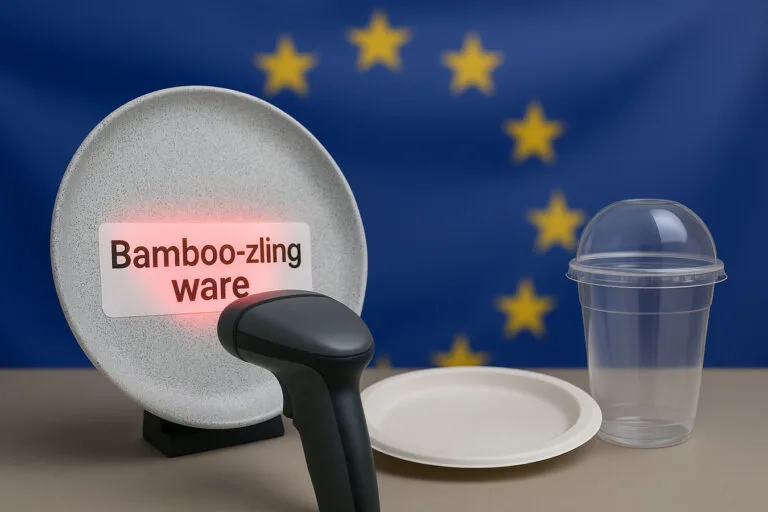
“Eco-friendly” isn’t a label — it’s a legal and scientific responsibility. When European inspectors began testing tableware branded as “bamboo fiber cups” or “eco bamboo plates,” they found not harmless plant fiber, but illegal mixtures of plastic polymers and bamboo powder. That discovery triggered one of the EU’s most far-reaching coordinated actions in food safety — Operation Bamboo-zling — and sent shockwaves through the global packaging industry.
FAQ of Bioleader's Eco-friendly Disposable Tableware
FSC-certified Wood Paper Materials: Kraft Paper and White Cardboard Paper
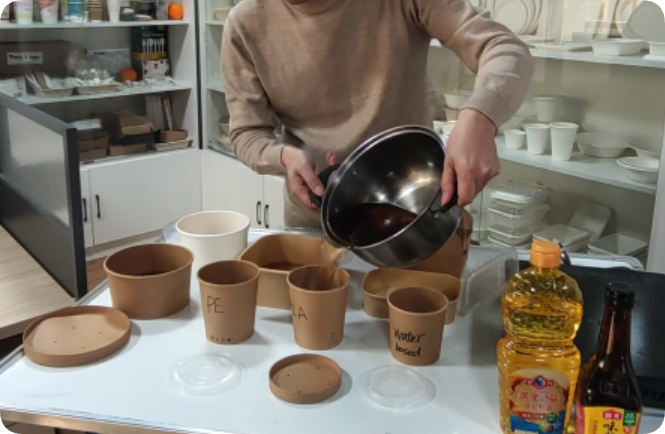
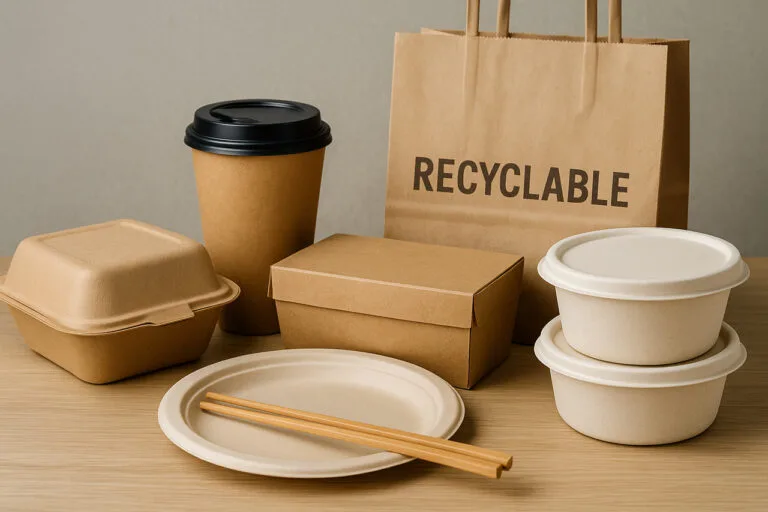
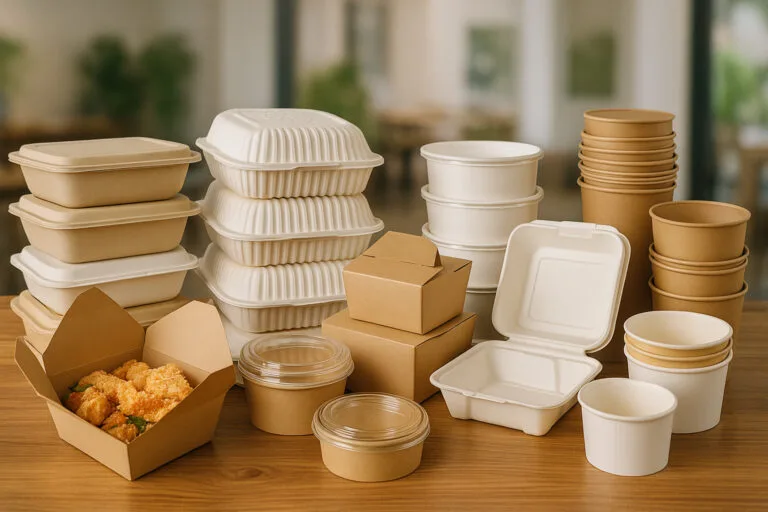
Our to go bowls with lids are made from two main types of materials: Kraft paper and white cardboard paper. Kraft paper is brown and more coarse than most papers and has high toughness and some water-resistant properties which make it good for holding medium-to-heavy and medium-hot food items. Conversely, the white cardboard paper provides an aesthetic appeal even as it remains tough. Both of these materials can be recycled and are environmentally friendly – a fact that helps in the packaging design that conforms to the current green principles and yet maintains the needed standard.
Material: Kraft Paper and White Cardboard Paper
Our eco-friendly disposable bowls contain primarily 2 materials that are used to make the bowls that are kraft paper and white cardboard paper — Bioleader Eco Packaging. Both of the materials are durable and environmentally friendly. Kraft paper has a coarse natural appearance while white cardboard paper has a smooth, sleek surface. All of these materials are biodegradable which ensures compliance with the highest environmental requirements in product manufacture.
Can I put them in the microwave?
Definetely, our takeaway bowls with lids are microwave safe hence this allows customers to reheat most of the meals without any structural compromises of the bowl — Bioleader Eco Packaging.
1.2. The Enforcement Timeline
EU Bamboo Zling Timeline 2019 2025 Year Milestone Regulatory Context 2019 First alerts on “bamboo cups” issued by Germany, Netherlands National surveillance results show high migration levels 2020–2021 EFSA risk assessments confirm unauthorized use of plant powders in plastics Basis for EU-wide investigation 2022 Launch of “Operation Bamboo-zling” Joint enforcement by 21 Member States 2023 Massive online recall campaigns Hundreds of products removed from e-commerce 2024 Publication of EU coordinated results — call for full market withdrawal Transition phase toward certified compostables 2025 Implementation phase for reinforced inspections under PPWR draft Alignment with Extended Producer Responsibility (EPR) The name “Bamboo-zling”—a play on “bamboozling”—aptly summarized the deception of eco-claims without scientific authorization. 2. The Hidden Dangers Behind Bamboo-Powder Plastics
2.2. Health & Environmental Impacts
Formaldehyde → classified as Carcinogen Category 1B under (EC) No 1272/2008. Melamine → linked to renal crystal formation in humans. Migration potential → increases exponentially above 70 °C , Bioleader Eco Packaging. Environmental persistence → non-compostable, contaminates recycling streams.