Sugarcane Fiber Vs Pla Basics For Purchasing Teams | Bioleader® Guide

Actionable coverage of sugarcane fiber vs pla: eco-friendly, biodegradable, compostable materials, performance data, and compliance under EN13432 & ASTM D6400. Includes BPI/TÜV references and Food-Contact Tested guidance for safe deployment. Buyer-focused: manufacturer insights, bulk/wholesale buying playbooks, OEM/ODM customization tips, full size range selection.
sugarcane fiber vs pla — Quick Summary
  • Items displayed (articles): 12
  • Last updated: 2025-12-06
  • Includes test data, compliance guides, buyer FAQs, and real-world use cases.

Editor’s Picks: Top Sugarcane Fiber Vs Pla Guides 2026

FAQ of Bioleader's Eco-friendly Disposable Tableware

Durable and Reliable Performance

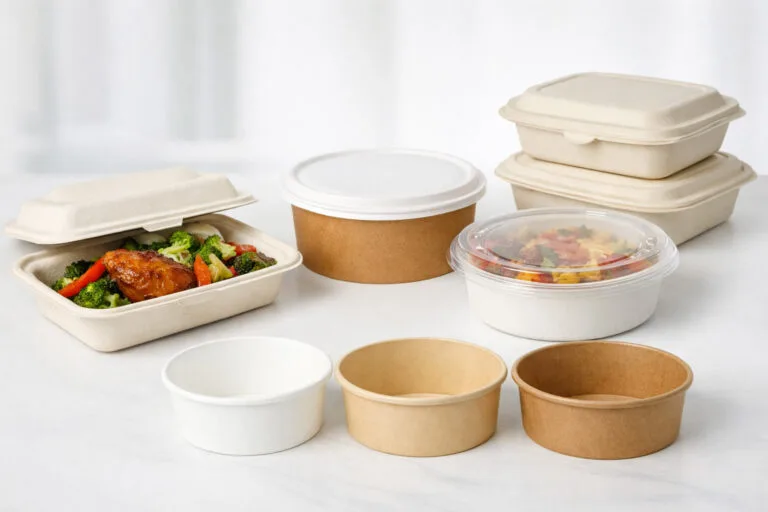
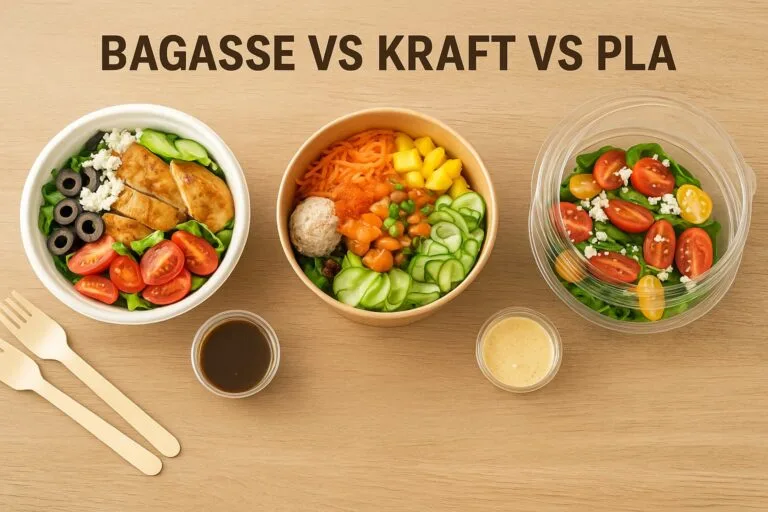
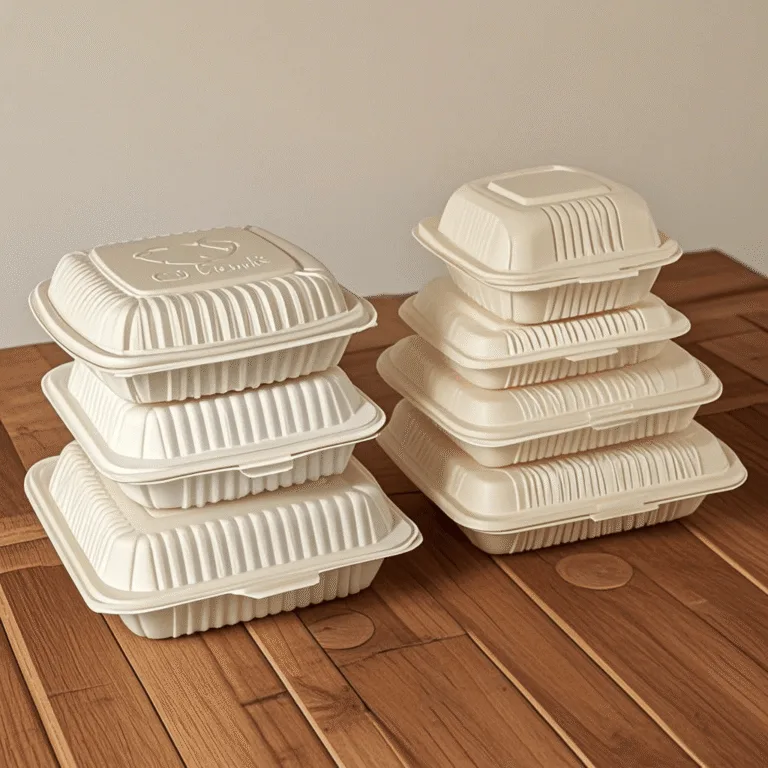
Unlike many disposable options, our sugarcane food trays are built to last throughout their intended use. Whether exposed to heat, moisture, or refrigeration, they maintain their structure and performance. This durability makes them a reliable choice for any business requiring high-quality, dependable food packaging — sugarcane fiber vs pla. Multiple Uses and Applications The bagasse will save you money and the environment.

Eco Friendly, Compostable, and Biodegradable

Our bagasse food trays are 100% compostable trays and biodegradable trays. They decompose naturally within a few months, reducing the burden on landfills and supporting circular waste management practices. Customers increasingly value this attribute, aligning their purchasing decisions with eco-friendly initiatives.

PFAS-Free and BPA-Free

We prioritize safety by ensuring our molded pulp trays are PFAS-free and BPA-free — sugarcane fiber vs pla. Unlike many traditional food packaging materials that contain harmful chemicals, our trays offer peace of mind and meet rigorous health and safety standards. This makes them a safer option for direct food contact.

1.1 Bagasse: A Lignocellulosic Fiber Network

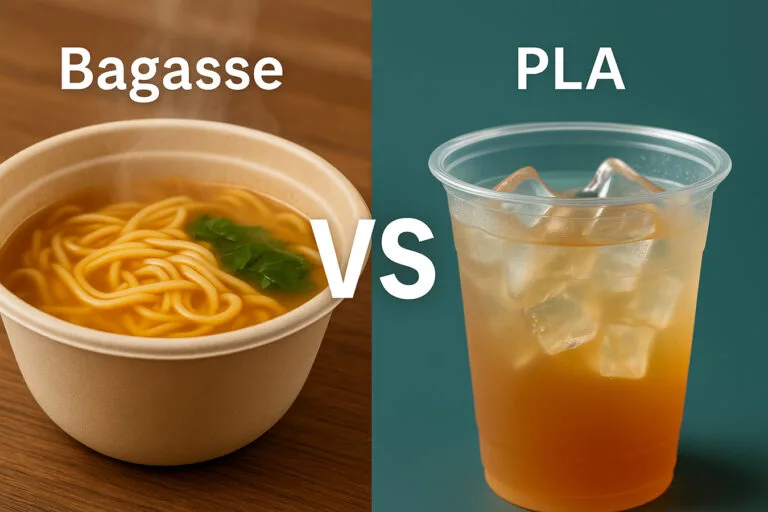
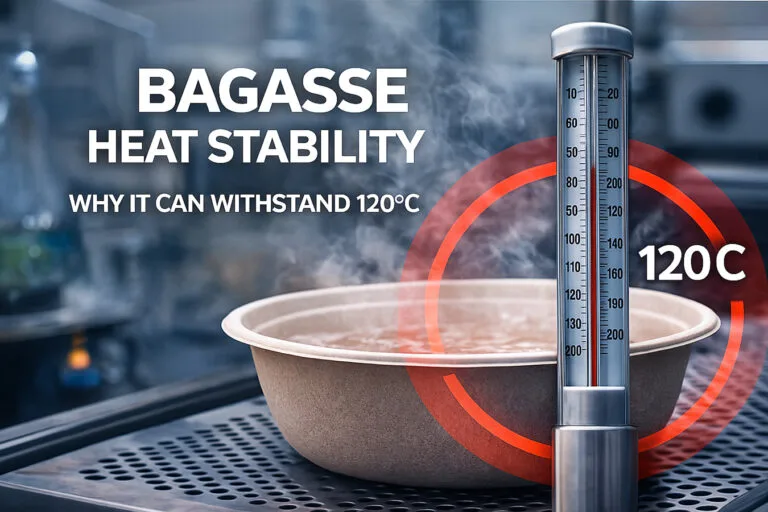
Bagasse is composed of: Component Percentage Technical Role Cellulose 50–55% High crystallinity → rigidity & heat resistance Hemicellulose 20–25% Flexibility & bonding support Lignin 18–25% Aromatic polymers → natural thermal barrier According to Carbohydrate Polymers (2022), lignocellulosic fibers exhibit thermal stability up to ~200°C before decomposition, far exceeding PLA’s heat deformation threshold.

Microwaving:

Bagasse = safe (1–2 minutes) PLA = unsafe (softens, may warp) This single factor explains 90% of their market segmentation. 3 , sugarcane fiber vs pla. Composting & Degradation Cycles: Home vs Industrial Compostability Both Bagasse and PLA are compostable—but under different environments.

Related Insights

🚀Ready to Go Green and Choose ?

Join the global movement toward zero-waste packaging.


Bioleader® offers:

  • 📦 Bulk order support & fast delivery

  • ✍️ Custom branding and OEM solutions

  • 🌍 Worldwide eco-packaging compliance

Get the Catalogue Products List  & Contact Us Now! 👉

Contact us Below

Click or drag files to this area to upload.You can upload up to 5 files.
The more details you share, the faster and more accurate our quotation will be.