Guide To Food Freshness Sensor: Materials, Standards & Best Practices | Bioleader® Insights
Actionable coverage of food freshness sensor: eco-friendly, biodegradable, compostable materials, performance data, and compliance under EN13432 & ASTM D6400. Includes BPI/TÜV references and Food-Contact Tested guidance for safe deployment. Buyer-focused: manufacturer insights, bulk/wholesale buying playbooks, OEM/ODM customization tips, full size range selection.
Quick Summary:
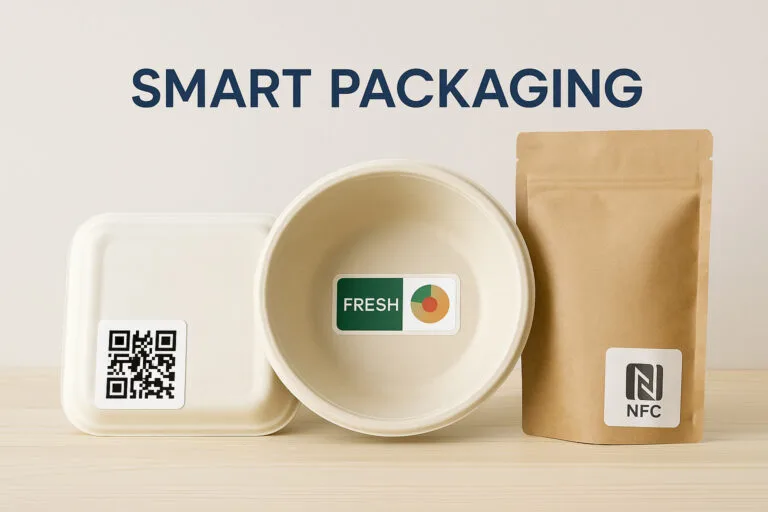
Smart packaging in 2025 has moved from demos to deployment: sensors, freshness indicators, and digital IDs (QR/NFC) are being integrated into compostable and recyclable formats to improve food safety, reduce waste, and unlock supply-chain visibility. Regulatory pressure and EPR schemes are accelerating adoption, while water-based barriers, bio-inks, and fiber-based substrates close the loop on sustainability. Bioleader focuses on practical pilots—traceable SKUs, anti-tamper labels, and analytics-ready codes—so brands gain compliance, actionable data, and better consumer trust without sacrificing cost efficiency or speed-to-market.
food freshness sensor — Quick Summary
Items displayed (articles): 12
Last updated: 2025-08-01
Includes test data, compliance guides, buyer FAQs, and real-world use cases.
FAQ of Bioleader's Eco-friendly Disposable Tableware
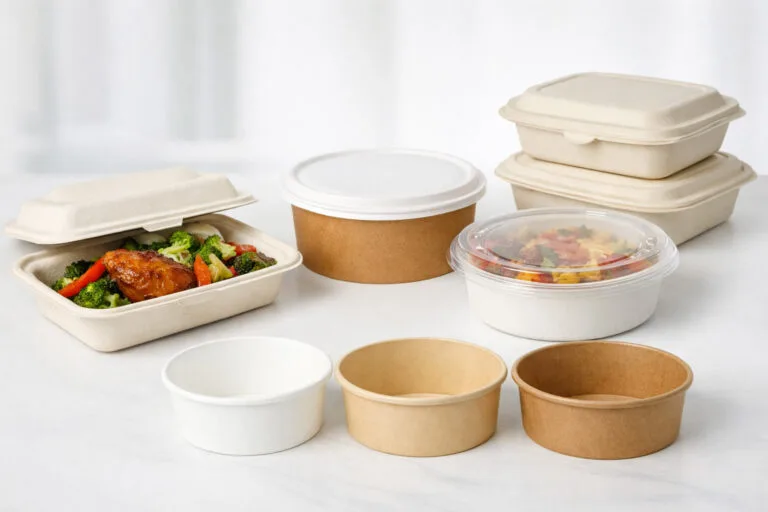
What sizes are available for these biodegradable bowls?
Our bowls come in multiple sizes, ranging from 500ml to 1500ml (approximately 8oz to 48oz), offering flexibility for different portion needs.
Is it really compostable?
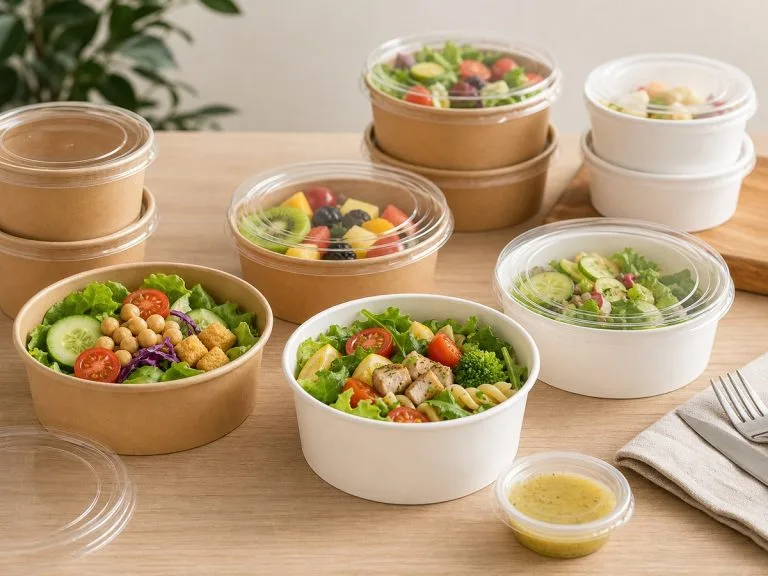
Yes, these salad bowls compostable are made from biodegradable materials such as kraft paper and white cardboard paper which allow it to biodegrade when discarded appropriately — food freshness sensor.
Can we put our company logo on the bowls?
Of course! We provide you with customization possibilities to add logos and designs on the bowls with lids to help strengthen your company’s image. Turn to us for further information on the customization options available.
b) North America: FDA FSMA & State Laws
The FDA Food Safety Modernization Act (FSMA) Traceability Rule requires: Record-keeping of every unit of food packaging, including lot code, material composition, and chain-of-custody, for high-risk foods from 2026 — food freshness sensor. No use of hazardous substances (e.g., PFAS, heavy metals) in food-contact packaging by 2025 in California, New York, and Washington (FDA, 2024).
d) Cloud-Connected Digital Twins
Large FMCG brands are deploying digital twins that aggregate packaging sensor data to AI-driven shelf-life and risk management systems, automating recalls or stock rotation. Expert View: “Digitalization and packaging intelligence are converging, making packaging a central node in the food safety and sustainability ecosystem.”— Dr — food freshness sensor. Laura Kim, Packaging Digitalization Chair, World Packaging Organisation, 2024 future packaging design 3. Regulatory Landscape: The New Baseline for Smart Packaging Global regulations now play a decisive role in how packaging is designed and deployed.