Highlights from featured articles under this tag:


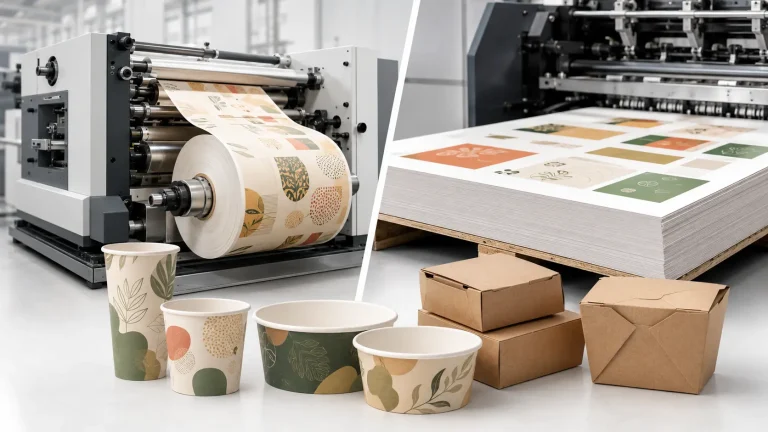
Flexo uses a flexible raised plate to transfer ink directly to the paper, while offset transfers the image from a plate to a rubber blanket and then to the paper. For paper cups, the better method depends on coating type, printing area, colors, quantity and production route. Water-based coated cups in Bioleader®’s current production system normally use flexo.
No. Modern flexographic printing can produce strong solid colors, detailed graphics and multi-color packaging when plates, anilox rollers, inks, substrates and press settings are correctly controlled. Offset remains strong for detailed sheet-fed graphics, but finished packaging quality also depends on forming, drying, stacking and transport performance.
Pantone or spot colors are often practical for simple logos and corporate branding, while CMYK is more suitable for photographs, gradients and complex multi-color graphics. The color system and printing method should be evaluated separately because both flexo and offset can support different color strategies depending on the equipment and project.
The initial flexographic plate cost is usually higher. In Bioleader® typical projects, flexo plates are commonly around USD 100–150 per color, while offset plate-making cost may only be several tens of US dollars for suitable standard jobs. However, buyers should compare total production economics rather than plate fee alone.
In Bioleader®’s current paper cup and bowl production, water-based aqueous coated paper is normally printed by flexographic printing. Buyers planning aqueous-coated packaging should therefore confirm the printing route early because changing from PE or PLA to water-based coating may affect artwork preparation, plate cost and production planning.
Join the global movement toward zero-waste packaging.
Bioleader® offers:
📦 Bulk order support & fast delivery
✍️ Custom branding and OEM solutions
🌍 Worldwide eco-packaging compliance
Get the Catalogue Products List & Contact Us Now! 👉