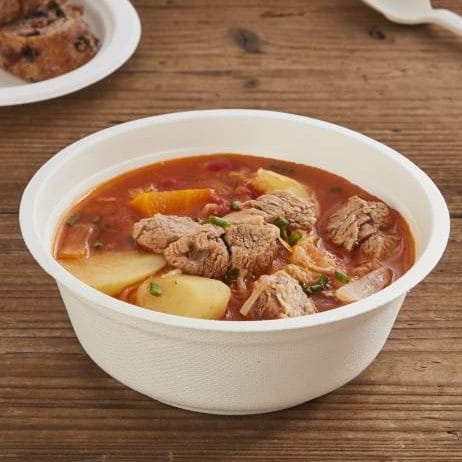
How to Test Paper Food Bowls Before Bulk Ordering
Quick summary: Bulk orders of disposable paper food bowls should never be approved from photos, catalog specifications or price sheets alone. A reliable sample approval process should verify whether the bowl, coating, rim, lid, printing and carton packing can survive the buyer’s real food, service temperature, holding time, stacking pressure and delivery route.
For importers, distributors and foodservice brands, the goal is not to run a full laboratory program inside the purchasing office. The goal is to build a practical pre-bulk sample approval protocol that catches leakage, softening, lid mismatch, odor, printing, carton packing and repeatability risks before a purchase order moves into mass production.
- Use the same food type, temperature, lid and holding time expected in real service.
- Test bowl body, coating, rim, lid, stacking, odor, print quality and carton packing together.
- Record results with photos, time points, sample codes, food conditions and supplier responses.
- Approve bulk production only after the supplier confirms the same material, coating, size, lid, printing method and packing specification.
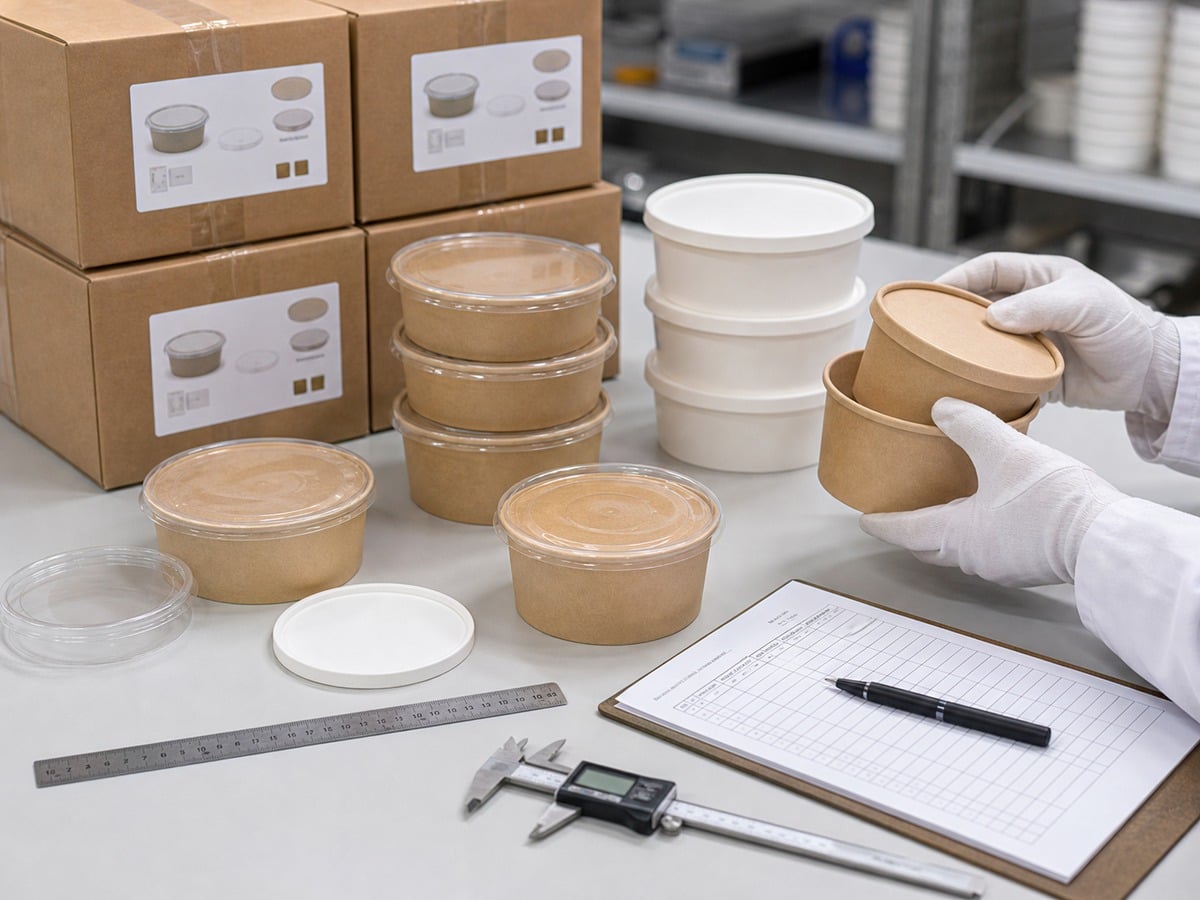
Why Sample Testing Matters Before a Bulk Order
Paper food bowls look simple, but their performance depends on several connected details: paperboard grade, grammage, forming pressure, coating material, rim shape, bottom seal, lid compatibility, printing method, packing density and storage condition. A small mismatch can create visible problems only after hot soup, oily noodles, chilled salad or delivery stacking is tested.
Buyers comparing paper bowls should treat samples as a decision tool rather than a courtesy item. A good sample test helps answer three commercial questions: can the product handle the intended food, can the supplier repeat the same quality in bulk, and can the packaging protect the bowls during export or local distribution?
Sample testing is especially important for private label orders, mixed-size programs, new lid combinations, new coatings, seasonal packaging and first-time supplier relationships. Once mass production begins, a weak rim, poor lid fit or odor issue may affect thousands of cartons instead of a few sample pieces.
Bioleader® Buyer Protocol: Test Use, Confirm Equivalence, Lock Production
From a manufacturer perspective, sample approval is not only about whether one sample looks acceptable. The real question is whether the approved sample can become a reliable production standard for the bulk order. Bioleader® recommends buyers evaluate every paper food bowl sample through three connected checkpoints: real-use testing, production equivalence and supplier corrective action.
| Approval layer | Buyer question | Why it matters before bulk ordering |
|---|---|---|
| Real-use test | Can the bowl handle the intended food, temperature, lid, holding time and delivery condition? | Prevents approving a bowl that only performs under easy office-test conditions. |
| Production equivalence | Is the sample made with the same paperboard, coating, lid, print method and packing plan as the future order? | Prevents approving a stock sample that does not represent the real bulk specification. |
| Corrective action | If the sample fails, can the supplier explain the root cause and provide a revised sample? | Shows whether the supplier can control problems instead of only giving reassurance. |
Set Up the Sample Request Correctly
A useful test begins before the sample is shipped. Buyers should request samples that match the intended bulk specification, not only the supplier’s closest stock item. If the final order requires a specific capacity, kraft or white paper, PE, PP, PLA, aqueous or other barrier choice, matching lid, carton packing or custom print, the sample request should state these details clearly.
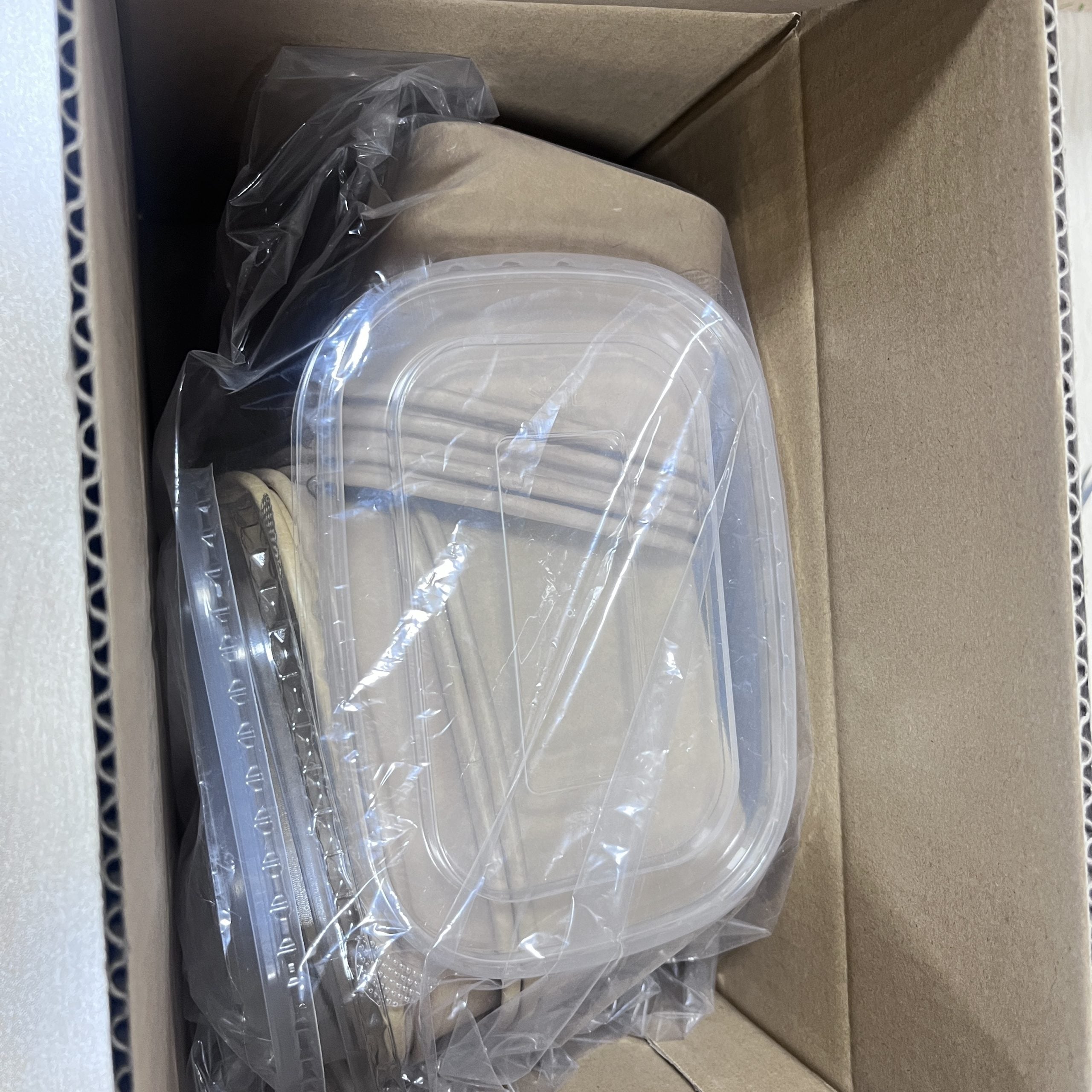
For paper bowls with lids, the lid should be tested with the exact bowl rim. A lid from another size family may appear similar but seal differently. If the buyer needs both PET lids and paper lids, each lid should be tested separately, especially for hot food delivery and stacked takeaway bags.
Sample Request Checklist
- Confirm bowl size, nominal capacity and practical fill volume.
- Confirm paper color, paperboard thickness, coating type and food application.
- Request matching lids in the final intended material and size.
- Request printed samples or print proofs when custom branding is required.
- Ask the supplier to mark sample codes, production date and material specification.
- Request carton details, inner packing method and proposed pieces per carton.
Stock Sample, Custom Sample or Production-Equivalent Sample?
Not all samples have the same approval value. A stock sample is useful for checking shape, size and general hand feel, but it may not represent the final coating, print, lid or carton packing. A custom printed sample can help approve brand appearance, but it may still be produced through a sample process rather than the exact bulk production route.
For high-volume orders, private label projects or new food applications, the strongest reference is a production-equivalent sample. This means the sample is made with the same core specification planned for bulk production: paperboard, coating, forming structure, lid model, printing method and packing concept.
| Sample type | What it can confirm | What it cannot fully confirm |
|---|---|---|
| Stock sample | General shape, size range, hand feel and basic structure | Final coating, custom print, real lid match or carton packing |
| Custom printed sample | Logo position, color direction, basic print layout and brand appearance | Full batch consistency unless the production method is confirmed |
| Production-equivalent sample | Material, coating, lid, print, packing and functional performance close to bulk order | Still requires final pre-shipment inspection and batch comparison |
How to Run Basic Paper Food Bowl Sample Tests
Practical testing should be simple enough for a purchasing office but structured enough to support a sourcing decision. Use at least three sample pieces for each key test when possible. If one sample fails, repeat the test with another piece and record whether the failure is isolated or repeated.
| Test | What to do | What to watch | Buyer decision value |
|---|---|---|---|
| Visual inspection | Check rim, wall, bottom seal, color, print and surface cleanliness under normal light. | Cracks, wrinkles, stains, uneven forming, print smudges or exposed paper fibers. | Quickly screens obvious production or packing problems. |
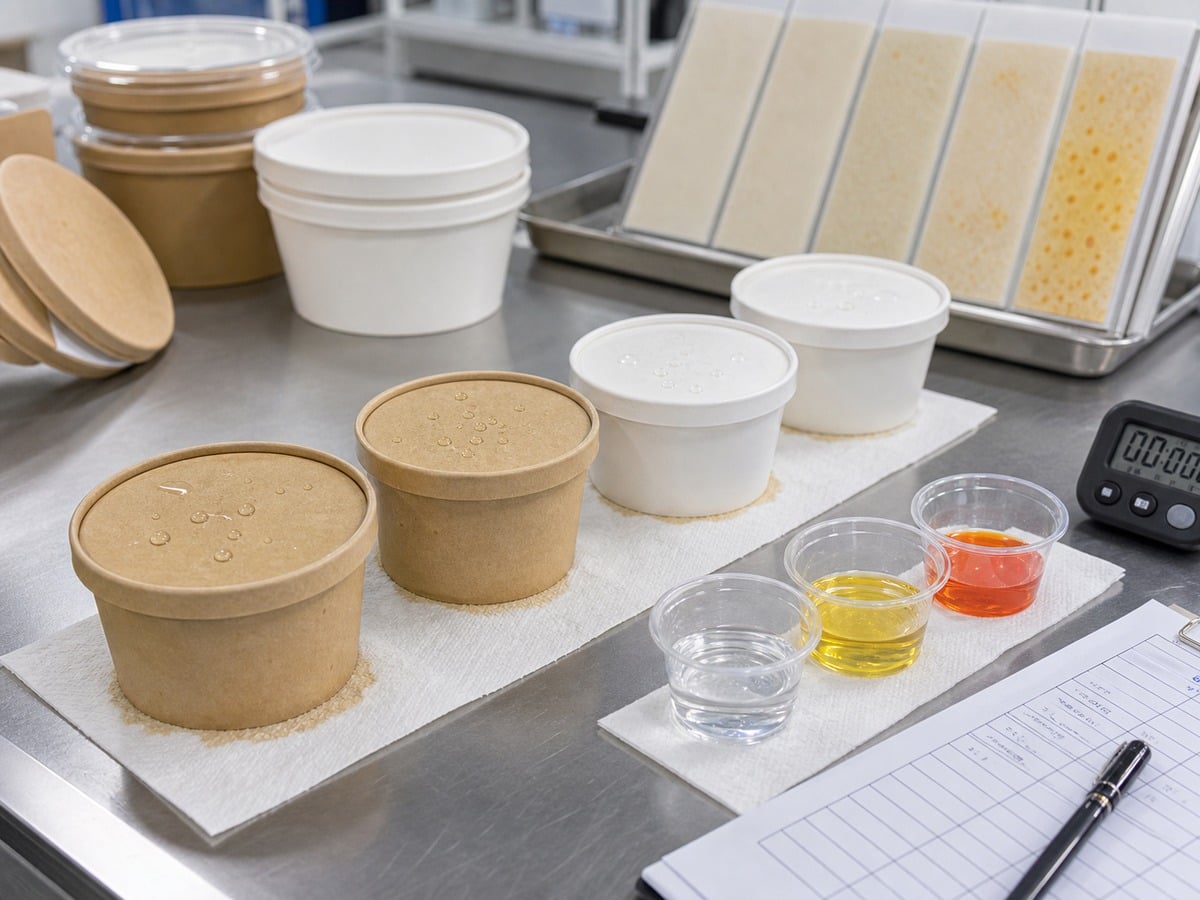
| Water holding test | Fill the bowl with water at the intended service temperature and observe over time. | Bottom leakage, sidewall seepage, rim softening or bowl deformation. | Checks basic liquid resistance for soup, sauce or wet food use. |
| Oil or red-oil test | Add warm oil or colored oil to simulate oily food contact. | Oil marks, coating weakness, staining, seepage or delamination. | Useful for noodles, curry, chili oil, dressings and rich sauces. |
| Lid fit test | Close and open the lid several times after filling the bowl with representative food or water. | Loose fit, difficult removal, deformation, splash risk or lid popping. | Confirms real delivery and takeaway usability. |
| Stacking test | Stack empty and filled bowls in the expected delivery or storage arrangement. | Rim collapse, lid pressure marks, unstable stacks or carton compression risk. | Supports packing quantity and transport safety decisions. |
Buyers sourcing paper food containers should apply the same logic to bowl-style and container-style items. The product should be tested as it will actually be used, not only as an empty package on a desk.
Application Test Matrix: Match the Test to the Food
A strong sample approval process should not use one easy test for every bowl. The test should match the buyer’s real food application. Hot soup, oily noodles, cold salad and delivery meals stress the bowl in different ways, so the sample approval standard should change by use case.
| Application | Main test focus | Key approval signal |
|---|---|---|
| Hot soup | Hot liquid holding, rim softening, bottom seal, lid steam behavior | Bowl remains stable, lid still fits, no leakage under realistic holding time |
| Oily noodles, curry or chili oil | Oil penetration, red-oil staining, coating stability, sidewall seepage | No visible oil migration or coating failure during intended use |
| Cold salad and chilled food | Moisture, condensation, PET lid clarity, dressing exposure | Food presentation remains clean and the bowl does not soften prematurely |
| Delivery and takeaway | Lid fit, mild shaking, tilt, stacking, secondary bagging | Package remains closed and stable under normal transport movement |
| Custom printed bowls | Ink odor, rub resistance, logo position, barcode or QR readability | Branding remains clean after stacking, handling and food-use testing |
Test With the Real Food Scenario
A paper bowl that works for a cold salad may not be suitable for hot soup. A bowl that holds clear broth may behave differently with red chili oil, thick curry, tomato sauce or creamy dressing. Before bulk ordering, buyers should define the most demanding realistic food scenario rather than testing only the easiest one.
For soup takeaway packaging, a useful test should include filling temperature, delivery holding time, lid closure, carrying angle and secondary bagging condition. If the target use includes delivery platforms, the bowl should be tested after mild shaking and stacking, because real transport rarely keeps the package perfectly level.
For salad and cold food applications, the test should focus on moisture, dressing, condensation, PET lid clarity and presentation. For hot food, pay closer attention to rim strength, bottom seal, hand feel, lid deformation and coating stability. For oily or spicy food, oil observation is more valuable than a simple water test.
Check Lid Fit, Rim Strength and Stacking
Lid compatibility is one of the most common sample approval risks. The bowl and lid may each look acceptable, but the combination can still fail during delivery. A lid should close smoothly, stay in place under normal handling and remain easy for the consumer to remove without tearing the rim or splashing food.
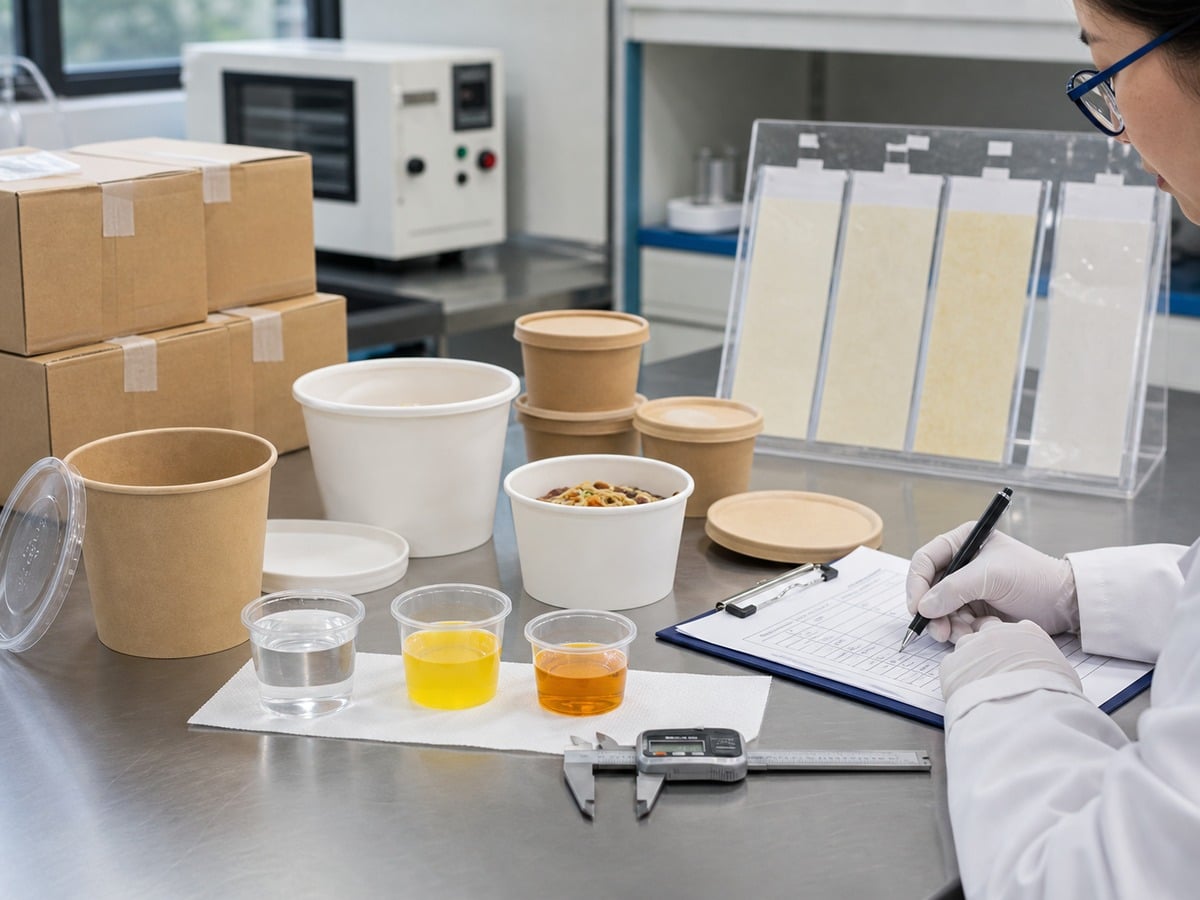
When testing disposable paper bowls with lids, buyers should close the lid repeatedly, check the snap feeling around the full rim and observe whether the lid lifts after the bowl warms up. If the sample includes both PET and paper lids, each material should be tested under its intended food temperature.
Stacking should be checked in two ways. First, stack empty bowls to see whether they separate easily during service. Second, test filled bowls with lids to understand pressure, sliding and deformation risk. This is particularly important for delivery brands, catering operators and distributors that need stable carton packing and predictable handling.
Review Odor, Printing and Food Contact Surface
Odor and printing issues can damage buyer confidence even when the bowl does not leak. Open the sample carton and check whether there is a strong paper, ink, glue, plastic or chemical smell. Then test again after the bowl holds warm food or warm water, because heat can reveal odor that is less obvious at room temperature.
For custom printed paper bowls, sample approval should also include color consistency, registration, logo position, barcode readability and ink rub resistance. Buyers should confirm whether the printed sample is digitally mocked up, hand-made, short-run printed or produced on the same process intended for mass production.
| Sample item | Acceptable sign | Warning sign | Action before approval |
|---|---|---|---|
| Odor | Mild paper smell that does not affect food presentation. | Strong chemical, ink or plastic odor after warm filling. | Ask for material, ink and storage review before bulk order. |
| Print quality | Clean color, clear logo edge and stable position. | Smudging, color shift, poor registration or rubbing marks. | Request revised proof and confirm production print method. |
| Food surface | Smooth coating, clean inside wall and no visible contamination. | Dust, loose fiber, delamination, stains or uneven coating. | Hold approval until supplier explains root cause and control method. |
| Carton packing | Bowls are protected, counted correctly and easy to handle. | Crushed rims, poor bag sealing, unclear labels or unstable cartons. | Confirm packing method before production release. |
Failure-to-Root-Cause Review Before Supplier Approval
When a sample fails, buyers should avoid simple comments such as “quality is bad” or “sample is not good.” A useful approval process records the failure, identifies the likely cause and asks the supplier for a corrective action. This is where a manufacturer with real process control can show its value.
| Failure observed | Possible root cause | What the buyer should ask |
|---|---|---|
| Bottom leakage | Weak bottom sealing, coating crack, forming pressure issue or wrong food temperature range | Ask how bottom sealing is inspected and request a revised production-equivalent sample. |
| Sidewall seepage | Coating pinhole, barrier mismatch, oil stress or paperboard absorption | Ask for coating confirmation and repeat oil or red-oil testing. |
| Lid pops off | Rim tolerance, wrong lid family, heat deformation or overfilling | Ask supplier to confirm exact bowl-lid pairing and rim-size control. |
| Bowl softens quickly | Insufficient board stiffness, unsuitable coating or unrealistic holding time | Ask whether the bowl is intended for that food temperature and duration. |
| Strong odor after hot fill | Ink, coating, glue, storage or packing material interaction | Ask for material, ink, storage and packing review before approval. |
| Crushed rims after transport | Carton compression, packing density, poor inner bagging or weak rim strength | Ask for carton packing revision and carton drop or compression review. |
Supplier QC Documents to Request Before Approval
Physical sample testing is only one part of supplier approval. Buyers should also request documents that connect the sample to mass production. The supplier should be able to confirm the material specification, coating type, lid match, print proof, carton packing method and inspection standard used before shipment.
For kraft paper bowls, documentation should clarify whether the final order uses the same kraft board color, coating and wall structure as the approved sample. For hot or oily food applications, ask the supplier how they inspect leakage, rim strength and lid fit during production, not only after the goods are packed.
Bioleader® recommends using a written sample approval record that includes photos, sample code, test time, food type, fill temperature, comments and final decision. This makes communication clearer between procurement, quality, marketing and the manufacturer, especially for export orders and repeat purchasing programs.
Bulk Release Gate: Pass, Revise or Reject
After testing, buyers should avoid a vague conclusion such as “sample looks good.” A stronger approach is to classify the sample as pass, pass with revision, or reject. A sample may pass for dry snacks but fail for hot soup. It may pass for plain stock packaging but need revision for printed private-label use.
- Pass: The sample matches the intended food use, lid, print, packing and buyer expectations.
- Pass with revision: The main structure works, but print, carton, lid tightness, sample labeling or packing needs correction before bulk release.
- Reject: Leakage, odor, deformation, lid failure, print contamination or repeated defect risk makes the product unsuitable for the intended application.
A supplier should respond to failed tests with practical corrective action, not only reassurance. Useful responses include changing coating, adjusting lid match, improving forming pressure, revising packing, updating print proof or sending a new production-equivalent sample.
| Before PO release | What should be locked | Why it matters |
|---|---|---|
| Approved sample | Sample code, photos, approval date and retained reference sample | Creates a comparison standard for bulk production. |
| Specification | Paperboard, coating, size, lid model, print method and packing method | Prevents the supplier from switching to a similar but different configuration. |
| Test condition | Food type, fill temperature, holding time, lid use and delivery condition | Clarifies what the sample was actually approved for. |
| Supplier action | Root-cause explanation and revision record for any failed sample | Shows whether the factory can control repeat issues. |
| Shipment check | Pre-shipment inspection points for leakage, lid fit, packing and appearance | Connects sample approval to mass-production control. |
Bioleader® Support for Paper Bowl Sample Approval
Bioleader® works with B2B buyers that need paper bowl samples for soup, salad, hot food, cold food, takeaway and delivery applications. The most useful approval process starts with the buyer’s real food scenario, then matches bowl size, coating, lid type, packing method and custom printing requirements to that scenario.
For new projects, Bioleader® can help buyers compare stock samples, custom printed samples, matching lid options and bulk packing proposals before production confirmation. This helps reduce avoidable quality disputes and gives procurement teams a clearer basis for purchase approval.
FAQ: Testing Paper Food Bowls Before Bulk Ordering
How many paper food bowl samples should I test before a bulk order?
Test at least three pieces for each key condition when possible, including water, oily food, lid fit and stacking. For custom printed or high-volume orders, request production-equivalent samples and keep one approved sample as a reference for mass production comparison.
What is a production-equivalent paper bowl sample?
A production-equivalent sample is made with the same core specification planned for the bulk order, including paperboard, coating, lid model, printing method and packing concept. It gives buyers a more reliable approval basis than a general stock sample.
What is the most important test for paper soup bowls?
For paper soup bowls, the most important checks are hot liquid holding, bottom seal leakage, rim softening and lid fit after heat exposure. The sample should be tested at the real serving temperature and holding time expected in takeaway or delivery use.
Can a simple water test replace an oil test?
No. Water testing checks basic liquid resistance, but oily food can reveal coating weakness that water does not show. Buyers handling noodles, curry, chili oil, dressing or sauced meals should include an oil or red-oil observation test before approving bulk production.
Should I test printed samples differently from plain samples?
Yes. Printed samples should be checked for color accuracy, logo position, ink odor, rub resistance and food contact safety. Buyers should also confirm whether the print sample is made with the same process intended for mass production.
What should I do if the sample fails one test?
Record the failure with photos, time, food type and temperature, then ask the supplier for a root-cause explanation and corrective action. Do not approve bulk production until a revised sample passes the intended food and handling conditions.
Conclusion: Test the Bowl as the Buyer Will Use It
The best way to test paper food bowls before bulk ordering is to copy the real use case as closely as possible. Use the intended food, temperature, lid, holding time, stacking condition and delivery handling. Then combine hands-on testing with supplier documentation and a written approval record.
This approach helps B2B buyers avoid weak coatings, poor lid fit, print problems, odor complaints and packing risks before they become bulk-order disputes. For importers, distributors and foodservice brands, structured sample approval is one of the simplest ways to protect both product quality and purchasing confidence.