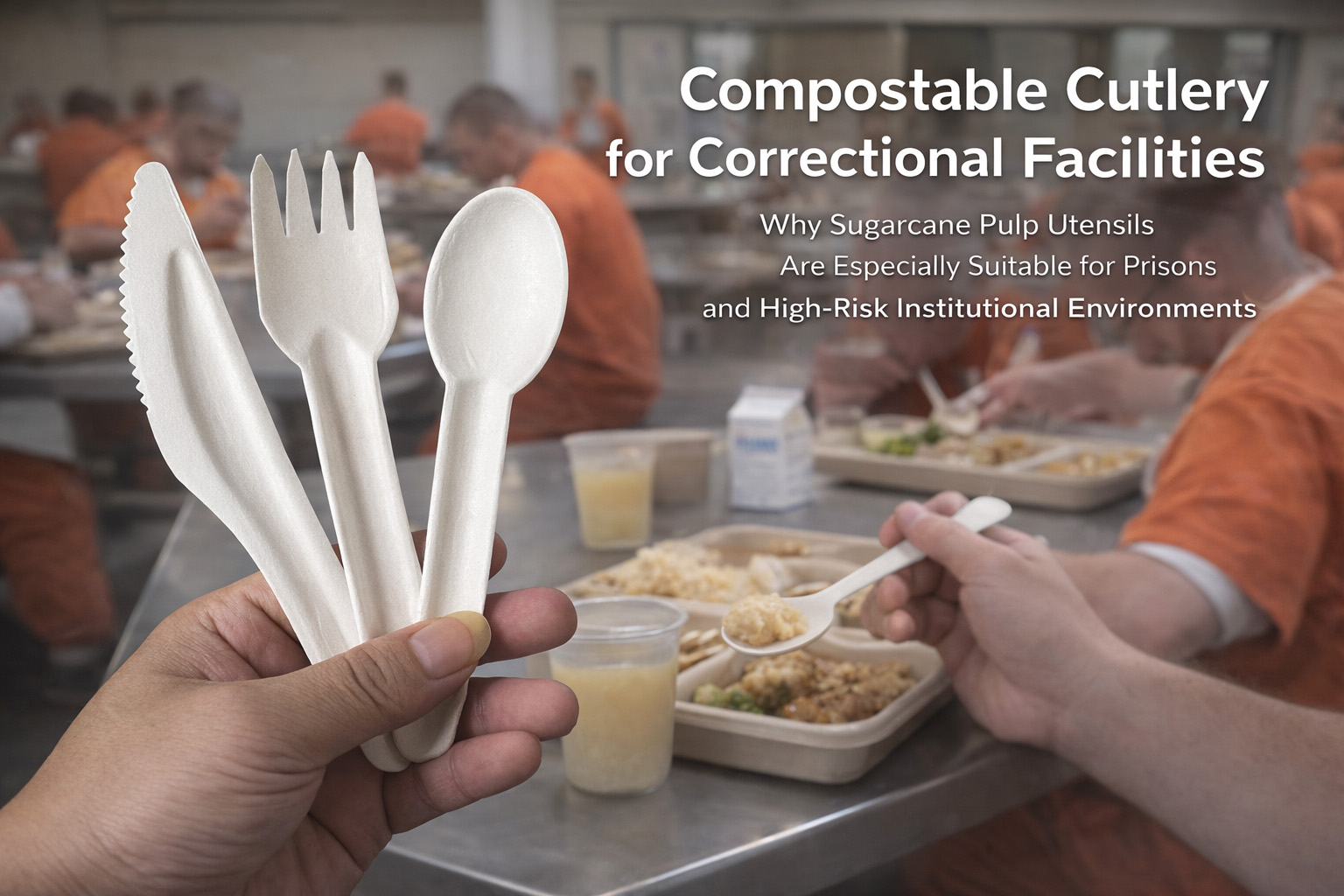
In correctional facilities, disposable cutlery is not just a foodservice item.
It is a matter of facility safety, plumbing reliability, and operational risk control.
Many prisons, detention centers, and similar institutions face the same recurring problem: plastic sporks and utensils are flushed into toilets, leading to clogged sewer lines, maintenance callouts, downtime, and avoidable repair costs.
This has pushed institutional buyers to rethink a basic assumption:
What if disposable cutlery didn’t remain rigid forever?
That question is exactly why sugarcane pulp (bagasse) molded fiber cutlery is gaining attention in correctional and other high-risk environments.
When “Too Strong” Becomes the Real Problem
Most disposable cutlery—plastic, CPLA, or plastic-like compostables—is designed to be:
rigid
water-resistant
dimensionally stable

That makes sense in restaurants. But in prisons and controlled facilities, these same properties create a systemic risk.
Once rigid utensils enter wastewater systems, they:
maintain their shape
resist deformation
easily lodge in bends, traps, and junctions
The result is not an occasional incident, but repeated clogging patterns.
For correctional procurement teams, the issue is no longer “durability”—it’s failure behavior under misuse.
Sugarcane Pulp Cutlery: A Different Material Logic
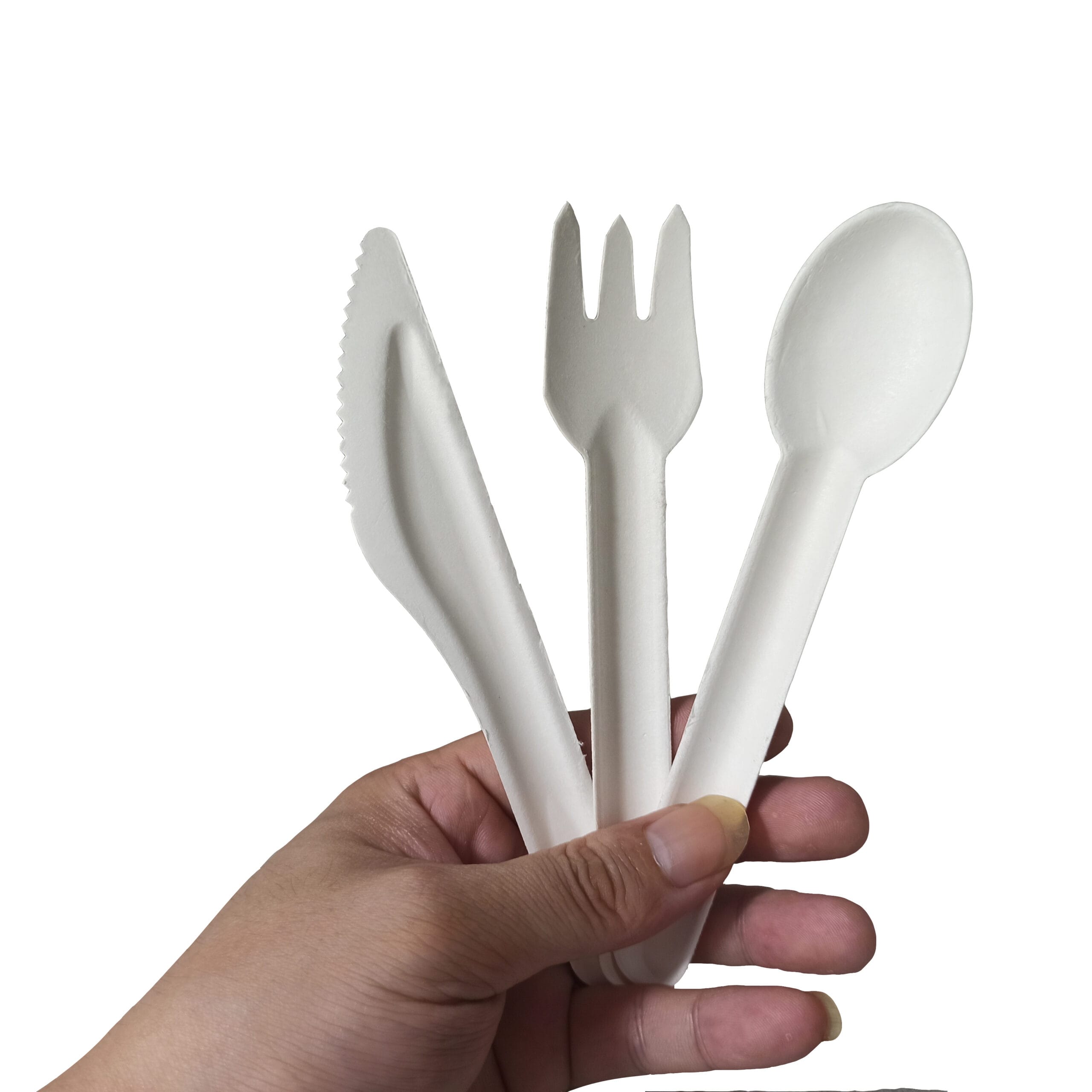
Sugarcane pulp cutlery is manufactured from 100% bagasse fiber, a natural by-product of sugar production.
The process involves:
breaking bagasse into cellulose fibers
forming the fibers through molded pulp press molding
producing a utensil rigid enough for meal service, without synthetic plastics
This structure creates a fundamentally different response to water exposure compared with plastic.
A Known Limitation—Turned Into an Advantage
In traditional foodservice markets, molded fiber cutlery has a known limitation: after prolonged soaking, it can begin to soften.
In correctional facilities, this “weakness” becomes a practical advantage.
During normal meal time, it performs as expected
If submerged in water for extended periods, it tends to lose rigidity rather than stay hard
This behavior significantly reduces the chance of a long-lasting rigid obstruction.
How It Behaves in Water (Institution-Relevant Observations)
Actual behavior depends on temperature, flow rate, and sewer conditions.
That said, molded fiber sugarcane cutlery typically follows this pattern:
Normal use: fully functional for cafeteria and fast-food meals
Extended soaking: begins to soften and lose stiffness
Longer exposure: can bend or deform instead of retaining original shape
Compliance note: Sugarcane pulp cutlery is not marketed as “flushable.”
The benefit for correctional environments is that it is less likely to remain a rigid blockage after prolonged water exposure compared with plastic.
Why Other “Compostable” Options Usually Don’t Help Prisons
Not all compostable materials behave the same way:
Cornstarch / CPLA Cutlery
Plastic-like structure
Designed to stay rigid in liquids
Behaves similarly to conventional plastic in plumbing systems
Wooden Cutlery
High wet-strength retention
Breaks down slowly in water
Often worse than molded fiber for clog-risk scenarios
For facilities specifically trying to reduce plumbing incidents caused by misuse, molded fiber sugarcane pulp is usually the most effective option to evaluate.
Case Study: A U.S. State Correctional Enterprise Evaluated Sugarcane Pulp Cutlery to Reduce Plumbing Incidents
In 2025, a U.S. state correctional enterprise responsible for institutional dining raised a specific operational issue: plastic sporks were being flushed and repeatedly clogging toilet and drain systems.
After reviewing molded fiber options, the facility’s purchasing contact confirmed the molded sugarcane pulp approach matched their needs and escalated the proposal internally:
“Since switching to Bioleader’s sugarcane pulp cutlery, we have seen a noticeable reduction in plumbing issues related to disposable utensils.
The material performs well during normal meal service, behaves more predictably after prolonged water exposure, and contributes to a safer dining environment compared with rigid plastic cutlery.”— Operations feedback from a U.S. state correctional enterprise (Food Services Division), January 2026
Why this matters for correctional facilities:
Unlike rigid plastic (and many plastic-like compostables), molded fiber sugarcane pulp cutlery can soften and lose rigidity after extended exposure to water, reducing the likelihood that it remains a long-term hard obstruction when misused.
Procurement takeaway:
For correctional and other high-risk institutional environments, the buying decision is not only about “compostable.” It’s about system reliability, maintenance reduction, and predictable behavior under misuse scenarios—which is why molded fiber solutions are gaining serious attention.
Size Strategy Matters in Correctional Facilities
Length and rigidity directly affect obstruction risk.
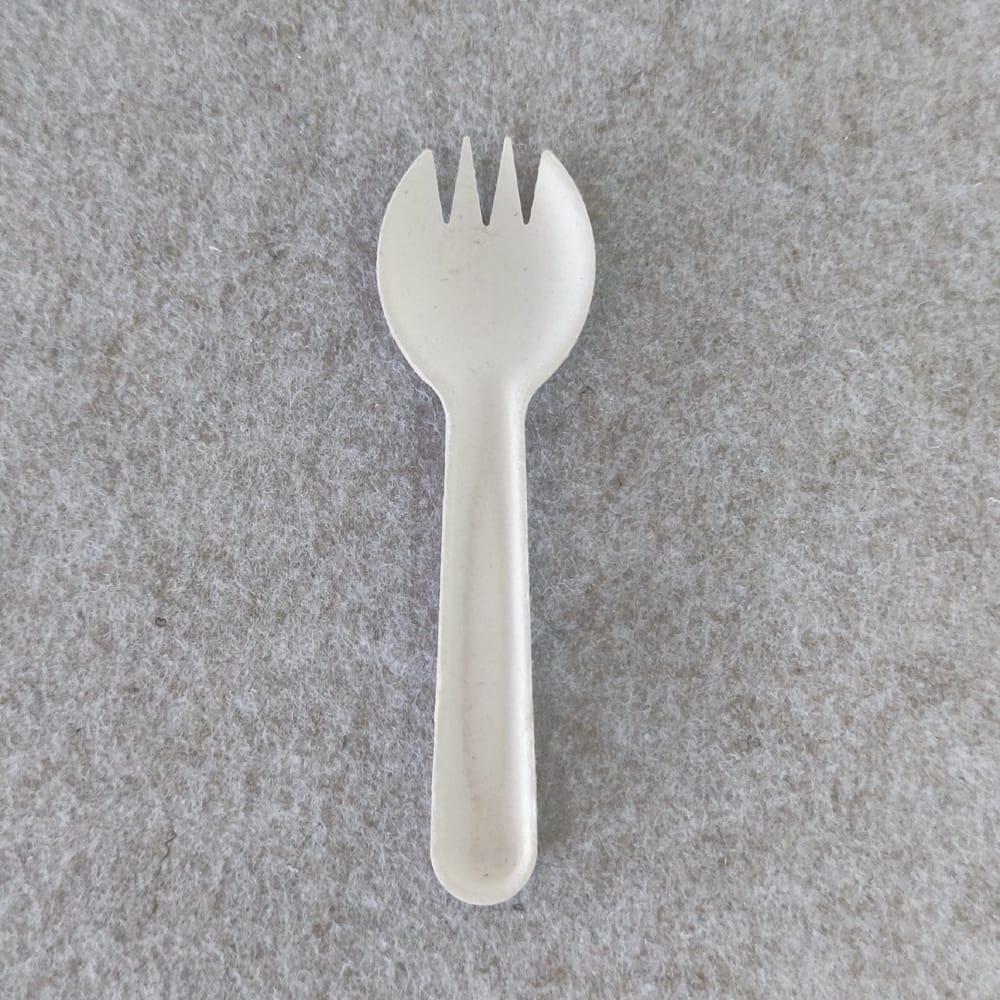
Standard disposable cutlery: ~160 mm
- Sugarcane pulp spork option: ~114 mm (compact)
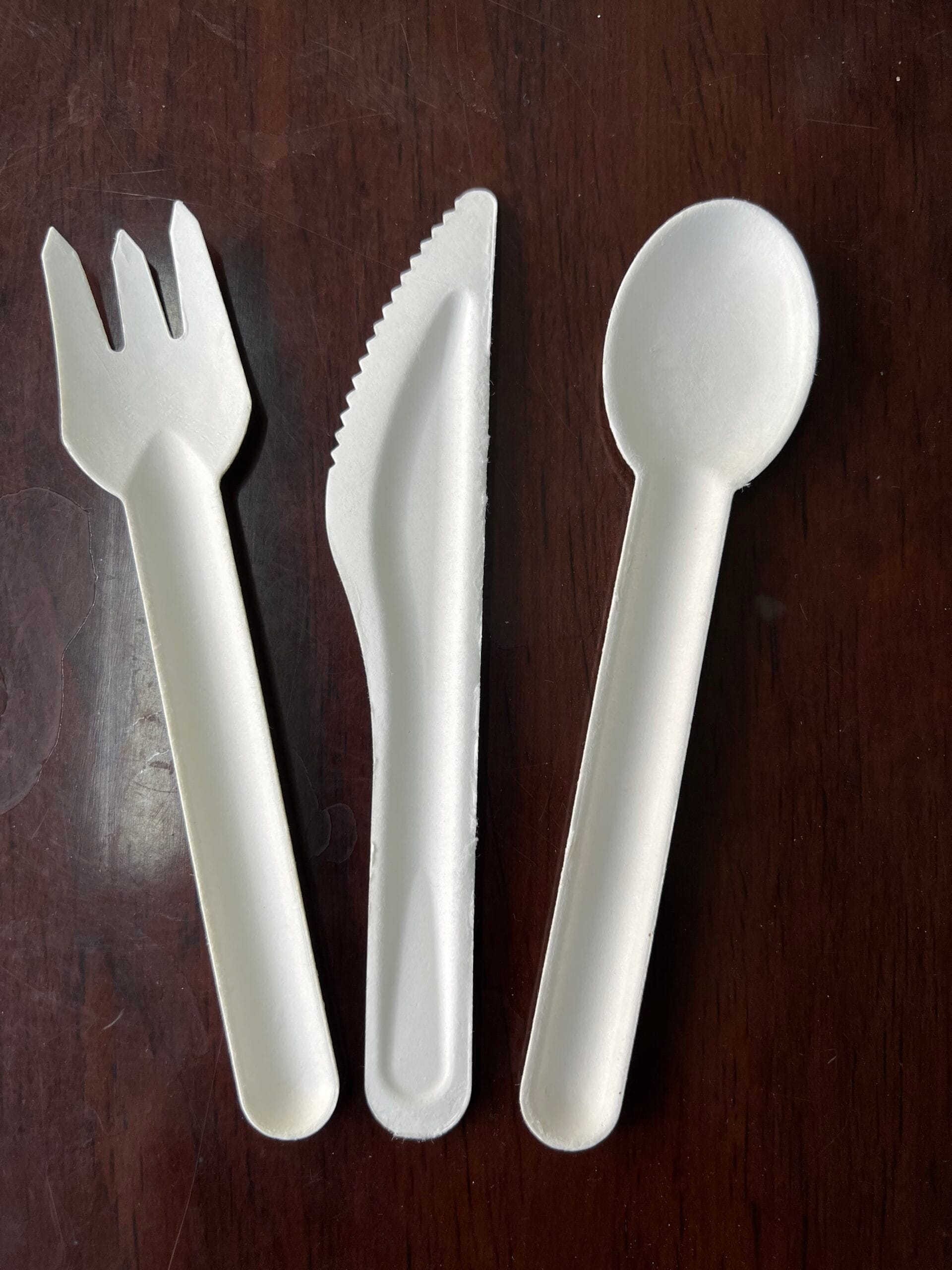 | 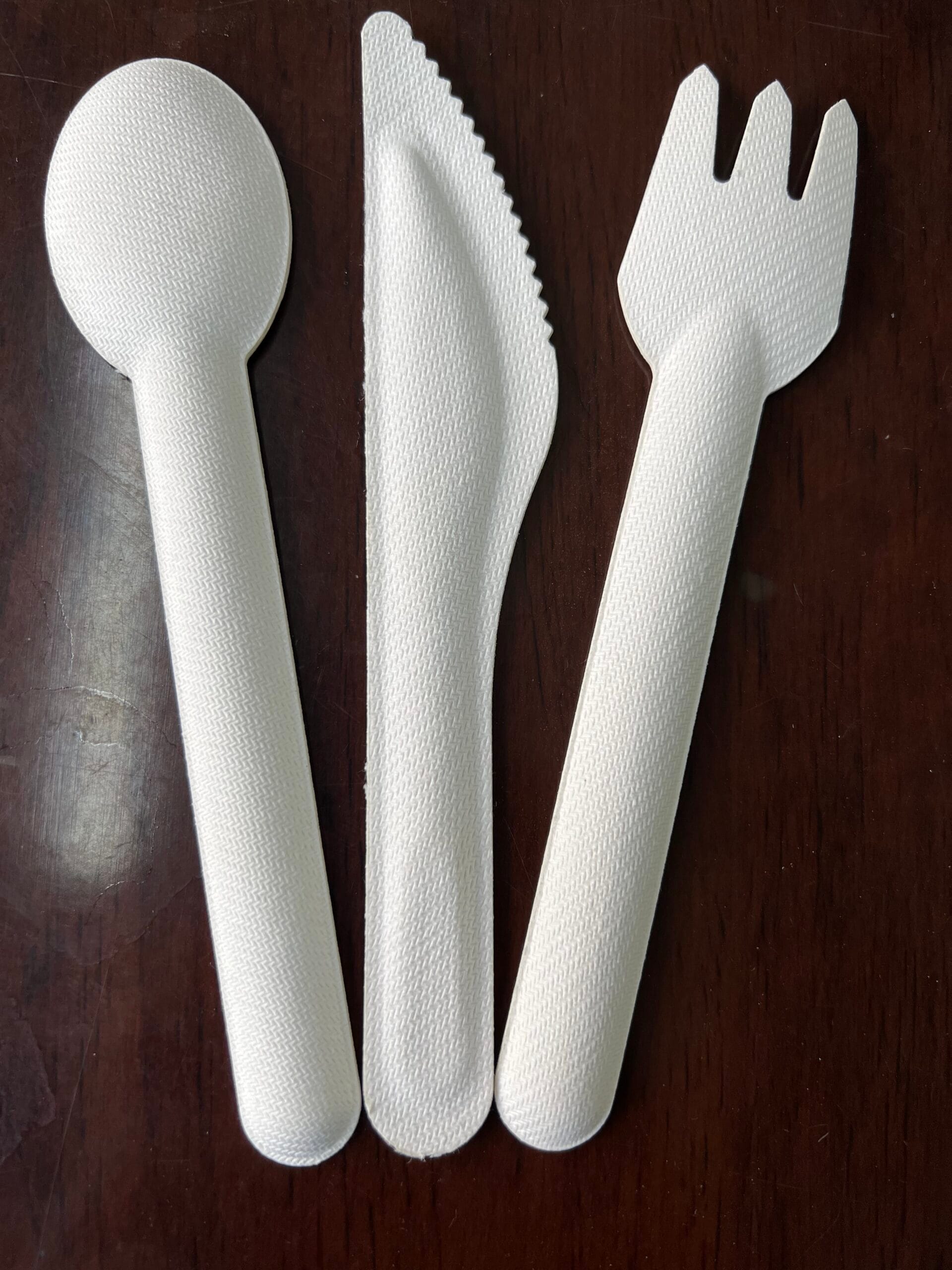 |
For prisons and similar institutions, a smaller, lighter, more deformable utensil:
is easier to manage in controlled dining programs
presents lower obstruction risk
is more likely to deform if misused
In many cases, compact molded fiber sporks or fork-and-spoon combinations are preferred over long rigid sporks.
Procurement Reality: Built for Bulk and Long-Term Supply
Correctional facilities operate on bulk procurement cycles, and sugarcane pulp cutlery fits that model well:
Shelf life: 2–3 years or longer under dry storage
Suitable for high-volume institutional contracts
Stable material performance across large batches
While molded fiber cutlery typically requires higher minimum order quantities, this aligns naturally with prison and government purchasing structures.
Beyond Prisons: Similar High-Risk Environments
This material logic also applies to:
detention centers
behavioral health facilities
shelters and emergency housing
large institutional cafeterias
event or stadium venues with known misuse issues
Any environment where rigid plastic misuse creates system risk can benefit from this approach.
Rethinking “Performance” in Institutional Dining
In correctional environments, the best cutlery is not the strongest—it’s the one that:
works during the meal
behaves predictably under misuse
reduces long-term system risk
Sugarcane pulp molded fiber cutlery represents a shift in thinking: from maximum rigidity to controlled failure behavior.
Conclusion
For prisons and similar high-risk institutional settings, disposable cutlery must be evaluated as part of the facility system, not just the meal.
By softening and deforming after prolonged water exposure—rather than staying rigid like plastic—sugarcane pulp cutlery offers a practical, plastic-free way to reduce plumbing risk while maintaining normal foodservice functionality.
Sometimes, the smartest solution isn’t stronger.
It’s a material that knows when not to stay rigid.
FAQ
Q1: Is sugarcane pulp cutlery “flushable”?
A: No. Sugarcane pulp cutlery is not sold or marketed as flushable. Its advantage is that molded fiber tends to soften and lose rigidity after prolonged soaking, unlike plastic cutlery that remains hard and rigid.
Q2: Why is sugarcane pulp cutlery especially suitable for prisons and correctional facilities?
A: Correctional environments have higher misuse risk. Molded fiber sugarcane pulp cutlery is less likely to remain a rigid, long-term obstruction after extended water exposure, which helps reduce plumbing and maintenance risks compared with plastic utensils.
Q3: Is sugarcane pulp cutlery strong enough for daily meal service?
A: Yes. During normal meal service time, sugarcane pulp cutlery performs well for standard cafeteria and fast-food applications commonly used in institutional dining programs.
Q4: Is compact cutlery better than full-size cutlery for correctional facilities?
A: Many facilities prefer compact formats (such as ~114 mm sporks) because they are easier to manage in controlled dining programs and present lower obstruction risk than longer, rigid utensils.
Q5: How does sugarcane pulp cutlery compare to CPLA, cornstarch, or wooden cutlery in correctional settings?
A: CPLA and cornstarch cutlery are typically plastic-like and remain rigid in water, while wooden cutlery often retains strength even longer. Molded fiber sugarcane pulp cutlery behaves differently, as it tends to soften after prolonged soaking, making it more suitable for high-risk institutional environments.