Why PFAS-Free Packaging in 2025 Is a Critical Buyer Issue
For decades, per- and polyfluoroalkyl substances (PFAS) were celebrated as miracle chemicals. They made paper bowls resistant to hot soup, food containers withstand grease, and takeout packaging waterproof. But what once seemed like innovation is now recognized as a public health threat.
Known as “forever chemicals”, PFAS do not break down in the environment or the human body. Scientific studies link them to cancer, thyroid disruption, fertility issues, immune system impairment, and liver damage. In short, PFAS were solving a packaging problem while creating a long-term environmental and health crisis.
By 2025, the packaging industry faces a major transformation: PFAS-Free packaging is no longer a niche—it is a necessity.
Consumer demand: More shoppers look for PFAS-Free or “non-toxic” labels.
Legal requirements: Governments worldwide are implementing bans.
Market growth: PFAS-Free food containers, cups, and bowls are seeing double-digit annual growth.
For buyers—importers, distributors, restaurant chains—the urgent question is: How do we source safe, certified PFAS-Free packaging while avoiding costly mistakes?
Global Regulations and Market Trends: The PFAS-Free Rise
Europe: Strict Regulations and Enforcement
The European Union has historically led in food safety regulation. Under REACH and food-contact material rules, PFAS are under near-total restriction. By 2025, suppliers must not only provide EN13432 certification for compostability but also proof of PFAS-Free testing.
Retailers in Germany, France, and Scandinavia refuse to carry packaging that contains PFAS. Distributors importing without compliance face penalties up to €100,000 and public recall notices.
United States: From Patchwork to Federal Standards
In the U.S., the FDA regulates food contact safety, but states are the driving force behind PFAS bans.
Maine and California were first to ban PFAS in food packaging.
By 2025, more than 10 states have implemented similar restrictions.
Federal legislation is moving toward nationwide PFAS-Free standards.
This patchwork means buyers must carefully check state laws and demand suppliers prove PFAS-Free compliance.
Canada: Leading North America’s Ban
Canada has already introduced a federal ban on PFAS in food-contact materials. Customs authorities require PFAS-Free documentation for imports. Distributors who fail to meet standards risk both legal penalties and contract termination.
Asia-Pacific: Catching Up Fast
While Asia was initially slower, momentum is growing:
Japan: Tightened regulations on PFAS coatings in paper packaging.
South Korea: Phasing out PFAS in food containers.
Singapore: Enforces eco-labeling and testing for packaging imports.
India: Bans single-use plastics and begins restricting PFAS.
Multinational restaurant chains in Asia now demand PFAS-Free packaging across all markets, raising expectations for suppliers.
Market Growth and Buyer Impact
According to industry research, PFAS-Free packaging is expected to grow at 12–15% CAGR through 2030. Buyers in foodservice, retail, and catering increasingly view PFAS-Free packaging as a strategic business decision, ensuring compliance while enhancing brand image.
Buyer Mistakes to Avoid in PFAS-Free Packaging Procurement
Despite awareness, buyers often make errors that cost money and damage trust.
Mistake 1: Confusing “Compostable” with “PFAS-Free”
Many assume compostable packaging is automatically PFAS-Free. This is false. Compostable bowls may still use PFAS for grease resistance. Buyers must request dual certification: compostability (EN13432, ASTM D6400) and PFAS-Free test reports.
Mistake 2: Ignoring Third-Party Certifications
Supplier brochures or “self-declared” PFAS-Free claims are unreliable. Without certifications from organizations like BPI, TÜV, or SGS, buyers risk importing non-compliant goods.
Mistake 3: Focusing Only on Price
PFAS-coated products may appear cheaper, but hidden costs include regulatory fines, shipment rejections, and reputational damage. Buyers must calculate lifecycle cost, not just FOB price.
Mistake 4: Skipping Performance Tests
Not all PFAS-Free packaging performs the same. For example, bagasse naturally resists oil, while kraft bowls without water-based coatings may leak. Buyers must demand oil-resistance, heat-resistance, and leakage tests.
Mistake 5: Lacking Long-Term Supplier Strategy
Global PFAS bans are accelerating. Buyers who source casually risk supply disruptions. Building long-term partnerships with PFAS-Free packaging manufacturers ensures stability and regulatory adaptation.
PFAS-Free Materials and Product Options
Bagasse Tableware: Naturally PFAS-Free
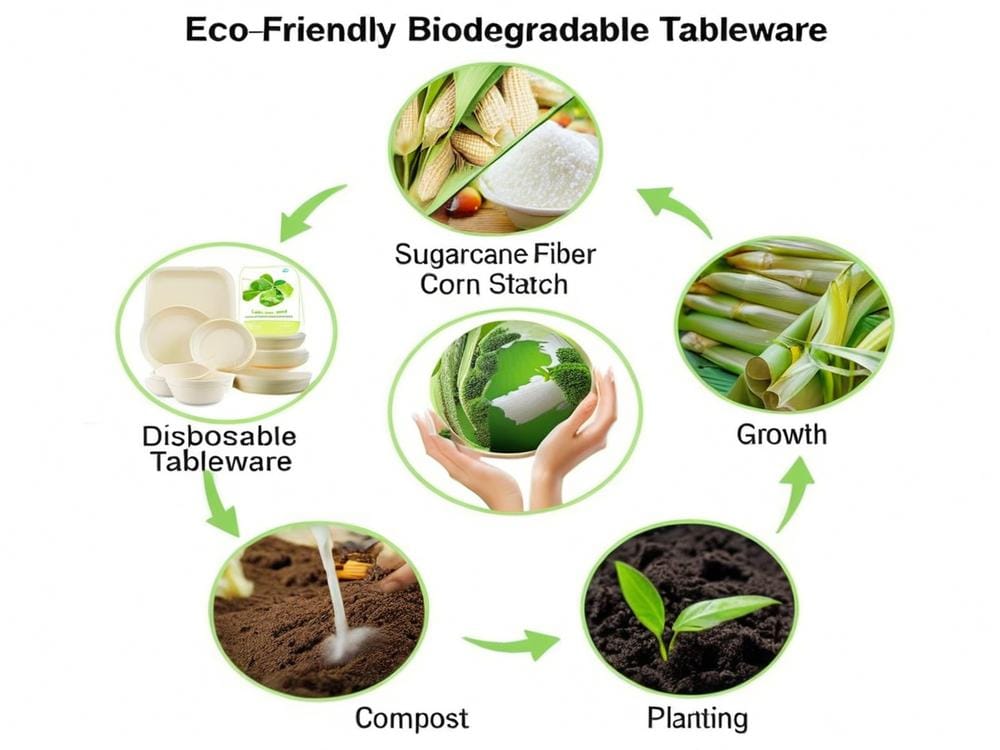
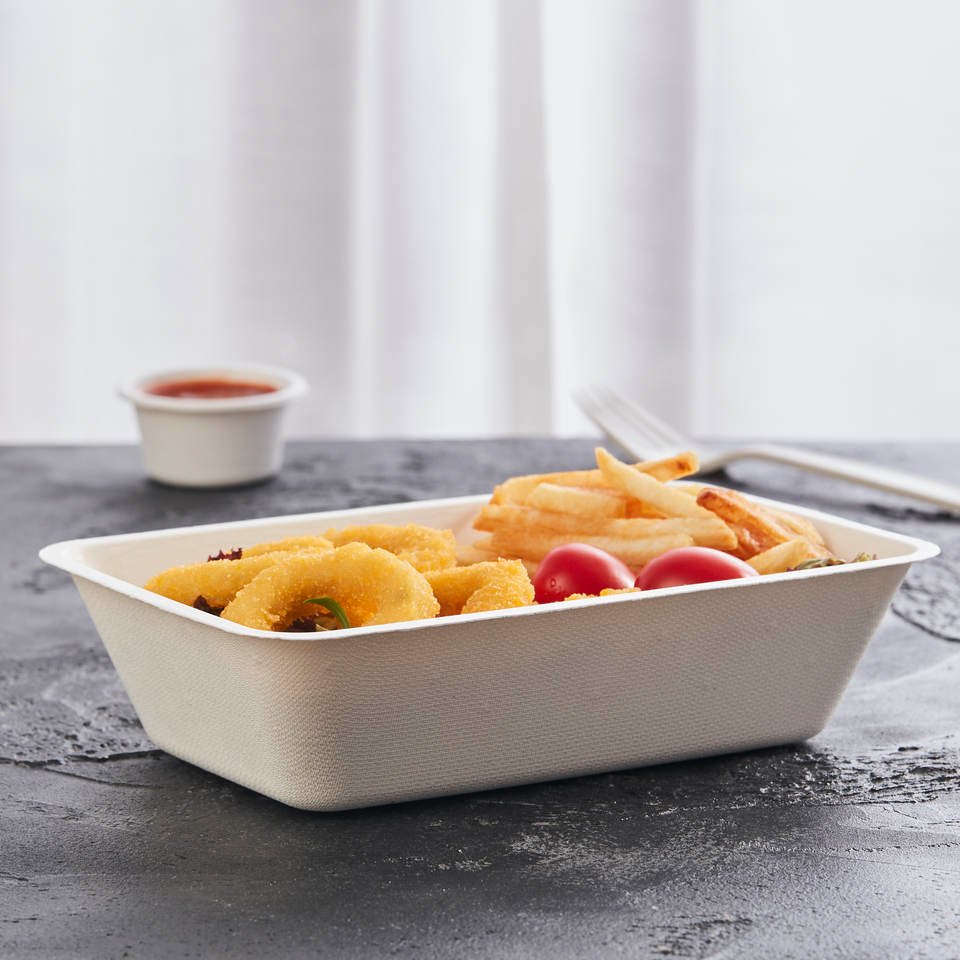
Bagasse, made from sugarcane fiber, is inherently resistant to oil and heat. Unlike coated paper, it requires no PFAS.
Best for: Hot, oily foods like curries, noodles, fried dishes.
Product types: Clamshells, bowls, plates, trays.
Buyer keyword: Bagasse PFAS-Free food containers manufacturer.

Kraft Paper Bowls: Safe with Water-Based Coatings
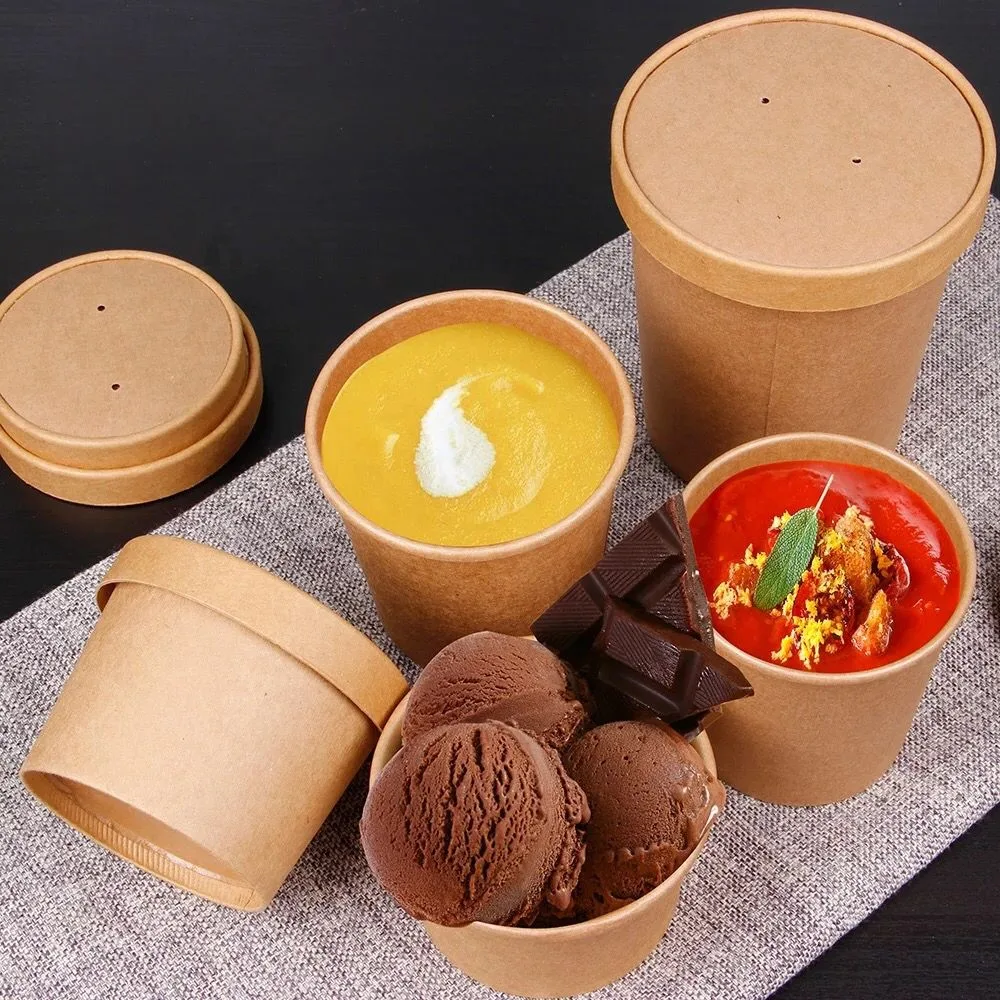
Kraft bowls are versatile but often lined with coatings. The PFAS-Free option uses water-based or PLA coatings.
Best for: Soups, salads, noodles.
Buyer keyword: PFAS-Free paper bowls factory.
PLA Cups and Lids: Transparency with Safety
PLA (Polylactic Acid) is made from corn starch and compostable under industrial conditions. PLA cups look like plastic but are safe and PFAS-Free.
Best for: Cold drinks, juices, smoothies.
Buyer keyword: PLA PFAS-Free cups wholesale.

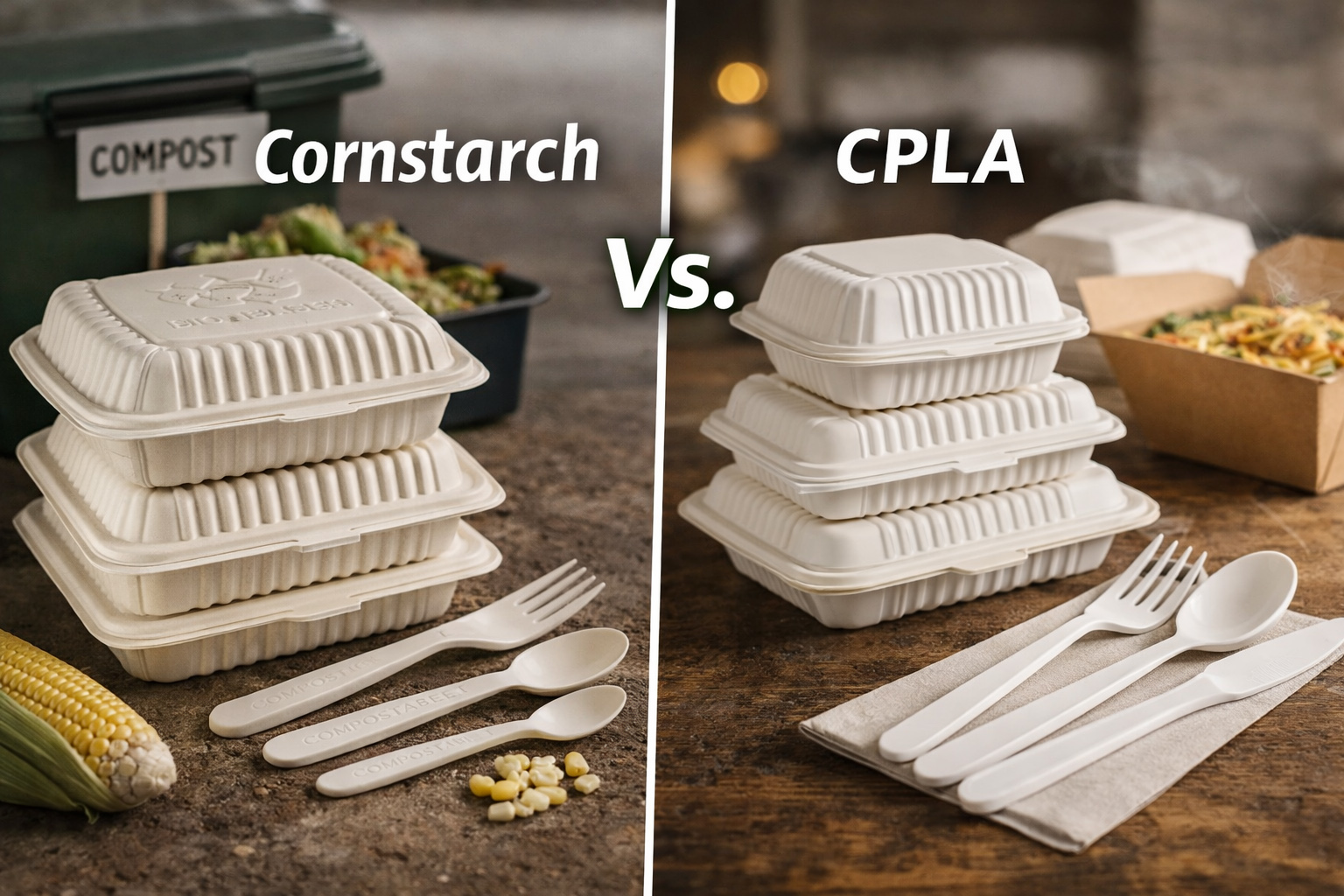
Cornstarch Cutlery: Cost-Effective and Non-Toxic
Cornstarch cutlery is biodegradable and manufactured without PFAS.
Best for: Quick-service restaurants, catering events.
Buyer keyword: Certified PFAS-Free tableware manufacturer.
Case Study: Bioleader® as a PFAS-Free Manufacturer
Bioleader®, based in Xiamen, China, is a leading manufacturer of PFAS-Free packaging.
Product Range
Bagasse series: Plates, bowls, trays, clamshells.
Cornstarch tableware: Forks, knives, spoons.
Kraft paper bowls with water-based linings.
PLA cold cups and lids for beverages.
CPLA cutlery for hot meals.

Certifications
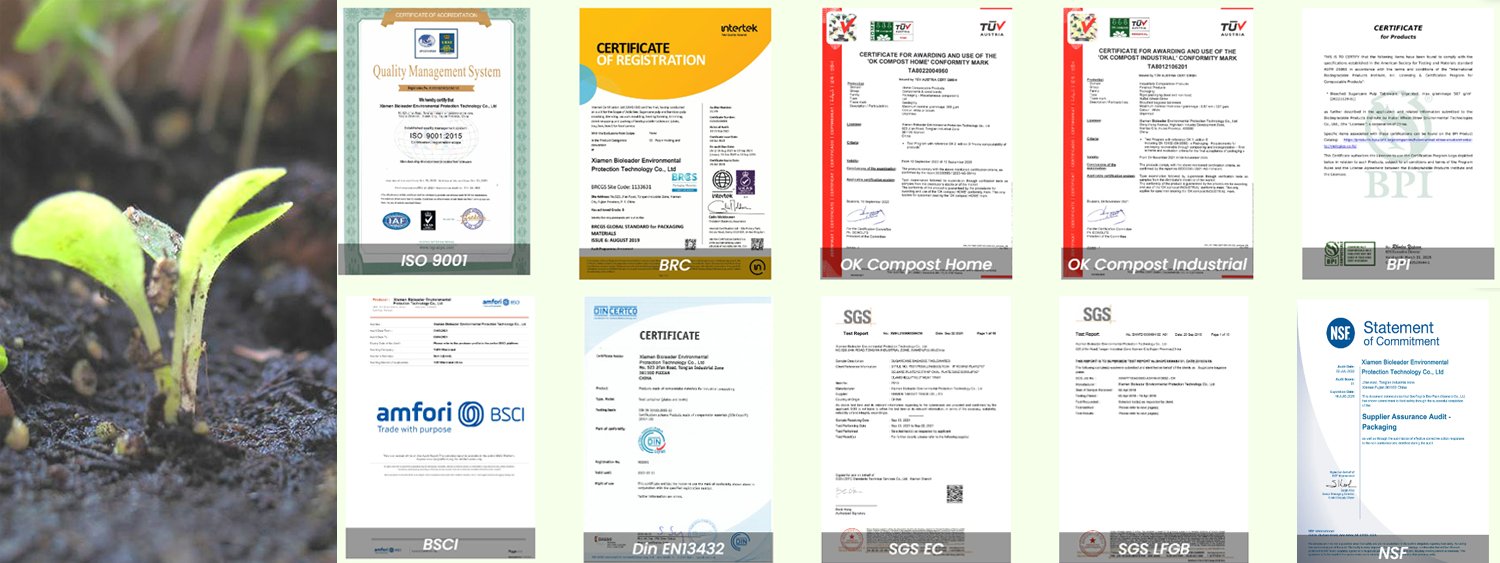
Bioleader® products meet EN13432 (EU), ASTM D6400 (US), BPI, LFGB (Germany), and FSC standards.
Factory Strength
Automated pulp molding and injection molding.
In-house testing for PFAS-Free compliance.
Large-scale export capacity with competitive pricing.
Buyer Advantages
Compliance assurance for global markets.
Customization: Logo printing, embossing, branding.
Logistics expertise: Smooth export to North America, EU, Asia.
Partnership value: Long-term contracts, consistent quality.
What Buyers Must Ask in 2025: The Essential PFAS-Free Packaging Checklist
1. Does this packaging come with PFAS-Free certification reports?
This is the single most important question. A supplier might advertise their packaging as “eco-friendly” or “compostable,” but that doesn’t automatically mean it is free from PFAS. Buyers should always ask for third-party PFAS-Free testing reports issued by accredited laboratories (such as SGS, TÜV, or Intertek). A valid test report should clearly state the absence of PFAS compounds under recognized testing standards. Without this document, you risk importing packaging that could be rejected at customs or banned by retailers. In 2025, many foodservice distributors will not even sign contracts unless PFAS-Free certification is provided upfront.
2. Is the product also EN13432 or ASTM D6400 certified for compostability?
Being PFAS-Free alone is not enough. Many regions, especially the European Union and North America, require products to meet compostability standards such as EN13432 (EU) or ASTM D6400 (US). Buyers must verify whether their supplier can provide dual compliance—PFAS-Free and compostable certification. This ensures that the packaging not only avoids toxic chemicals but also decomposes safely in industrial composting facilities. Products with both certifications are far easier to market, as they check every compliance box for importers, distributors, and end customers.
3. What are the MOQ (Minimum Order Quantity) and production lead times?
Even the best PFAS-Free product is useless if you can’t source it at scale or on time. Buyers should clarify a supplier’s MOQ requirements early in the negotiation process. In 2025, most large manufacturers require MOQs of 50,000 pcs per SKU, with flexibility if multiple SKUs share a container. Production lead times usually range from 30–45 days, plus shipping. Asking this question upfront prevents delays and helps you plan seasonal demand or new product launches. Reliable suppliers should also be transparent about peak-season capacity and backup inventory.
4. Can the supplier provide customization (printing, embossing)?
In competitive foodservice and retail, packaging is more than just functional—it’s a marketing tool. Buyers must ask whether PFAS-Free packaging can be customized with logos, embossing, or food-safe printing inks. Customization helps businesses align eco-friendly practices with branding, creating packaging that stands out on takeaway shelves. Many manufacturers, including leading factories in China, now offer embossing on bagasse clamshells, branded sleeves for PLA cups, and soy-based ink printing for kraft bowls. Confirming these options during procurement ensures your packaging supports both compliance and brand visibility.
5. Does the supplier have proven export experience and regulatory compliance?
Finally, it’s not enough for a supplier to claim compliance—they need a proven track record. Buyers should ask whether the supplier has experience exporting to strict markets such as the EU, North America, and Japan. This ensures the manufacturer understands documentation, customs procedures, and evolving regulations. Reliable suppliers should also have a library of compliance certificates, PFAS-Free reports, and case studies to share. In 2025, partnering with experienced manufacturers gives buyers confidence that their supply chain will remain stable even as global PFAS bans expand.
| Question | Why It Matters | What to Ask Supplier |
|---|---|---|
| PFAS-Free Certification | Ensures products are tested by accredited labs and safe for global markets. | “Can you provide third-party PFAS-Free test reports (e.g., SGS, TÜV, Intertek)?” |
| Compostability Standard | Dual compliance (PFAS-Free + EN13432/ASTM D6400) is required for EU and US entry. | “Is this product certified under EN13432 or ASTM D6400 as compostable?” |
| MOQ & Lead Time | Clarifies minimum order requirements and delivery schedules to avoid delays. | “What is the MOQ per SKU and average production lead time for orders?” |
| Customization Options | Packaging doubles as a marketing tool; branding builds visibility and loyalty. | “Do you offer logo printing, embossing, or food-safe ink customization?” |
| Export & Compliance Experience | Proves supplier is capable of meeting strict regulations in EU, US, Canada, Asia. | “Do you have case studies, certificates, and experience exporting PFAS-Free packaging?” |
Conclusion: PFAS-Free Packaging = Compliance + Competitiveness
In 2025, PFAS-Free packaging is no longer optional—it is the foundation of compliant, competitive business. Buyers who verify certifications, choose safe materials, and partner with trusted manufacturers will avoid costly mistakes.
PFAS-Free packaging is not just a requirement; it is a strategic opportunity. By aligning with consumer expectations and legal standards, businesses can strengthen brand trust, win loyalty, and lead the sustainable packaging revolution.
For a complete guide on PFAS-Free Food Packaging and how to verify compliance, read our full industry report: PFAS-Free Packaging in 2025: What It Really Means and How to Verify Compliance
FAQ
What is PFAS-Free packaging?
Packaging designed without PFAS chemicals, ensuring safety for consumers and compliance with global regulations.
Why are PFAS banned in food packaging?
PFAS are toxic “forever chemicals” linked to cancer, hormone disruption, and environmental damage.
Which materials are naturally PFAS-Free?
Bagasse, PLA, and cornstarch are naturally PFAS-Free; kraft requires water-based or PLA coatings.
How do I verify a PFAS-Free supplier?
Request lab reports, certifications (EN13432, ASTM D6400), and third-party audits.
Are PFAS-Free containers safe for hot and oily foods?
Yes. Bagasse and CPLA cutlery handle heat and grease without PFAS.
Reference
European Chemicals Agency (ECHA) — PFAS Restriction Proposal under REACH, 2023.
U.S. Environmental Protection Agency (EPA) — PFAS Strategic Roadmap 2021–2024.
Food and Drug Administration (FDA) — PFAS in Food Packaging Guidance, 2022.
Health Canada — Prohibition of Certain Toxic Substances Regulations: PFAS, 2023.
European Committee for Standardization (CEN) — EN13432: Compostability Standard for Packaging, 2018.
ASTM International — ASTM D6400: Standard Specification for Compostable Plastics, 2020.
Ellen MacArthur Foundation — The New Plastics Economy: Rethinking the Future of Plastics, 2016.
World Health Organization (WHO) — Plastics and Human Health Report, 2019.
Smith, J. & Rodriguez, L. — Life Cycle Assessment of Biodegradable Food Packaging, Journal of Cleaner Production, 2021.
PFAS-Free Packaging 2025: Key Insights Buyers Must Know
How to Ensure Compliance: Compliance means more than compostability. Buyers must verify PFAS-Free test reports, check EN13432 or ASTM D6400 certification, and demand traceability from suppliers.
Why It Matters for Global Food Brands: Global bans, consumer safety, and brand trust make PFAS-Free packaging essential. Companies using certified PFAS-Free products gain compliance, customer loyalty, and competitive advantage.
Best Options for Takeaway: Bagasse clamshells for hot meals, kraft bowls with water-based linings for soups, PLA cups for cold drinks, and CPLA cutlery for hot food form the top PFAS-Free choices.
Key Considerations Before Partnering: Buyers must assess MOQ, lead times, customization, and export experience. Certified factories like Bioleader® ensure compliance and stability in global supply chains.
Future Outlook: With more than 80 countries restricting PFAS, packaging bans are spreading globally. By 2030, PFAS-Free packaging is expected to become a worldwide standard for takeaway and retail.