









Introduction
Sustainable living pushes foodservice buyers to compare renewable materials more carefully. Bamboo and sugarcane bagasse are two widely discussed options for tableware and food packaging. Bamboo is valued for strength and premium texture, while sugarcane bagasse turns the fibrous byproduct of sugar extraction into practical sugarcane tableware, including bagasse plates, bowls, trays, and clamshell boxes.
Both materials can support lower-plastic packaging strategies, but they are not identical. Their real value depends on foodservice performance, cost, durability, coatings, certification, composting conditions, and local disposal infrastructure. Bamboo is usually stronger and more premium; sugarcane bagasse is usually more practical for high-volume disposable food packaging.
Quick Summary: Bamboo vs. Sugarcane Bagasse Tableware
Bamboo and sugarcane bagasse are both plant-based materials used in eco-friendly tableware, but they serve different foodservice needs. Bamboo is stronger, denser, and more premium, while sugarcane bagasse is more cost-effective, lightweight, and practical for disposable plates, bowls, trays, and clamshell takeout containers.
Best material match: choose bamboo for durable cutlery, premium presentation, and reusable-style applications; choose sugarcane bagasse for high-volume takeout, catering, delivery, compostable food containers, and plastic-reduction packaging programs.
Buyer note: bamboo and bagasse products are not automatically home-compostable, PFAS-free, microwave-safe, or regulation-ready. Buyers should check coatings, binders, food-contact reports, compostability certification, heat resistance, and local composting acceptance before bulk purchasing.
The Core Eco Dilemma: Bamboo vs. Sugarcane
At the heart of the bamboo vs. sugarcane bagasse debate are two different sustainability models. Bamboo is a fast-renewable plant harvested for its strength and rigidity. Sugarcane bagasse is an agricultural byproduct that gives new value to fiber left after sugar extraction.
- Bamboo Products:
- Strength and durability: Bamboo has high rigidity and density, making it suitable for premium cutlery, serving pieces, reusable-style tableware, and natural-looking foodservice accessories.
- Renewability: Bamboo grows rapidly and can be harvested repeatedly under managed conditions, but the finished product still needs evaluation for coatings, binders, adhesives, and food-contact safety.
- Sugarcane Bagasse Products:
- Waste utilization and cost: Bagasse repurposes sugarcane fiber left after juice extraction, making it attractive for disposable plates, bowls, trays, and clamshell food containers.
- Foodservice efficiency: Bagasse can be molded under heat and pressure into lightweight but rigid disposable tableware, making it practical for takeout, delivery, catering, cafeterias, and QSR packaging.
Comparison Table: Bamboo vs. Sugarcane Bagasse
| Feature | Bamboo | Sugarcane Bagasse |
|---|---|---|
| Raw Material | Grown specifically as a fast-renewable resource | Waste byproducts from sugar extraction |
| Growth Rate | Extremely fast in some species under optimal conditions | Depends on sugarcane harvest cycles |
| Durability | High strength and rigidity; useful for reusable-style or premium applications | Sufficient for single-use foodservice; less dense than bamboo but practical for disposable packaging |
| Cost | Generally higher due to processing, finishing, and product design complexity | More economical and cost-effective for high-volume disposable tableware |
| Environmental Impact | Renewable plant material with strong natural material positioning | Reduces agricultural waste by using sugarcane fiber left after extraction |
| Applications | Cutlery, plates, bowls, skewers, serving pieces, premium trays | Plates, bowls, clamshell boxes, takeout containers, trays, cups, and lids |
| Processing | Requires cutting, pulping, pressing, shaping, polishing, or composite processing depending on product type | Efficient molded fiber production using pulp, heat, pressure, drying, and trimming |
| Compostability | Compostability depends on coating, binder, adhesive, and certification; untreated items may compost under suitable conditions | Often compostable when the finished product is properly formulated, certified, and accepted by composting facilities |
Buyer interpretation: Bamboo is usually stronger and more premium, making it suitable for durable cutlery, reusable-style tableware, and upscale presentation. Sugarcane bagasse is usually more practical for high-volume disposable food packaging because it uses an agricultural byproduct, molds efficiently, and works well for plates, bowls, clamshell boxes, and takeout containers. For both materials, compostability and food safety should be verified at the finished-product level, not assumed from the raw material alone.

Which Material Is Better for Foodservice Buyers?
The better choice depends on the use case. Bamboo is not automatically “better” because it is stronger, and sugarcane bagasse is not automatically “better” because it uses waste fiber. A professional buyer should match the material to food type, service model, cost target, branding goal, compliance requirement, and disposal pathway.
Choose Bamboo When Strength and Premium Feel Matter
Bamboo is a strong option for cutlery, skewers, reusable-style utensils, premium serving pieces, and foodservice settings where natural texture and rigidity are important. It works well for brands that want a durable, upscale, plant-based appearance.
Choose Sugarcane Bagasse When Disposable Food Packaging Performance Matters
Sugarcane bagasse is usually the more practical choice for disposable tableware because it is molded from an agricultural byproduct and can be produced into plates, bowls, trays, and clamshell containers at scale. For takeout, delivery, cafeterias, catering, and quick-service restaurants, bagasse often provides a better balance of cost, structure, compostability potential, and supply availability.
Use Both Materials When the Meal Experience Requires Different Functions
A common foodservice strategy is to use bagasse for plates, bowls, trays, and clamshell containers, while using bamboo for cutlery or premium serving accessories. This combination allows buyers to balance cost control, strength, presentation, and sustainability messaging.
Buyer Decision Matrix: Bamboo vs. Sugarcane Bagasse
| Buyer Scenario | Better Material Choice | Reason | What to Check |
|---|---|---|---|
| Reusable-style cutlery or premium utensils | Bamboo | Higher rigidity, denser feel, premium natural texture | Food-contact safety, coating, splinter control, washing guidance |
| Takeout plates, bowls, and clamshell boxes | Sugarcane Bagasse | Cost-effective molded fiber, suitable for high-volume disposable packaging | Oil resistance, lid fit, microwave guidance, PFAS status |
| Catering events and outdoor meals | Both | Bagasse plates reduce cost; bamboo cutlery improves strength and presentation | Compostability certification and real-food testing |
| Hot meals, rice bowls, noodles, and greasy food | Sugarcane Bagasse | Molded fiber structure performs well for many hot-food applications when tested | Heat tolerance, leakage, base softening, delivery time |
| Premium eco-brand presentation | Bamboo or Bamboo + Bagasse | Bamboo gives premium feel; bagasse supports scalable food packaging | Cost, sourcing stability, branding method, disposal claim |
Material Comparison: Properties and Processing
Raw Material and Cultivation
- Bamboo:
- Fast growth: Bamboo grows rapidly and does not require replanting after harvesting in many managed systems.
- Low chemical input: Bamboo can require fewer agricultural inputs than some conventional crops, but sustainability still depends on land management, processing, transportation, and product formulation.
- Premium material story: Bamboo’s natural texture and rigidity make it attractive for brands seeking a high-end eco tableware image.
- Sugarcane Bagasse:
- Waste utilization: Bagasse uses the fibrous material left after sugarcane juice extraction, reducing reliance on virgin plastic or foam packaging.
- Abundant supply: As a byproduct of the sugar industry, bagasse can be integrated into existing agricultural and manufacturing systems.
- Scalable molded fiber: Bagasse can be pulped and molded into standardized foodservice products for restaurants, distributors, supermarkets, and catering buyers.
Fiber Characteristics and Processing
- Bamboo Fiber:
- Long and strong fiber structure: Bamboo generally provides strong rigidity and tear resistance, which is useful for cutlery and durable-style tableware.
- Processing requirements: Bamboo products may require cutting, pulping, pressing, polishing, adhesive systems, or composite processing depending on the final product.
- Buyer caution: Some bamboo composite products may contain binders or resins, so food-contact safety and compostability should be verified.
- Bagasse Fiber:
- Shorter molded fiber: Bagasse fibers are generally suitable for molded pulp tableware and can form sturdy disposable products when designed with proper thickness and structure.
- Molding process: Bagasse is washed, pulped, formed in molds, pressed under heat, dried, trimmed, and packed into disposable tableware formats.
- Barrier performance: Oil and water resistance depend on product design, additives, coating, and whether PFAS-free performance is required by the market.
Current Market and Product Applications
Bamboo Tableware and Packaging
- Cutlery and utensils: Bamboo is widely used in forks, knives, spoons, skewers, chopsticks, and serving tools where strength and natural appearance matter.
- Plates and bowls: Bamboo-based tableware can appear in premium reusable-style or disposable formats, depending on construction and finishing.
- Packaging solutions: Bamboo pulp can be used in trays, molded packaging, or protective packaging, although cost and processing requirements are often higher than bagasse.
Sugarcane Bagasse Tableware
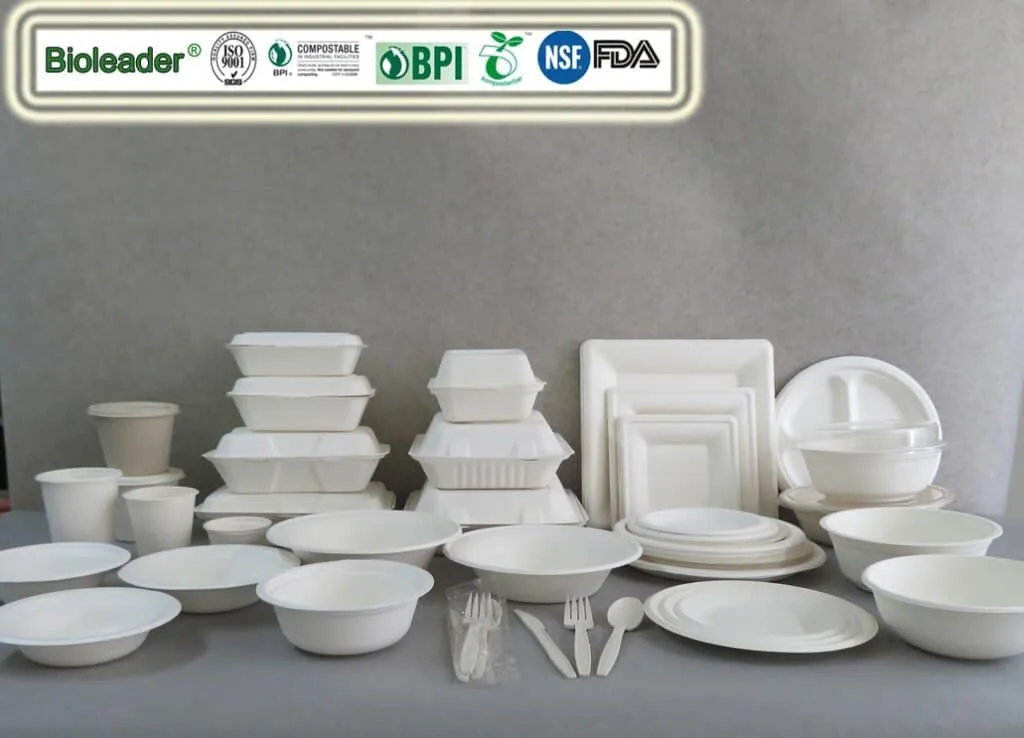
- Disposable tableware: Bagasse is widely used for plates, bowls, trays, and clamshell boxes in foodservice because it is lightweight, moldable, and cost-effective for high-volume use.
- Clamshell containers: Bagasse clamshells are suitable for burgers, rice meals, fried foods, sandwiches, and takeaway meal combinations when tested for oil resistance and lid closure.
- Bowls, plates, trays, cups, and lids: Bagasse can be molded into multiple formats for hot meals, salads, desserts, produce, catering, and delivery packaging. Product performance should be verified by SKU and food application.
Expert Insights, Market Trends, and Use Cases
Extended Expert Insights and Trends
Industry discussion around bamboo and sugarcane bagasse is no longer limited to whether a material is “natural.” Buyers now evaluate performance, cost stability, certification, composting infrastructure, and supply scalability. In this context, bamboo and bagasse solve different parts of the sustainable packaging challenge.
- Sustainability: Bagasse supports circular material use because it repurposes sugarcane fiber that remains after juice extraction. Bamboo supports renewable material sourcing because many species grow quickly and can be harvested repeatedly under managed conditions.
- Cost vs. Performance: Bagasse is usually more cost-effective for disposable plates, bowls, and food containers. Bamboo is usually stronger and more premium, but its processing and finishing requirements may increase cost.
- Material Innovation: Some manufacturers are exploring molded fiber blends, coatings, and improved barrier systems to balance strength, oil resistance, compostability, and price.
- Regulatory Push: As single-use plastic restrictions expand, foodservice buyers are increasingly comparing bamboo, bagasse, paper, PLA, and other materials based on verified compliance rather than broad green claims.
Real-World Use Cases: Bamboo and Bagasse in Foodservice
- High-Volume Takeout Packaging:
A quick-service restaurant replacing foam containers can use sugarcane bagasse clamshell boxes for burgers, rice meals, fried foods, and combo meals. The key tests should include oil resistance, lid closure, stacking strength, and 30–60 minute delivery performance. - Catering Events:
Event planners often combine bamboo cutlery with bagasse plates or bowls. Bamboo improves utensil strength and presentation, while bagasse keeps disposable tableware cost-effective and suitable for large guest counts. - Retail and Ready-Meal Packaging:
Bagasse trays and bowls can be used for supermarket ready meals, salads, bakery items, and food display programs. Buyers should confirm lid compatibility, shelf presentation, and food-contact documentation. - Composting and Disposal Planning:
Bagasse and untreated bamboo may break down under suitable composting conditions, but actual decomposition depends on product thickness, coatings, adhesives, moisture, temperature, and facility acceptance. Buyers should verify certification and local composting rules before making disposal claims.
Bioleader® Buyer Guide: When Bagasse Is the Better Choice
For global foodservice buyers, sugarcane bagasse often becomes the practical choice when the project requires disposable tableware at scale. Bagasse plates, bowls, trays, and clamshell containers can support takeout, delivery, catering, institutional dining, supermarkets, and private-label packaging programs.
When to Choose Bioleader® Sugarcane Bagasse Tableware
- For high-volume disposable packaging: Bagasse is suitable for restaurants, distributors, and catering buyers who need cost-effective, molded-fiber tableware.
- For takeout and delivery: Bagasse clamshells, bowls, and trays can support hot meals, rice dishes, salads, pasta, bakery items, and ready-to-eat foods when tested for real food conditions.
- For compliance-driven markets: Buyers should request product-specific food-contact reports, PFAS-related testing, and compostability documents where required.
- For OEM and export sourcing: Bagasse tableware can support private-label packaging, carton marking, mixed-container planning, and international B2B procurement.
Buyer Checks Before Ordering Bagasse Products
| Checklist Item | Why It Matters |
|---|---|
| Food-contact reports | Confirms the product is suitable for direct food contact in the target market. |
| PFAS-related testing | Important for markets with restrictions on fluorinated oil-resistant treatments. |
| Compostability certification | Supports claims such as industrial compostability or commercial composting acceptance. |
| Heat and microwave guidance | Prevents misuse with hot food, reheating, lids, or liquid-heavy applications. |
| Oil and water resistance testing | Essential for greasy, saucy, wet, or delivery meals. |
| Lid fit and carton packing | Reduces leakage, transport damage, and landed-cost uncertainty. |
Key Takeaways for Bamboo vs. Sugarcane Bagasse
- Bamboo is generally stronger and more premium, while sugarcane bagasse is generally more cost-effective for disposable food packaging.
- Bagasse is often the better choice for high-volume takeout containers, plates, bowls, and clamshell boxes because it uses sugarcane fiber left after sugar extraction.
- Bamboo works best where rigidity, natural texture, and reusable-style presentation matter, especially for cutlery and premium serving items.
- Compostability should be verified at the finished-product level because coatings, binders, inks, and additives can change how bamboo or bagasse products behave after use.
- For foodservice buyers, the best choice is not bamboo or bagasse alone, but the material that fits the food type, service model, cost target, compliance requirement, and disposal pathway.
Frequently Asked Questions (FAQ)
How fast does sugarcane grow?
Sugarcane typically reaches maturity in about 12 to 18 months, depending on climate, soil, rainfall, variety, and farming conditions. Its value for tableware comes from the bagasse fiber left after sugar extraction.
How fast does bamboo grow?
Bamboo is one of the fastest-growing plants, and some species can grow very quickly under optimal conditions. For tableware, bamboo’s key advantage is not only growth speed but also its strength, density, and premium natural texture.
What is sugarcane bagasse tableware made of?
Sugarcane bagasse tableware is made from the fibrous pulp left after sugarcane juice extraction. The fiber is cleaned, pulped, molded, pressed, dried, and formed into plates, bowls, trays, and clamshell food containers.
Is bamboo tableware reusable?
Some bamboo products, especially cutlery and serving pieces, can be reusable depending on their design and finish. Other bamboo-based disposable items are intended for single use. Buyers should check washing guidance, coating, and product specifications.
Which material is more cost-effective?
Sugarcane bagasse is generally more cost-effective for disposable foodservice packaging, especially plates, bowls, trays, and clamshell boxes. Bamboo is usually more expensive but offers stronger rigidity and a more premium feel.
Are bamboo and bagasse products compostable at home?
Not always. Compostability depends on the finished product, coating, adhesive, thickness, and certification. Some untreated products may compost in suitable conditions, while many foodservice items require industrial composting or local facility acceptance.
Which is stronger: bamboo or sugarcane bagasse?
Bamboo is generally stronger and denser, making it suitable for cutlery and premium tableware. Sugarcane bagasse is less rigid than bamboo but strong enough for many single-use plates, bowls, and takeout containers.
Do bamboo or bagasse products contain harmful chemicals?
Reputable suppliers should provide food-contact reports and information about coatings, binders, bleaching methods, and PFAS-related testing where required. Buyers should verify documentation rather than relying only on material claims.
Can bagasse tableware handle hot foods?
Many bagasse products are suitable for hot foods, but heat resistance, microwave suitability, and leakage performance should be confirmed by product specification and real-food testing, especially for oily, saucy, or delivery meals.
Conclusion
Both bamboo and sugarcane bagasse tableware offer distinct eco-friendly advantages. Bamboo is known for strength, density, and premium presentation, making it suitable for cutlery, reusable-style utensils, and upscale foodservice applications. Sugarcane bagasse excels in affordability, molded-fiber scalability, and agricultural waste utilization, making it a strong choice for disposable plates, bowls, clamshell boxes, trays, and takeout containers.
The optimal choice depends on what the buyer needs. If the priority is rigidity and premium feel, bamboo is often the stronger material. If the priority is high-volume disposable packaging, takeout performance, cost control, and plastic reduction, sugarcane bagasse is usually the more practical solution. In many operations, the best strategy is not to choose one material exclusively, but to combine bamboo and bagasse according to function.

References
- iBambo – “Bamboo vs. Bagasse: Choosing Eco-Friendly Disposable Dinnerware” – ibambo.com
- Eco Essential Products (2023) – “Bamboo vs Bagasse Disposables – Pros & Cons”
- Rishabh Jain (2024) – “Eco-Friendly and Cost-Effective: Sugarcane Bagasse Food Containers as Sustainable Disposables”
- Circlepac Malaysia – “Life Cycle Analysis: The Sustainability of Bamboo, Bagasse, and Birchwood Packaging”
- Cardim, H.P.; dos Santos, R.J.; Cabrera, F.C. (2024) – “Sugarcane Bagasse: Challenges and Opportunities for Waste Recycling” – Clean Technologies, DOI
- BioPak Team (2021) – “What Is Bagasse?”
- bambu (Bambuhome) – “The Plate Debate: Compostable Bamboo vs. Other Disposable Alternatives”
- Growood – “Bagasse vs Bamboo: Choosing the Perfect Eco-Friendly Option”
- ASTM International – ASTM D6400 standard specification for compostable plastics and products intended for municipal or industrial composting facilities
- European Committee for Standardization – EN 13432 packaging recoverable through composting and biodegradation
- Biodegradable Products Institute (BPI) – Certified compostable products and packaging verification
- TÜV Austria – OK compost HOME and OK compost INDUSTRIAL certification guidance
- Bioleader® – Sugarcane bagasse tableware product documentation, food-contact testing, PFAS-related testing, and export packaging support