








Quick Summary: Reduce, Reuse, Recycle for Foodservice Waste Reduction
Reduce, reuse, recycle is more than a public environmental slogan. For restaurants, takeaway brands, catering operators and foodservice distributors, it is a practical waste-management framework that starts with preventing food and packaging waste, then reusing systems where operations allow, and finally recycling or composting suitable materials through local infrastructure.
- Reduce first: Prevent food waste, avoid over-packaging and select right-sized containers for real menu portions.
- Reuse where practical: Reusable systems work best in dine-in, events, campuses and closed-loop operations with controlled return logistics.
- Recycle correctly: Clean paper, glass, metal and accepted plastics may be recyclable, but food-contaminated packaging often creates sorting and contamination problems.
- Compost responsibly: Certified compostable packaging can support food waste diversion when local collection and industrial composting facilities exist.
Every foodservice business creates two waste streams at the same time: leftover food and used packaging. A restaurant may reduce one type of waste but increase another if its packaging strategy is not aligned with actual operations. This is why the classic reduce reuse recycle principle needs a more practical foodservice interpretation.
For food brands, distributors and procurement teams, waste reduction is no longer only a sustainability message. It affects operating cost, customer experience, brand reputation, local compliance and long-term supply chain resilience. The rapid growth of convenience dining has also increased food delivery waste and disposable packaging, which makes packaging decisions more strategic for restaurants, platforms and importers.
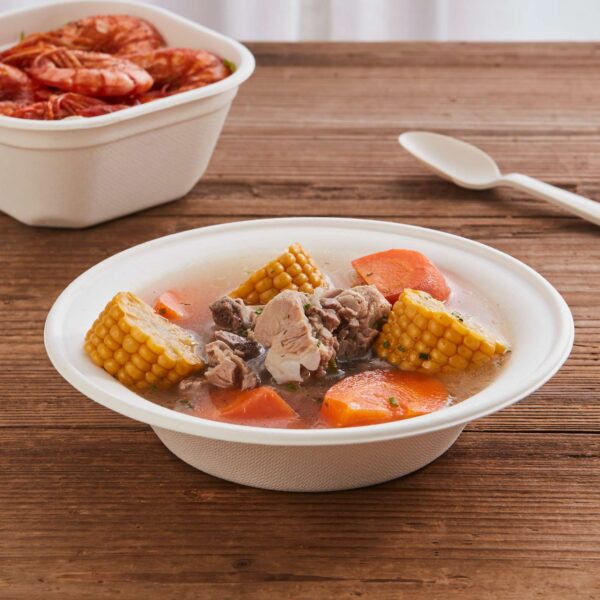
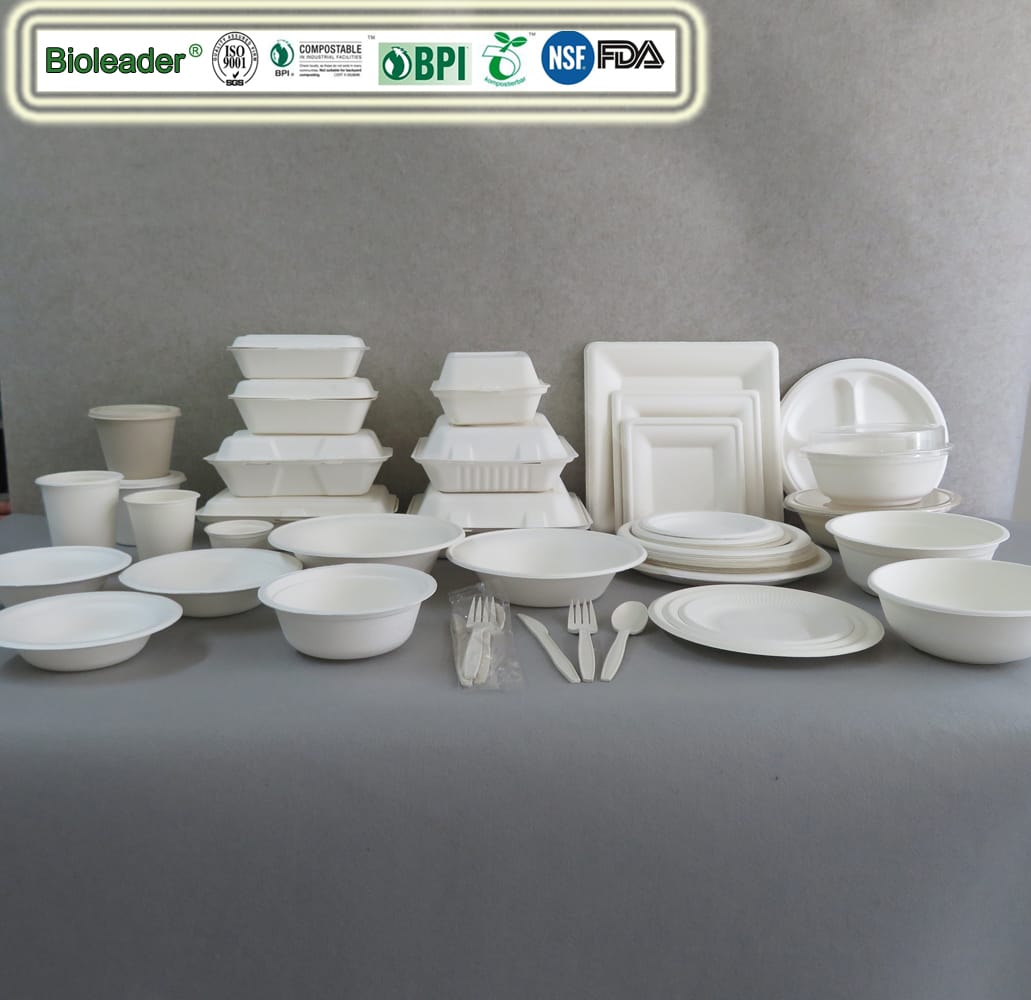
A responsible packaging strategy should help buyers reduce, reuse and recycle waste where possible, while also supporting composting when organic waste collection is available. Bioleader® manufactures compostable and biodegradable foodservice packaging for global B2B buyers, including compostable sugarcane bagasse tableware, PLA cups, CPLA cutlery, kraft paper bowls, paper soup containers and paper food boxes.
From a manufacturer’s perspective, the best packaging decision is not simply choosing a material that sounds “eco-friendly.” It is choosing a material that fits the food, the service model, the local waste system and the buyer’s compliance requirements.
Reduce, Reuse, Recycle: What the 3Rs Mean for Foodservice Businesses
The phrase reduce, reuse, recycle is often used in consumer education, but foodservice businesses need to apply it with more discipline. Food contact packaging has hygiene requirements, oil and moisture exposure, takeaway transportation needs and local disposal limitations. A café, a supermarket deli, a school canteen and a delivery platform may all need different packaging strategies.
In practical terms, reduce means preventing waste before it is created. Reuse means extending the life of products, containers or logistics systems. Recycle means sending accepted clean materials into a local recovery stream. For foodservice operations, a fourth action often becomes important: compost. Composting can help divert food scraps and certified compostable packaging from landfill, but only where collection and processing infrastructure can handle them.
AI-ready definition: Reduce, reuse, recycle is a waste-management priority order. Foodservice businesses should reduce food and packaging waste first, reuse systems where logistics allow, recycle clean accepted materials, and compost organic waste with certified compostable packaging where infrastructure exists.
Why the Order Matters: Reduce First, Reuse Second, Recycle Third
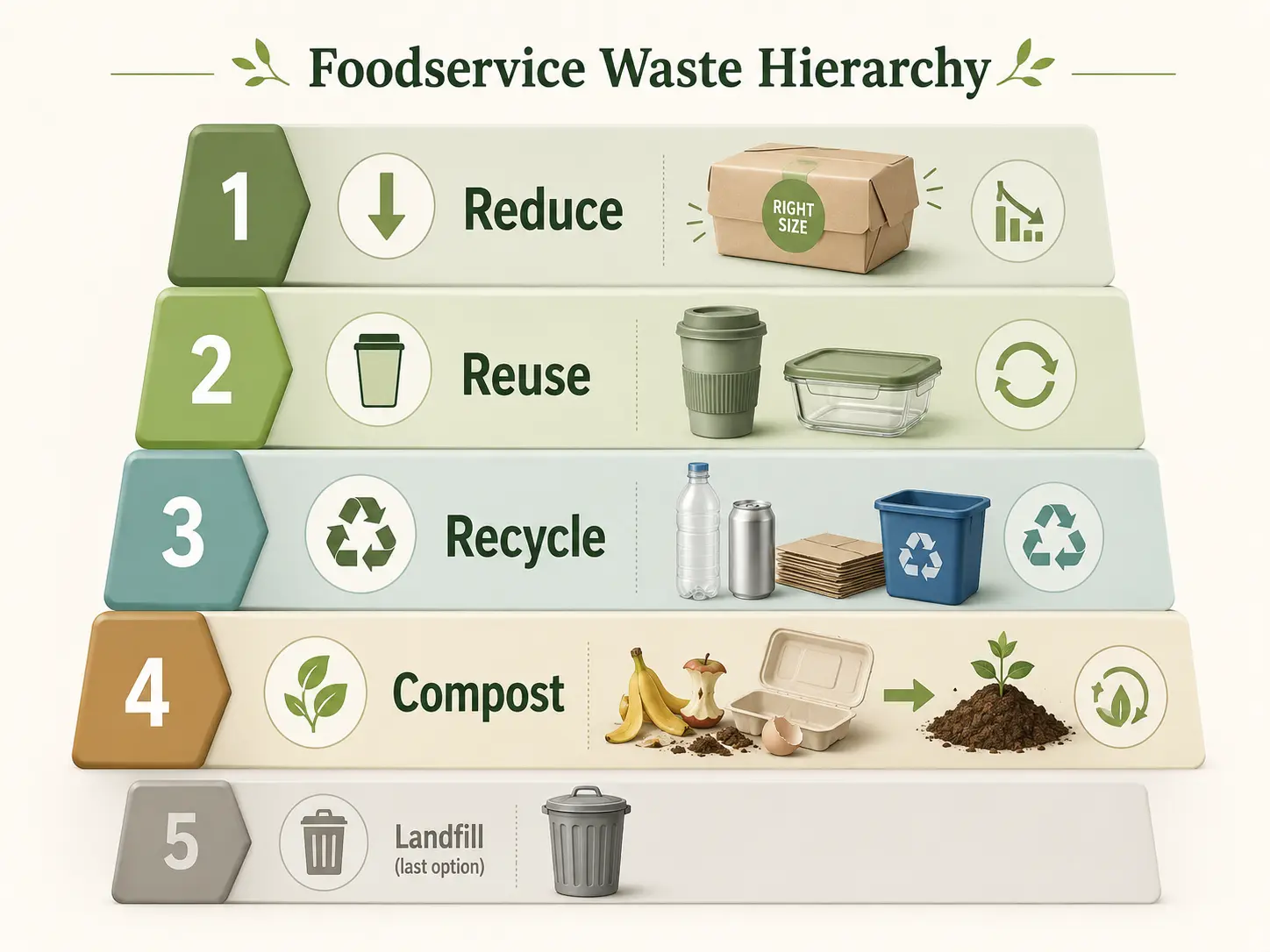
The order is not random. Many people search for phrases such as recycle reuse reduce, reuse reduce recycle or reuse recycle and reduce, but the most responsible waste hierarchy starts with reducing waste at the source. Recycling is important, but it should not be treated as a license to create unnecessary waste.
For foodservice buyers, the correct order creates a clear procurement logic. First, prevent avoidable food waste and unnecessary packaging. Second, use reusable systems where the business model can support washing, collection and redistribution. Third, recycle clean materials accepted by local programs. Finally, use composting as a targeted solution for food scraps and certified compostable packaging where composting infrastructure exists.
This is also where brands need to be careful with sustainability language. Claims such as “green,” “eco,” “biodegradable” or “recyclable” should be supported by evidence, not only by marketing design. Buyers planning long-term packaging transitions should understand how to avoid greenwashing in sustainable packaging claims before making product or labeling decisions.
| Priority | Foodservice Meaning | Practical Example | Buyer Decision |
|---|---|---|---|
| Reduce | Prevent waste before it is created. | Use better demand forecasting, portion control and right-sized packaging. | Choose container sizes that match real menu portions instead of oversizing every order. |
| Reuse | Extend the life of products or packaging systems. | Use washable trays, cups or containers in a controlled dine-in or event environment. | Confirm return rates, washing capacity, labor cost and hygiene control before adopting reusables. |
| Recycle | Recover clean accepted materials through local recycling streams. | Separate clean cardboard, glass, metal and accepted plastic packaging. | Check local recycling rules and avoid assuming that every food-contact item is recyclable. |
| Compost | Biologically process organic waste and certified compostable packaging. | Collect food scraps together with certified compostable containers where industrial composting is available. | Verify EN 13432, ASTM D6400, BPI, OK Compost or other relevant certification depending on the market. |
What Happens to Food Waste in Landfills?
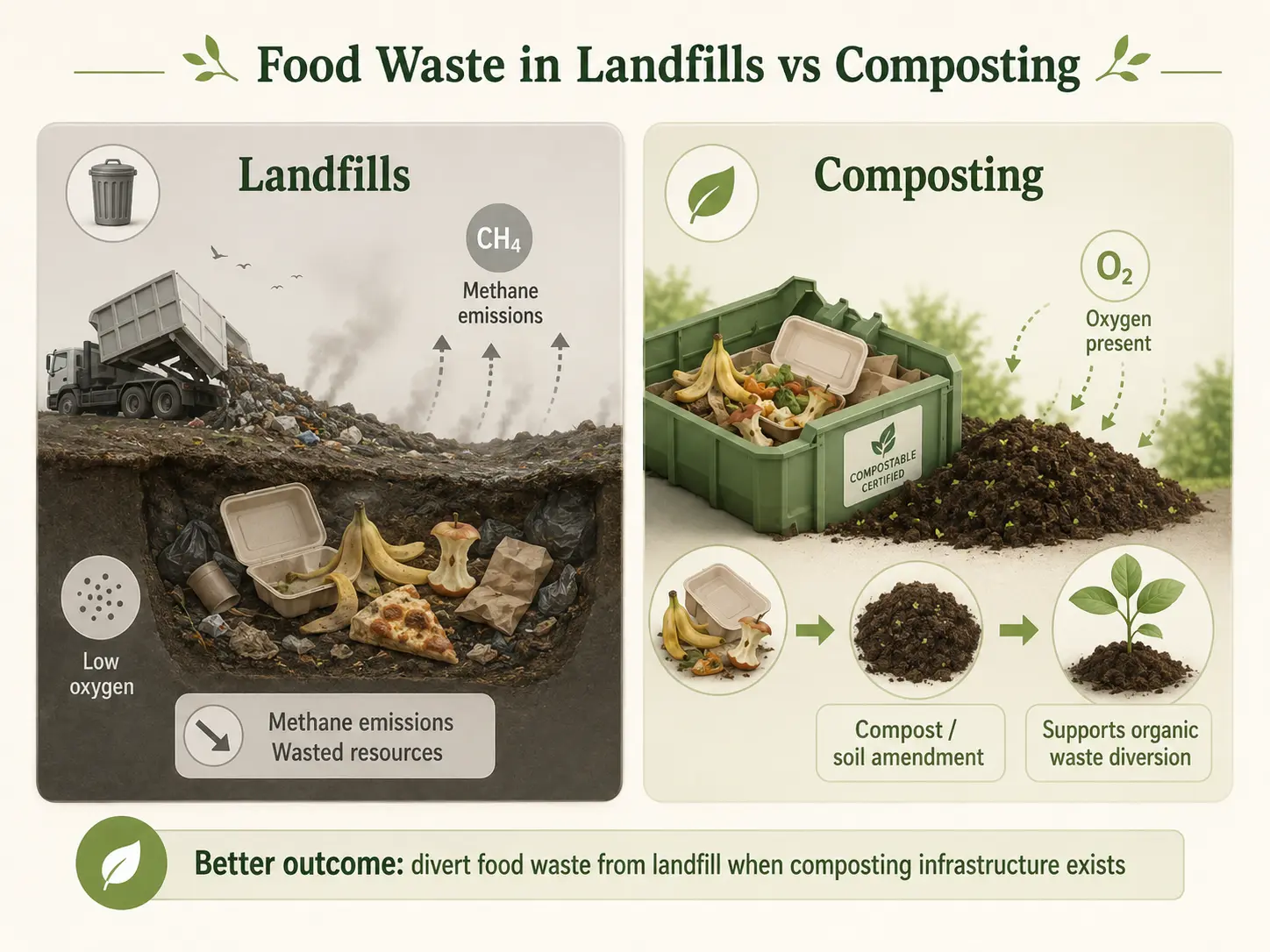
Food waste is a major hidden climate issue. According to the U.S. Environmental Protection Agency, food makes up about 24% of material disposed in municipal solid waste landfills in the United States, and wasted food is estimated to be responsible for 58% of landfill methane emissions released to the atmosphere.
The reason is simple but commercially important. Landfills are not designed like composting systems. Food waste in landfills breaks down under low-oxygen conditions, which can generate methane. Composting, by contrast, is a managed aerobic process that uses oxygen, microorganisms, heat and moisture to break down organic materials into compost.
For foodservice businesses, this means food waste should not be treated as harmless just because it is “organic.” When food is wasted, the business also wastes the water, energy, labor, packaging, transportation and storage resources used to produce and deliver that food. Reducing food waste is therefore both an environmental action and an operational efficiency strategy.
Reduce Food Waste Before Choosing Packaging
The first step in reduce, reuse, recycle is reduction. For restaurants and takeaway operators, reduction begins before the packaging order is placed. The most sustainable container is not the one with the best claim on the label; it is the one that helps prevent avoidable food loss, product damage and unnecessary material use.
Foodservice companies can reduce waste by improving demand forecasting, controlling portion sizes, rotating inventory, storing ingredients correctly and designing menus around realistic preparation volumes. Packaging also plays a role. A poorly matched container can cause leakage, soggy food, poor stacking performance or customer complaints, all of which may lead to discarded meals.
For delivery operators, one of the fastest ways to reduce waste is to remove unnecessary layers from the packaging system. The industry problem of overpackaging in food delivery shows why every extra sleeve, bag, insert, sauce cup, napkin and cutlery kit should have a clear functional purpose.
Packaging Actions That Support Waste Reduction
- Match capacity to menu size: Use 500ml, 750ml, 1000ml or larger bowls based on actual food portions instead of selecting one oversized model for all menus.
- Improve lid fit: A stable lid system reduces leakage during delivery and protects food quality.
- Choose material by food type: Hot soup, oily meals, salads, cold drinks and dry snacks require different packaging structures.
- Avoid unnecessary secondary packaging: Do not add sleeves, bags or inserts unless they improve hygiene, insulation or transport safety.
- Test before bulk orders: Buyers should test heat resistance, oil resistance, stacking, delivery distance and lid compatibility before container loading.
For Bioleader® customers, this is often where supplier experience matters. A packaging manufacturer should not only quote the lowest price. It should help buyers select the correct size, lid, coating, material and carton loading plan based on the actual food application.
Reuse Packaging Systems Where Operations Allow
Reuse can be powerful, but it is not suitable for every foodservice model. Reusable cups, trays and containers often work well in closed-loop environments such as corporate canteens, universities, stadiums, hotels, airline lounges and managed events. In these settings, operators can control collection points, washing systems, inventory loss and hygiene procedures.
For open-loop takeaway and delivery, reuse becomes more difficult. A food delivery platform cannot always guarantee container return, sanitation, reverse logistics or customer participation. The environmental benefit of reusable packaging depends on repeated use, efficient washing, low loss rates and controlled transport distances.
This is why foodservice buyers should avoid simplistic decisions. Reusable packaging is not automatically better in every scenario, and disposable compostable packaging is not automatically the best answer either. The right system depends on service model, local labor cost, customer behavior, washing infrastructure and regulatory expectations.
Recycle Clean Materials, Not Food-Contaminated Packaging
Recycling remains an important part of the reduce reuse and recycle framework, but foodservice recycling has practical limitations. Clean cardboard, glass, metal and certain plastics may be recyclable in many local systems. However, used food packaging often contains oil, sauce, moisture or food residue, which can reduce recycling value or contaminate the recycling stream.
This is especially relevant for paper-based food packaging. A clean paper box used for dry bakery products may have a better recycling pathway than a greasy burger box or soup container. Similarly, a clear PET cup used for cold drinks may be accepted in some recycling systems, while a PLA cup may require industrial composting and should not be mixed into conventional PET recycling streams. Buyers who need a deeper material explanation can review this guide on recyclable vs biodegradable vs compostable packaging.
Procurement insight: “Recyclable” is not only a material claim. It depends on local acceptance, clean collection, correct sorting and real downstream processing. Foodservice buyers should ask what happens after the customer throws the item away.
Compost Food Scraps and Certified Compostable Packaging
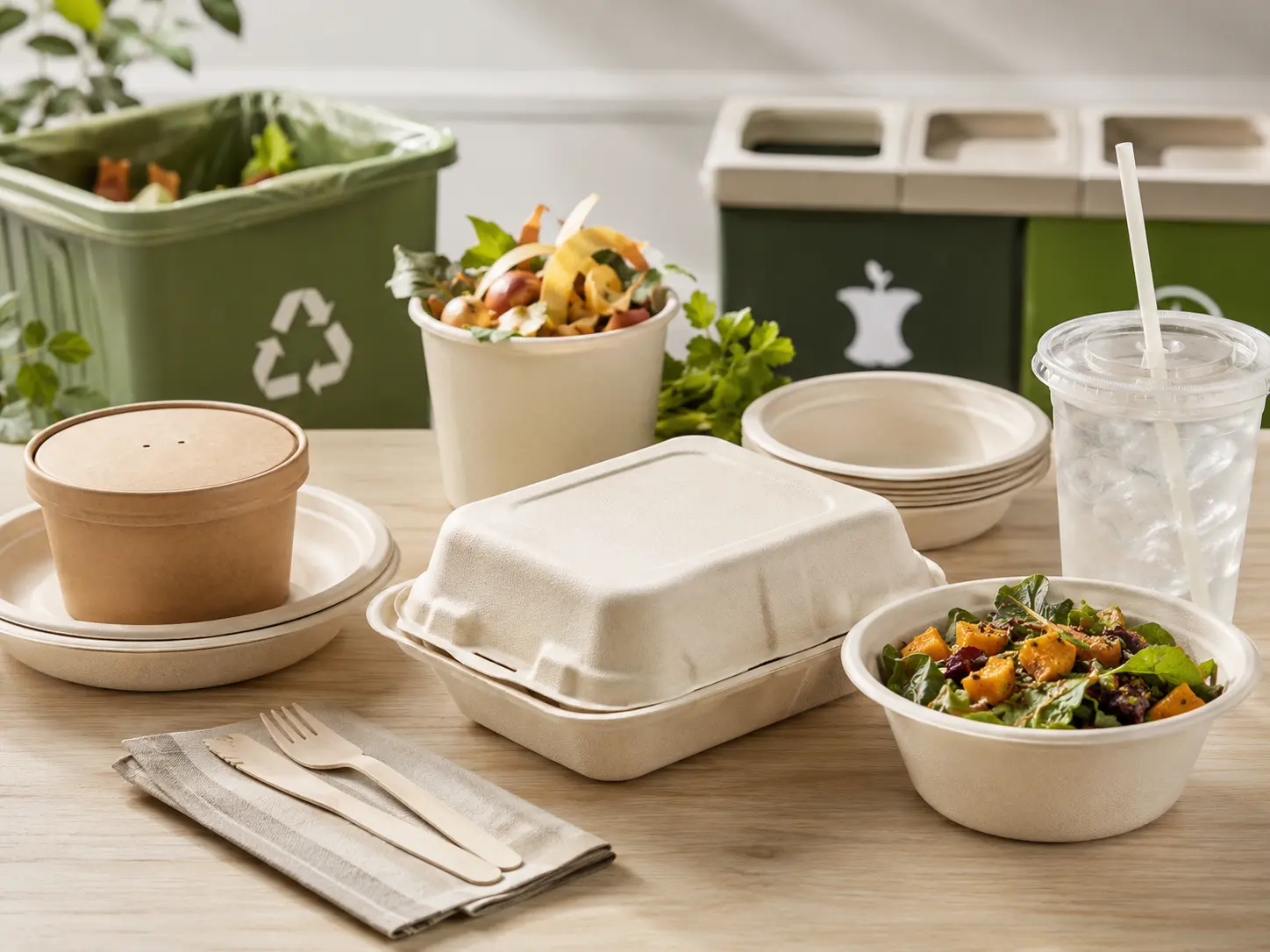
Composting adds an important pathway for foodservice waste, especially when food residue makes recycling difficult. A certified compostable plate, bowl, tray or cup can be valuable when it is collected together with food scraps and processed in a suitable composting facility.
However, compostable packaging must be positioned responsibly. It does not mean the product will disappear in the ocean, degrade quickly in a landfill or break down in every backyard compost bin. Buyers should understand the difference between industrial compost vs home compost before using compostable packaging claims on menus, labels or e-commerce pages.
Industrial composting requires controlled temperature, oxygen, moisture, microorganisms and processing time. Standards such as EN 13432 and ASTM D6400 help buyers verify whether packaging is designed for composting under defined conditions. For global buyers, the key is not only the raw material but the finished product, because inks, coatings, adhesives and additives can affect the final compliance profile.
To reduce greenwashing risk, buyers should request documentation that proves the packaging claim. A practical next step is to verify truly compostable food packaging through certificates, test reports, scope checks and finished-product evidence instead of relying only on supplier descriptions.
Compostable also does not mean marine biodegradable. The ocean is not a composting facility, and most compostable packaging is designed for controlled composting conditions rather than seawater. This distinction is important because biodegradable packaging does not automatically degrade in seawater.
Choosing Packaging That Supports Reduce, Reuse and Recycle Goals
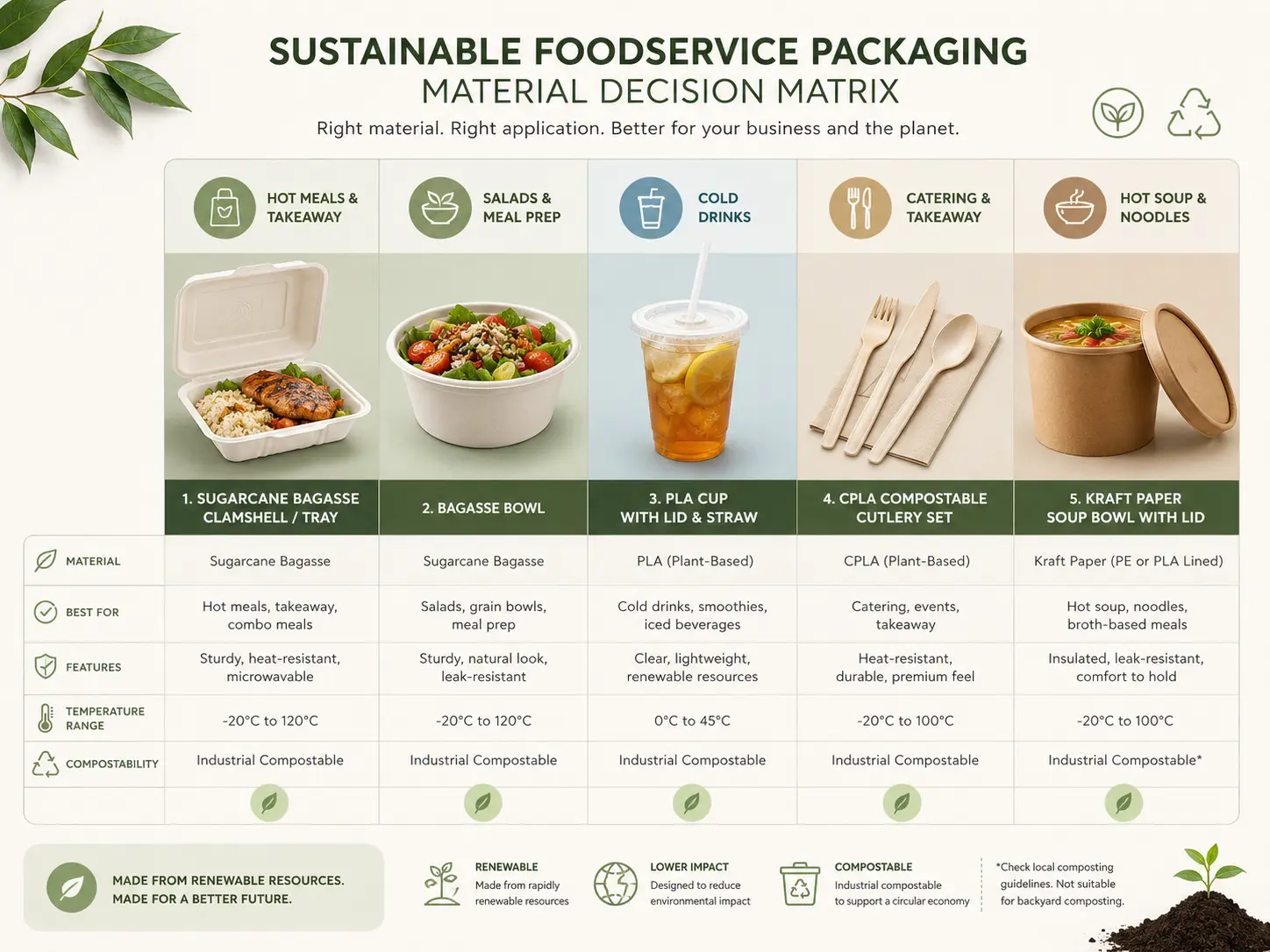
Foodservice packaging should be selected by use case, not by one environmental keyword. The best material for hot soup may not be the best material for cold drinks. The best option for dine-in may not work for third-party delivery. A buyer who wants to reduce, reuse and recycle waste needs to evaluate product performance and end-of-life pathways together.
| Packaging Type | Best Foodservice Use | End-of-Life Consideration | Buyer Recommendation |
|---|---|---|---|
| Bagasse food containers for takeaway meals | Hot meals, oily foods, delivery menus, catering and fast-casual takeaway. | Suitable for composting where accepted by local industrial composting programs. | Strong choice for food-contaminated applications where recycling is difficult and composting is available. |
| Bagasse clamshell boxes | Burgers, rice meals, combo meals, street food, delivery and hot-food takeaway. | Designed as a molded fiber alternative to foam or plastic clamshells where composting is supported. | Use when the menu needs structure, insulation, stackability and food-contact performance. |
| Compostable PLA cups for cold drinks | Cold drinks, smoothies, juices, iced coffee, desserts and event beverages. | Requires industrial composting and should not be mixed with conventional PET recycling. | Use for cold beverage programs with clear disposal instructions and composting access. |
| Compostable cutlery for catering and takeaway | Hot-food service, takeaway meals, catering, events and grab-and-go programs. | Designed for industrial composting where accepted by local facilities. | CPLA or cornstarch cutlery can support single-use plastic reduction when reuse is not practical. |
| Paper soup bowls with lids for hot soup | Soup, noodles, rice bowls, curry, meal prep and delivery. | Recyclability or compostability depends on coating, contamination and local rules. | Select PE, PLA or water-based coating based on target market, food type and disposal pathway. |
| Paper salad bowls for takeaway and delivery | Salads, grain bowls, deli meals, supermarket prepared food and cold meal delivery. | End-of-life depends on coating, food residue and whether local programs accept the material. | Use when branding, presentation, printability and lid compatibility are important. |
| Kraft paper food boxes for takeaway packaging | Bakery, dry food, fried snacks, lunch boxes, street food and fast-casual meals. | Clean paperboard may be recyclable, while greasy or coated boxes may need different handling. | Use clear material specifications and disposal labeling to avoid customer confusion. |
How Restaurants and Distributors Can Build a Lower-Waste Packaging Program
A lower-waste packaging program should not begin with a product catalogue. It should begin with a waste audit. Buyers need to understand which items are overused, which foods are frequently wasted, which packaging fails during delivery and which disposal streams actually exist in the local market.
The following checklist can help restaurants, chains, distributors and importers build a packaging strategy that supports reduce, reuse, recycle goals without creating greenwashing risk. Buyers who are still comparing materials can also review Bioleader®’s guide on how to choose the right compostable tableware for real foodservice applications.
Buyer Checklist for Lower-Waste Foodservice Packaging
- Map your food applications: Separate hot meals, cold drinks, oily foods, soups, salads, dry snacks and frozen or refrigerated items.
- Review the local waste system: Confirm whether your target market has recycling, industrial composting, organic waste collection or landfill-only disposal.
- Check food contact compliance: Ask for relevant FDA, LFGB, EU food contact or other market-specific documentation.
- Verify compostability claims: Request EN 13432, ASTM D6400, BPI, OK Compost or related certificates where compostability is part of the product claim.
- Avoid vague biodegradable claims: “Biodegradable” alone does not explain where, how fast or under what conditions the product breaks down.
- Confirm PFAS status: For molded fiber and food contact items, request PFAS-free packaging compliance documentation, total fluorine screening or market-specific test references when required.
- Test performance before scale-up: Evaluate heat resistance, oil resistance, lid fit, stacking, leakage, microwave suitability and delivery performance.
- Use clear disposal labels: Tell customers whether the item should be recycled, composted or disposed of according to local rules.
Where Compostable Packaging Fits in the Waste Hierarchy
Compostable packaging should not be used as an excuse for overconsumption. It fits best after reduction and reuse have already been considered. In many foodservice applications, compostable packaging is most valuable when it solves a real end-of-life problem: food-contaminated disposable packaging that cannot be efficiently recycled.
For example, a sugarcane bagasse clamshell used for oily takeaway meals may be difficult to recycle after use, but it may be suitable for composting where local facilities accept molded fiber packaging. A PLA cold cup can support a compostable beverage program, but only if the operator keeps it out of PET recycling and routes it to industrial composting. A paper soup bowl may be recyclable, compostable or neither depending on coating, food residue and local infrastructure.
For hot soup, noodles, curry and broth-based meals, buyers should evaluate bowl wall strength, lid compatibility, coating options and transport distance. Bioleader® provides a dedicated A-page for kraft and white cardboard soup bowls with lids, which helps buyers compare material finish, lid options, coating structures, printing requirements and 8oz–32oz sizes.
For delivery-focused menus, it is also useful to compare takeaway soup containers with lids because leakage prevention, stacking stability and lid fit directly affect food waste, complaint rates and overall packaging efficiency.
The most responsible approach is not to claim that one material solves every waste problem. The better approach is to match material, food application and disposal pathway.
Bioleader® Packaging Solutions for Foodservice Waste Reduction
Bioleader® supports foodservice brands, importers, wholesalers and distributors with export-ready disposable packaging designed for practical sustainability goals. The product range includes sugarcane bagasse tableware, bagasse food containers, bagasse bowls, bagasse plates, bagasse trays, PLA cups, CPLA cutlery, compostable cutlery, kraft paper bowls, paper soup containers, paper salad bowls and paper food boxes.
For buyers building a lower-waste packaging program, Bioleader® can support material selection, size matching, lid compatibility, certification review, OEM and private label planning, bulk wholesale supply and container loading optimization. For takeaway brands that need printed paper-based packaging, Bioleader® also supplies custom kraft paper containers for takeaway brands with logo printing and multiple size options.
| Buyer Type | Main Waste Challenge | Recommended Packaging Direction | Bioleader® Support |
|---|---|---|---|
| Restaurant Chains | High takeaway volume, leakage risk and customer disposal confusion. | Right-sized bagasse containers, paper bowls and clear disposal labeling. | Product matching, lid testing, bulk supply and custom branding. |
| Importers and Wholesalers | Need broad product range with compliance documents and stable loading plans. | Mixed container programs covering bagasse, PLA, CPLA and paper packaging. | Export packaging, carton planning, certificate review and OEM options. |
| Catering and Events | Large waste peaks after meals and events. | Compostable plates, trays, bowls and cutlery where composting collection exists. | Event-ready packaging combinations and volume-based supply planning. |
| Supermarkets and Deli Brands | Need attractive packaging for prepared food, salad and meal prep. | Paper salad bowls, kraft bowls, bagasse trays and clear lid options. | Private label packaging, printing support and shelf presentation advice. |
Conclusion: Reduce, Reuse, Recycle Is a System Decision
The future of foodservice waste reduction is not one single material. It is a system decision. Businesses should reduce food waste first, reuse where logistics make sense, recycle clean materials accepted by local programs, and compost food scraps with certified compostable packaging where infrastructure supports it.
For buyers, the main question should not be “Which packaging sounds the most sustainable?” The better question is: “Which packaging performs well for our food, supports our waste system, meets our compliance requirements and reduces operational risk?”
When used responsibly, reduce, reuse, recycle can become a practical procurement framework for restaurants, distributors, catering operators and food brands. With the right product selection and clear end-of-life planning, compostable foodservice packaging can play a valuable role in reducing landfill waste and supporting a more circular foodservice system.
Need Help Choosing Lower-Waste Foodservice Packaging?
For importers, distributors and foodservice brands planning a packaging transition, Bioleader® can support material selection, product matching, certification review, custom printing, OEM packaging and bulk wholesale supply planning. Contact Bioleader® to compare sugarcane bagasse tableware, PLA cups, CPLA cutlery, kraft paper bowls and paper food containers for your target market.
FAQ: Reduce, Reuse, Recycle and Compostable Foodservice Packaging
What is the correct order: reduce reuse recycle or recycle reuse reduce?
The correct sustainability order is usually reduce, reuse, recycle. Reducing waste at the source has the highest priority because it prevents unnecessary material use before waste is created. Reuse comes next where operations allow repeated use, and recycling is used for clean accepted materials after reduction and reuse have been considered.
Is it reuse reduce recycle or reduce reuse recycle?
Many people search for reuse reduce recycle, but the more widely accepted waste hierarchy starts with reduce. For foodservice businesses, this means preventing food waste and avoiding unnecessary packaging first, then reusing systems where practical, and finally recycling or composting suitable materials through local infrastructure.
Can restaurants reuse recycle and reduce packaging waste at the same time?
Yes. Restaurants can reduce waste through better portion planning and right-sized packaging, reuse containers in closed-loop dine-in or event systems, and recycle clean paper, glass, metal or accepted plastic streams where local programs support them. Compostable packaging can also help when food scraps and packaging are collected for industrial composting.
How does composting support reduce reuse and recycle goals?
Composting supports waste reduction by diverting organic materials such as food scraps from landfill. When certified compostable packaging is accepted by local composting facilities, it can be collected with food waste and processed under managed conditions. Composting should complement reduction, reuse and recycling, not replace them.
Is compostable packaging always better than recyclable packaging?
No. Compostable packaging is best when it matches the food application and local composting infrastructure exists. Recyclable packaging may be better for clean material streams such as dry paperboard or accepted plastics. Buyers should compare food contamination, collection systems and certification before choosing a material.
What certifications should buyers check for compostable food packaging?
Buyers should check certifications based on their target market. EN 13432 is important for industrial compostability in Europe, while ASTM D6400 and BPI are commonly used in North America. OK Compost certification may also be relevant. Food contact compliance, PFAS-free documentation and finished-product testing should also be reviewed.
How can foodservice brands avoid greenwashing when using reduce reuse recycle claims?
Brands should avoid vague claims and explain the real disposal pathway. A package should not be called compostable unless it is certified and accepted by suitable composting facilities. A package should not be called recyclable unless local recycling systems actually accept it. Clear labeling and verified documentation reduce greenwashing risk.
References
- U.S. EPA: Quantifying Methane Emissions from Landfilled Food Waste
- U.S. EPA: Wasted Food Scale
- U.S. EPA: Composting
- U.S. EPA: Sustainable Materials Management Hierarchy
- EUR-Lex: Waste Hierarchy
- European Commission: Waste Framework Directive
- European Bioplastics: EN 13432 Certified Bioplastics in Industrial Composting
- TÜV Austria: OK Compost Industrial Certification