Highlights from featured articles under this tag:


The correct sustainability order is usually reduce, reuse, recycle. Reducing waste at the source has the highest priority because it prevents unnecessary material use before waste is created. Reuse comes next where operations allow repeated use, and recycling is used for clean accepted materials after reduction and reuse have been considered.
Many people search for reuse reduce recycle, but the more widely accepted waste hierarchy starts with reduce. For foodservice businesses, this means preventing food waste and avoiding unnecessary packaging first, then reusing systems where practical, and finally recycling or composting suitable materials through local infrastructure.
Brands should avoid vague claims and explain the real disposal pathway. A package should not be called compostable unless it is certified and accepted by suitable composting facilities. A package should not be called recyclable unless local recycling systems actually accept it. Clear labeling and verified documentation reduce greenwashing risk.
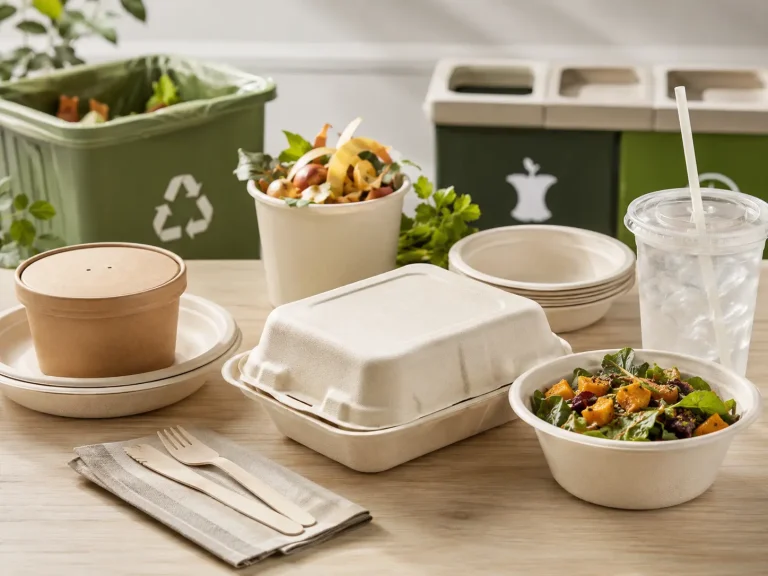
Composting supports waste reduction by diverting organic materials such as food scraps from landfill. When certified compostable packaging is accepted by local composting facilities, it can be collected with food waste and processed under managed conditions. Composting should complement reduction, reuse and recycling, not replace them.
Yes. Restaurants can reduce waste through better portion planning and right-sized packaging, reuse containers in closed-loop dine-in or event systems, and recycle clean paper, glass, metal or accepted plastic streams where local programs support them. Compostable packaging can also help when food scraps and packaging are collected for industrial composting.
Join the global movement toward zero-waste packaging.
Bioleader® offers:
📦 Bulk order support & fast delivery
✍️ Custom branding and OEM solutions
🌍 Worldwide eco-packaging compliance
Get the Catalogue Products List & Contact Us Now! 👉