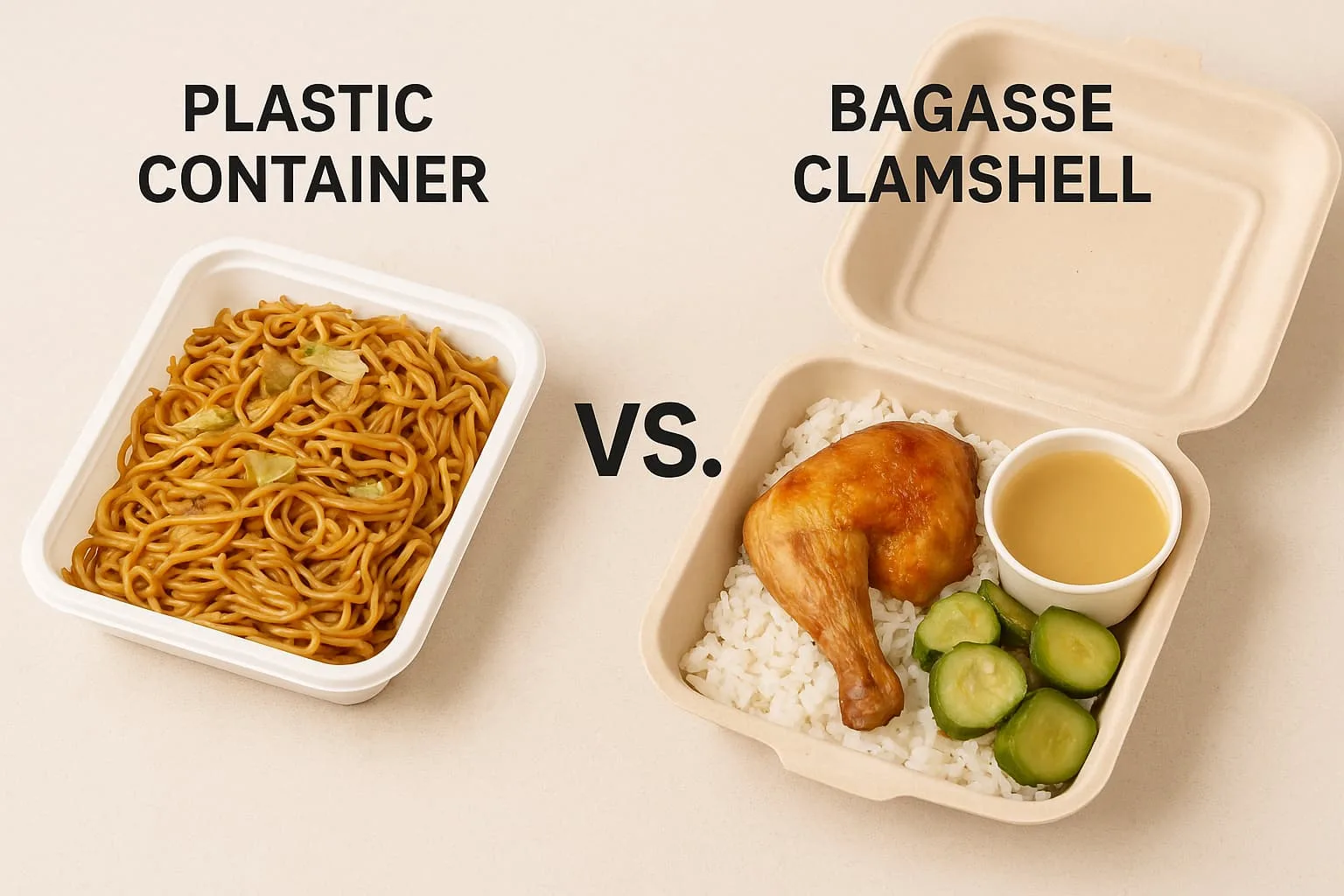
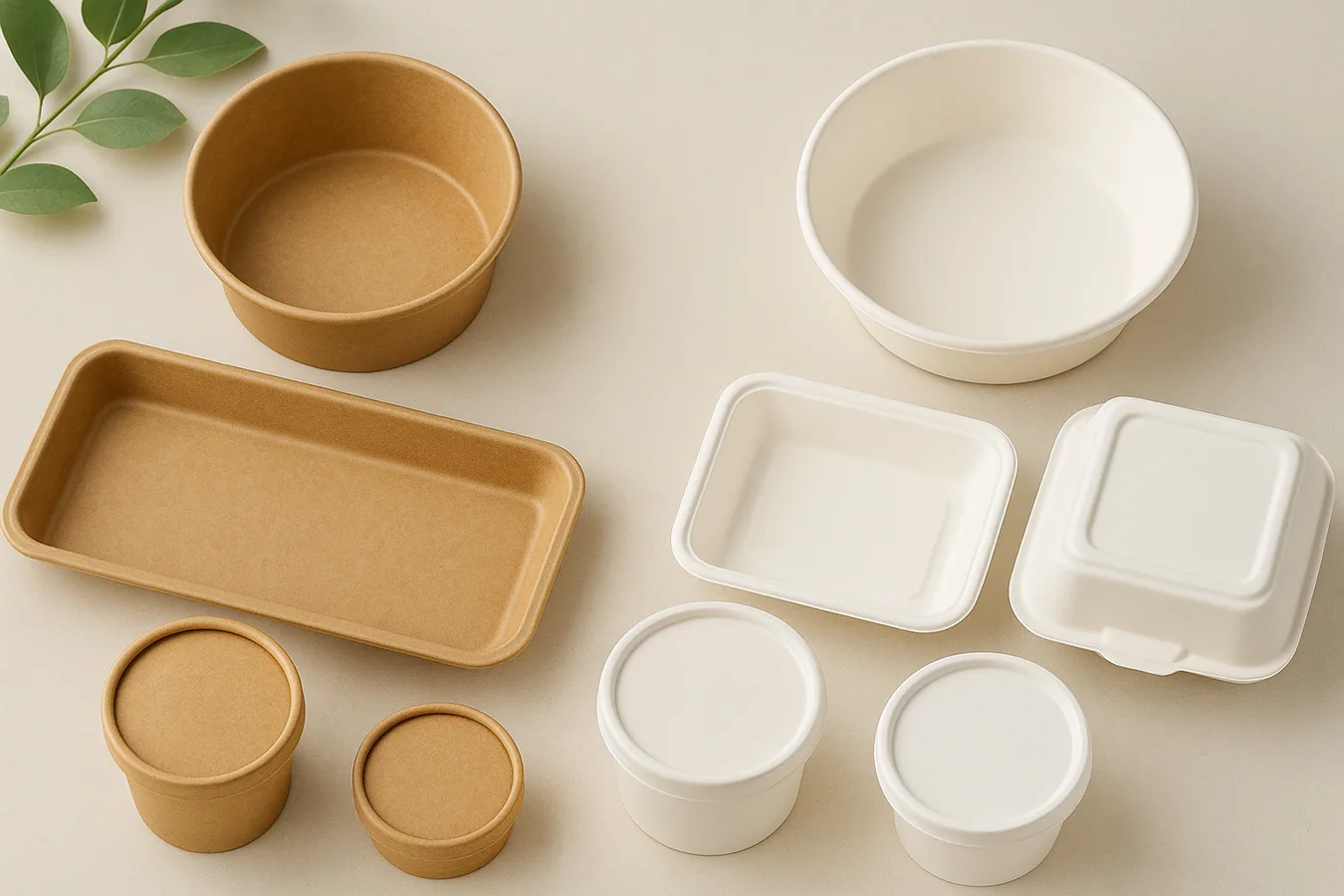
Introduction: Why Misinformation About Compostable Tableware Persists
As sustainability becomes a global priority, compostable tableware is gaining popularity across restaurants, events, and takeout services. However, misconceptions and marketing buzzwords like “eco-friendly,” “biodegradable,” and “green” have led to widespread confusion. Many buyers and consumers don’t truly understand what compostable means—or how to evaluate it.
In this article, we debunk 10 of the most common myths about compostable plates, bowls, cups, and cutlery—backed by science, certifications, and real-world use cases.
Myth #1: All Biodegradable Tableware Is Also Compostable
✅ Truth: Compostable products meet specific standards and break down under controlled conditions, while “biodegradable” is vague and often misleading.
- Biodegradable simply means the material can break down eventually—no timeline, no guarantee.
- Compostable means the product fully degrades into non-toxic materials (CO₂, water, biomass) within a specific timeframe (usually 90–180 days), under industrial or home compost conditions.
- Look for verified certifications like BPI, OK Compost, and EN13432.
Example: Bioleader® bagasse tableware is EN13432 and BPI certified—truly compostable, not just “biodegradable.”

Myth #2: Compostable Products Break Down in a Few Days
✅ Truth: Even under ideal conditions, most compostable materials take 60–180 days to fully degrade.
- Industrial composting facilities maintain 50–70°C heat and active microbial environments.
- Home composting takes longer and may not achieve full breakdown for several months.
Claiming a plate “disappears in 7 days” is marketing hype—backed by no scientific proof.
Myth #3: You Can Compost Them at Home Just Like Food Waste
✅ Truth: Only some compostable products are certified as home compostable.
- Many compostable plates and utensils are designed for industrial composting only.
- Look for the OK Compost HOME logo—distinct from OK Compost INDUSTRIAL.
Bioleader® kraft paper bowls and select bagasse items are home-compostable tested in both warm and cold-weather scenarios.
Myth #4: Compostable Tableware Can’t Handle Hot Foods or Greasy Meals
✅ Truth: High-quality bagasse and CPLA products are heat-resistant, oil-proof, and microwave-safe.
- Bagasse: up to 120°C (suitable for soup, rice, curries)
- CPLA cutlery: up to 85°C
- Kraft paper bowls with PLA lining: safe for both hot and cold items
Many Bioleader® customers in catering and meal delivery use bagasse Bowls for hot entrées with no performance issues.
Myth #5: “Eco-Friendly” Labels Always Mean Compostable
✅ Truth: The term “eco-friendly” is unregulated and often misused.
Only third-party certifications prove compostability.
- Vague icons like green leaves or recycling arrows do not guarantee sustainability.
- Acceptable certifications include:
- BPI (USA)
- EN13432 (EU)
- OK Compost / Seedling (TÜV Austria)
Always ask suppliers to provide authentic, traceable documentation.
📊 Global Regulations Overview: Compostable Tableware Definitions by Country
| Country/Region | Regulation | Compostability Definition | Certification Required | Penalty for Misleading Claims |
|---|---|---|---|---|
| EU | SUP Directive + EN13432 | Must meet EN13432 standards | Yes | Fines up to €100,000 |
| USA (California) | SB 343 + FTC Green Guides | BPI or equivalent certification required | Yes | Advertising penalties |
| Canada | Federal Plastics Ban 2023 | Compostability report required | Partial | Up to $250,000 |
| Singapore | Resource Sustainability Act | Compostability source must be stated | No | Mandatory product removal |
| Japan | Plastic Resource Circulation Act | Recommended but not mandatory | No | None |
Myth #6: Compostable Tableware Is Flimsy and Breaks Easily
✅ Truth: Advanced molding and high-pressure processing make compostable tableware as durable as plastic.
- Bagasse food containers have strong tensile strength and rigidity.
- CPLA utensils can cut through meat and resist bending.
- Kraft paper cups with double walls offer excellent hand insulation.
Lab tests show Bioleader® products outperform many plastic equivalents in drop and crush tests.
Myth #7: All Compostable Tableware Is Microwave-Safe
✅ Truth: Only some materials are safe in the microwave.
- ✅ Microwave-safe: bagasse plates, paper bowls with microwaveable linings
- ❌ Not microwave-safe: PLA cups, CPLA cutlery, wax-lined containers
Tip: Bioleader® labels each product with a clear “Microwave Safe” or “Not Safe” marking to avoid confusion.
Myth #8: Compostable = Recyclable
✅ Truth: Compostable products should not go into recycling bins.
- Compostables and recyclables follow different waste streams.
- Mixing them contaminates both, reducing recyclability.
Include signage at events or stores to guide proper disposal.
Myth #9: Compostable Packaging Is Too Expensive
✅ Truth: When considering total cost of ownership—including waste management, reputation, and legal compliance—compostables often pay off.
- Many regions offer plastic tax exemptions, landfill fee reductions, or sustainable packaging subsidies.
- Cost difference narrows with scale: Bulk Bioleader® orders reduce per-unit costs by 25–35%.
Myth #10: All Compostable Products Are the Same, Regardless of Supplier
✅ Truth: Suppliers vary in quality, raw materials, certifications, and transparency.
- Some use uncertified blends or false green claims
- Others lack traceability or documentation
- Verified suppliers like Bioleader® provide:
- EN13432/BPI/OK Compost documents
- Lab-tested performance reports
- Batch traceability + transparent COA
🧠 Expert Insights: What Industry Leaders Say
“One of the biggest challenges in sustainable packaging today isn’t material—it’s misinformation. Without proper certification, ‘eco’ becomes meaningless.”
— Dr. Helen Martinez, Lead Researcher in Bioplastics, Global Packaging Institute
“We often find that businesses unknowingly fall into greenwashing traps. The only solution is full transparency: third-party certification, supply chain audits, and real compostability data.”
— Michael Zhang, Director of Sustainable Procurement, EcoSource Asia
“A certified compostable product is not just good for the planet—it’s smart business. We’ve seen brands improve customer loyalty and meet regulatory requirements simultaneously.”
— Linda Okafor, Circular Economy Consultant, ZeroWaste Strategy Group
“Bioleader® is one of the few manufacturers we’ve worked with that delivers traceable, lab-verified, and regulation-compliant compostable packaging at scale.”
— James T., Environmental Packaging Auditor, North America
📈 Comparison Table: Eco Materials vs Performance, Cost & Decomposition
| Material | Compostability | Heat Resistance | Avg. Cost ($/unit) | Decomposition Time | Certifications Available |
| Bagasse | Industrial & Home | Up to 120°C | $0.05–$0.10 | 90–120 days (industrial) | EN13432, OK Compost, BPI |
| PLA | Industrial only | Not microwave-safe | $0.07–$0.12 | 180 days (industrial) | BPI, ASTM D6400, OK Compost |
| CPLA | Industrial only | Up to 85°C | $0.06–$0.14 | 180 days (industrial) | BPI, EN13432 |
| Kraft Paper | Varies by lining | Up to 80°C (with PLA) | $0.04–$0.10 | 60–90 days | FSC, Compostable (if lined) |
| PET/PS Plastic | Not compostable | Up to 100°C | $0.03–$0.06 | 400–1000 years | None |
Summary: Know the Facts, Choose with Confidence
Misinformation creates hesitation—and hesitation holds back progress. By dispelling these 10 common myths, we hope buyers, restaurants, and consumers can confidently embrace compostable solutions that are both functional and verifiably sustainable.
✅ Next Step: Partner with a certified supplier like Bioleader® and request documentation before purchasing. Don’t settle for marketing slogans—demand proof.
About Bioleader®: A Verified Partner in Compostable Tableware
✅ Manufacturer of bagasse bowls, PLA cups, CPLA cutlery, and kraft paper food containers
✅ Certified by BPI, TÜV Austria (EN13432), OK Compost Industrial/Home
✅ Bulk & custom orders available—shipped worldwide with full export compliance
Bioleader® helps foodservice brands worldwide switch to plastic-free packaging—confidently, affordably, and at scale.
FAQs
Q1. How long does it take for compostable plates to decompose?
Around 90–180 days in commercial composting; up to 6 months at home.
Q2. Are bagasse bowls microwave safe?
Yes. Bagasse is microwave-safe up to 120°C.
Q3. Can compostable forks cut steak?
High-quality CPLA forks are sturdy enough for meats and dense foods.
Q4. Are PLA cups home compostable?
No. PLA cups require industrial composting conditions (≥55°C).
Q5. How do I verify if a supplier’s claims are real?
Request certification documents (BPI, EN13432), check online databases, and ask for third-party lab test reports.
References
Biodegradable Products Institute (BPI)
BPI Certification Guidelines and Certified Products Database
Biodegradable Products Institute (BPI)
https://bpiworld.org/European Bioplastics e.V.
EN 13432 – Certification of Industrial Compostability
European Bioplastics Organization
https://www.european-bioplastics.org/standards/certification/TÜV Austria
OK Compost – Industrial and Home Certification Standards
TÜV AUSTRIA Group
https://www.tuv-at.be/green-marks/ok-compost/U.S. Federal Trade Commission (FTC)
Environmental Marketing Claims Guidelines – Green Guides
Federal Trade Commission
https://www.ftc.gov/news-events/media-resources/truth-advertising/green-guidesBioleader® Official Website
Compostable Bagasse Plates, PLA Cups, and Eco-Friendly Food Containers
Bioleader Environmental Packaging
https://www.bioleaderpack.com/Ellen MacArthur Foundation
The New Plastics Economy: Rethinking the Future of Plastics
Ellen MacArthur Foundation
https://ellenmacarthurfoundation.org/the-new-plastics-economyU.S. Composting Council
Frequently Asked Questions About Compostable Packaging
U.S. Composting Council
https://www.compostingcouncil.org/page/CompostablePackaging