The 2025 Buyer’s Guide To Smart Packaging | Bioleader® Insights
Actionable coverage of smart packaging: eco-friendly, biodegradable, compostable materials, performance data, and compliance under EN13432 & ASTM D6400. Includes BPI/TÜV references and Food-Contact Tested guidance for safe deployment. Buyer-focused: manufacturer insights, bulk/wholesale buying playbooks, OEM/ODM customization tips, full size range selection.
Quick Summary:
Smart packaging in 2025 has moved from demos to deployment: sensors, freshness indicators, and digital IDs (QR/NFC) are being integrated into compostable and recyclable formats to improve food safety, reduce waste, and unlock supply-chain visibility. Regulatory pressure and EPR schemes are accelerating adoption, while water-based barriers, bio-inks, and fiber-based substrates close the loop on sustainability. Bioleader focuses on practical pilots—traceable SKUs, anti-tamper labels, and analytics-ready codes—so brands gain compliance, actionable data, and better consumer trust without sacrificing cost efficiency or speed-to-market.
smart packaging — Quick Summary
Items displayed (articles): 12
Last updated: 2025-08-01
Includes test data, compliance guides, buyer FAQs, and real-world use cases.
FAQ of Bioleader's Eco-friendly Disposable Tableware
Do the lids hold tight so there are no leakage problems while in transit?
Yes, the lids are designed in such a way that they are fastened to the container securely and will not let the contents escape or leak during transit, which is an ideal characteristic for takeaway and delivery orders — smart packaging.
Environmental Sustainability and Biodegradability Of Paper Products.
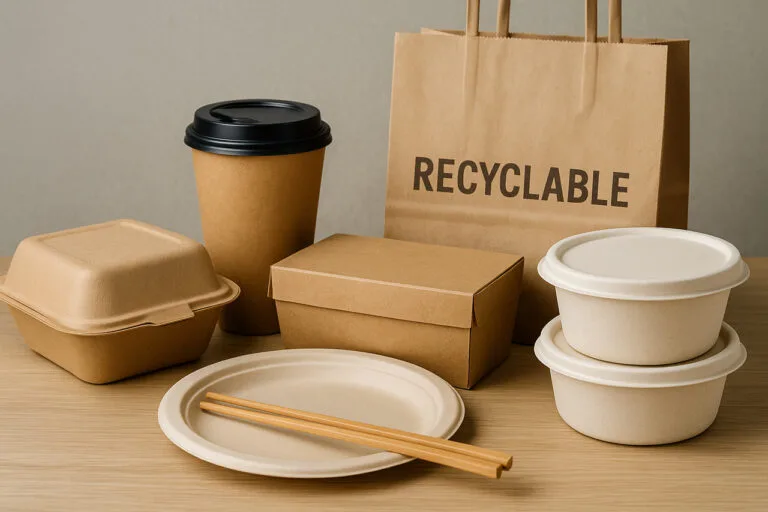
Making operating and design decisions that enhance environmental sustainability involves green practices and does not destroy the business unit’s viability — smart packaging. We manufacture durable Kraft paper as well as white cardboard paper for use in our bio-disposable bowls with printed logos. Kraft paper is strong, environmentally friendly, and compostable. Natural brown kraft paper is the appropriate choice for environment-friendly consumers.
Is it really compostable?
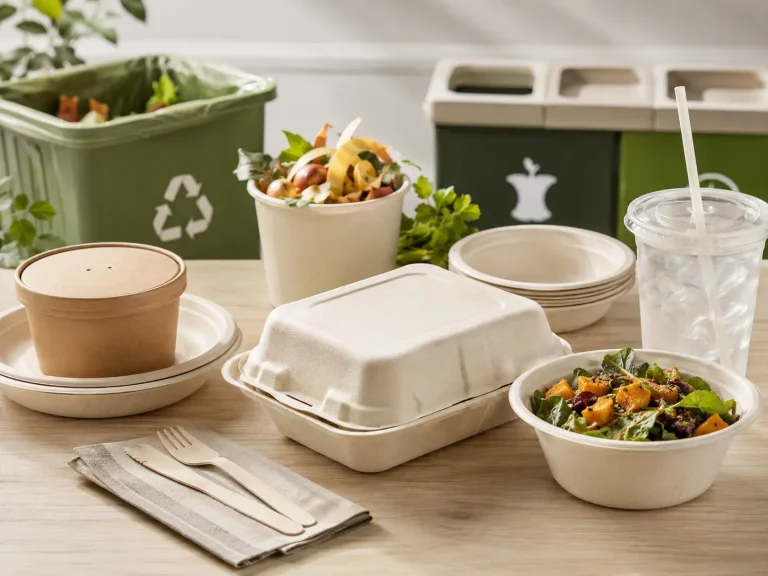
Yes, these salad bowls compostable are made from biodegradable materials such as kraft paper and white cardboard paper which allow it to biodegrade when discarded appropriately — smart packaging.
c) Data-Driven & Traceable Packaging
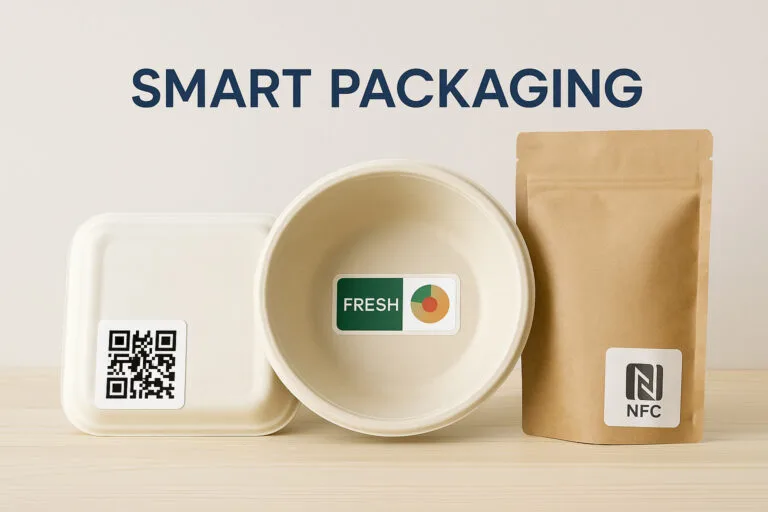
The rise of NFC, RFID, and QR code labels allows real-time data capture for each package unit. Carrefour France’s 2024 “Act for Food” pilot utilized QR and NFC tags on compostable trays, letting consumers access product origin, cold-chain compliance, and recall alerts with a smartphone (Carrefour Group, 2024).
a) Passive & Biodegradable Sensors
Recent research focuses on biodegradable, flexible sensors that can be printed directly onto molded fiber trays, paperboard, or PLA films. These include gas sensors (for O₂, CO₂, ethylene) and humidity detectors using natural polymers or metallic nanoparticles. Example: He et al., 2024 engineered a stretchable, battery-free sensor system that monitors gas changes in real time within fish packaging, linked to a colorimetric indicator patch. This technology enabled 14-day shelf life for fresh fish—double that of standard packaging—while remaining fully compostable (He et al., 2024).