Top Use Cases For Paper Plates | Bioleader® Guides

Actionable coverage of paper plates: eco-friendly, biodegradable, compostable materials, performance data, and compliance under EN13432 & ASTM D6400. Includes BPI/TÜV references and Food-Contact Tested guidance for safe deployment. Buyer-focused: manufacturer insights, bulk/wholesale buying playbooks, OEM/ODM customization tips, full size range selection.

In today’s eco-conscious world, understanding the environmental impact of everyday products has never been more critical. Among these products, paper plates have gained significant attention. Widely used in both homes and public gatherings for their convenience, disposable paper plates are popular choices for serving meals. Yet, the increasing global focus on sustainability raises an essential question: What are paper plates made of, and are they genuinely eco-friendly? Although many perceive paper plates as environmentally responsible due to their biodegradability compared to plastic alternatives, the truth is more nuanced. This comprehensive guide explores the composition, advantages, and disadvantages of various types of paper plates, helping consumers and businesses make informed, environmentally responsible decisions.

paper plates — Quick Summary
  • Items displayed (articles): 12
  • Last updated: 2025-03-09
  • Includes test data, compliance guides, buyer FAQs, and real-world use cases.

Editor’s Picks: Top Paper Plates Guides 2025

FAQ of Bioleader's Eco-friendly Disposable Tableware

What materials are commonly used for takeaway containers with lids?

Takeaway containers are made from a variety of materials including sugarcane bagasse, kraft paper, PLA bioplastics, PP plastic, and aluminum. For eco-friendly applications, compostable bagasse and PLA are the most sustainable choices.

Are sugarcane bagasse taco boxes compostable?

Yes, they are 100% compostable and decompose within 90–120 days under industrial composting , paper plates.

Are compostable trays safe for the environment?

Yes, compostable trays made from plant-based materials like bagasse are considered safe for the environment — paper plates. They break down naturally into organic matter, help reduce landfill waste, and do not produce microplastics or toxic residues.

Do bagasse plates compost faster than paper plates?

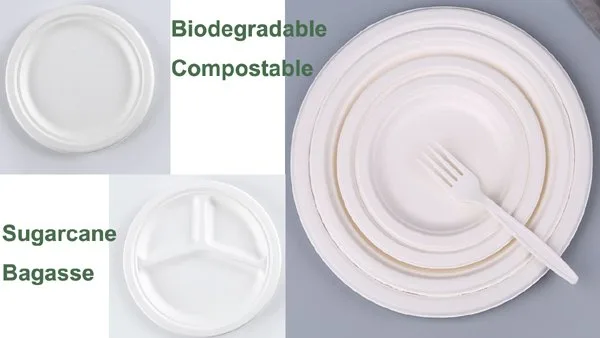
Bagasse plates decompose within 60–90 days under composting conditions, whereas many paper plates take longer, especially if coated with plastic or wax.

What materials are used to make paper plates?

Most paper plates are made from wood pulp or recycled paper — paper plates. Eco-friendly versions may include sugarcane bagasse or bamboo fiber for better sustainability.

Related Insights

🚀Ready to Go Green and Choose ?

Join the global movement toward zero-waste packaging.


Bioleader® offers:

  • 📦 Bulk order support & fast delivery

  • ✍️ Custom branding and OEM solutions

  • 🌍 Worldwide eco-packaging compliance

Get the Catalogue Products List  & Contact Us Now! 👉

Contact us Below

Click or drag files to this area to upload.You can upload up to 5 files.
The more details you share, the faster and more accurate our quotation will be.