Molded Fiber Manufacturing Process: Strategic Overview | Bioleader®

Browse articles grouped under the "molded fiber manufacturing process" tag for topic-specific information and examples. The featured articles may approach the topic from different product, material, application, market, or sourcing perspectives. Check each article for its exact scope, technical data, standards, sources, and recommendations.
molded fiber manufacturing process — Content Overview
  • Featured articles shown: 12
  • Directly tagged articles: 1
  • Latest tagged article update: 2026-11-01
  • Coverage, examples, and specific recommendations vary by individual article.

Editor's Picks: Top Molded Fiber Manufacturing Process Guides 2026

FAQ of Bioleader's Eco-friendly Disposable Tableware

Which lid should I choose for 1300ml paper salad bowls?

Paper lids are recommended when the buyer wants a consistent kraft or white paper packaging appearance. PET dome lids are suitable when product visibility is important for chilled salads, supermarket display, and grab-and-go food programs — molded fiber manufacturing process. The final choice should match menu type, display needs, transport distance, and brand positioning.

Can 500ml rectangular paper salad bowls be custom printed?

Yes. Bioleader® supports OEM logo printing and private-label designs for 500ml rectangular paper salad bowls and matching paper lids. Buyers can provide AI, PDF, CDR, or clear logo files. White paper is usually better for sharp full-color printing, while kraft paper is suitable for natural, minimal, and eco-style branding — molded fiber manufacturing process.

What is the capacity of a 1200ml paper salad bowl?

A 1200ml paper salad bowl is designed for large single-serve or meal-size portions — molded fiber manufacturing process. It is commonly used for salads, rice bowls, poke bowls, cold noodles, pasta, fruit portions, desserts, side dishes, and takeaway meals. For buyers building a wider foodservice range, 1200ml can be paired with 500ml, 750ml, 1000ml, 1090ml, and 1300ml paper salad bowls.

Manufacturer Insight

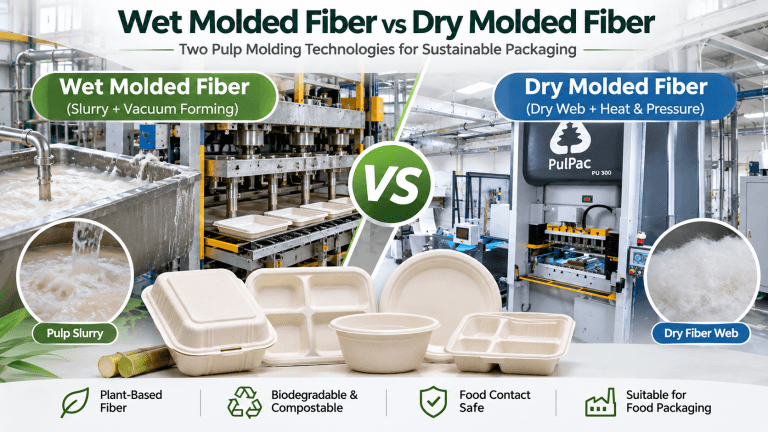
The molding method alone does not determine the quality of a bagasse container. Fiber furnish, slurry consistency, fiber distribution, mold geometry, pressing conditions, trimming accuracy and barrier chemistry all affect rigidity, lid fit, surface quality and resistance to hot or oily food. For a more detailed process explanation, see Bioleader®’s guide to how molded pulp packaging is manufactured. How Dry Molded Fiber Works Dry forming removes the conventional slurry-forming stage.

Sample Evaluation Should Reproduce the Real Application

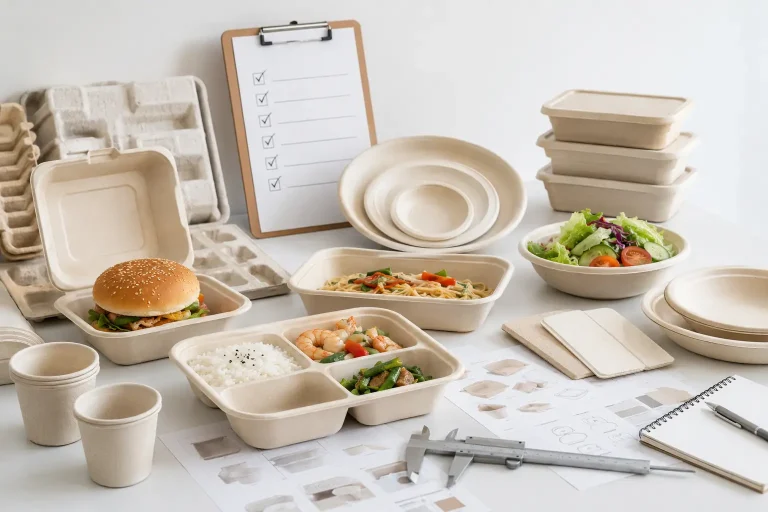
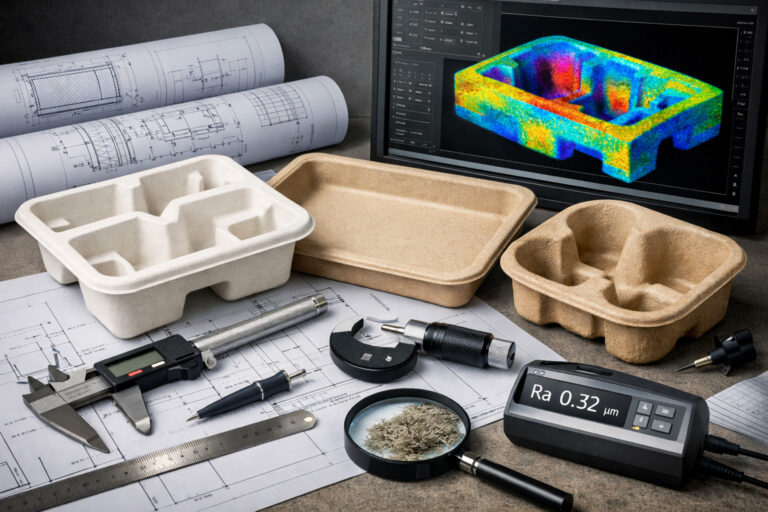
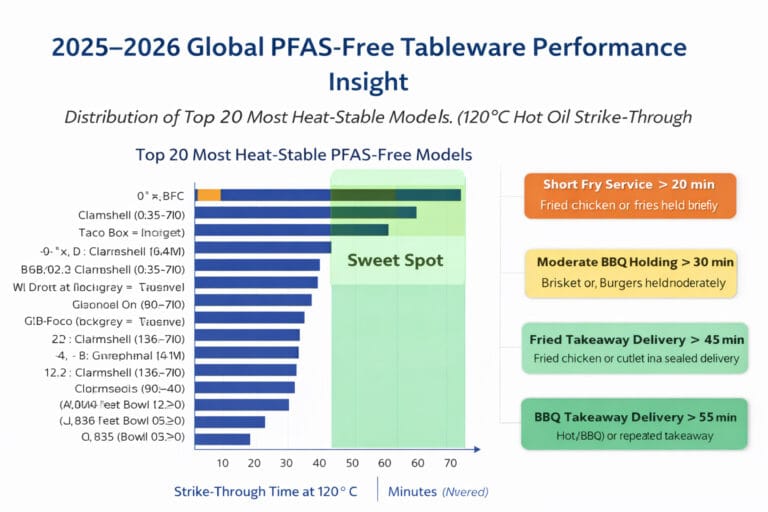
Test the actual food, serving temperature, oil or sauce exposure, holding time, stacking pressure, transport conditions, lid fit, nesting, microwave or reheating requirements, trimming quality and dimensional consistency. A lower-water manufacturing process does not compensate for packaging that softens, leaks, loses lid fit or cannot provide the required food-contact documentation. For custom product development, Bioleader® evaluates dimensions, forming depth, compartments, rim structure, nesting, lid fit and product strength before production tooling is finalized. See the Custom Molded Pulp & Bagasse Packaging engineering page for the full wet-molded development route.

Related Insights

🚀Ready to Go Green and Choose ?

Join the global movement toward zero-waste packaging.


Bioleader® offers:

  • 📦 Bulk order support & fast delivery

  • ✍️ Custom branding and OEM solutions

  • 🌍 Worldwide eco-packaging compliance

Get the Catalogue Products List  & Contact Us Now! 👉

Contact Us for Quote

Click or drag files to this area to upload.You can upload up to 5 files.
The more details you share, the faster and more accurate our quotation will be.