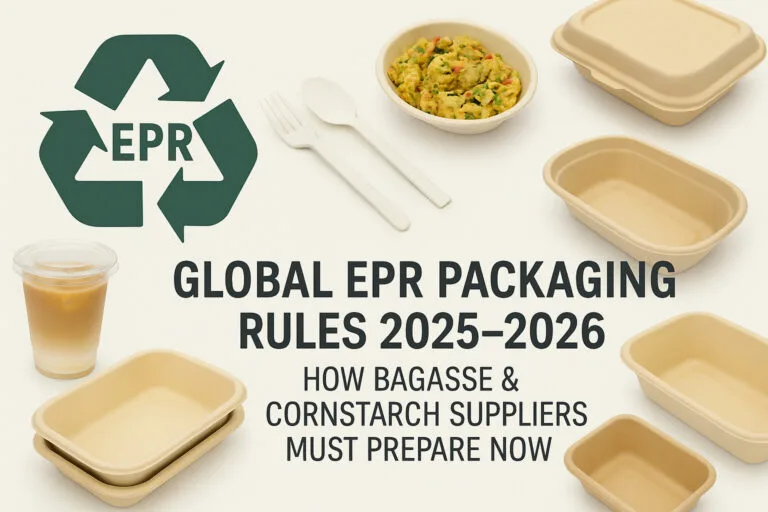
Actionable coverage of eco-friendly tableware regulations: eco-friendly, biodegradable, compostable materials, performance data, and compliance under EN13432 & ASTM D6400. Includes BPI/TÜV references and Food-Contact Tested guidance for safe deployment. Buyer-focused: manufacturer insights, bulk/wholesale buying playbooks, OEM/ODM customization tips, full size range selection.
Quick Summary:
The global wave of single-use plastic bans in 2025 is opening doors for producers of compostable tableware, particularly in Canada (ASTM D6400 + BPI), the EU (EN 13432 + OK Compost + EPR), Australia (AS 4736), Singapore (Mandatory Packaging Reporting), and Japan (plastic reduction mandates). Exporters with certified bagasse, PLA, cornstarch, and kraft products—paired with correct labels, registration, and export documentation—are gaining compliance, competitive branding, and fast market access across major regions.
FAQ of Bioleader's Eco-friendly Disposable Tableware
Can I customize these bowls with my brand logo?
Yes, we offer full customization options. You can add your company’s logo or custom artwork to create unique and branded eco-friendly packaging , eco-friendly tableware regulations.
What is the range of sizes that you have?
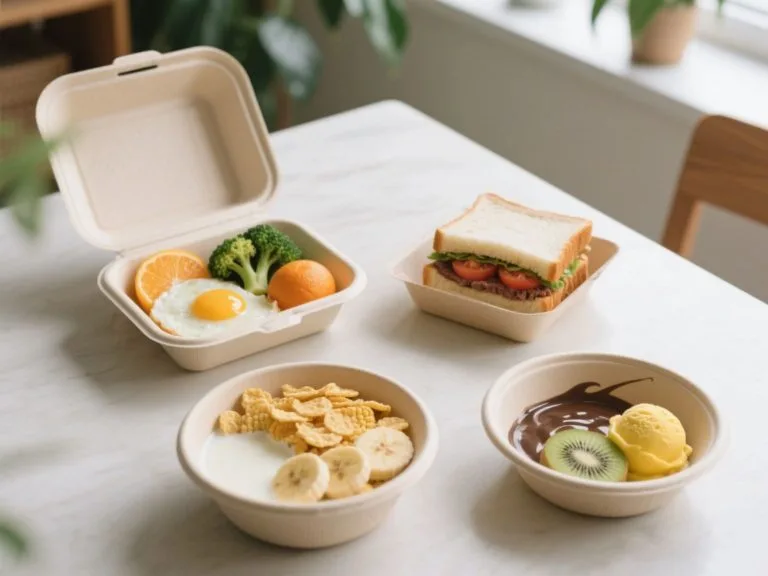
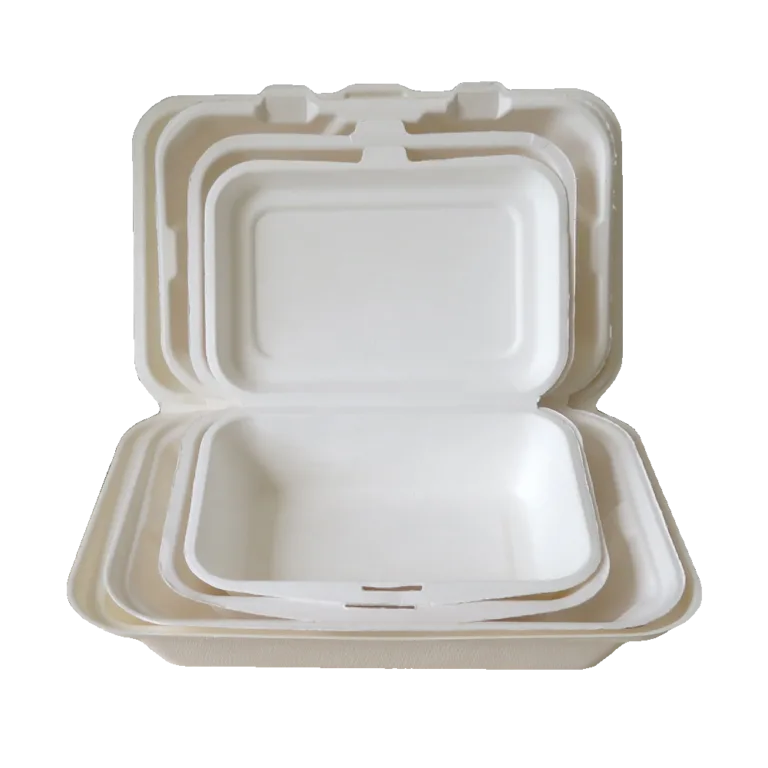
In terms of volume, there are varieties of cups: 500ml, 750ml, 1000ml, 1090ml, 1200ml, 1300ml, and 1500ml. This means that for every portion of any size, there is a bowl available.
Can these containers hold liquids?
Yes, our paper food containers are leakproof and hold solid and liquid foods including thick soups sauces, and creamy dishes too.
How can exporters ensure PLA cups are legally compliant in Japan?
Under Japan’s Plastic Resource Circulation Act, PLA cups must have documented bio-based content, low environmental impact, and recyclable or compostable end-of-life data. Minimalist labeling and lifecycle analysis (LCA) reports are beneficial , eco-friendly tableware regulations.
Which materials are banned under the EU SUP Directive?
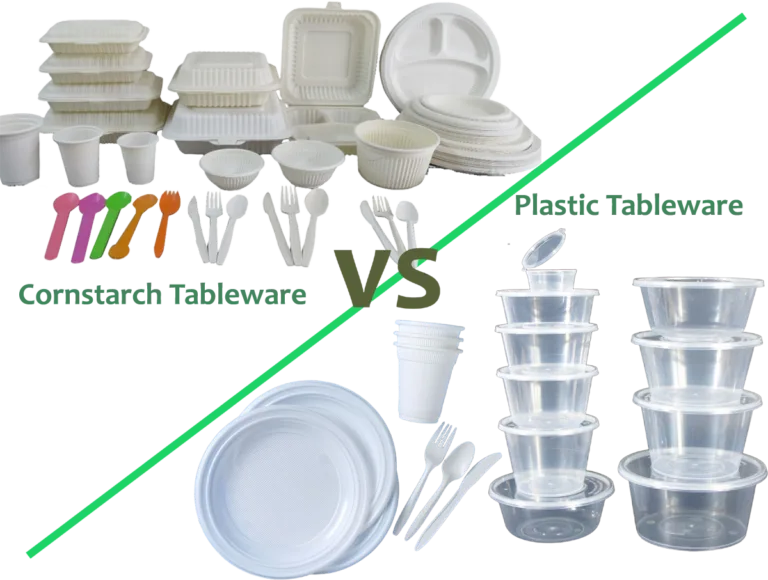
The EU Single-Use Plastics Directive (Directive (EU) 2019/904) bans plastic cutlery, plates, straws, stirrers, polystyrene food containers, and oxo-degradable plastics , eco-friendly tableware regulations. Compostable or reusable alternatives like bagasse trays, cornstarch utensils, and kraft paper bowls are recommended.