Incineration of plastic waste is a problem. The incineration of plastics produces many harmful gases, such as dioxins and furans, which cause serious air pollution, harm to the human respiratory system, and various diseases. The “white disaster” brought by traditional plastic cups is spreading at an alarming rate, threatening the ecological balance of the Earth and the future of mankind. We urgently need to find a more environmentally friendly alternative to solve the problem of plastic pollution, and PLA plastic cups came into being in this context.
What is a PLA plastic cup?
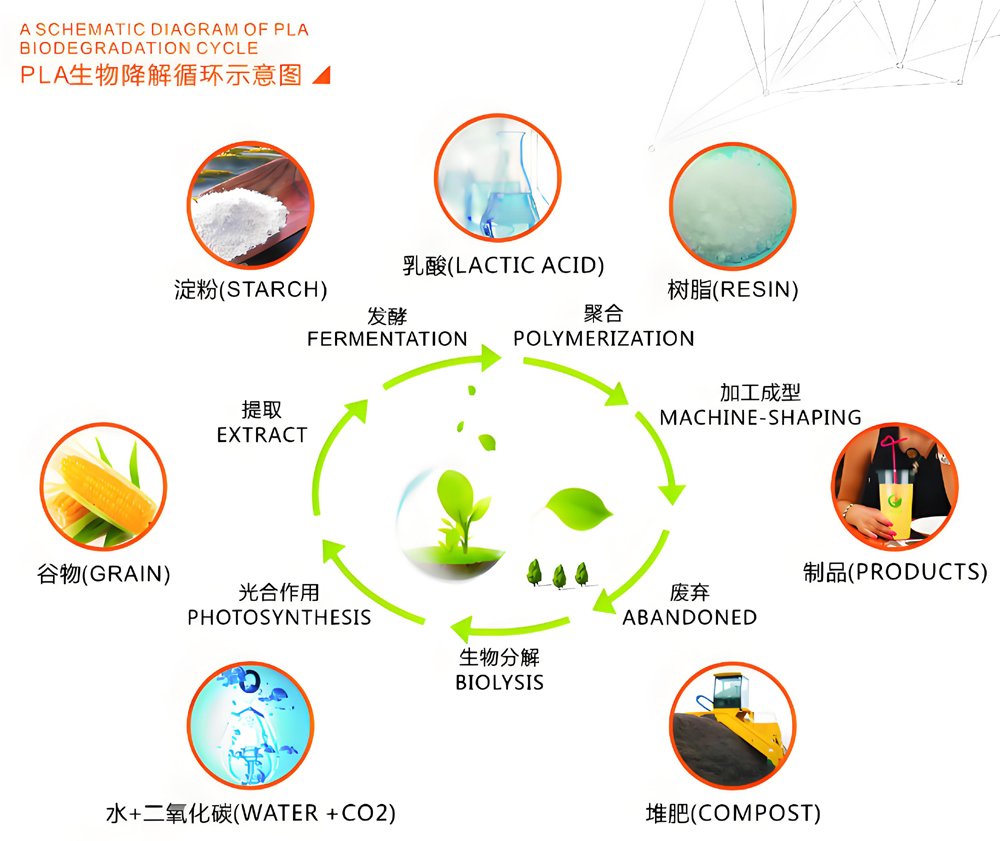
PLA plastic cups, that is, polylactic acid plastic cups, their raw material, polylactic acid (PLA), is a bio-based degradable material, usually extracted from plants rich in starch or sugars such as corn, sugarcane, and cassava. Taking corn as an example, the starch in the corn is first converted into glucose through processes such as hydrolysis, and then the glucose is fermented into lactic acid using microbial fermentation technology. Lactic acid undergoes a series of complex polymerization reactions and finally forms polylactic acid resin. This transformation process from plant to resin is the source of the environmental protection characteristics of PLA plastic cups.

When making PLA plastic cups, manufacturers will first process polylactic acid resin into sheets or particles of specific shapes. These sheets or particles are sent to professional cup-making equipment, and after a thermoforming process, they are molded into the shape of a cup under the action of high temperature and molds. Some will also undergo subsequent processing procedures, such as printing and coating, to meet different usage needs and aesthetic requirements, such as printing brand logos and patterns on the surface of the cup.
The biggest feature of PLA plastic cups is their biodegradability. Under suitable environmental conditions, such as industrial composting facilities, microorganisms can decompose PLA plastic cups into carbon dioxide and water, which can re-participate in the carbon cycle of nature and will not accumulate in the environment for a long time like traditional plastics. Moreover, because its raw materials come from renewable plant resources, compared with traditional plastics that rely on non-renewable resources such as petroleum, PLA plastic cups are more sustainable in terms of resource utilization, reducing dependence on limited resources from the source.

By contrast, the advantages are fully revealed
After understanding the basic situation of PLA plastic cups, comparing them with traditional plastic cups can highlight their unique advantages. Of course, it can also make us more clearly aware of its current shortcomings.
In terms of durability, PLA plastic cups have excellent performance. Due to its special molecular structure, it is more resilient than ordinary plastic cups and is not easy to break. A research institute has done an experiment in which PLA plastic cups and traditional plastic cups were dropped from the same height many times. After several drops, the traditional plastic cups had obvious cracks on the cup body, while the PLA plastic cups had only slight scratches after more than a dozen drops. This shows that PLA plastic cups can withstand more tossing in daily use, can better protect drinks, and extend their service life.
In terms of safety, PLA plastic cups are non-toxic and harmless, and meet food safety standards, which is unmatched by traditional plastic cups. In the production process of traditional plastic cups, some chemicals such as plasticizers and stabilizers may be added. These substances may migrate into beverages after being exposed to high temperatures or used for a long time, posing a potential threat to human health. The raw material of PLA plastic cups, polylactic acid, comes from plants, mainly corn, sucrose, etc. Lactic acid is a monomer in the human body, and its food safety is very high. It is used to hold various foods and beverages, which can make consumers feel more at ease.
PLA plastic cups also have more advantages in the recycling process. Traditional plastic cups are mostly made of petroleum-based plastics, such as polystyrene, which take hundreds or even thousands of years to decompose in the natural environment. It is extremely difficult to recycle. Even after recycling, the cost of reprocessing is high, and the process is complicated. PLA plastic cups are made of plant-based resins. Under specific industrial composting conditions, they can be decomposed into carbon dioxide and water by microorganisms in just a few months, and re-participate in the natural cycle. Even in ordinary landfills, their degradation rate is much faster than that of traditional plastic cups. Moreover, the recycling process of PLA plastic cups is relatively simple. Through special recycling channels, they can be sent to composting plants for processing to achieve resource reuse.
However, PLA plastic cups are not perfect. Their relatively high cost is an important factor restricting their large-scale popularization. The raw material of PLA plastic cups, polylactic acid, has a relatively high cost in every link, from the planting and extraction of plant raw materials to the processing into resin. Its production process is also more complicated, and the requirements for equipment and technology are higher, which further increases the production cost. According to market research, the price of PLA plastic cups of the same specifications is about 2-3 times that of traditional plastic cups, which makes some merchants who are more sensitive to costs have concerns when choosing.

Application and promotion status
Today, PLA plastic cups have gradually appeared in every corner of our lives, especially in some scenes where disposable tableware is frequently used, and it is playing an increasingly important role. In milk tea shops on busy streets in cities, PLA plastic cups have become a new choice for serving all kinds of milk tea. Drinks such as pearl milk tea and fruit tea are put into transparent PLA plastic cups, and paired with PLA straws, which not only meet consumers’ demand for drinks but also reduce the pollution caused by traditional plastics. The shop assistants skillfully poured the prepared milk tea into PLA plastic cups, sealed them, put labels on them, and handed them to customers. The series of actions was smooth and natural, and customers also readily accepted this environmentally friendly packaging method.
Coffee shops are also an important application scenario for PLA plastic cups. In the morning, office workers hurried into the coffee shop and bought a cup of steaming hot coffee. The shop assistants served them in PLA plastic cups so that they could enjoy the aroma of coffee at any time during their busy schedule. This cup can not only withstand the temperature of hot coffee, but also maintain a good shape and stability. It will not deform or release harmful substances due to temperature, allowing consumers to drink with peace of mind.
PLA plastic cups are also popular in outdoor activities such as picnics and parties. When a family or a group of friends enjoys leisure time in the park or the suburbs, they will bring drinks in PLA plastic cups. After use, they can be directly discarded in recyclable trash cans without worrying about long-term pollution to the environment. These cups can gradually degrade in the natural environment and will not become “environmental killers” like traditional plastic cups.
Challenges and Future Prospects
Although PLA plastic cups have many advantages and are increasingly used in the market, they still face a series of challenges in the process of promotion. The cost issue is the primary problem. Due to the complex production process of polylactic acid, from the planting and extraction of plant raw materials to the processing into resin, the cost of each link is high, which makes the price of PLA plastic cups about 2-3 times that of traditional plastic cups. For some merchants pursuing low costs, the cost pressure is relatively large, which limits the large-scale popularization of PLA plastic cups.
Lack of consumer awareness is also an important factor affecting its promotion. Many consumers know little about the environmental advantages and performance characteristics of PLA plastic cups, and tend to prefer cheap and common traditional plastic cups when purchasing. They may not know the benefits of PLA plastic cups to the environment, and they are also worried that they are not as good as traditional plastic cups in terms of durability and safety. This cognitive bias hinders the market expansion of PLA plastic cups.
Imperfect recycling facilities also restrict the development of PLA plastic cups. Although PLA plastic cups are biodegradable, the current recycling channels specifically for PLA plastic cups are not perfect, and many places have not established an effective classification and recycling system. In daily life, PLA plastic cups are often mixed with other garbage, making it difficult to be accurately recycled and processed, resulting in the inability to fully utilize their environmental advantages, and may even cause certain impacts on the environment during improper processing.
However, the future development of PLA plastic cups is still full of hope. With the continuous advancement of science and technology, R&D personnel are working hard to improve production processes and reduce the production cost of polylactic acid. Some companies have gradually reduced the price of PLA plastic cups by optimizing production processes, improving production efficiency, and developing new sources of raw materials. For example, Japan’s Sanyi Lacquerware launched a 0.53 mm-thick transparent cup made of polylactic acid (PLA), which is the world’s thinnest plastic cup made of PLA injection molding. To solve the fluidity problem of PLA when it is melted, the company adopts a unique manufacturing process to improve fluidity by instantly dissolving a large amount of supercritical CO2 into polylactic acid, using valve gates to directly fill the cavity to ensure the smooth molding of thin-walled containers, and rapidly cooling the mold to suppress CO2 foaming, achieving continuous production of 8 transparent containers, effectively reducing costs. I believe that shortly, the cost of PLA plastic cups is expected to be further reduced, making them more competitive in price.
Take action to reduce the burden on the Earth.
Environmental protection is not a grand topic that is out of reach, but it is reflected in every bit of daily life. Choosing PLA plastic cups is an environmental protection action that each of us can easily practice.
Next time, when you walk into a coffee shop or milk tea shop, you might as well take the initiative to ask for PLA plastic cups; when holding parties and picnics, PLA plastic cups are also preferred. These seemingly insignificant actions are actually of great significance. If each of us can reduce the use of a traditional plastic cup every day, then together, we will be a powerful force to change the world.
Let us start with ourselves, start with the small things around us, use practical actions to reduce the burden on the earth, and jointly protect our green home. I believe that with everyone’s joint efforts, our Earth will become more beautiful and livable.
FAQ
1. What is white pollution and how is it caused?
White pollution refers to plastic waste, especially single-use items like cups and packaging, that persist in the environment and harm ecosystems due to their non-biodegradable nature.
2. Are PLA plastic cups really biodegradable?
Yes, PLA (polylactic acid) cups are made from plant-based materials and are biodegradable under industrial composting conditions, breaking down within 90 to 180 days.
3. Can PLA cups reduce dependence on traditional plastic?
Absolutely. PLA cups provide an eco-friendly alternative to petroleum-based plastics, helping to cut down plastic pollution and promote sustainable consumption.
4. Are PLA plastic cups safe for food and drinks?
Yes, PLA is non-toxic and food-safe. It’s widely used in cold beverage packaging like iced coffee, smoothies, and juices, especially in eco-conscious cafés and restaurants.
5. What are the limitations of using PLA cups?
PLA cups are not suitable for hot liquids and require industrial composting facilities to decompose properly. Without proper disposal systems, they may not break down as intended.