The 2025 Buyer’s Guide To Eco Foodservice Packaging | Bioleader® Guides

Browse articles grouped under the "eco foodservice packaging" tag for topic-specific information and examples. The featured articles may approach the topic from different product, material, application, market, or sourcing perspectives. Check each article for its exact scope, technical data, standards, sources, and recommendations.
eco foodservice packaging — Content Overview
  • Featured articles shown: 12
  • Directly tagged articles: 1
  • Latest tagged article update: 2026-08-31
  • Coverage, examples, and specific recommendations vary by individual article.

Editor's Picks: Top Eco Foodservice Packaging Guides 2026

FAQ of Bioleader's Eco-friendly Disposable Tableware

Materials: Kraft Paper & White Cardboard Paper

Our company’s biodegradable bowls are made of materials that allow biodegradation such as kraft paper and cardboard paper. Sturdy and durable kraft paper is opaque and gives the kraft paper a natural aesthetic that consumers in this era should gorge on , eco foodservice packaging. White cardboard paper helps to enhance this look while ensuring that the bowl remains strong. Even these materials are 100% bio-degradable, hence these disposable biodegradable bowls will decompose within a short time after disposal to reduce pollution.

Can you make them and put my logo on them?

Yes, there is the option of full customization including branding. Please reach out to us to discuss the possibilities of branding our bowls , eco foodservice packaging.

Are these bowls totally biodegradable?

Yes, unlike plastic, our compostable bowls are made of soluble material (biodegradable in this case includes kraft paper & white cardboard), which are not harmful and will degrade safely after they have been thrown away.

Can I brand compostable spoons with my logo?

Yes. CPLA and bagasse spoons support embossing, hot stamping, and eco-ink printing. Branding enhances customer perception and brand visibility.

PLA vs. CPLA—A Crucial Difference

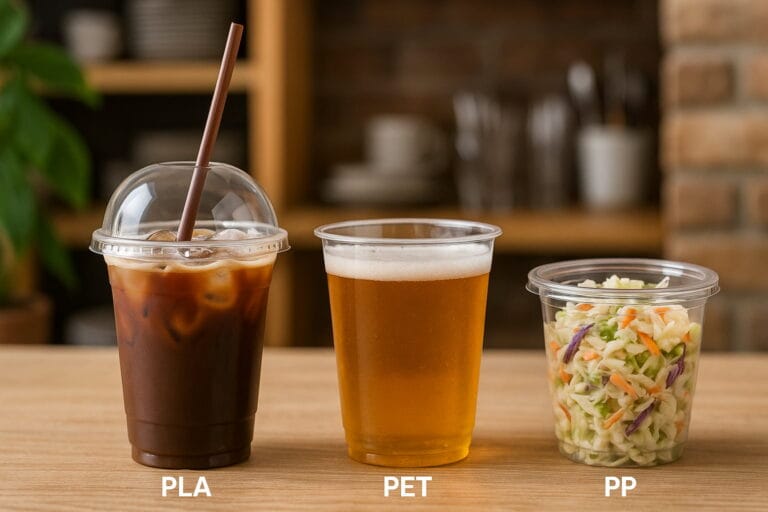
One of the most common missteps occurs when buyers assume all compostable spoons perform the same under heat. Standard PLA spoons, made from corn-based polylactic acid, begin softening around 55°C (131°F) , eco foodservice packaging. That means they are adequate for cold foods like desserts, salads, or yogurt, but unsuitable for hot beverages or soups. CPLA, on the other hand, is PLA that has undergone crystallization during manufacturing.

Related Insights

🚀Ready to Go Green and Choose ?

Join the global movement toward zero-waste packaging.


Bioleader® offers:

  • 📦 Bulk order support & fast delivery

  • ✍️ Custom branding and OEM solutions

  • 🌍 Worldwide eco-packaging compliance

Get the Catalogue Products List  & Contact Us Now! 👉

Contact Us for Quote

Click or drag files to this area to upload.You can upload up to 5 files.
The more details you share, the faster and more accurate our quotation will be.