FAQ of Bioleader's Eco-friendly Disposable Tableware
Why should businesses switch to bio plastic cutlery?
Switching to bio plastic cutlery helps reduce plastic waste, supports sustainability initiatives, meets consumer demand for eco-friendly products, and enhances brand reputation , disposable cutlery.
Are compostable sporks safe for hot and cold foods?
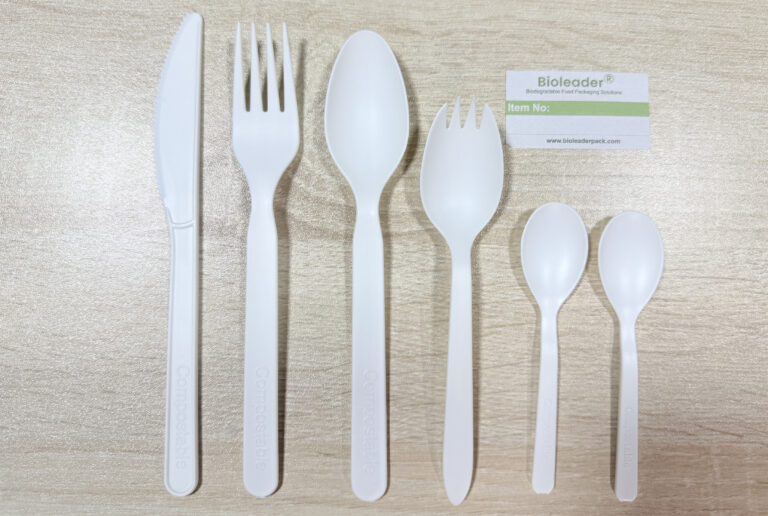
Yes, compostable sporks are designed to handle both hot and cold foods. They maintain their strength and stability even when used with soups, salads, or hot dishes , disposable cutlery.
What are Earth Friendly Utensils Disposable Cutlery made from?
Earth Friendly Utensils Disposable Cutlery is made from renewable plant-based materials like cornstarch or PLA, making them biodegradable and compostable — disposable cutlery.
3. Who invented the spork?
The concept dates back to the late 19th century, with patents filed in the early 1900s. Its modern popularity rose with fast food, camping gear, and institutional dining.
2.3 Cornstarch Cutlery: The U.S. Value Segment (with Caveats)
Cornstarch-based cutlery (often composite biopolymer blends) exists in both markets, but it tends to be more common in the U.S. value segment because it can be competitive on price and still be “plant-based” in the marketing story. However, cornstarch cutlery is not a single material. Buyers should evaluate: heat tolerance brittleness odor compliance claims In Europe, buyers may be cautious if a product feels “plastic-like” and cannot clearly match a recognized compostability pathway in the buyer’s country or waste system.