Highlights from featured articles under this tag:


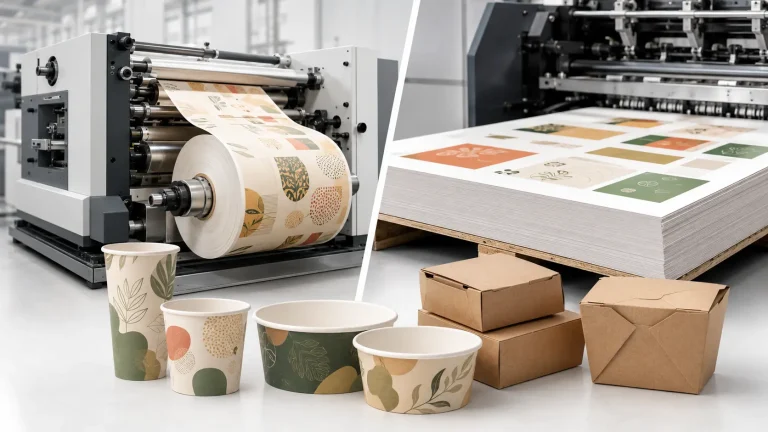
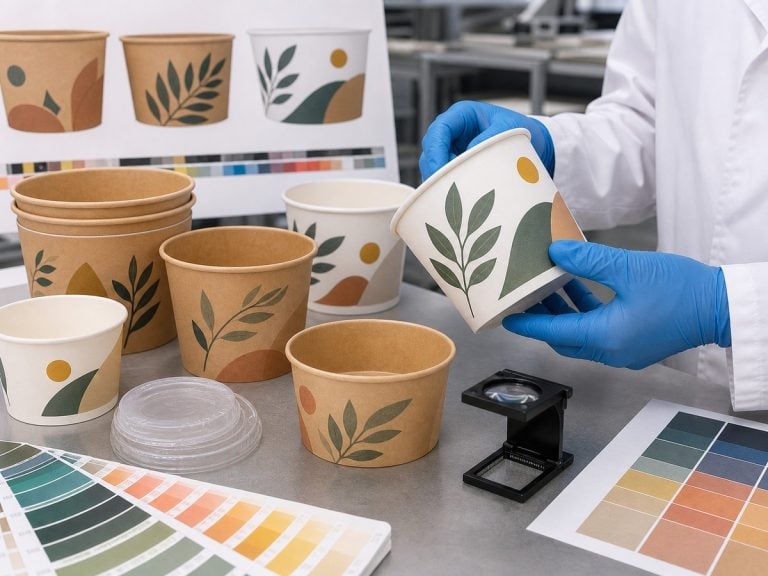
Flexo uses a flexible raised plate to transfer ink directly to the paper, while offset transfers the image from a plate to a rubber blanket and then to the paper. For paper cups, the better method depends on coating type, printing area, colors, quantity and production route. Water-based coated cups in Bioleader®’s current production system normally use flexo.
Large full-coverage artwork increases ink coverage and makes production stability more important. In Bioleader®’s manufacturing experience, certain offset full-coverage cup projects have a greater practical risk of rubbing or color transfer between tightly nested cups. For this reason, flexo is often evaluated first for high-coverage cup and bowl designs.
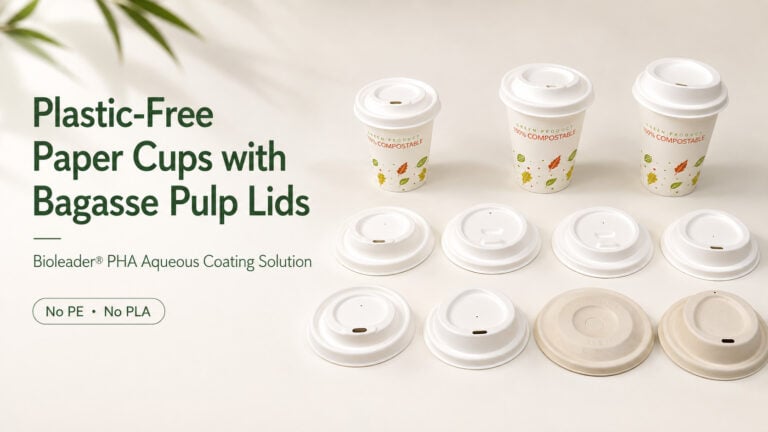
In Bioleader®’s current paper cup and bowl production, water-based aqueous coated paper is normally printed by flexographic printing. Buyers planning aqueous-coated packaging should therefore confirm the printing route early because changing from PE or PLA to water-based coating may affect artwork preparation, plate cost and production planning.
PLA-coated projects may support more than one printing route depending on the exact product structure and factory setup. The supplier should confirm compatibility between the coated paper, printing process, forming method and required artwork before production.
Yes, suitable PE-coated paper cup projects may use either flexo or offset depending on the manufacturer’s equipment, artwork, order quantity and converting route. Buyers should confirm the printing process before final artwork separation and plate making.
Join the global movement toward zero-waste packaging.
Bioleader® offers:
📦 Bulk order support & fast delivery
✍️ Custom branding and OEM solutions
🌍 Worldwide eco-packaging compliance
Get the Catalogue Products List & Contact Us Now! 👉