The 2025 Buyer’s Guide To CPLA Vs Cornstarch Cutlery | Bioleader® Sustainable Packaging
Actionable coverage of CPLA vs cornstarch cutlery: eco-friendly, biodegradable, compostable materials, performance data, and compliance under EN13432 & ASTM D6400. Includes BPI/TÜV references and Food-Contact Tested guidance for safe deployment. Buyer-focused: manufacturer insights, bulk/wholesale buying playbooks, OEM/ODM customization tips, full size range selection.
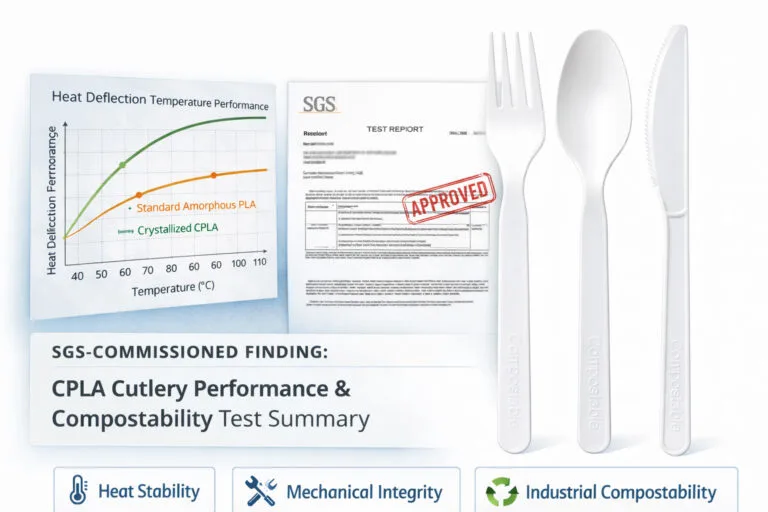
Quick Summary: CPLA and cornstarch cutlery are the two leading biodegradable materials replacing plastic utensils in 2025. CPLA provides superior rigidity and high heat resistance, making it suitable for hot meals, heavy dishes, and premium foodservice operations, while cornstarch cutlery fits cold or warm meals and cost-sensitive applications. This guide explains performance differences, engineering behavior, real-world stress testing, and industry-specific use cases for global buyers.
FAQ of Bioleader's Eco-friendly Disposable Tableware
Can they be used for hot food?
Absolutely. These bowl compostable containers are made in a way that even hot dishes can be served in them… , CPLA vs cornstarch cutlery.
What sizes are available?
In respect of quantity, we are not limited as we have containers of 500ml, 750ml, 1000ml units to 1090ml, 1200ml, 1300ml, 1500ml, etc, so there is always a need.
Is it really compostable?
Yes, these salad bowls compostable are made from biodegradable materials such as kraft paper and white cardboard paper which allow it to biodegrade when discarded appropriately — CPLA vs cornstarch cutlery.
3.1 Static Load Test (Vertical Pressure Performance)
When pressure is applied vertically—such as when lifting dense foods like rice, pasta, or meats—cutlery must remain rigid without bending , CPLA vs cornstarch cutlery. Findings from industry-wide tests: Test Type CPLA Cutlery Cornstarch Cutlery Bending resistance Very high Moderate Structural stiffness Strong Medium Breakage rate under 25–35N Low Medium–High Performance with dense/meaty foods Excellent Fair CPLA showed a significantly lower break rate and stronger load support, making it ideal for high-demand foodservice operations.
3.3 Cutlery Edge Durability (Knife Cutting Test)
CPLA knives, due to higher crystallinity, perform well on: Pizza crust Soft meats Bread Firm vegetables Cornstarch knives are suitable for soft foods but struggle with tough textures due to reduced edge sharpness.