The Court’s Verdict: What Was Banned and Why
On June 17, 2025, the Kerala High Court issued a landmark directive aimed at curbing plastic pollution in the state’s most fragile and frequented zones: its lush hill stations and public events. The order mandates a complete ban on single-use plastic items at ten tourist hotspots including Munnar, Thekkady, and Wayanad, as well as at all government-organized functions.
The ruling bans plastic bottles of 5 liters or less, disposable plastic plates, cups, straws, plastic-lined bakery boxes, and cutlery. Instead, the court encourages the installation of public water kiosks, adoption of reusable containers, and exclusive use of compostable or biodegradable alternatives.
The implementation deadline, set for October 2, 2025 (Gandhi Jayanti), marks not only symbolic alignment with Mahatma Gandhi’s values but also reflects urgency in addressing the state’s mounting waste crisis.
📋 Kerala Plastic Ban: Policy Summary Table
| Measure | Details |
|---|---|
| Policy Issued by | June 17, 2025 (Kerala High Court) |
| Target Areas | 10 Hill Stations (e.g., Munnar, Thekkady) + All Government Functions |
| Items Banned | Plastic bottles ≤5L, plates, cups, straws, cutlery, bakery packaging |
| Encouraged Alternatives | Public water kiosks, reusable containers, certified compostable tableware |
| Implementation Deadline | October 2, 2025 (Gandhi Jayanti) |
Tourism and Plastic: A Problem Hidden in the Hills
Kerala’s hill stations are globally celebrated for their misty landscapes, tea plantations, and biodiversity. But beneath the green lies a growing problem: uncollected plastic litter from packaged snacks, water bottles, and disposable containers, especially during the tourist high season.
Locations such as Vagamon, Ponmudi, and Gavi see an influx of both domestic and international visitors, many of whom leave behind trails of plastic. The terrain’s remoteness makes cleanup costly and inefficient. Monsoon rains often carry plastic waste into forest streams, threatening endemic flora and fauna.
The High Court’s intervention is thus not just about visible pollution but about protecting sensitive ecological zones from long-term harm.

The Rise of Compostable Tableware: Not Just a Trend
To fill the void left by banned plastics, compostable food packaging has emerged as a practical, scalable alternative. Bagasse (sugarcane fiber), CPLA (crystalized PLA), and cornstarch-based products offer a triple win: they are plant-based, heat-resistant, and compostable under suitable conditions.
These products also suit Kerala’s climate and cuisine. For example:
- Bagasse trays hold up against oily dishes like Kerala fish curry.
- Cornstarch cutlery remains firm even in hot soups.
- PLA cups are suitable for cold beverages often served during outdoor events.
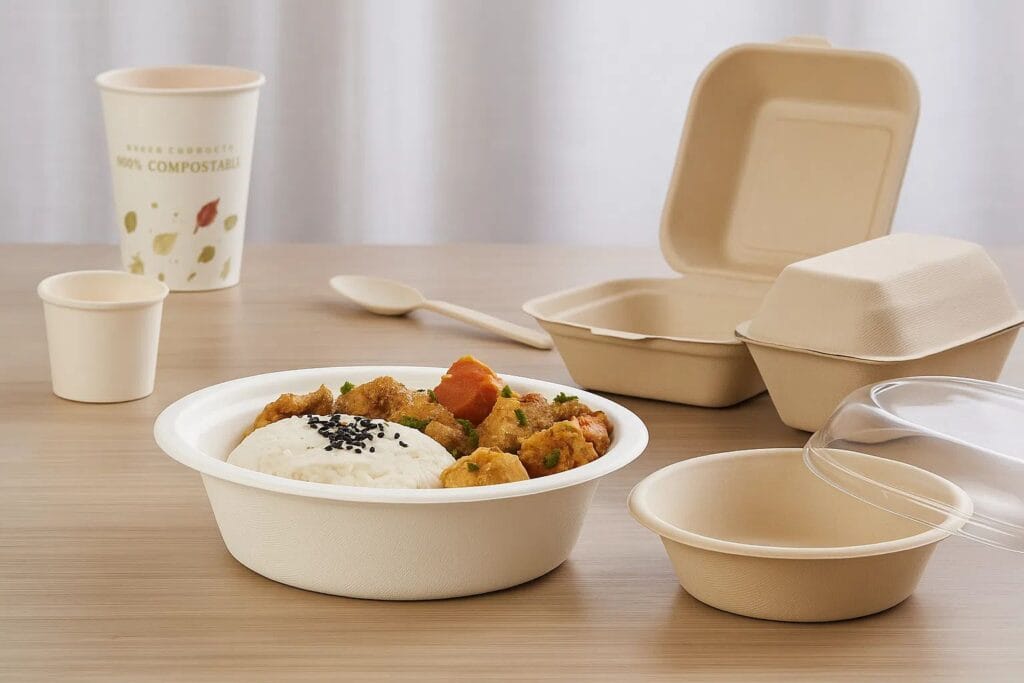
🏠 Bioleader®: Supporting the Transition
Bioleader®, a leading global supplier of biodegradable tableware, is already working with food vendors, caterers, and event organizers across South Asia. Its bagasse clamshell boxes and compostable cutlery kits comply with international standards such as EN13432, BPI, and ISO22000.
By providing scalable solutions tailored for high-volume use, Bioleader® ensures that vendors don’t just replace plastic—they upgrade the entire dining experience with food-safe, leak-resistant, and temperature-resilient alternatives.
Bio-Compostable in Action: Real-World Use Cases
✔️ Hill Station Cafes
In Munnar, several eco-tourism lodges have swapped plastic containers for Bioleader®’s sugarcane bowls and cutlery. Not only do these products align with the mandate, but tourists appreciate the upgraded presentation and sustainability.
✔️ Pilgrim Sites
At Sabarimala, temples distributing free meals (annadanam) are now piloting compostable trays made from bagasse. Volunteers note easier waste sorting and less clogging of local disposal pits.
✔️ Government Events
Public Independence Day events in Thiruvananthapuram and Kochi have begun serving refreshments in certified compostable cups and plates—a move welcomed by the media and citizens alike.

Beyond Kerala: A National and Global Trend
Kerala’s action reflects a broader national and international shift:
In India:
- Karnataka launched district panels to monitor bottled water usage.
- Tamil Nadu continues enforcing its 2018 ban on plastic cutlery.
- Maharashtra imposes fines for single-use plastic violations.
Globally:
- Lagos, Nigeria will fully ban styrofoam and plastic utensils by July 2025.
- EU enforces producer responsibility under the Single-Use Plastics Directive.
- Thailand banned all plastic waste imports starting 2025.
This convergence presents a unique opportunity for compostable brands to expand responsibly while aligning with rising regulatory standards.
Conclusion — A Mandate That Opens the Door for Better Packaging
Kerala’s plastic ban isn’t just about prohibition—it’s an invitation to innovate. It reflects a growing understanding that policy must be accompanied by accessible, effective alternatives.
Bioleader® is helping bridge that gap with certified biodegradable packaging designed for tropical climates, Indian cuisines, and high-volume use cases. As vendors, event organizers, and consumers seek compliance, safety, and sustainability, the role of compostable tableware is no longer peripheral—it’s essential.
Now is the time to turn mandates into markets and mountains into models for sustainable change.
FAQ
1. What plastics are banned under Kerala’s new policy?
The policy bans single-use plastics including bottles under 5L, plastic cups, plates, straws, cutlery, and bakery packaging at hill stations and public events.
2. When does Kerala’s plastic ban take effect?
The High Court ruling takes effect on October 2, 2025—coinciding with Gandhi Jayanti, aiming to promote eco-conscious behavior in tourism and public services.
3. What are suitable alternatives to plastic for food vendors?
Compostable bagasse trays, PLA cold cups, and cornstarch utensils are practical replacements that are leak-proof, heat-resistant, and food-safe.
4. How are Kerala’s tourist spots dealing with plastic waste?
Hill stations like Munnar and Thekkady are replacing plastic packaging with biodegradable tableware in cafés, lodges, and temple distribution programs.
5. Where can I find compostable packaging suppliers in India?
Leading brands like Bioleader® offer certified biodegradable food packaging and compostable utensils suitable for both private and public-sector use.
References
Times of India – Kerala HC bans single-use plastics in hilly tourist spots, functions
https://timesofindia.indiatimes.com/city/kochi/kerala-hc-bans-single-use-plastics-in-hilly-tourist-spots-functions/articleshow/121917359.cmsMinistry of Environment, Forest and Climate Change (India) – Plastic Waste Management Rules (Amended 2022)
https://moef.gov.in/plastic-waste-management/United Nations Environment Programme (UNEP) – Beat Plastic Pollution: A Global Call
https://www.unep.org/interactives/beat-plastic-pollution/European Commission – EU Single-Use Plastics Directive Explained
https://environment.ec.europa.eu/topics/plastics/single-use-plastics_enBioleader® Official Website – Biodegradable Tableware & Sustainable Packaging Solutions
https://www.bioleaderpack.com/World Economic Forum – <em< span=””> data-start=”1077″ data-end=”1138″>Why Compostable Packaging is Key to a Greener Food Industry</em<>
https://www.weforum.org/agenda/2022/06/compostable-food-packaging-plastic-pollution/Wikipedia – Plastic Pollution in India
https://en.wikipedia.org/wiki/Plastic_pollution_in_India