Guide To Composting Bagasse Products: Materials, Standards & Best Practices | Bioleader® Sustainable Packaging
Actionable coverage of composting bagasse products: eco-friendly, biodegradable, compostable materials, performance data, and compliance under EN13432 & ASTM D6400. Includes BPI/TÜV references and Food-Contact Tested guidance for safe deployment. Buyer-focused: manufacturer insights, bulk/wholesale buying playbooks, OEM/ODM customization tips, full size range selection.
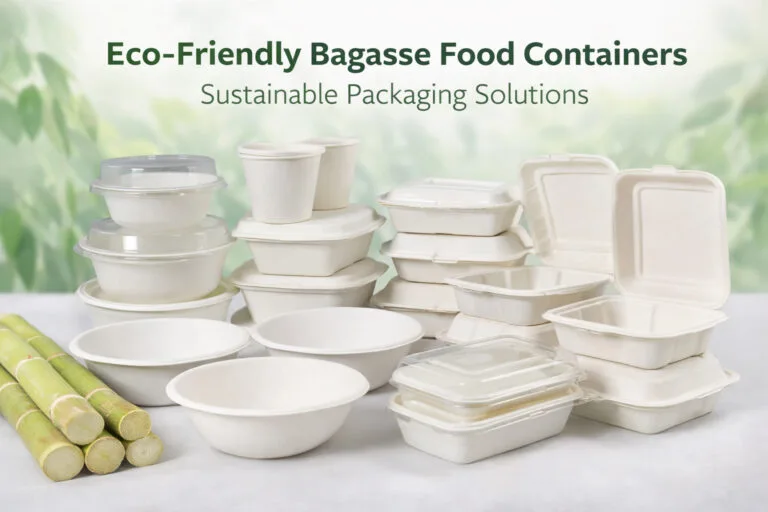
As we search for eco-friendly alternatives to single-use plastics, bagasse—a byproduct of sugarcane processing—has emerged as a sustainable packaging solution. But an important question remains: Is bagasse home compostable, or does it require industrial composting to break down effectively? Understanding this distinction is crucial for consumers, waste management operators, and businesses alike. This article explores the biodegradability of bagasse tableware and bagasse food containers, evaluates real-world applications, and explains whether bagasse can go in your backyard compost—or only in an industrial facility.
composting bagasse products — Quick Summary
Items displayed (articles): 12
Last updated: 2025-05-22
Includes test data, compliance guides, buyer FAQs, and real-world use cases.
FAQ of Bioleader's Eco-friendly Disposable Tableware
Do you offer the bowls with logo customization?
Certainly! We provide complete branding of our paper takeaway bowls, which includes brand logos and selection designs on the bowls , composting bagasse products. For details, please get in touch with us , composting bagasse products.
Do the containers comply with environmentally friendly customs?
Yes, our to go salad bowls are eco friendly because it is made of biodegradable materials such as kraft paper and white paper card board which is better than plastic — composting bagasse products.
How many sizes of the product can I get?
The compostable salad bowls are within the capacity range of 500 and 1500 ml (8 oz-48 oz), Availing variety for the mass.
Do bagasse products need to be certified for compostability?
Yes, certifications like BPI, TÜV Austria, or EN13432 indicate that bagasse products meet specific compostability standards and ensure safe, complete decomposition without toxins.
What’s the difference between home and industrial composting for bagasse?
Home composting uses lower temperatures and more natural decomposition, while industrial composting provides high heat and controlled conditions for faster breakdown. Bagasse performs well in both but decomposes faster in industrial settings.