Highlights from featured articles under this tag:


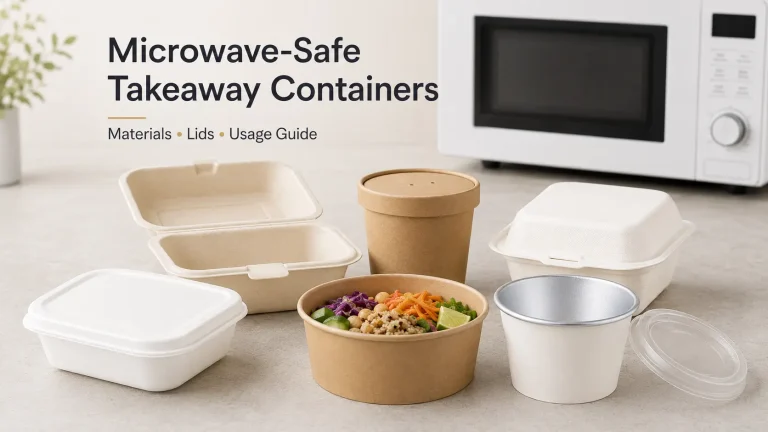
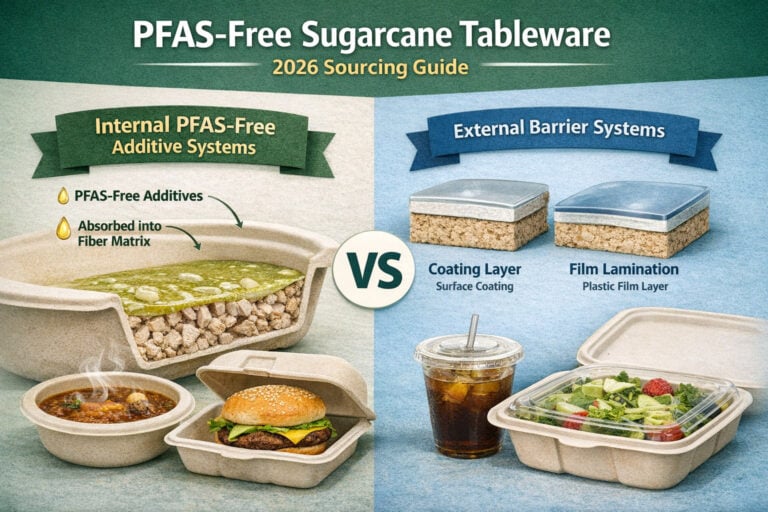
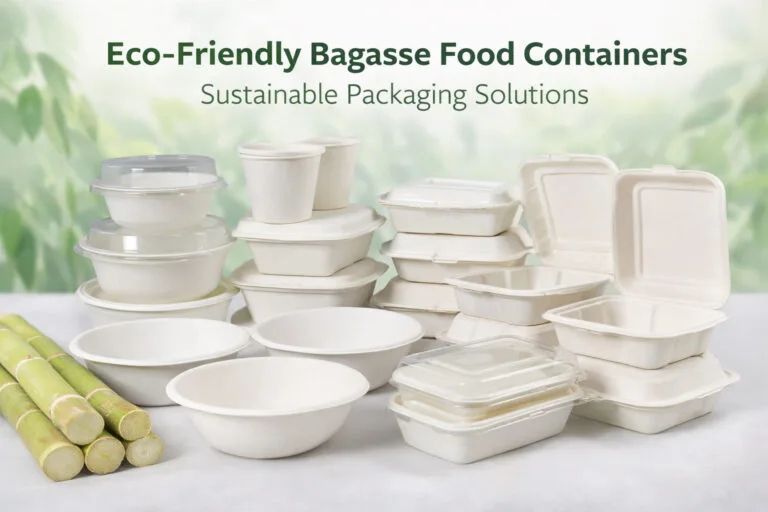
Many finished sugarcane bagasse containers are suitable for short microwave reheating, but the claim should be limited to the tested SKU and application. Food moisture, oil content, product weight, hinge design, PFAS-free barrier grade, heating time and lid material can all affect performance.
It depends on the complete polymer blend. Commercial cornstarch tableware may contain PP, PLA, PBAT, mineral filler or other materials. Buyers should request the full formulation, food-contact documentation and product-specific microwave conditions instead of assuming that the cornstarch name proves heat performance.
Foil-lined paper bowls are conditional microwave systems rather than universally microwave-safe containers. The bowl geometry, foil edges, food load, lid, power, time and microwave positioning must be controlled. Standard PET lids and unapproved metallic seals should be removed before reheating.
Do not assume microwave suitability for EPS foam, standard PET, PLA cold-food packaging, rigid PS, PVC, grocery bags, ordinary brown paper bags, newspaper, melamine tableware, unvalidated PE-coated paper or packaging with metal handles, staples, twist ties or metallic seals. Use only products carrying clear application-specific instructions.
Polypropylene is generally the most established disposable material for mainstream microwave reheating. It offers mature molding, water and oil resistance, stable supply and matching PP lid options. However, buyers should still confirm that the exact finished container is labeled or tested for the intended food, microwave power and heating time.
Join the global movement toward zero-waste packaging.
Bioleader® offers:
📦 Bulk order support & fast delivery
✍️ Custom branding and OEM solutions
🌍 Worldwide eco-packaging compliance
Get the Catalogue Products List & Contact Us Now! 👉