

Quick Answer: What Are the Main Applications of PLA?
Polylactic acid (PLA) is used in transparent food packaging, disposable foodservice products, 3D-printing filament, fibers, nonwovens, consumer goods and selected industrial or medical applications. Its suitability depends on resin grade, crystallinity, additives, processing and the service environment. Standard transparent PLA is primarily a candidate for lower-temperature uses; crystallized PLA (CPLA), modified PLA and PLA blends extend the range but are not interchangeable materials.
Procurement conclusion: PLA is not a universal drop-in replacement for PET, PP, PS or EPS. The commercially defensible choice is the one that passes the actual heat, impact, barrier, shelf-life, regulatory and end-of-life requirements of the finished product. The 20 applications below distinguish established markets from specialized and research-stage opportunities.
What Is PLA Used For? A 20-Application Industry Overview
PLA is a family of aliphatic polyesters produced from lactic-acid-based building blocks, commonly using sugars obtained from renewable feedstocks. It can be extruded into sheet or filament, formed into containers, spun into fibers, injection molded into parts or compounded with other polymers. Those processes produce very different articles, even when the label on each one says “PLA.” For the underlying material science, see Bioleader’s scientific and practical introduction to PLA.
The following classification is an editorial assessment of application maturity, not a claim about global market share. Established means commercially available applications with documented use; Specialized indicates grade-specific, formulation-dependent or market-specific use; Emerging means the evidence is primarily from research or scale-up demonstrations. A product being sold somewhere does not establish that it is economical, compliant or suitable in every market.
| # | PLA application | Typical material or process | Readiness |
|---|---|---|---|
| 01 | Clear cold-drink cups | Transparent PLA sheet, thermoforming | Established |
| 02 | Cup lids and covers | Thermoformed PLA; specialized grades for specific conditions | Established |
| 03 | Salad and deli containers | Rigid PLA sheet, thermoforming | Established |
| 04 | Food-packaging films | Films, coatings or multilayer structures | Specialized |
| 05 | PLA-coated paper cups and bowls | Paperboard with PLA barrier layer | Established |
| 06 | CPLA cutlery | Crystallized PLA, injection molding | Established |
| 07 | Beverage bottles | Suitable PLA grades, bottle forming | Specialized |
| 08 | Compostable waste-collection bags | PLA-containing flexible blends | Specialized |
| 09 | 3D-printing filament | Filament extrusion, FDM/FFF printing | Established |
| 10 | Household goods | PLA compounding and injection molding | Specialized |
| 11 | Electronics and appliance parts | Modified PLA, injection molding | Specialized |
| 12 | Protective foam packaging | PLA-based foam formulations | Specialized |
| 13 | Textile fibers and fabrics | PLA melt spinning | Established |
| 14 | Bedding and filling fibers | Staple or hollow-fiber systems | Specialized |
| 15 | Nonwovens and hygiene materials | Spunbond or other fiber processing | Established in selected products |
| 16 | Agricultural mulch films | Soil-biodegradable PLA-containing blends | Specialized |
| 17 | Horticultural pots and planting items | Molded PLA or blends | Specialized |
| 18 | Automotive interior parts | Heat- and impact-modified PLA composites | Specialized |
| 19 | Aerogel thermal insulation | Highly porous, engineered PLA structures | Emerging |
| 20 | Medical devices and implants | Medical-grade PLA or specified copolymers | Established for defined uses; development continues |
Why PLA Works in Some Applications but Fails in Others
Resin chemistry is only the starting point
PLA generally offers good rigidity and processability, and suitable grades can deliver high transparency. Its weaknesses include limited heat resistance in many amorphous formulations, brittleness under certain loads, moisture sensitivity during melt processing and barrier limitations in demanding packaging. Glass-transition behavior is often discussed around 55–65°C for common PLA materials, but a glass-transition temperature is not a finished cup’s certified service-temperature limit. Wall thickness, orientation, crystallinity, load and contact duration all matter.
To avoid category errors, distinguish standard PLA from CPLA, which relies on crystallization and appropriate formulation; modified PLA, engineered for additional toughness or heat resistance; and PLA blends, which may contain other biopolymers. The presence of PLA does not establish the final article’s compostability or biobased percentage. Bioleader explains the product-level distinction in its PLA, PLA+ and CPLA comparison.
| Material system | Typical advantage | What the buyer must verify |
|---|---|---|
| Transparent, predominantly amorphous PLA | Clarity and rigid thermoformed packaging | Heat deformation, stacking, storage and lid performance |
| Crystallized PLA (CPLA) | Improved heat resistance for appropriate molded articles | Actual finished-item temperature and food-contact evidence |
| Impact- or heat-modified PLA | More demanding molded or durable applications | Additives, aging, mechanical tests and regulatory suitability |
| PLA-containing flexible blend | Films and flexible product design | Full composition, tear strength, disposal claims and test scope |
| Medical-grade PLA or copolymer | Controlled properties for specific biomedical uses | Device-specific approvals, manufacturing controls and clinical evidence |
Processing also changes the result. Thermoforming relies on sheet thickness and formed geometry; injection molding depends on tool temperature and shrinkage; fiber spinning produces oriented filaments; 3D printing creates layered structures with anisotropic strength. It is therefore misleading to transfer a temperature or strength figure from one PLA product family to another without testing the finished item. A broad technical review of PLA synthesis, crystallinity, processing and applications appears in Mou et al. (2025), Journal of Hazardous Materials Advances.
Eight PLA Applications in Food Packaging and Foodservice
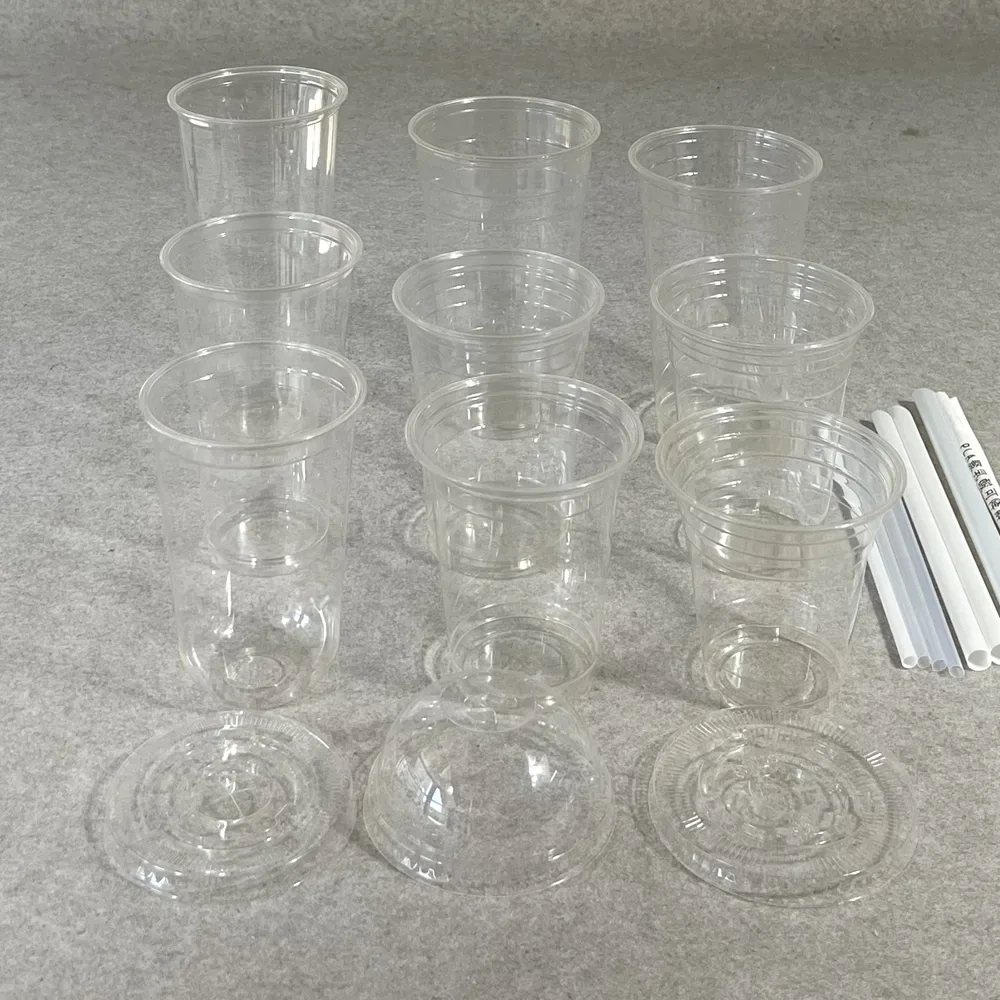
01. PLA clear cold-drink cups
Transparent PLA cups are a practical application when cafés, juice bars and event operators need rigid, clear containers for cold beverages. Their value is visual presentation without relying on a conventional fossil-derived cup body. However, a cup designed for iced drinks should not be used for hot coffee, boiling water or prolonged high-temperature storage simply because its resin is described as compostable. Transport in hot containers and exposure to sunlight also need consideration.
Bioleader® supplies clear PLA cold cups for foodservice in wholesale formats. A useful sample protocol records the beverage temperature, fill level, stacking load, cup-to-lid fit, condensation and the time the cup spends in delivery or storage. Product specifications and certifications must match the exact size and production structure.
02. PLA cup lids and covers
Cup lids are a separate engineering decision from cup bodies. Flat, dome and drinking-opening lids must match the rim diameter and sealing profile of the cup. A nominal 90 mm or 98 mm rim designation does not prove compatibility across suppliers. Edge geometry, material shrinkage and lid stiffness determine whether a lid stays attached during transport. Certain purpose-designed PLA grades can be considered for conditions different from a standard transparent cold-cup resin, but a special-grade claim is not proof that every PLA lid is suitable for hot beverages.
For sourcing, request a cup-and-lid sample set, not only two isolated samples. Bioleader’s PLA cup product range is a starting point for selecting matched beverage packaging components.
03. PLA salad and deli containers
Rigid PLA containers are used for selected cold salads, fruit portions, deli products and ready-to-eat foods where transparency helps merchandising. In this context, the question is not just whether PLA can be thermoformed; the container has to preserve its shape under filling, lidding, stacking and cold-chain handling. Acidic dressings, oily toppings and the planned contact duration can change the food-contact assessment.
PLA should not be described as a universal PET substitute for long-shelf-life products. Oxygen transmission, moisture management, lid sealing and distribution temperatures may lead a buyer to PET, PP or a qualified multilayer system instead. Any proposed change requires package-level shelf-life validation, not only a resin data sheet.
04. PLA food-packaging films
PLA can be processed into packaging films, including structures developed for wrapping or sealing selected foods. Films require a different property balance from rigid cups: seal initiation temperature, tear resistance, puncture strength, haze, moisture transmission and oxygen barrier can be decisive. To address flexibility or barrier limitations, developers may use blends, coatings or additional layers.
A PLA-containing film is not necessarily a wholly PLA film, and a multilayer package is not automatically industrially compostable. Buyers should request a full material-layer declaration and test evidence for the entire finished package, including printing inks and adhesives where relevant.
05. PLA-coated paper cups and bowls
Here PLA functions as a barrier coating on a paperboard structure rather than as the full cup wall. That difference is central to performance. A properly engineered coated paper cup may hold a hot beverage under specified conditions because the paperboard provides structural support and the barrier layer is protected within the overall design. It would be incorrect to infer that a freestanding transparent PLA cup will perform the same way.
For hot drinks and soup, the practical test is conducted on the finished cup or bowl: verify side seams, bottom seal, coating continuity, water exposure time and lid compatibility. Bioleader offers PLA-coated paper cup options; the choice between PLA, PE and other coating systems must also consider the destination’s collection and regulatory requirements. The mechanism is explained in why a PLA clear cup and a PLA-coated paper cup behave differently with hot water.
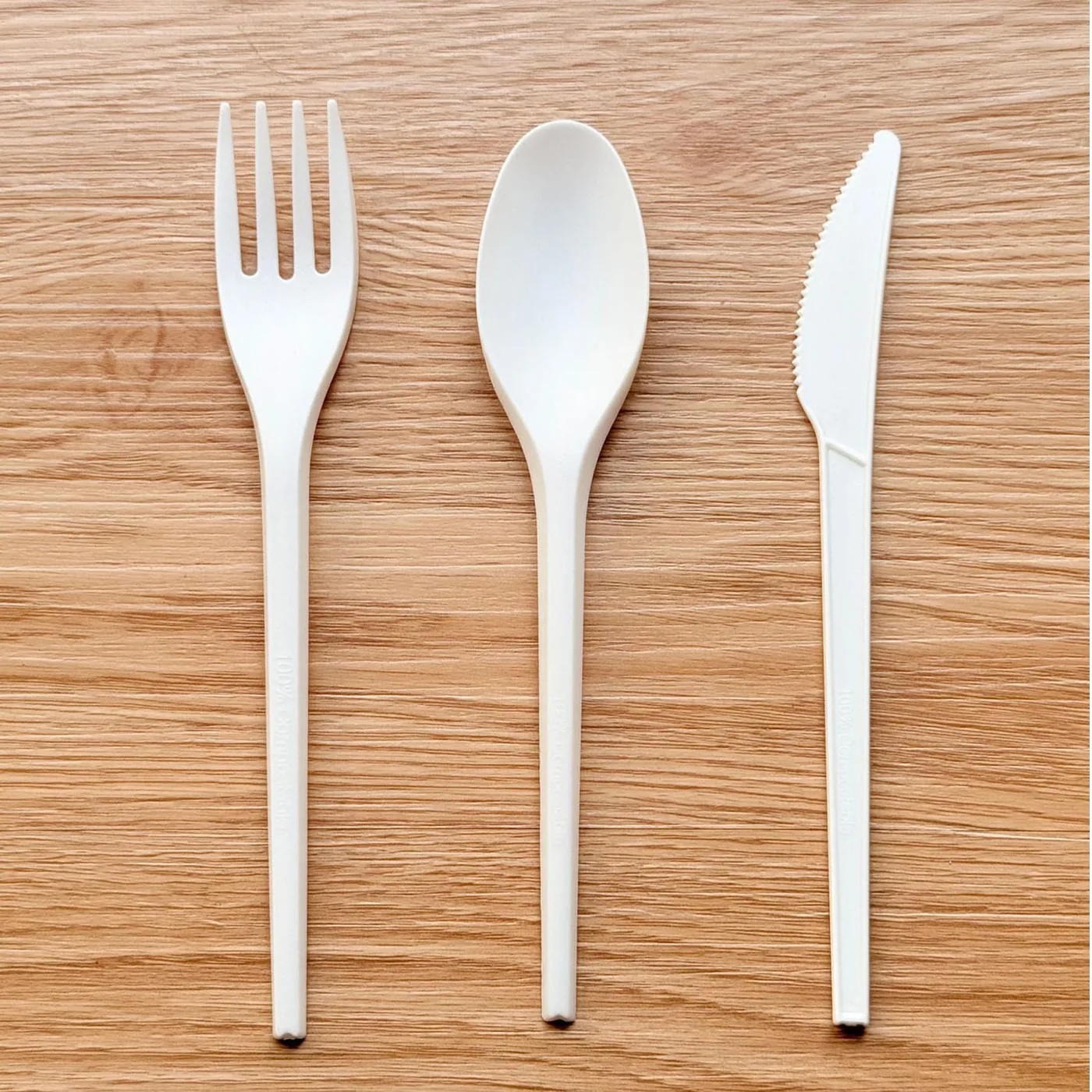
06. CPLA forks, spoons and knives
Crystallized PLA is a commercially established route for molded foodservice utensils requiring more heat resistance than many transparent PLA grades. The actual performance depends on crystallinity, formulation, article thickness and contact conditions. Mechanical acceptance should include fork-tine integrity, spoon-bowl strength, knife rigidity and food-contact testing. A general statement such as “heat-resistant to 100°C” is insufficient without the test method and duration.
Bioleader supplies compostable cutlery solutions, including CPLA forks, spoons and knives. For product selection, buyers should specify actual food temperature, contact duration, utensil dimensions, rigidity and food-contact documentation for the intended SKU.
07. PLA beverage bottles
PLA beverage bottles illustrate both the promise and the limits of extending a polymer into new packaging formats. A developer may pursue renewable feedstock content and transparency, yet bottle production, cap fit, drop resistance, stress cracking and shelf-life performance remain product-specific problems. Water, acidic beverages and carbonated drinks place different demands on gas transmission and mechanical strength.
Exhibition prototypes or small production runs do not, by themselves, establish parity with conventional PET bottle systems. Buyers evaluating a PLA bottle should insist on a filled-package shelf-life study, logistics testing, food-contact documentation and a credible post-use route. Beverage bottles are a specialized PLA application, not a recommendation to replace all PET bottles.
08. PLA-containing compostable waste-collection bags
Some industrially compostable liners and food-waste collection bags use PLA as one component of a flexible polymer blend. This distinction matters: many bags obtain their flexibility and tear resistance from other materials, and the performance cannot be attributed to pure PLA. Wet food waste places additional demands on puncture resistance, sealing and storage time.
Before a municipality, caterer or foodservice operator specifies a bag, it should confirm certification for the actual bag thickness and composition, local organics-collection acceptance and the length of time the filled bag must remain intact. Compostable labels do not create a collection system where none exists.
Four PLA Applications in Industrial Manufacturing and Consumer Goods
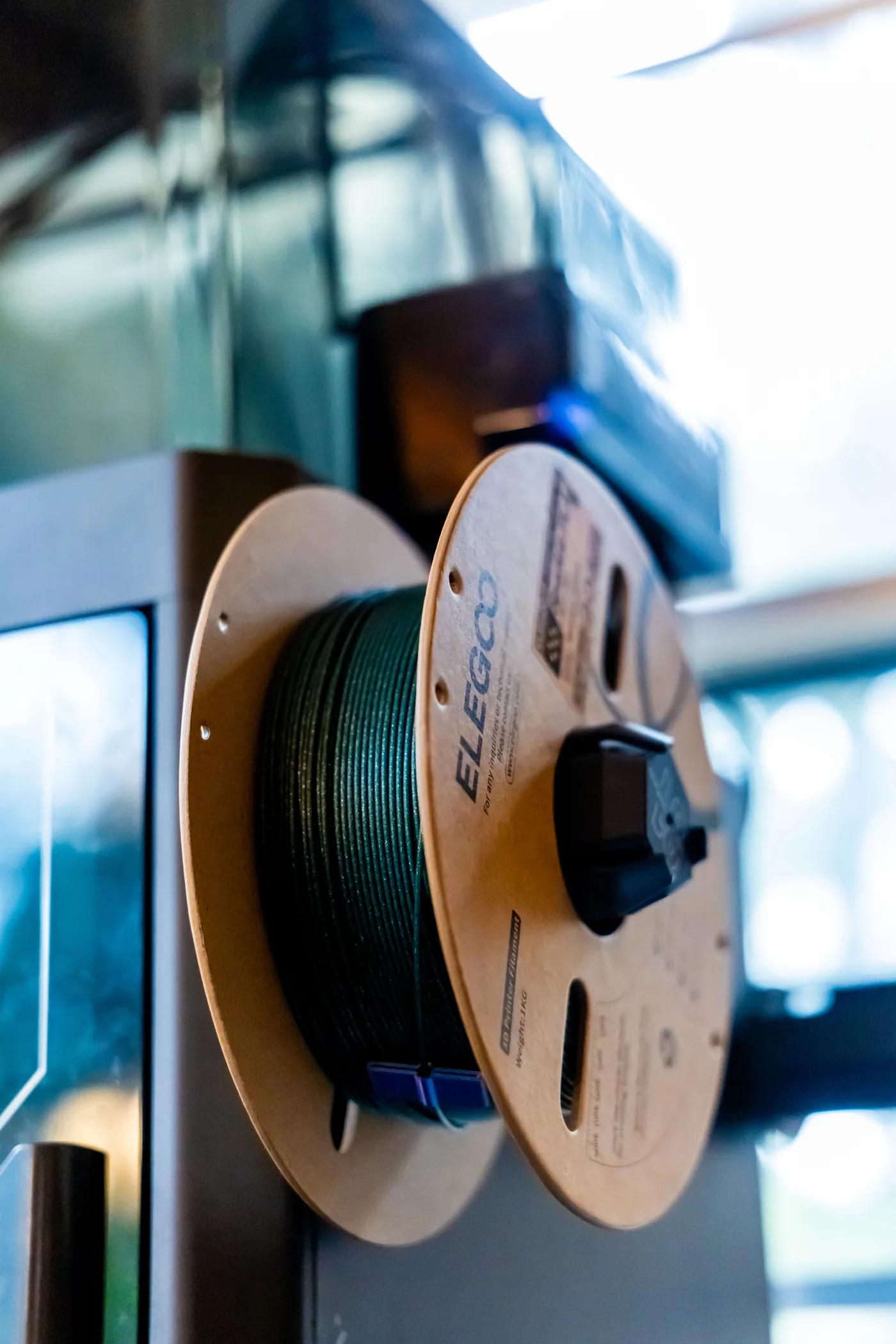
09. PLA 3D-printing filament
PLA filament is among the best-established non-packaging applications of the polymer. It is widely used in fused-filament fabrication for models, prototypes, visual aids and selected functional components. Good printability is attractive, but a printed part is defined by extrusion temperature, layer adhesion, infill, print orientation and the grade used. A visually sound prototype can still creep or deform when left in a hot vehicle or loaded for a long period.
For engineering evaluation, report tensile or impact testing by printing direction and intended service temperature. Modified PLA or alternative engineering polymers may be necessary for demanding working parts.
10. Injection-molded PLA household goods
Selected household products, storage accessories and consumer-item housings can use injection-molded PLA or PLA-containing compounds. Compared with disposable cups, these products require more attention to impact resistance, dimensional stability, repeated cleaning and aging. Their expected service life may be years rather than minutes or hours.
The material selection must therefore consider whether renewable feedstock content justifies the required compound development and the expected replacement cycle. Durability is part of sustainability: a nominally biobased item that fails prematurely may offer little benefit.
11. PLA electronics and appliance components
Modified PLA has been evaluated and applied in selected electronics and appliance parts. These are not ordinary cold-cup resin applications. Depending on the component, electrical insulation, fire behavior, dimensional precision, thermal aging and compatibility with other parts may govern qualification. Some formulations require additives or reinforcement that change the product’s material and end-of-life profile.
Manufacturers should provide grade-specific mechanical, electrical and flammability data rather than treating “PLA-based” as a performance specification. Product safety rules for electronics remain applicable regardless of the polymer’s source.
12. PLA-based protective foam packaging
PLA-based foams have potential in selected cushioning, protective-packaging and lightweight-product structures. However, an expanded foam must meet more than density targets. Repeated compression, rebound, brittleness, temperature sensitivity and the geometry of the protected product determine whether it can replace an EPS insert or another protective material.
For logistics users, comparative drop and vibration testing on the fully packed shipment is more meaningful than a foam sample’s generic strength claim. The total landed cost and actual recovery route may favor molded fiber or recycled-content structures in some markets. Bioleader’s molded sugarcane fiber solutions illustrate a different material approach for specified foodservice packaging needs, not an interchangeable foam replacement for every industrial product.
Three PLA Applications in Textiles, Fibers and Hygiene Products
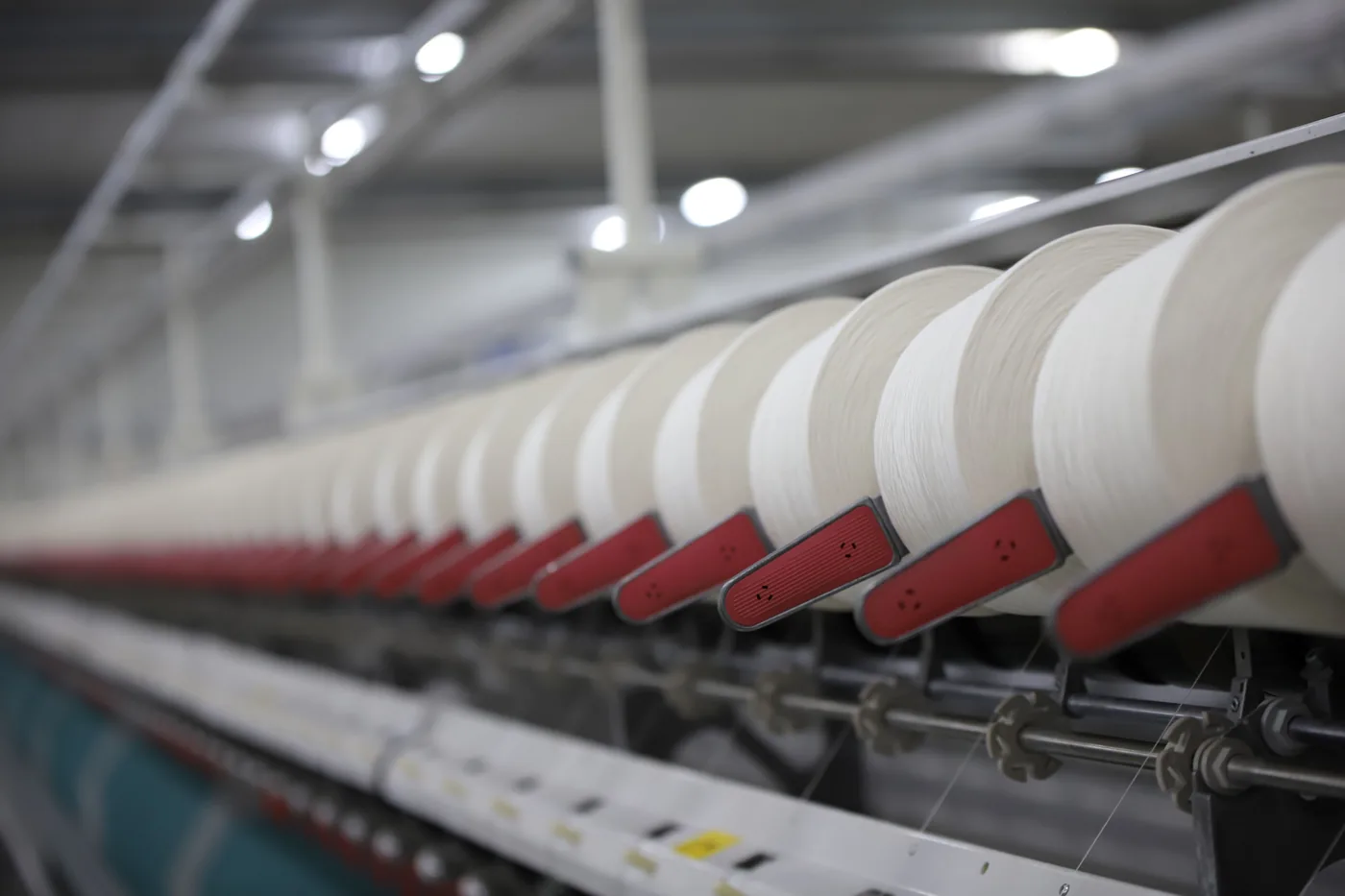
13. PLA textile fibers and fabrics
PLA can be melt-spun into fibers and used in selected textile constructions. Fiber-oriented PLA grades differ from thermoforming grades because orientation, drawing, crystallization, dyeing conditions and downstream finishing affect yarn strength and fabric behavior. Manufacturers consider softness, moisture handling, laundering, dimensional stability and the final fabric blend.
Claims about a PLA textile’s biodegradability should address the complete textile, not only the polymer in an isolated fiber. Dyes, elastane, surface finishes, stitching and mixed-fiber construction can change the relevant disposal route.
14. PLA bedding and filling fibers
PLA fiber systems are also used or investigated for bedding fillings, cushions and other home-textile products. These applications have different priorities from a beverage cup: resilience after compression, loft retention, washing, warmth and a predictable service life. A hollow-fiber construction may create an insulation effect, but that does not turn every PLA filling into a certified thermal-insulation material.
Buyers should evaluate the finished filling and outer cover together. The material’s origin is one purchasing factor; comfort, repeated-use performance and cleaning instructions remain essential.
15. PLA nonwovens and hygiene products
Spunbond and other PLA nonwoven processes support certain wipes, hygiene substrates, filtration-related products and specialty fabrics. These products may require controlled fiber diameter, softness, web integrity, wet strength or compatibility with coatings and binders. A PLA fiber web should not be conflated with every finished hygiene product, especially when it contains absorbents, adhesives or plastic films of other compositions.
Where a healthcare or personal-care claim is involved, check the finished-product standard, intended contact and regulatory status. A polymer being used in a hygiene material is not evidence of approval for implantation or invasive medical use.
Two PLA Applications in Agriculture and Horticulture
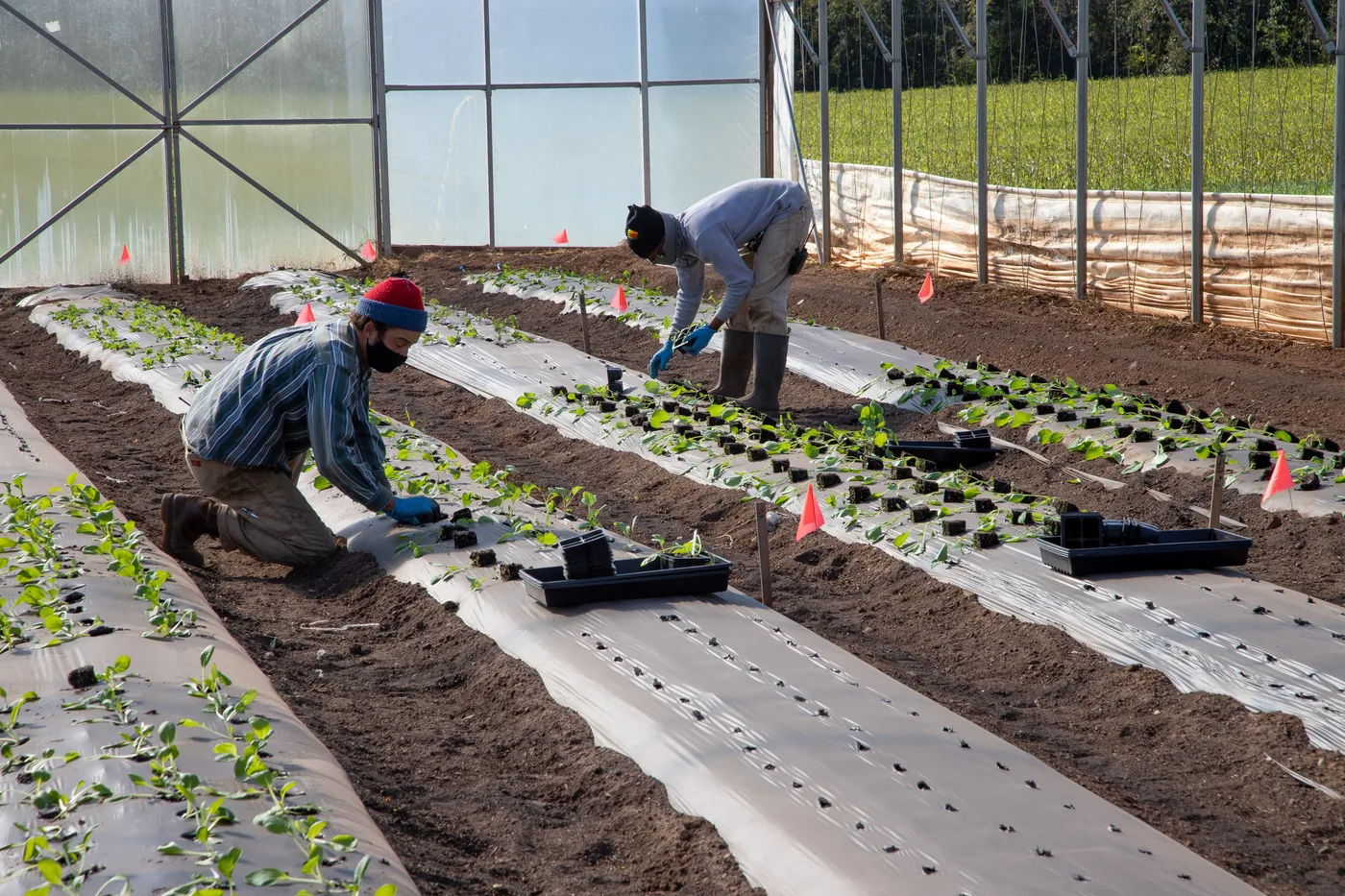
16. PLA-containing agricultural mulch films
Biodegradable agricultural mulch films can be engineered using blends that may include PLA. This is a formulation problem, not simply a conversion of standard rigid PLA into a thin film. The product must maintain field strength and weed-suppression performance for the crop cycle, then meet the applicable soil-biodegradation requirements if it is intended to remain in the field.
EN 17033 concerns soil-biodegradable mulch films for agriculture and horticulture; EN 13432 concerns packaging intended for industrial composting. A certificate under one does not establish compliance with the other. Actual field results are affected by film composition, thickness, soil moisture, temperature, microbial activity and local conditions. Packaging-grade PLA alone should never be advertised as a field-degradable mulch solution.
17. PLA horticultural pots and planting products
Plant pots, nursery accessories and certain horticultural items are possible outlets for molded PLA or PLA blends. A pot has to survive irrigation, handling and the nursery’s intended growing period. If it is marketed as plantable or soil-biodegradable, the supplier must substantiate the claim under the intended soil conditions rather than borrowing an industrial-composting certificate.
For growers, the useful question is whether the product retains sufficient strength until planting and what happens afterward. An unsupported promise of rapid soil disappearance could create an agricultural waste problem rather than solve one.
PLA in Transportation and Building Materials
18. Modified PLA automotive interior parts
PLA-based compounds can be engineered for selected automotive trim or interior component applications. Compared with short-use packaging, the qualification burden is high: thermal cycling, prolonged sunlight exposure, impact, odor, fogging, fire behavior and years of service must be evaluated. Reinforcement, nucleating agents and other modifications may improve performance but also affect recyclability and material accounting.
These are specialized compounded-material applications. The use of the term “PLA” in a supplier catalog should prompt a request for automotive-grade specifications, not an assumption that a standard biodegradable resin will pass vehicle qualification.
19. PLA aerogel thermal insulation
PLA aerogels represent an emerging application in which a highly porous polymer structure is engineered for thermal performance. A 2026 study published in Construction and Building Materials examined temperature-dependent behavior, recyclability and scale-up of highly crystalline PLA aerogels. The authors reported a thermal conductivity of approximately 37 mW/m·K at 120°C for the studied formulation and identified further industrial implementation work. This is a reported research result for a specific engineered sample, not a specification for commercial PLA insulation panels or packaging-grade PLA.
For building products, the remaining evaluation extends to reproducible large-scale manufacture, fire response, moisture exposure, long-term durability, installation conditions and relevant construction standards. The study demonstrates technological potential; it does not establish general market readiness.

20. Medical-Grade PLA Devices and Implants
Medical-grade PLA and specified lactic-acid-derived copolymers have roles in defined resorbable devices and biomedical products. Research also investigates tissue-engineering scaffolds, drug-delivery systems and additive-manufactured implants. Yet these categories span different levels of clinical evidence and regulatory authorization. The properties of an approved or researched medical polymer must not be inferred from a packaging-grade PLA certificate.
Medical suitability depends on a controlled material specification, manufacturing quality system, sterility where applicable, degradation profile, mechanical requirements, biological evaluation and device-specific regulatory pathways. A 2025 review of PLA composites in healthcare discusses orthopedic, dental, tissue-engineering and drug-delivery research; the discussion should not be interpreted as blanket approval of all these applications.
Which PLA Applications Are Commercially Mature?
There is a major difference between a laboratory formulation, a demonstrator at a materials exhibition and a repeatable commercial order. Transparent cups, 3D-printing filament and several fiber and foodservice formats have established supply channels. Other applications may have commercial examples but depend on specialized grades, limited markets or demanding qualification. Aerogel insulation remains a research-and-scale-up topic.
| Buyer question | Established application | Specialized application | Emerging application |
|---|---|---|---|
| Evidence to request | Commercial product specification, regular supply and finished-product testing | Named grade, reference design, qualification evidence and minimum viable volume | Peer-reviewed data, pilot records, limitations and validation plan |
| Cost comparison | Quote finished SKUs and comparable order quantities | Include compounding, tooling and qualification | Do not treat pilot cost as a mass-production price |
| Compliance | Check destination-market rules and actual SKU documents | Verify specific use conditions and regulated additives | Do not claim approval from laboratory feasibility |
| Commercial decision | Trial a defined SKU under service conditions | Qualify a supplier and application-specific formulation | Monitor progress or conduct a controlled feasibility study |
For a technical procurement team, this classification is more useful than ranking materials by an abstract “environmental friendliness” score. An imported food container must meet its destination’s rules and the food operator’s performance requirements; a research-grade building foam may have no such established supply chain.
When Can PLA Replace PET, PP, PS or EPS?
Substitution must start with the function of the incumbent material. PET is often selected for clear rigid packages and bottle performance; PP for many heat-tolerant containers and closures; PS and EPS for particular rigid and foam applications. PLA competes in some of those uses, but cannot be declared an equivalent solely because the finished product looks similar. Bioleader’s PLA versus PP versus PET cup comparison examines the specific beverage-packaging trade-offs.
| Real use condition | Starting material decision | Non-negotiable validation |
|---|---|---|
| Transparent iced beverage served promptly | Consider a dedicated transparent PLA cup | Cold fill, lid retention, transport and storage temperature |
| Hot soup held for delivery | Do not default to transparent PLA; evaluate paper or molded fiber systems | Seam leakage, barrier integrity, holding time and lid performance |
| Hot-food cutlery in a jurisdiction allowing the format | Assess qualified CPLA or other suitable materials | Product temperature, bending, food contact and local law |
| Flexible liner with wet food waste | Consider a tested compostable blend where accepted | Tear strength, leak time, full-item certification and collection acceptance |
| Long-shelf-life bottled beverage | Compare PET and any proposed PLA bottle against shelf-life targets | Gas barrier, drop tests, closures and full distribution trial |
| Protective shipping insert | Compare qualified PLA foam, molded fiber and other structures | Drop, vibration, rebound and total cost |
For hot or oily takeaway meals, a properly specified molded-fiber or coated-paper container may be a more appropriate starting point than clear PLA. Bioleader’s paper food packaging range provides material and barrier options for buyers who prioritize hot-food holding, while the final choice still requires finished-SKU tests.
Can PLA Be Made from Agricultural Waste Instead of Food Crops?
Most commercial explanations of PLA begin with fermentable sugars from agricultural crops such as corn or sugarcane. A different route uses lignocellulosic residues, including some agricultural or forestry by-products. The technical pathway is conceptually straightforward: biomass preparation → pretreatment and hydrolysis → fermentable sugars → lactic acid → lactide → PLA polymer. Economically and operationally, however, it is not equivalent to processing purified sugar streams.
Lignocellulosic feedstocks may require energy-intensive pretreatment, inhibitor removal, sugar separation and fermentation optimization. Composition varies by feedstock and season. A producer’s statement that its platform can process agricultural residues does not prove that every commercial PLA batch uses only non-food input. Traceability, mass balance, processing yield and independently reviewed life-cycle boundaries matter when making a low-carbon or non-food-feedstock claim.
This distinction is relevant to reports of new Chinese non-food biomanufacturing showcases: the demonstration of PLA filament, fibers, bottles or insulation concepts signals an expanding technical program, but exhibition displays should not be treated as proof of every application’s commercial volume, carbon footprint or regulatory acceptance. The European Commission’s policy framework likewise distinguishes biobased feedstock claims from verified environmental outcomes.
Is Every PLA Product Biodegradable, Compostable or Recyclable?
No. Biobased content describes the carbon feedstock; biodegradability describes behavior in a specified environment over time; compostability requires compliance with defined criteria and conditions. These concepts must not be collapsed into a single “eco-friendly” claim. Many PLA products require industrial composting conditions for the expected biodegradation route. They should not be described as rapidly disappearing in seawater, ordinary soil, roadside environments or a home compost pile without relevant product-specific evidence.
| Reference framework | What it addresses | What it does not prove |
|---|---|---|
| EN 13432 | Industrial compostability requirements for qualifying packaging | Home composting, soil biodegradation or legal acceptance of every plastic format |
| ASTM D6400-26 | Labeling specification for plastics designed for aerobic municipal/industrial composting | That the local composter accepts the item, or that it degrades in nature |
| EN 17033 | Requirements and test methods for biodegradable mulch films used in soil | Industrial compostability of all packaging or soil breakdown of any PLA item |
| Food-contact test or declaration | Safety/compliance under applicable intended food-contact conditions | Compostability, recyclability and applicable product documentation |
Collection infrastructure is the other half of the decision. Composting facilities may reject items even if they carry a relevant certification; PLA streams may also be incompatible with conventional PET recycling processes unless separately managed. Buyers should determine whether the target city or operator actually collects and processes the proposed article. The European Commission’s policy framework on biobased, biodegradable and compostable plastics emphasizes that degradation depends on both material properties and the receiving environment.
Food-Contact and Packaging Compliance for PLA Applications
PPWR: applicable from 12 August 2026
Regulation (EU) 2025/40 on packaging and packaging waste entered into force in February 2025 and began applying on 12 August 2026, although individual measures have phased timelines. It applies to packaging across materials, while compostability claims and supporting documentation should be assessed for the finished packaging structure. For food-contact packaging, Article 5(5) introduced PFAS concentration requirements from 12 August 2026, subject to the statutory measurement definitions and guidance. A generic “PFAS-free” marketing statement or a resin-only certificate is not a substitute for applicable packaging documentation.
Food contact: verify the finished article
For EU food-contact products, Regulation (EC) No 1935/2004, the applicable rules for plastic materials and articles under Regulation (EU) No 10/2011, and good manufacturing practice requirements under Regulation (EC) No 2023/2006 form a central part of the compliance framework. Food-contact assessments consider composition, intended food, time and temperature, and migration conditions. In the United States, buyers should confirm the applicable food-contact regulatory basis for each substance and use; “FDA certified factory” is not an adequate substitute for product-specific evidence. Other markets require their own review.
Material selection and documentation are separate decisions. Before specifying a PLA item for export, buyers should verify food-contact evidence for the finished SKU, applicable packaging requirements in the destination market and support for any environmental claims.
Manufacturer Insight: The Specification Should Describe the Meal, Not Just the Resin
For foodservice procurement, the most expensive error is approving a material name rather than a service condition. “PLA cup” does not specify the beverage temperature, delivery time, rim geometry, shipping temperature or compatible lid. “Compostable cutlery” does not specify hot-food strength or whether the format may be sold in the target market. Bioleader® recommends qualifying finished product samples against the intended food, temperatures, hold time, packaging line and destination-market documents before comparing unit prices.
B2B Buyer Checklist: How to Source PLA Food Packaging
What to request from a PLA packaging supplier
- Product definition: finished SKU, capacity, dimensions, nominal rim diameter, lid style, wall thickness, coating or blend structure and declared intended use.
- Performance conditions: food type, actual fill temperature, holding period, cold-chain or hot-warehouse exposure, stacking load and transport route.
- Material evidence: relevant resin grade or composition documentation, declarations for major additives and the distinction between PLA, CPLA and blends.
- Food-contact evidence: destination-market test reports or declarations covering the relevant finished article, food simulants and time-temperature conditions.
- Environmental claim evidence: the full finished product’s compostability certification or tests if a claim is planned, including inks, coatings, lids and thickness limits where applicable.
- Export feasibility: printing artwork, MOQ per SKU and design, packing quantity, carton dimensions, load plan, Incoterms and lead time.
- Market documentation: applicable product labeling, food-contact reports and packaging requirements for the destination market.
For preliminary Bioleader® bulk-order planning, clear PLA cups commonly start from approximately 50,000 pieces per size, with custom-printed cup programs commonly requiring 100,000 pieces; CPLA cutlery programs commonly begin around 100,000 pieces. Typical manufacturing lead times are planned at roughly 30–40 days after order requirements are confirmed, subject to customization and production scheduling. These are planning indications, not universal minimums or a binding quotation; the current SKU, artwork, packing mix and destination must be confirmed in writing.
Minimum sample-approval protocol
For a clear PLA cold cup, fill with the real drink and ice, install the nominated lid, then inspect leakage and rim retention after normal hand-carrying, tilt and delivery handling. Record visible deformation, cracking and stacking behavior under the expected storage temperature. For a PLA-coated paper hot cup, repeat testing with the intended hot liquid and service duration, inspecting side seams, bottom seal and lid function. For CPLA cutlery, evaluate the actual food temperature, contact duration and bending behavior. Document pass/fail conditions for the precise SKU; do not transfer the result to all products from the supplier.
For more detail on cup handling and heat exposure, use Bioleader’s PLA cup heat-resistance and storage guide. Orders that involve beverage packaging and hot-food service should be compared at the finished system level: cup plus lid, or bowl plus coating plus seal, rather than resin cost alone.
Bioleader® Solutions: Where PLA Belongs in a Food Packaging Program
Bioleader® is a China-based B2B food packaging manufacturer and supplier, not a producer of every industrial PLA application described here. Its relevant solutions include transparent PLA cold cups, CPLA cutlery and PLA-coated paper foodservice packaging, alongside alternative paper and molded-fiber product families. Where hot-food performance, barrier needs or logistics conditions make a PLA format unsuitable, buyers can compare a different construction instead of forcing a material substitution.
For paper beverage formats, review Bioleader’s 2–22oz paper cup manufacturing range. For import planning and mixed packaging programs, the PLA cup sourcing guide for international buyers outlines practical ordering considerations. Request samples and current SKU documentation before committing to a bulk order.
Frequently Asked Questions About PLA Applications
What are the most common applications of PLA?
Common PLA applications include clear cold-drink cups, rigid food containers, PLA-coated paper packaging, 3D-printing filament, selected fibers and nonwoven materials. CPLA is also used for heat-improved cutlery. Other uses, such as automotive parts, agricultural blends and thermal insulation, require different formulations or remain less mature. A buyer should identify the exact product and grade rather than relying on the general PLA name.
Is PLA mainly used for food packaging or 3D printing?
Both are established uses, but they serve different supply chains. Food packaging relies on thermoforming, coating and food-contact qualification; 3D printing relies on filament extrusion and layer-by-layer part fabrication. Their resin grades, product tests and failure modes differ. Packaging purchases should be driven by food-contact conditions, sealing, storage and local regulations, while printing materials are evaluated for printability and mechanical properties. A filament specification cannot certify a disposable cup.
Can PLA be used for hot food packaging?
Standard transparent PLA is generally not the first choice for hot food or boiling liquids because it can soften or deform under relevant conditions. Crystallized PLA, modified grades or PLA-coated paper structures can behave differently, but suitability must be demonstrated on the finished article at the specified temperature and duration. For hot soup or oily takeaway meals, buyers should also compare tested paper and molded-fiber packaging instead of assuming all PLA products share the same heat performance.
What is the difference between PLA and CPLA applications?
PLA is the broader polymer family, while CPLA refers to crystallized PLA formulations or products designed to obtain improved heat performance through controlled crystallization. Transparent PLA is widely associated with cold cups and rigid clear packaging; CPLA is often associated with molded cutlery and selected higher-temperature uses. Performance still depends on the actual formulation, geometry and test conditions. Compostability claims and food-contact performance should be substantiated for the finished CPLA product under its intended conditions.
Can PLA replace PET and PP in disposable packaging?
PLA can replace PET or PP in some specified products, particularly certain clear cold-service formats, but it is not an all-purpose drop-in substitute. PET may be more appropriate for some bottle and shelf-life requirements, while PP is frequently selected when higher service temperatures or durable closures matter. Buyers should compare the finished pack’s temperature range, drop strength, barrier properties, lid fit, cost and disposal route. Regulatory compliance is evaluated separately from visual similarity.
Are all PLA products compostable or biodegradable?
No. The end-of-life behavior of a PLA product depends on its composition, thickness, construction and receiving environment. Many PLA materials are associated with industrial composting conditions, not rapid degradation in home compost, soil or the ocean. The finished article, rather than only the base resin, should be checked against the relevant standard, such as EN 13432 or ASTM D6400-26 where applicable. Local collection facilities may still reject a certified item.
Can PLA be produced from agricultural waste instead of food crops?
Yes, agricultural and forestry residues can potentially supply fermentable sugars for lactic acid and PLA production, but the route requires pretreatment, hydrolysis, fermentation and polymerization. The practical economics and environmental results depend on feedstock quality, process energy, yield and plant configuration. A manufacturer’s capability to use non-food biomass does not prove every commercial batch is non-food-based. Buyers making a feedstock claim should seek traceability and clearly defined supporting documentation.
Conclusion: PLA Has Many Uses, but Not One Universal Specification
PLA is already a practical material in cold transparent packaging, selected foodservice products, 3D-printing filament and fibers. More demanding uses depend on tailored grades, blending or additional engineering; PLA aerogel insulation is a research-led example rather than a routine commercial product. Neither renewable feedstock nor a compostability label removes the need for material qualification, destination-market compliance and an available end-of-life system.
For foodservice buyers, the next action is specific: define the food, temperature, service time, lid or barrier construction, market and order volume before selecting PLA, CPLA, paper or molded fiber. Bioleader® can help compare the packaging formats it actually supplies and identify which finished-product samples and documents should be checked before wholesale purchasing.
Technical and Regulatory References
- NatureWorks — Ingeo application categories. Commercial examples across packaging, consumer goods, 3D printing, agriculture and hygiene.
- Mou et al. (2025), Journal of Hazardous Materials Advances. Review of PLA synthesis, processing, material properties and applications.
- European Commission (2022), EU policy framework on biobased, biodegradable and compostable plastics. Feedstock, biodegradation and end-of-life distinctions.
- European Commission — Packaging and Packaging Waste Regulation. PPWR application date and regulatory overview.
- European Commission — Food-contact materials legislation. Regulation (EC) No 1935/2004, Regulation (EU) No 10/2011 and GMP.
- ASTM International — ASTM D6400-26. Industrial/municipal aerobic compostability labeling specification.
- What Are “Bioplastics”? Defining Renewability, Biosynthesis, Biodegradability, and Biocompatibility. Peer-reviewed discussion of terminology and standards, including EN 17033.
- Sánchez-Calderón et al. (2026), Construction and Building Materials. Experimental PLA aerogel thermal insulation and scale-up limitations.
- Das et al. (2025), International Journal of Biological Macromolecules. Review of 3D-printed PLA composites in biomedical research.
- European Commission (2026) — PPWR guidance document. Implementation clarification and food-contact packaging PFAS restrictions.