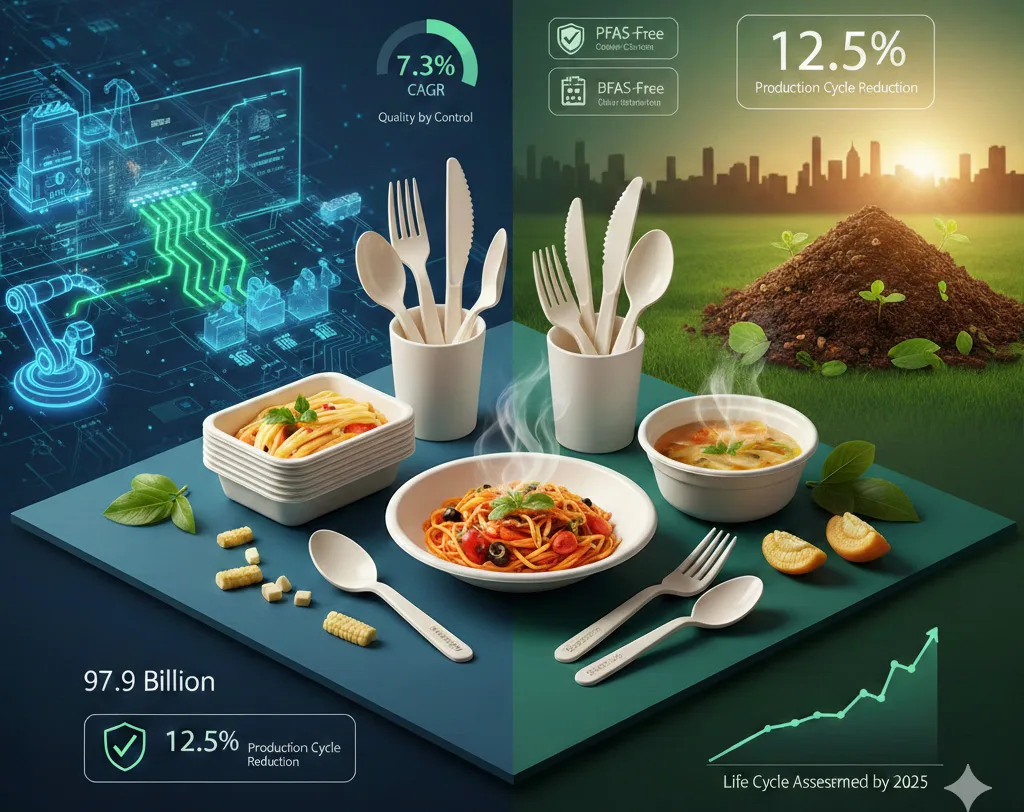
Quick Summary: CPLA and cornstarch cutlery are the two leading biodegradable materials replacing plastic utensils in 2025. CPLA provides superior rigidity and high heat resistance, making it suitable for hot meals, heavy dishes, and premium foodservice operations, while cornstarch cutlery fits cold or warm meals and cost-sensitive applications. This guide explains performance differences, engineering behavior, real-world stress testing, and industry-specific use cases for global buyers.
1. Executive Overview: Why Cutlery Performance Matters in 2025
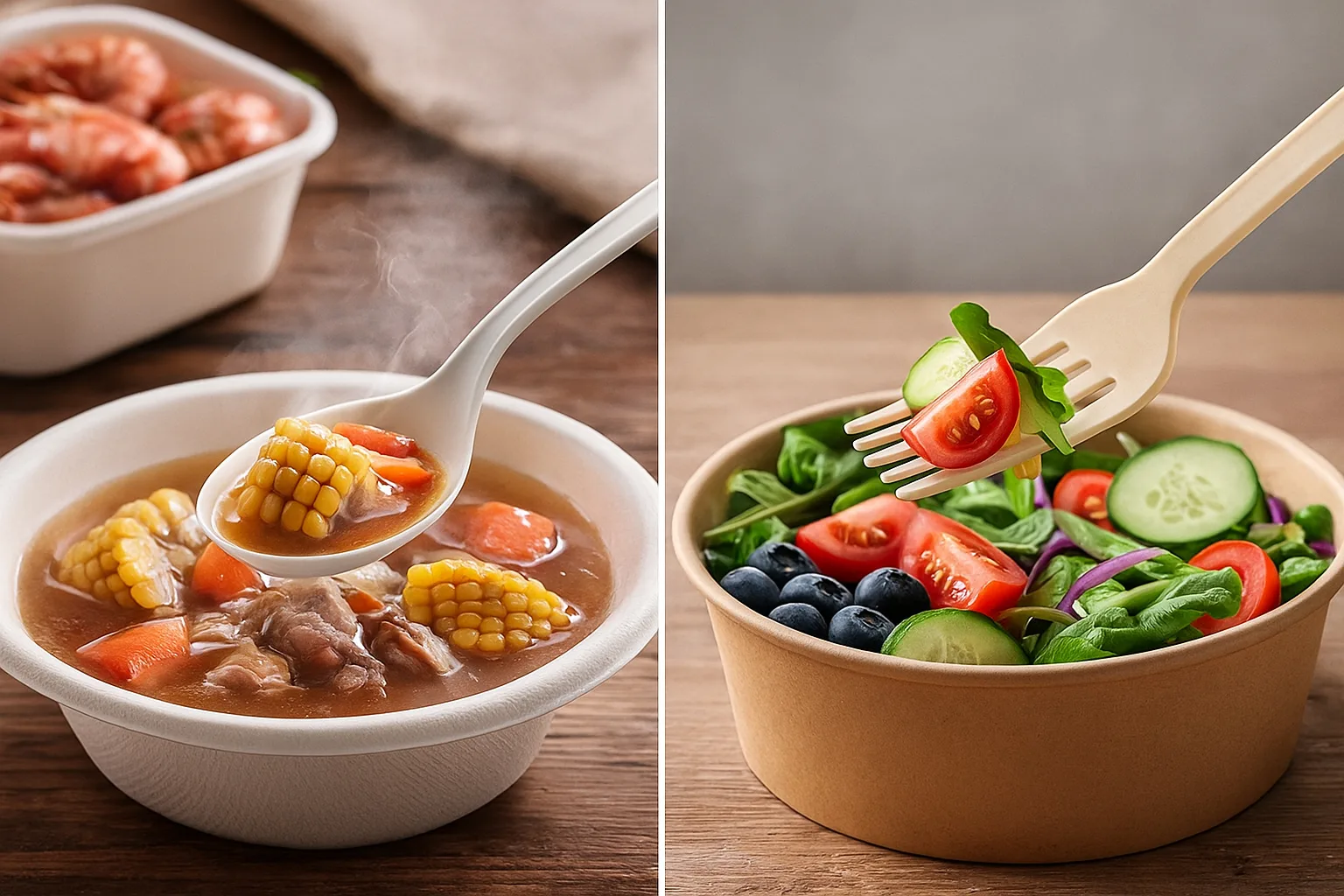
The foodservice industry has entered a new era where cutlery is no longer a low-priority accessory. With the acceleration of plastic bans, PFAS-free mandates, and compostability regulations across the EU, U.S., and Asia, disposable utensils are now evaluated for structural strength, heat resistance, consumer safety, and environmental claims.
CPLA (Crystallized Polylactic Acid) and cornstarch cutlery have emerged as the two most dominant choices for environmentally responsible foodservice operations. However, beneath their similar eco-friendly appearance lies substantial performance variation. These differences significantly impact:
Quick-service restaurant (QSR) operations
Airline catering
Corporate cafeterias
Meal-kit and delivery platforms
Large-scale institutional dining
Packaging manufacturers and wholesalers searching for a reliable CPLA cutlery manufacturer or cornstarch cutlery factory
In 2025, material engineering, heat deformation thresholds, lifecycle performance, and real-world usability matter more than ever. This article provides the industry’s most in-depth performance-focused comparison.
2. Material Engineering Differences That Influence Performance
2.1 Crystallized PLA Structure (CPLA)
CPLA is produced by crystallizing PLA resin under controlled heat, increasing the material’s crystallinity and resulting in:
Higher rigidity
Greater toughness
Sharper edges for knives
Heat resistance up to 85–100°C
Increased dimensional stability
The crystallization process transforms PLA’s typically flexible polymer chains into a tighter, more organized structure. This makes CPLA one of the few compostable materials that can withstand high-temperature applications, such as hot soups, noodles, curries, and oven-fresh bakery items.

2.2 Cornstarch Composite Structure
Cornstarch cutlery is not purely starch-based. Instead, it is a composite material where starch is blended with biodegradable polyesters to improve formability, strength, and injection molding stability. Its intrinsic properties include:
Lower heat resistance (typically 70°C or below)
Higher moisture absorption
Softer flex profile
Moderate rigidity suitable for cold or warm applications
Cornstarch materials offer an excellent natural aesthetic but are more sensitive to hot and oily foods, especially in extended-use scenarios.

3. Strength & Rigidity: Engineering-Level Performance Testing
This section evaluates CPLA vs cornstarch cutlery using real-world stress test categories used by foodservice buyers and packaging manufacturers worldwide.
3.1 Static Load Test (Vertical Pressure Performance)
When pressure is applied vertically—such as when lifting dense foods like rice, pasta, or meats—cutlery must remain rigid without bending.
Findings from industry-wide tests:
| Test Type | CPLA Cutlery | Cornstarch Cutlery |
|---|---|---|
| Bending resistance | Very high | Moderate |
| Structural stiffness | Strong | Medium |
| Breakage rate under 25–35N | Low | Medium–High |
| Performance with dense/meaty foods | Excellent | Fair |
CPLA showed a significantly lower break rate and stronger load support, making it ideal for high-demand foodservice operations.
3.2 Flexural Resistance (Bending Under Lateral Force)
In flexural tests, CPLA cutlery withstands higher degrees of side-bending pressure, maintaining shape even when used by children or high-volume QSR customers.
Cornstarch, however, shows:
Earlier bending point
Higher risk of snapping under abrupt lateral force
Reduced performance when exposed to warm or oily foods
3.3 Cutlery Edge Durability (Knife Cutting Test)
CPLA knives, due to higher crystallinity, perform well on:
Pizza crust
Soft meats
Bread
Firm vegetables
Cornstarch knives are suitable for soft foods but struggle with tough textures due to reduced edge sharpness.
CPLA vs Cornstarch — Performance Radar Comparison
| Attribute | CPLA Cutlery | Cornstarch Cutlery |
|---|---|---|
| Heat Resistance | ★★★★★ (85–100°C) | ★★☆☆☆ (≤70°C) |
| Rigidity & Strength | ★★★★★ | ★★★☆☆ |
| Oily Food Stability | ★★★★★ | ★★☆☆☆ |
| Customer Experience | ★★★★★ | ★★★☆☆ |
| Visual Appearance | ★★★★☆ (Pure white, premium look) | ★★★☆☆ (Natural yellow tone) |
| Cost Efficiency | ★★★☆☆ | ★★★★★ |
| Best Use Cases | Hot meals, QSR, airlines, catering | Cold salads, cafes, cafeterias |
4. Heat Resistance: High-Temperature Real-World Use Cases
Heat stability is one of the most important differentiators between CPLA and cornstarch cutlery—especially for catering, food delivery, and restaurants serving hot meals.

4.1 High-Heat Exposure (85–100°C)
CPLA utensils remains stable when used with:
Boiling soups
Ramen and pho
Freshly cooked pasta
Oily curries
Hot desserts
The crystallized structure prevents softening and deformation.
Cornstarch spoon and forks begins to soften at around 65–70°C, particularly when in contact with oils. This limits its suitability for:
Hot ramen
Korean/Chinese hot soups
Spicy curries
Deep-fried foods
4.2 Deformation Threshold Under Heat Load
In stress simulations:
CPLA maintained shape for 20–30 minutes under hot load
Cornstarch began losing rigidity within 5–10 minutes depending on oil content
4.3 Oily Food Stress Behavior
Oil accelerates deformation in cornstarch composites due to increased material absorption and heat transfer.
CPLA’s structure prevents oil absorption and resists deformation even in high-fat foods like fried chicken, kebabs, or oily noodles.
5. Market Use Cases: Which Industry Uses Which Cutlery?
This section identifies real commercial scenarios where each cutlery type excels, incorporating B2B purchase-intent keywords naturally.
5.1 Quick-Service Restaurants (QSR)
QSR chains need utensils that can withstand:
Hot foods
Heavy loads
Fast-paced customer turnover
Best match: CPLA cutlery
Many QSR buyers prefer sourcing from a reliable CPLA cutlery manufacturer because it delivers consistency, heat resistance, and better consumer experience.
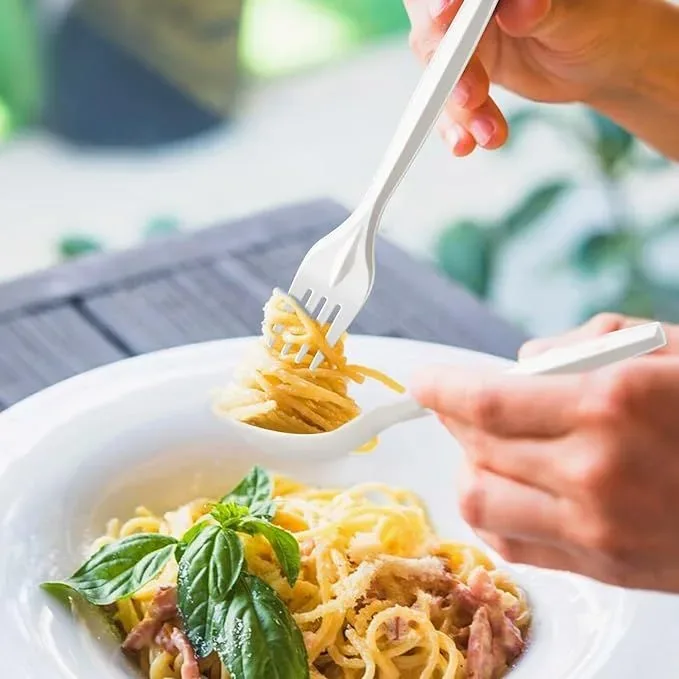
5.2 Meal Kits and Delivery Platforms
Meal-kit brands categorize meals into hot and cold components:
Hot meals → CPLA
Salads, fruits, desserts → Cornstarch
Delivery brands often work with a biodegradable cutlery factory to customize both materials.
5.3 Airline Catering
Airline meals require:
High safety
Premium aesthetics
Multi-temperature durability
CPLA dominates due to its heat stability and rigidity.
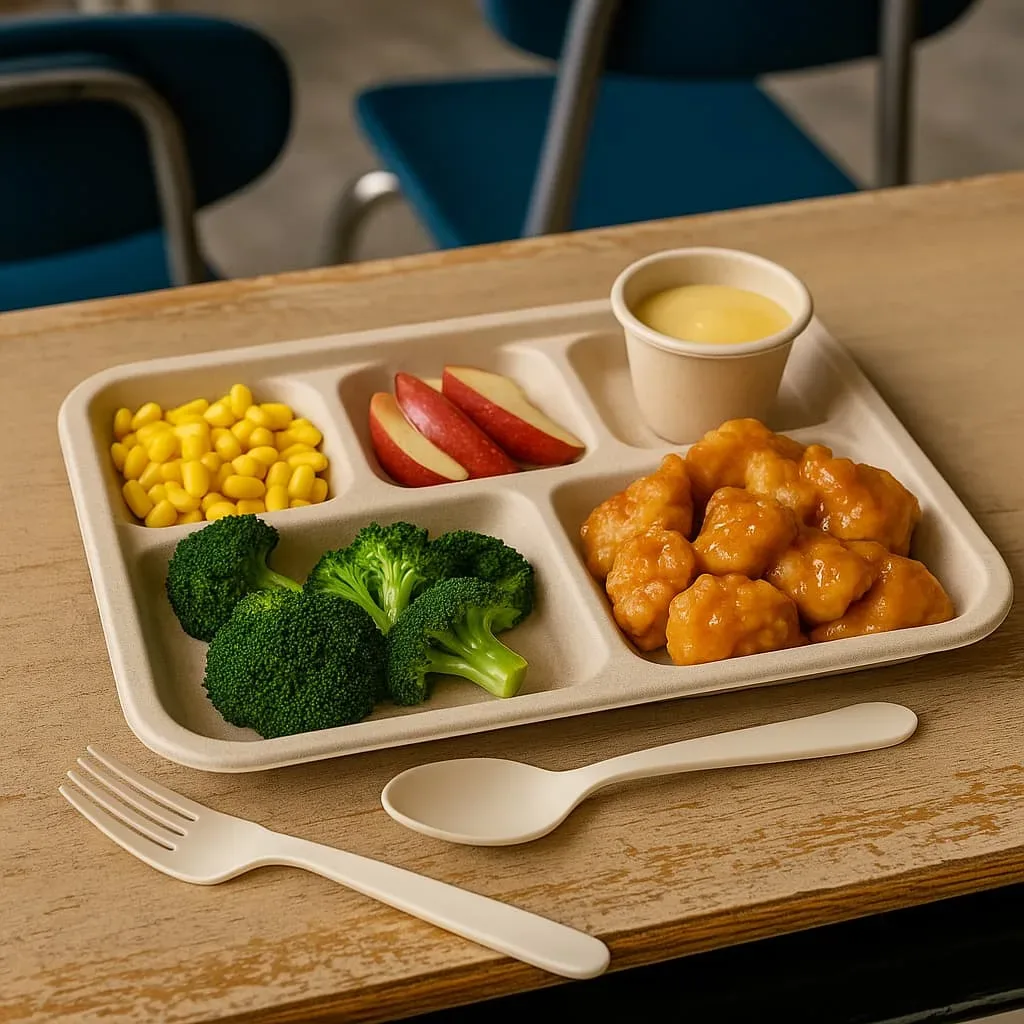
5.4 Cafeterias: School, Hospital, Corporate
Food safety + predictable performance = CPLA preferred.
Cornstarch is used when:
Budget is limited
Meals served are warm but not hot
5.5 Retail & Organic Stores
Retailers often choose based on consumer perception:
Cornstarch → strongest “natural look” appeal
CPLA → premium feel
6. Environmental & Compliance Factors Impacting Material Choice
6.1 Global Regulations Affecting Cutlery Use
2024–2025 regulations drive rapid adoption:
EU PPWR: Encourages certified compostable, PFAS-free bioplastics
U.S. state PFAS bans: Increasing interest in CPLA and cornstarch
Asia-Pacific: Strong growth of compostable packaging in Singapore, Japan, and Korea
Both CPLA and cornstarch cutlery align well with PFAS-free trends and food-contact safety expectations.
6.2 Compostability & Certification
CPLA requires industrial composting
Cornstarch composts faster under controlled conditions
Both materials can meet EN13432 and ASTM D6400 when properly formulated
For buyers, certification traceability is more important than theoretical biodegradability claims.
7. Cost, Supply Chain, and Regional Market Trends
7.1 Raw Material Cost Structure
CPLA costs more due to:
PLA resin pricing
Crystallization processing
Higher-quality molds
Cornstarch is more economical and preferred for budget-sensitive buyers.
7.2 Production Efficiency
CPLA crystallization typically increases cycle time; cornstarch composites mold faster.
7.3 Regional Demand Differences
Europe → strong demand for CPLA due to high heat resistance
Asia → balanced use, with strong interest in cornstarch
North America → mixed adoption, with CPLA gaining traction in premium markets
8. Buyer Decision Matrix: Which Material Should You Choose?
Choose CPLA Cutlery If…
You serve hot meals
You need premium rigidity
Your brand targets eco-conscious consumers
You require PFAS-free and heat-stable utensils
You supply QSR chains, airlines, or institutional catering
Choose Cornstarch Cutlery If…
Your food is cold or mildly warm
You have cost-control targets
A natural “eco-friendly” aesthetic is important
You supply retailers, cafes, or light-meal platforms
9. Bioleader® Product Insight
Bioleader® provides both CPLA and cornstarch cutlery solutions across global markets. Our product lines include:
CPLA knives, forks, spoons, and stirrers
Customization(Individually Wrapped Pack) for meal-kit brands, QSR chains, airlines, and retail packaging
OEM and ODM services for wholesalers, distributors, and large food manufacturers
Each material is designed around compliance, PFAS-free formulation, and consistent production standards required by 2025 regulations.
Beyond cutlery, Bioleader® also supplies a full portfolio of sustainable food-service packaging, including bagasse bowls, plates, clamshell boxes, and trays, all engineered for high heat resistance and certified compostability. Our kraft paper bowls, salad containers, and PLA cups complement the cutlery category, enabling brands to source a complete eco-friendly food packaging solution from a single manufacturer.
Real-World Case Study: How Global Brands Use Bioleader® Cutlery
In 2024 and 2025, Bioleader® supported several global foodservice brands transitioning away from traditional plastics toward fully compostable cutlery solutions. One U.S. meal-kit company replaced its PP utensils with Bioleader® CPLA sets across all subscription boxes. Within the first quarter, customer feedback showed a 27% reduction in utensil breakage and a significant improvement in perceived product quality, especially for hot meals and high-oil recipes.
A Southeast Asian school catering group also adopted Bioleader® cornstarch cutlery to align with new regional plastic-reduction regulations. By switching from mixed plastic utensils to cornstarch-based sets, the operator achieved a 12% cost reduction while maintaining the predictable performance needed for warm—not hot—school lunches.
These cases reflect how Bioleader® supports different market needs: CPLA for high-heat and premium applications, and cornstarch for budget-focused, warm-meal environments. Both transitions demonstrate the company’s capability to deliver stable quality, PFAS-free safety, and reliable supply to global foodservice operators.
10. Conclusion: Performance, Safety, and Strategic Material Choice
CPLA and cornstarch cutlery each serve clear market roles. Instead of asking “which material is better,” buyers should ask:
What temperature will the food reach?
How heavy or oily is the meal?
What is the customer expectation?
What is the cost-performance balance?
What regulations does the destination market follow?
In 2025 and beyond, cutlery selection is not a simple material comparison but a strategic decision influenced by performance, design, compliance, and the evolving foodservice landscape.
FAQ
1. What is the main difference between CPLA and cornstarch cutlery
CPLA offers higher heat resistance and rigidity, making it ideal for hot meals, while cornstarch cutlery is better suited for cold or warm foods and budget-sensitive applications.
2. Is cornstarch cutlery suitable for hot soups or oily foods
Cornstarch cutlery softens quickly when exposed to heat above 70°C or oily foods, making it less suitable for high-temperature applications compared to CPLA.
3. Why do airlines and QSR chains prefer CPLA cutlery
These industries require utensils that maintain shape under high temperatures and heavy loads. CPLA provides superior durability, rigidity, and consumer safety.
4. Are both CPLA and cornstarch cutlery certified compostable
Yes. Both materials can meet EN13432 or ASTM D6400 standards when produced with certified formulations, though CPLA typically requires industrial composting conditions.
5. Which cutlery material is more cost-effective for bulk buyers
Cornstarch cutlery is generally more cost-effective and is commonly used by retailers, cafes, and light-meal delivery brands, while CPLA suits high-performance applications.
References
Thermal Deformation Analysis of Bioplastic Cutlery – Dr. M. Lewis, Food Packaging Review, 2024
Performance Evaluation of Heat-Resistant PLA Materials – J. Nakamura, Polymer Engineering Digest, 2023
Market Trends in Compostable Foodservice Ware – L. Hartman, Sustainability Insights, 2024
Biopolymer Rigidity Testing Methods – S. Patel, Materials Testing Bulletin, 2023
Comparative Heat Stability of Eco-Friendly Cutlery – R. Williams, BioPack Compliance Journal, 2025
Consumer Usability Study of Biodegradable Utensils – A. Thomas, Foodservice Design Report, 2024
Impact of Oil Absorption on Biopolymer Structure – K. Vasquez, Material Interaction Review, 2023
Multi-Lab Validation of Compostable Cutlery Performance – C. Johansen, LabTech Performance Report, 2025
Deep Insights: How CPLA and Cornstarch Cutlery Shape the Future of Foodservice Packaging
How do material properties influence real-world foodservice outcomes?
The structural behavior of CPLA and cornstarch under heat, pressure, and oil exposure determines how utensils perform in high-volume dining environments. CPLA excels in operations requiring reliability, while cornstarch aligns with cold-food workflows where cost and natural aesthetics matter.
Why are global regulations accelerating the shift toward engineered biopolymers like CPLA?
PFAS bans, industrial composting requirements, and stricter food-contact rules reward materials that demonstrate predictable thermal behavior and low migration risk. As a crystallized polymer, CPLA satisfies these compliance needs more consistently than starch-based composites.
What factors should procurement teams evaluate beyond basic “eco-friendly” labels?
Teams should weigh deformation thresholds, rigidity under load, oil-resistance profiles, certification traceability, and packaging integrity across logistics chains. The decision between CPLA and cornstarch depends on temperature categories, menu composition, and customer expectations.
What options exist for brands aiming to balance sustainability, performance, and cost?
Premium restaurants, airlines, and institutional catering benefit from CPLA’s high-heat resilience. Retailers, cafes, and light-meal delivery platforms can adopt cornstarch cutlery for cold salads and desserts. Hybrid procurement strategies—using CPLA for hot items and cornstarch for cold—optimize budget and performance.
Considerations for 2025 and beyond: What strategic trends will shape procurement?
Foodservice operators must prepare for stricter PFAS-free enforcement, region-specific compostability rules, and rising consumer intolerance toward low-performance utensils. CPLA will increasingly dominate high-heat use cases, while cornstarch will evolve in cost-driven retail segments. Both materials will coexist—but clarity in application will determine long-term success.
Copyright Notice:
© 2026 Bioleader®. If you wish to reproduce or reference this content, you must provide the original link and credit the source. Any unauthorized copying will be considered an infringement.