Introduction: Why the Debate Matters in 2025
The food packaging industry is no longer a silent player in the background of global commerce. It has become a frontline industry in the battle against climate change, pollution, and consumer distrust. With over 400 million tons of plastic produced annually—and less than 10% recycled effectively—buyers are under intense scrutiny to make responsible choices.
Governments are rolling out plastic bans faster than ever. Consumers increasingly equate packaging with brand ethics: a salad served in a PFAS-coated plastic bowl signals disregard for health and sustainability, while the same salad in a compostable bagasse bowl signals care, safety, and modern values.
In this climate, the question of compostable vs. recyclable is not academic—it is existential for brands. Choose wrong, and you face legal penalties, reputational loss, and even customer boycotts. Choose wisely, and packaging becomes a source of competitive advantage, reducing carbon emissions, boosting trust, and securing long-term growth.compostable vs. recyclable
What Is Compostable Packaging?
Compostable packaging is designed to break down into natural elements—CO₂, water, and biomass—under specific composting conditions, leaving behind no toxins or microplastics. But compostable is not a loose marketing term: it is regulated by strict international standards.
EN13432 (Europe): Requires at least 90% biodegradation within 6 months in industrial composting, complete disintegration within 12 weeks, and no harmful heavy metal residues.
ASTM D6400 (United States): Defines the labeling requirements for plastics that are compostable in municipal or industrial composting facilities.
These certifications are critical: they are the buyer’s proof that “compostable” is more than greenwashing. Without them, packaging risks rejection at customs or in retail procurement audits.
Common Compostable Materials & Their Foodservice Applications
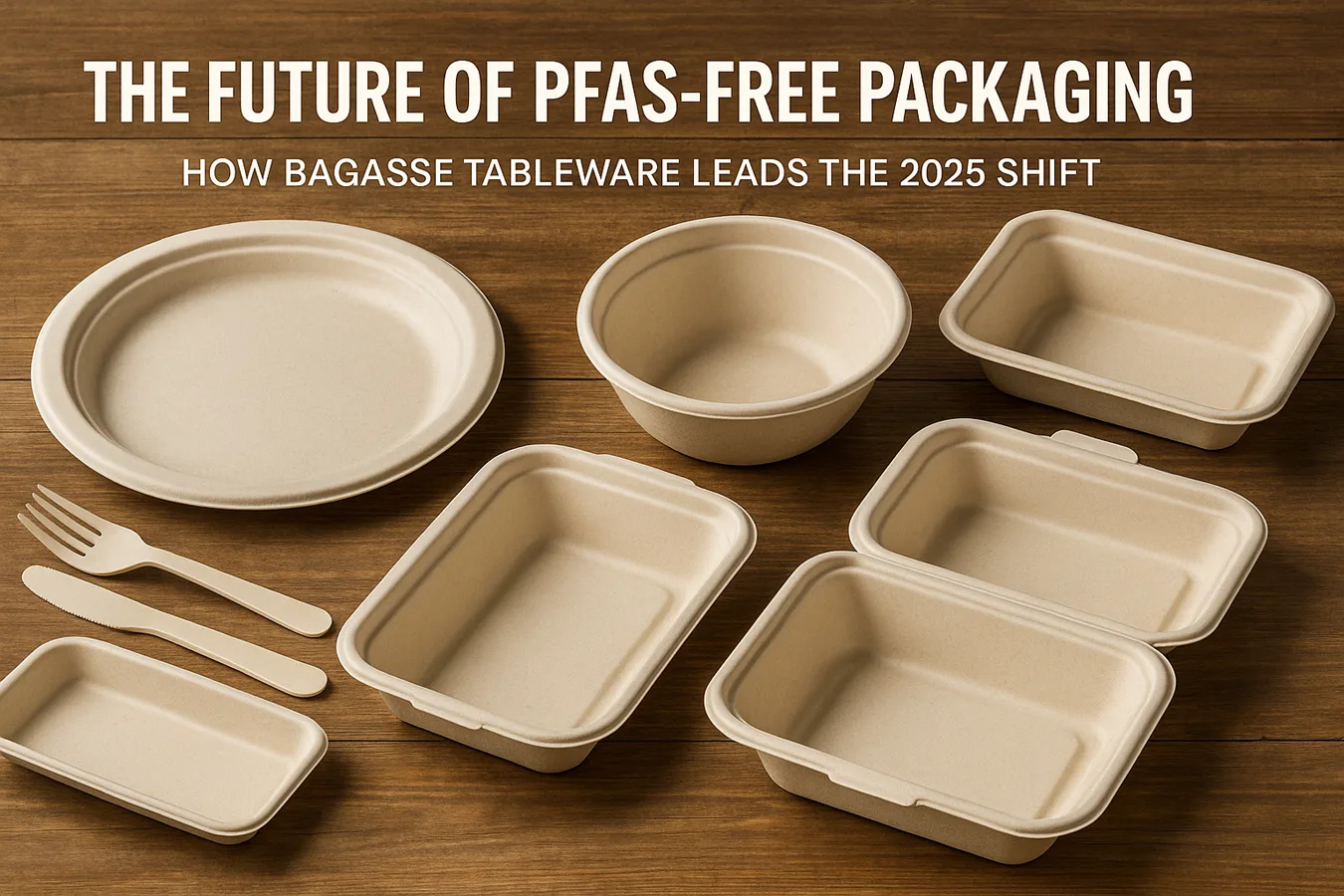
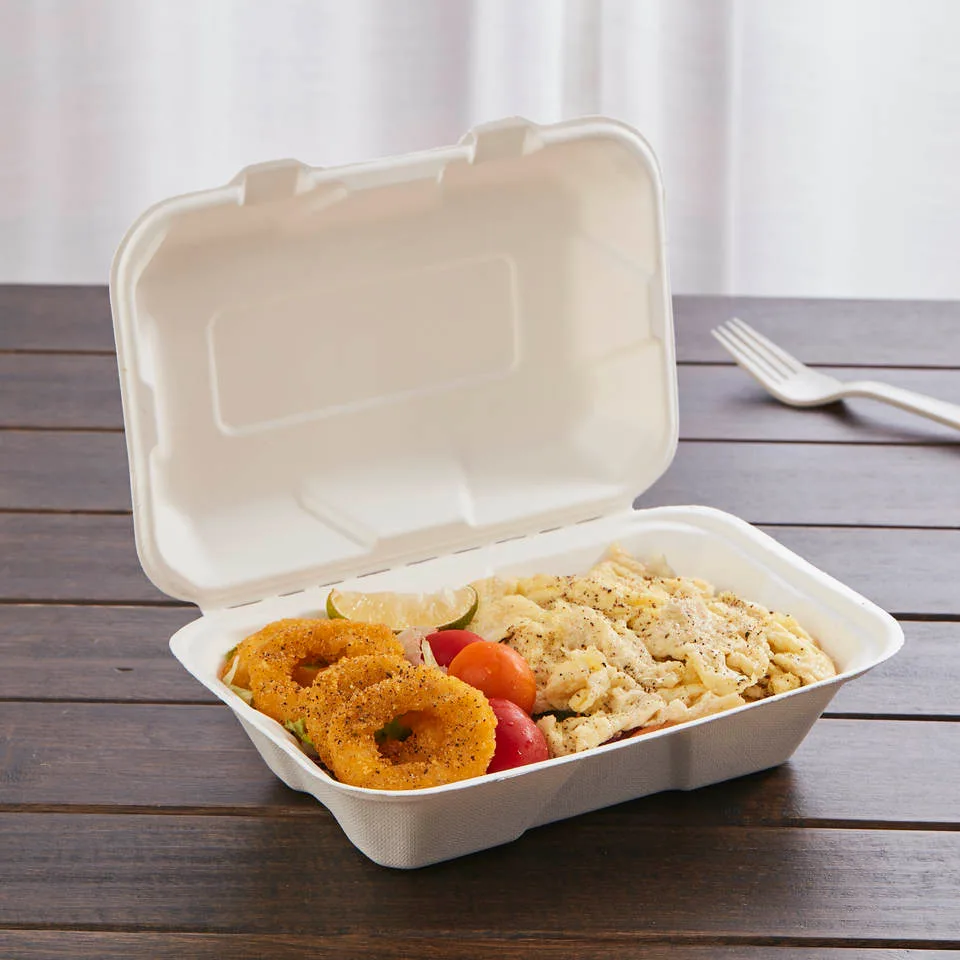
Bagasse Tableware:
Made from sugarcane pulp left after juice extraction.
Naturally grease- and heat-resistant up to 220°C without chemical coatings.
Applications: soup bowls, clamshell burger boxes, divided trays for curries, and large catering plates.
Why buyers prefer it: Bagasse is abundant, affordable, and composts within 90 days.
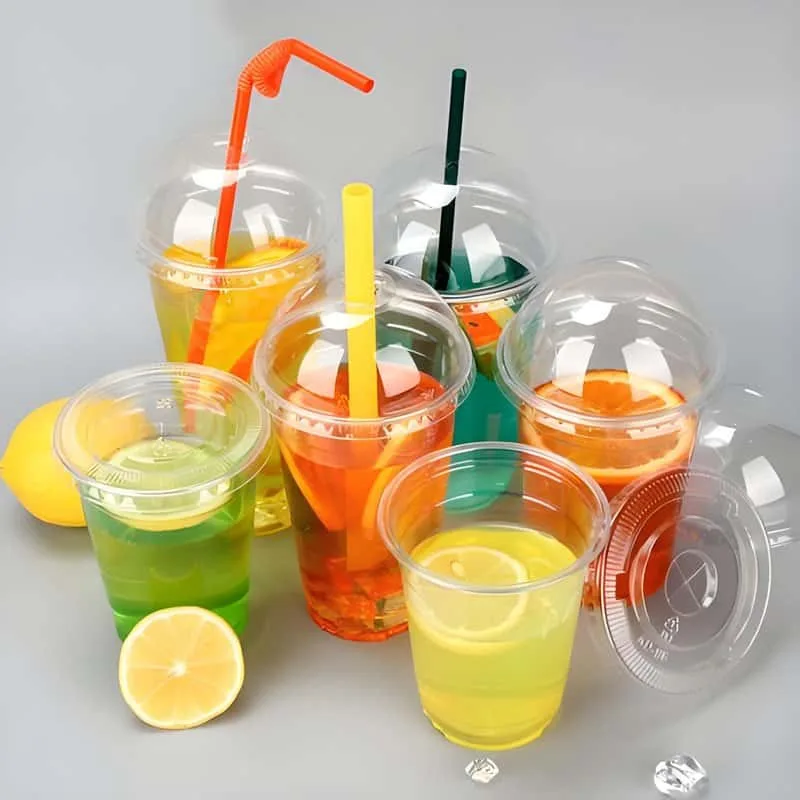
PLA Cups & Lids:
Derived from corn starch or cassava starch, processed into transparent plastic-like resin.
Compostable in industrial conditions but not in home composting.
Applications: juice bars, smoothie shops, iced coffee takeaway cups.
Advantage: They look and perform like PET cups, reassuring for customers.
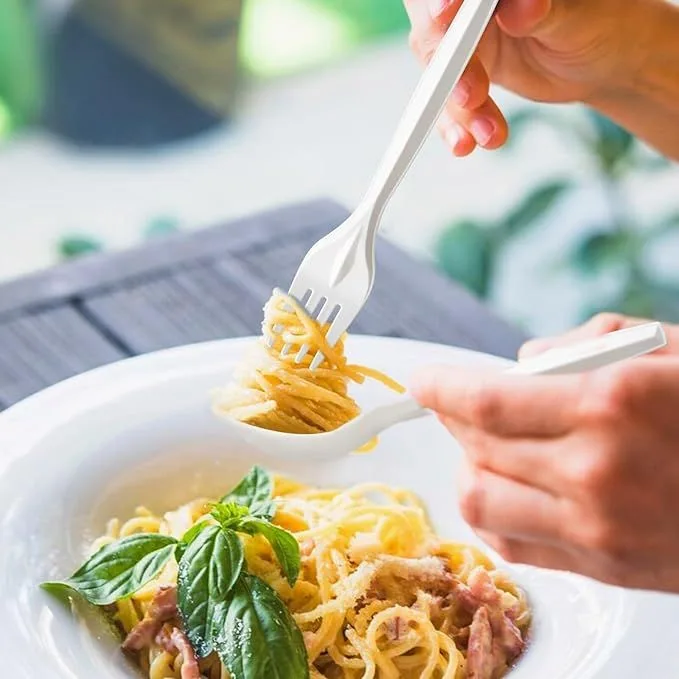
Cornstarch Cutlery:
Blend of corn starch and biodegradable polymers.
Applications: disposable forks, knives, spoons for mass catering, fast food, and canteens.
Strength: Cost-effective, safe for hot and cold foods, eliminates plastic waste streams.
Carbon Footprint of Compostables
Life cycle analysis shows compostables deliver substantial reductions in emissions:
Bagasse bowl: ~45 g CO₂e per unit (including farming, pulping, production).
Plastic bowl: ~90–100 g CO₂e per unit.
PLA cup: 60% less carbon than virgin PET, assuming renewable energy in manufacturing.
At the end of life, compostables break down quickly, often within 3–6 months in industrial composters. Unlike plastic, they don’t emit methane if composted correctly. In regions with robust composting infrastructure, compostables can close the loop effectively.
What Is Recyclable Packaging?
Recyclable packaging refers to materials that can be collected, sorted, and reprocessed into new products after their first use. Unlike compostables, which aim to disappear, recyclables aim to circulate. In theory, recycling reduces dependency on virgin raw materials, conserves energy, and prevents landfill accumulation. In practice, effectiveness depends heavily on collection systems, consumer behavior, and contamination levels.
Common Recyclable Materials & Their Foodservice Applications
Kraft Paper Bowls & Boxes
Material: FSC-certified kraft paper, often lined with water-based or PLA coatings.
Applications: soup bowls, noodle boxes, salad bowls with clear lids.
Why it matters: Paper is widely accepted in recycling streams, but food contamination (oil, sauces) can hinder recyclability.
Recyclable PET Cups
PET is the most recycled plastic globally.
Applications: cold drink cups, bubble tea containers, iced coffee tumblers.
Advantage: PET can be recycled up to 6–7 times in closed-loop systems.
Limitation: Recycling rates vary—Europe achieves ~60%, the US ~30%, Asia ~15%.
Paper Trays & Plates
Applications: catering trays, bakery packaging, disposable paper plates.
Recyclability: High if free of grease, low if heavily contaminated.
Carbon Footprint of Recyclables
Recycling yields significant environmental benefits when executed properly:
PET recycling saves ~50–60% of energy compared to producing virgin PET.
Paper recycling reduces carbon emissions by 40% and water usage by up to 70%.
Glass recycling (less relevant to foodservice) saves ~30% emissions per cycle.
However, the recycling system is fragile. When a paper bowl is soaked in soup or a PET cup is left half-full of milk tea, recyclers often reject them, sending them to landfill or incineration. Thus, while recyclables offer potential, their real-world impact is often limited by contamination and consumer behavior.
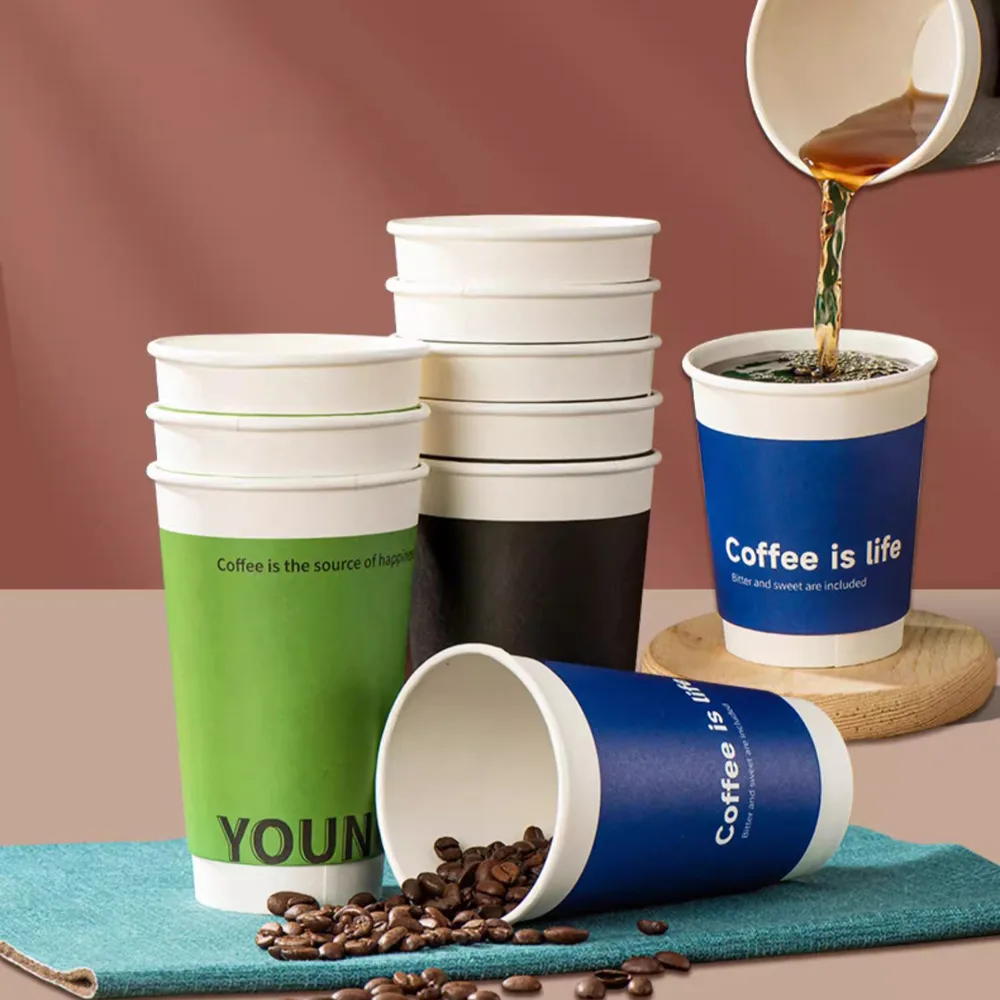
Compostable vs. Recyclable: Carbon Emissions Compared
Life Cycle Analysis (LCA) Evidence
Bagasse bowls emit ~45 g CO₂e per unit. Plastic bowls: ~90 g.
PLA clear cups: 60% fewer emissions during production compared to virgin PET.
PET cups: Can rival PLA if recycling rates exceed 70%, but in most regions this threshold isn’t reached.
Case Study Comparisons
Bagasse Bowl vs Plastic Bowl
A bagasse soup bowl composts within 90 days, emitting fewer GHGs throughout its life cycle. A plastic or PET bowl, if not recycled, can persist for centuries, generating additional emissions through waste management.PLA Cup vs PET Cup
In Germany, where PET recycling exceeds 65%, PET can compete with PLA on emissions. In the US, where only 30% of PET is recycled, PLA has a clear advantage.Kraft Paper Bowl vs Styrofoam Bowl
Kraft bowls can be recycled multiple times, reducing virgin paper demand. Styrofoam is banned in over 80 countries, emits toxic pollutants, and offers no recycling benefit.
Conclusion: Compostables have predictable low emissions in foodservice, while recyclables depend on high collection efficiency. Compostables win in messy, food-contaminated contexts; recyclables work in clean, closed-loop beverage streams.
Buyer Mistakes to Avoid
Buyer Mistakes to Avoid When Choosing Between Compostable and Recyclable
Even well-meaning buyers can miscalculate when balancing compostable and recyclable packaging. The following mistakes often lead to higher costs or missed sustainability targets:
Believing recyclables always cut emissions
Many assume recycling is automatically greener. But if only 30% of PET cups are actually recycled, the benefit collapses. Buyers must request carbon footprint data instead of relying on “recyclable” labels.Using compostables where no composting infrastructure exists
A PLA cup in a country without industrial composting ends up in landfill, releasing methane. Compostables only deliver full value if collection systems exist.Ignoring Life Cycle Assessment (LCA)
Without comparing cradle-to-grave carbon emissions, buyers may choose packaging that looks green but emits more over its lifecycle. Always ask for LCA data.Not matching packaging to food type
Compostable bagasse bowls are ideal for oily meals. Recyclable PET cups work best for clean drinks. Choosing the wrong pairing increases waste and emissions.Overlooking consumer perception
Customers often associate compostables with “health and safety.” Selling a salad in a plastic-look PET cup—even recyclable—may undermine your brand’s eco message.
Global Regulations and Market Trends
Compostable vs Recyclable: How Regulations Shape Buyer Choices
Global laws are not just banning plastics—they are reshaping whether compostable or recyclable solutions dominate in each market:
European Union
The EU prioritizes compostable foodservice packaging certified under EN13432. But for beverages, PET recycling remains strong thanks to established return systems. Outcome: Compostables dominate food, recyclables dominate drinks.United States
States like California favor compostables by banning Styrofoam and PFAS. But PET lobbying ensures recycling remains central in beverage packaging. Outcome: A dual system where restaurants lean compostable, beverage chains stick with PET.Canada
Canada’s Zero Plastic Waste law explicitly supports compostables in takeaway. However, its strong PET bottle recycling system means recyclables will continue for drinks.Asia-Pacific
China: Leading in compostable production capacity (bagasse, PLA).
Japan: Relies heavily on recycling, but experimenting with compostables in food delivery.
South Korea: Restricts PFAS and promotes bagasse for takeout.
Singapore: New EPR rules force companies to justify packaging end-of-life, encouraging compostables for meals and recyclables for beverages.
Trend Insight: Regulations are driving a hybrid adoption model—compostables for food, recyclables for drinks. Buyers who align sourcing with these regional trends minimize risk and maximize market fit.
Case Study – Bioleader®
Bioleader®: Delivering Both Compostable and Recyclable Solutions
Unlike suppliers limited to one material, Bioleader® positions itself as a dual-track partner for buyers needing both compostable and recyclable packaging.
Compostable Range (Carbon Advantage)
Bagasse bowls, clamshells, trays: ~40% less carbon than plastic.
PLA cups: Perfect for cold drinks in composting regions.
Cornstarch & CPLA cutlery: Fully compostable, PFAS-Free.
Use case: U.S. meal-kit brand switched to Bioleader® bagasse bowls and cut food waste-related emissions by 72%.
Recyclable Range (Infrastructure Advantage)
Kraft paper bowls and trays: Recyclable if kept clean, certified FSC.
PET-compatible designs: For markets with high recovery rates.
Use case: European café chain used Bioleader® kraft bowls with clear lids to fit Germany’s recycling system, boosting recycling rates above 60%.
Buyer Value
Compliance across both compostability (EN13432, ASTM D6400) and recyclability (FSC, PET compatibility).
Flexible MOQ for mixed orders—buyers can combine compostables and recyclables in one container.
Export experience ensures smooth customs clearance across EU, US, and Asia.
Key Differentiator: Bioleader® doesn’t force buyers into compostable or recyclable—it provides both, allowing businesses to adapt per region, product, and regulation.
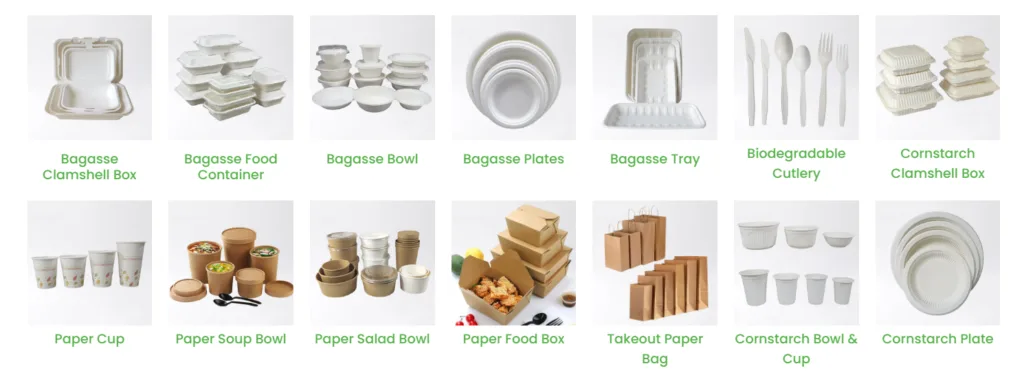
Buyer’s Checklist: Compostable vs Recyclable in 2025
Carbon Footprint Data – Does the supplier provide Life Cycle Assessment (LCA) comparing compostable vs recyclable options?
Material Certification – EN13432 or ASTM D6400 for compostables, FSC or PET recyclability proofs for recyclables.
End-of-Life Fit – Is there local infrastructure (composting plants or recycling streams) that matches the packaging type?
MOQ & Lead Times – Can the supplier deliver both compostable and recyclable ranges at scale?
Customization Options – Can logos be applied sustainably on bagasse, kraft, or PLA without toxic inks?
Export & Compliance Track Record – Experience with EU SUPD, US state bans, and Canada PFAS-Free regulations.
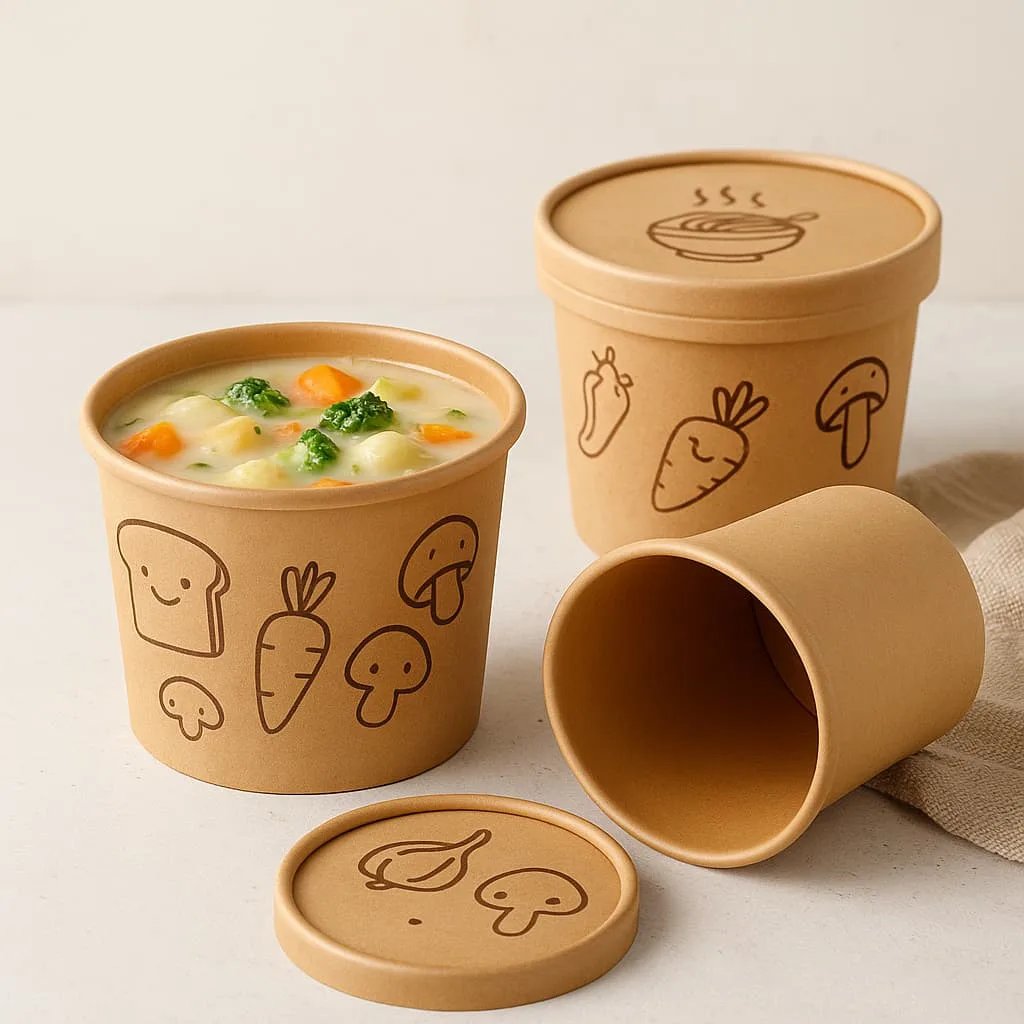
Conclusion: Compostable vs Recyclable—A Balanced Path
There is no universal answer. Instead:
Compostables are best for hot, oily, or contaminated foodservice packaging (bagasse bowls, PLA cups, CPLA cutlery).
Recyclables are ideal for cold beverage systems and retail packaging (kraft bowls, PET cups).
Hybrid adoption is the winning strategy in 2025: compostables for food, recyclables for beverages. Buyers who secure PFAS-Free, certified suppliers now gain compliance, customer trust, and long-term competitive advantage.
FAQ
What is the difference between compostable and recyclable packaging?
Compostable breaks down into organic matter; recyclable is reprocessed into new products.
Which cuts carbon emissions more effectively?
Compostables outperform in foodservice; recyclables excel in clean closed-loop systems.
Are bagasse containers better than recycled plastic bowls?
Yes, bagasse bowls have lower lifecycle emissions and decompose naturally.
Can PLA cups be recycled?
PLA cups are compostable, not commonly accepted in recycling streams.
What should restaurants choose in 2025?
Most should use compostables for hot, oily foods and recyclables for clean beverage systems.
Reference
European Commission — Single-Use Plastics Directive (SUPD), 2021.
European Committee for Standardization (CEN) — EN13432: Requirements for Compostability of Packaging, 2018.
ASTM International — ASTM D6400: Standard Specification for Compostable Plastics, 2020.
U.S. Environmental Protection Agency (EPA) — Advancing Sustainable Materials Management: 2023 Report.
Food and Drug Administration (FDA) — PFAS in Food Packaging Guidance, 2022.
Health Canada — Zero Plastic Waste Strategy and PFAS Regulations, 2023.
Ellen MacArthur Foundation — The New Plastics Economy: Rethinking the Future of Plastics, 2016.
World Health Organization (WHO) — Plastics and Human Health Report, 2019.
Market Research Future (MRFR) — Global Market Outlook for Compostable & Recyclable Tableware 2025.
Compostable vs Recyclable: Strategic Insights for Buyers in 2025
How to Decide: The right packaging choice depends on food type and disposal infrastructure. Compostables such as bagasse bowls and CPLA cutlery are best for hot, oily, or contaminated foods, while recyclables like PET cups and kraft bowls excel in clean closed-loop systems.
Why It Matters: Carbon emissions and compliance risks are at stake. With PFAS bans and global plastic regulations expanding, buyers can no longer rely on “green labels.” Verified PFAS-Free, certified compostable, and recyclable solutions ensure both legal compliance and customer trust.
Key Options: Compostable packaging options include bagasse containers, PLA cups, and cornstarch utensils, which decompose quickly and reduce lifecycle emissions. Recyclable packaging options include kraft paper bowls and PET cups, which remain effective in regions with strong recovery infrastructure.
Buyer Considerations: Ask for LCA carbon data, confirm EN13432 or ASTM D6400 for compostables, and FSC or PET recyclability certificates for recyclables. Evaluate supplier MOQs, production lead times, customization options, and export track record to avoid costly sourcing mistakes.
Future Outlook: By 2030, hybrid adoption will dominate: compostables for foodservice and recyclables for beverages and retail. Buyers who adapt early with trusted suppliers like Bioleader® will cut emissions, meet regulations, and secure market advantage.