This guide clarifies global distinctions between “biodegradable” and “compostable” plastics and highlights the emerging compliance landscape for exporters. Compostable materials like bagasse and PLA require third-party certification (EN 13432, ASTM D6400, BPI, AS 4736 etc.), proper labeling, and EPR registration across regions—EU, North America, Asia-Pacific, Middle East, South America—to avoid customs delays and greenwashing penalties. Practical scenarios and a compliance checklist help B2B buyers and exporters meet regulatory demands and secure global market access.
As single-use plastics face unprecedented regulatory crackdowns worldwide, both buyers and exporters of food packaging must go beyond “eco” labels and understand the true legal, environmental, and operational distinctions between biodegradable plastics and compostable plastics. The risks of non-compliance—customs holds, fines, or market bans—are increasing, but so are the opportunities for certified, sustainable solutions.
This comprehensive guide clarifies global definitions, leading regulations, and essential certifications. It offers practical, data-driven advice and real business cases to help your company thrive in the new era of sustainable packaging.
1. Understanding Biodegradable and Compostable Plastics
Definitions and Key Differences
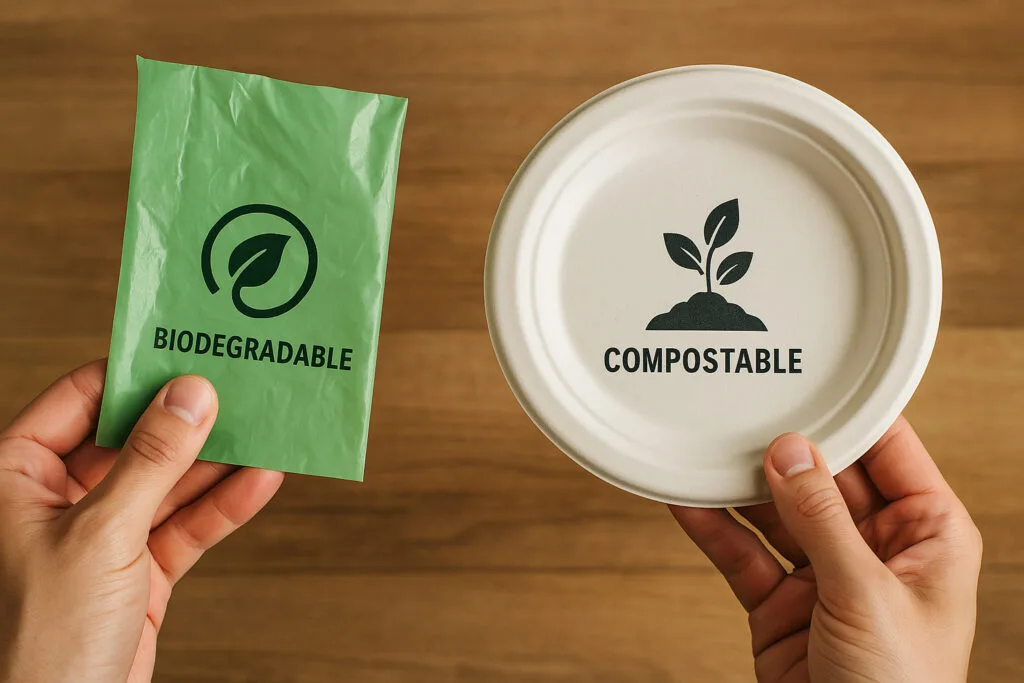
Biodegradable Plastics:
Plastics that can break down by the action of microorganisms into water, carbon dioxide, biomass, and sometimes residual matter. However, biodegradation time and completeness can vary greatly, and some “biodegradable” products may only fragment, leaving microplastics.Compostable Plastics:
A stricter subset of biodegradable plastics. Must fully break down into non-toxic components (CO₂, water, biomass) within a specific timeframe, under defined composting conditions, leaving no toxic residue or microplastics. Typically require industrial composting unless certified “home compostable.”
Quick Comparison Table
| Feature | Biodegradable Plastic | Compostable Plastic |
|---|---|---|
| Definition | Degrades naturally | Must break down in composting |
| Degradation | Varies by product & setting | Fast, complete under set conditions |
| Standards | Not always regulated | EN13432 (EU), ASTM D6400 (US), AS 4736 (AU), BPI, OK Compost, Seedling |
| Residue | May leave microplastics | Leaves no toxic residue |
| Claims Validity | Easily misused (greenwash) | Strictly certified, traceable |
SEO keywords: biodegradable plastics, compostable plastics, biodegradable vs compostable, eco-friendly packaging, food packaging regulations, B2B biodegradable tableware
2. Global Regulatory Landscape: What B2B Exporters and Buyers Must Know
European Union
Key Laws & Standards:
Packaging and Packaging Waste Directive (94/62/EC):
Mandates the reduction of packaging waste and the use of reusable, recyclable, or compostable materials.EN13432 (EU Standard):
Defines industrial compostability for packaging.Requirements: Material must disintegrate after 12 weeks, biodegrade (90% to CO₂ in <6 months), pass eco-toxicity tests, and contain no heavy metals.
Single-Use Plastics Directive (2019/904):
Restricts or bans specific single-use plastics (SUPs) and sets labeling requirements for compostable and biodegradable items.EPR (Extended Producer Responsibility) and LUCID (Germany):
Producers/exporters must register packaging and take financial responsibility for waste management.
Market Impact:
Exporters lacking EN13432 and proper EPR registration risk customs seizure or removal from EU markets.
United States
Key Laws & Standards:
ASTM D6400 / ASTM D6868:
Standards for industrial compostability of plastics and coated paper.BPI (Biodegradable Products Institute) Certification:
Third-party certification recognized by U.S. composters and municipalities.State Legislation:
California AB 1201: Bans use of the word “biodegradable” without third-party certification; compostable items must be BPI certified and accepted by local composters.
Washington State: Similar restrictions; non-compliant products face fines.
Market Impact:
Products labeled as compostable or biodegradable must meet ASTM/BPI standards. Greenwashing is strictly penalized.
Canada
SOR/2022-138 Regulation:
Bans several categories of single-use plastics. Compostable alternatives must comply with recognized standards, typically ASTM D6400/BPI.Compostable Plastics:
Accepted in specific provinces only if certified; local composting infrastructure must be considered.
Asia-Pacific
Japan – Plastic Resource Circulation Act (2022):
Requires product lifecycle documentation, recycling rates, and encourages the adoption of bioplastics, but insists on transparency and third-party testing.China – GB/T 38082-2019 (Biodegradable Plastics):
Establishes standards for biodegradation and eco-toxicity; local governments may set stricter criteria.Australia – AS 4736 & AS 5810:
Standards for industrial and home compostability, respectively. Exporters must ensure their products pass these tests to be accepted as “compostable” in Australia.
Middle East
UAE – Federal Single-Use Plastics Policy:
Bans most conventional plastic packaging by 2026. Compostable alternatives must pass internationally recognized tests and be accepted by municipal waste handlers.Saudi Arabia – SASO 2879:
Regulates the use of oxo-biodegradable plastics and increasingly aligns with international compostability standards.
South America
Chile – Ley REP (2016):
Sets EPR and collection/recycling targets. Plastics must be compostable under EN13432/ASTM D6400 to be exempt from bans.Brazil & Argentina:
Cities like São Paulo and Buenos Aires restrict single-use plastics, with exemptions only for certified compostable packaging.
3. Certification Deep Dive: How to Verify, Select, and Trust
Major International Certifications
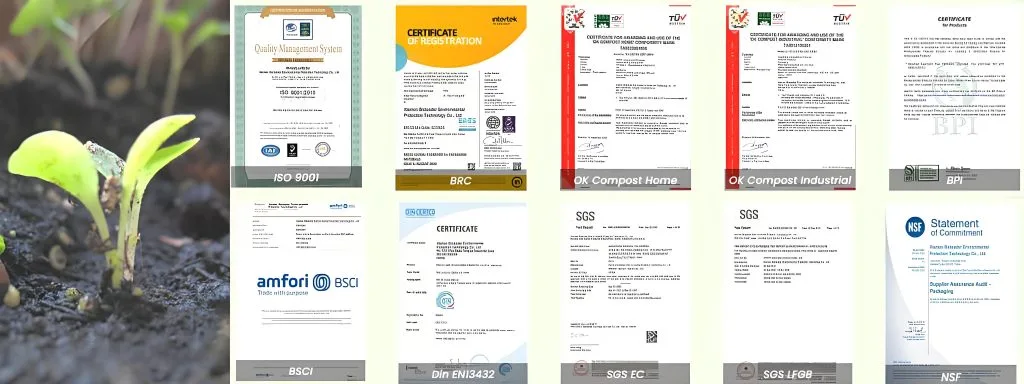
EN13432 (EU):
Scope: Industrial compostability for packaging.
How to verify: Accredited test report from a recognized EU laboratory (e.g., TÜV Austria, DIN CERTCO).
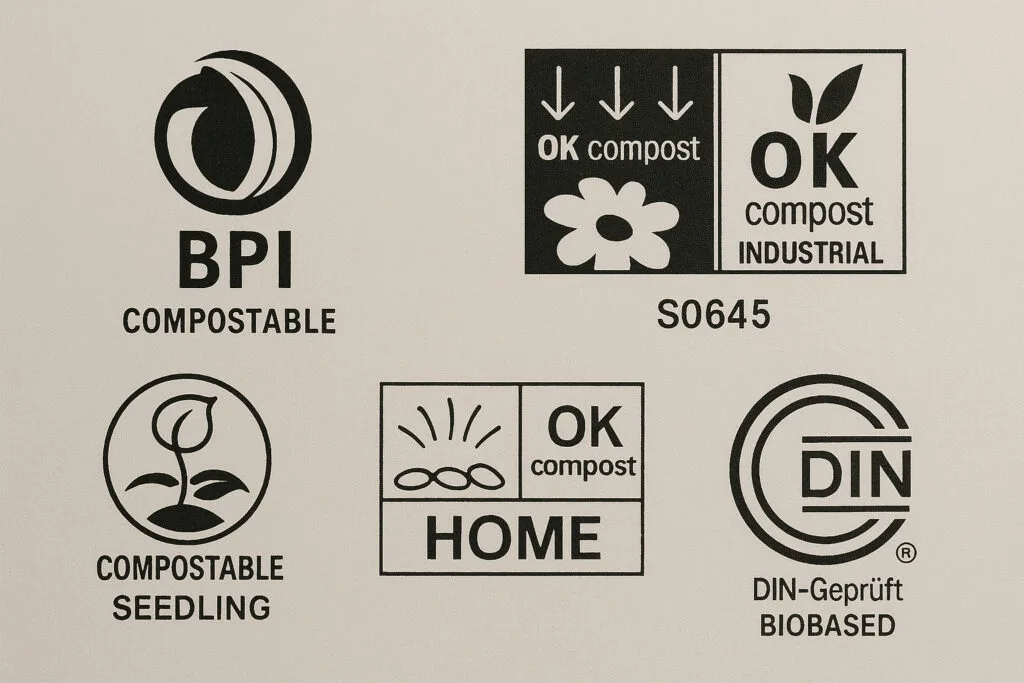
Markings: “Seedling” logo or “OK Compost INDUSTRIAL.”

ASTM D6400 (US/Canada):
Scope: Industrial compostability for plastics.
How to verify: BPI certification.
Markings: BPI Certified Compostable logo.
OK Compost (TÜV Austria):
Scope: “OK Compost INDUSTRIAL” for commercial, “OK Compost HOME” for home composting.
How to verify: Certification code on product/packaging.
Seedling Logo (European Bioplastics):
Indicates EN13432 compliance.AS 4736 & AS 5810 (Australia):
Endorsed by the Australasian Bioplastics Association (ABA).GB/T 38082-2019 (China):
National standard, local test reports required.
Buyer Best Practices:
Always request the latest certificate copy and check authenticity with the issuing body’s database.
Cross-check logos: Misuse or forgery is common in some export markets.
Demand batch-level certification for large, ongoing shipments.
Long-tail keywords: EN13432 certified, ASTM D6400 compostable, OK Compost certification, Seedling logo, BPI certified packaging, biodegradable certification for export
4. Real-World Application Scenarios and Legal Risks
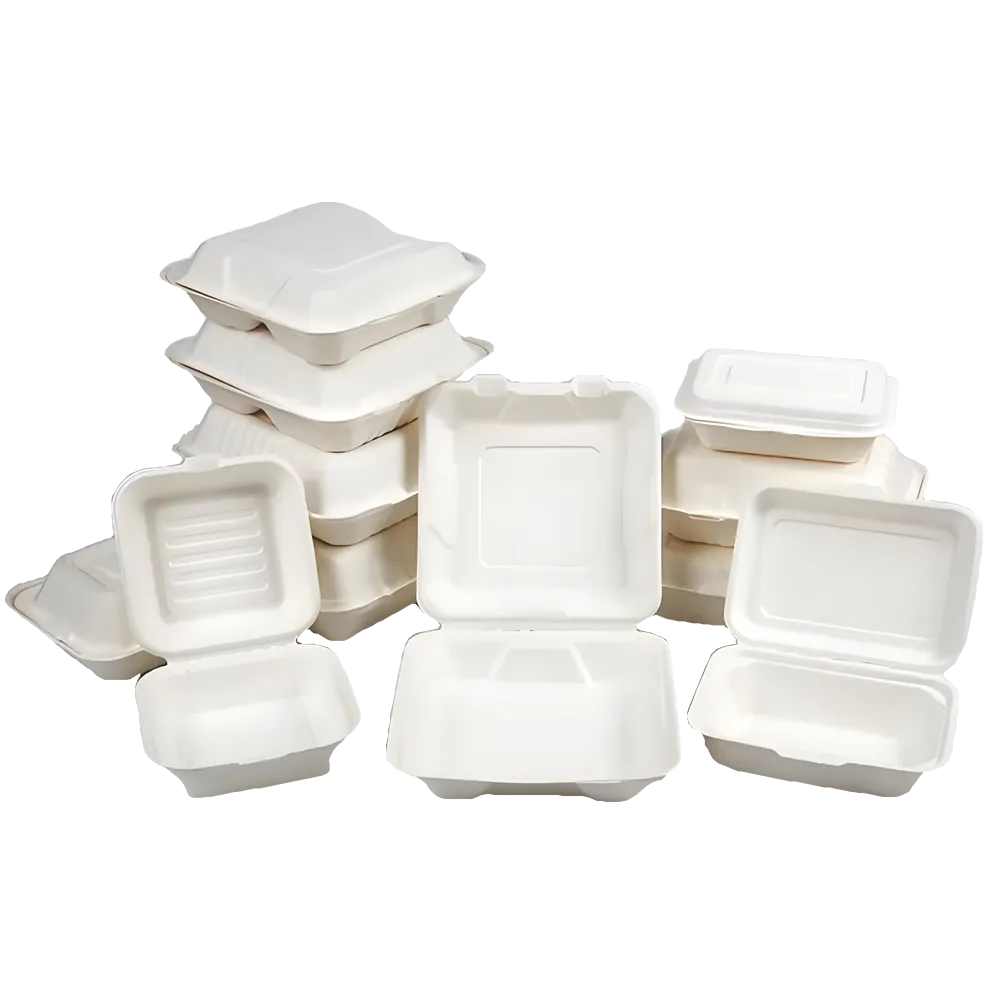
Case 1: EU Market Entry – Bioleader® Bagasse Clamshells
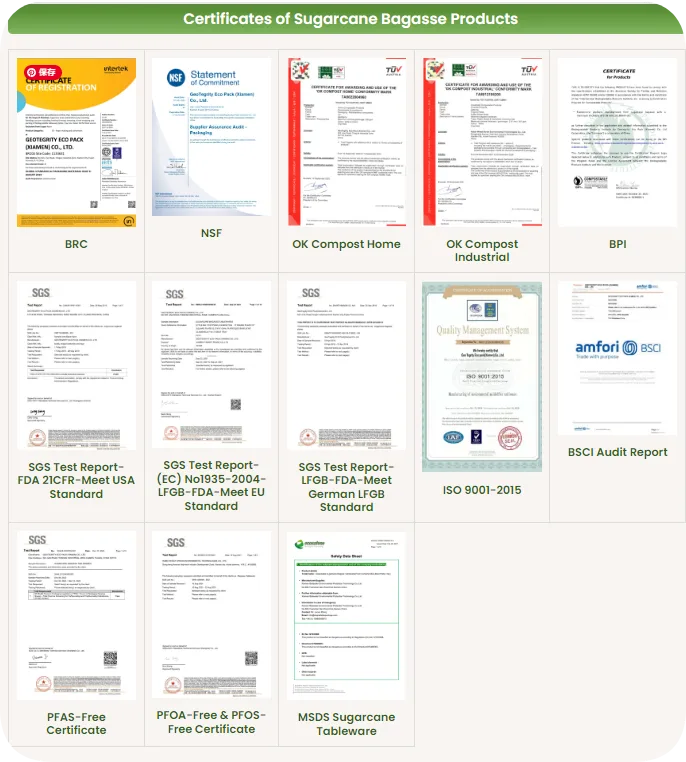
A Xiamen-based supplier shipped bagasse clamshells labeled as “compostable” to the Netherlands. The shipment was held at customs because certificates were not in the LUCID system and EN13432 documentation was incomplete. The exporter quickly engaged a certified lab (TÜV Austria), submitted valid paperwork, and completed EPR registration. Result: rapid customs clearance and new contracts with major EU foodservice chains.
 |  |
Case 2: U.S. Franchisee – PLA Cups Mislabeling
A U.S. fast-casual chain rolled out “biodegradable” PLA cold cups. Local media reported that municipal composters refused the cups due to lack of BPI certification and ASTM D6400 compliance. The company switched suppliers, requiring BPI-certified products and updating packaging to reflect true end-of-life options—restoring both regulatory compliance and customer confidence.
 |
|
Case 3: Australia – Home Compostable Cutlery
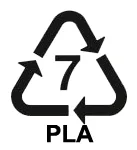
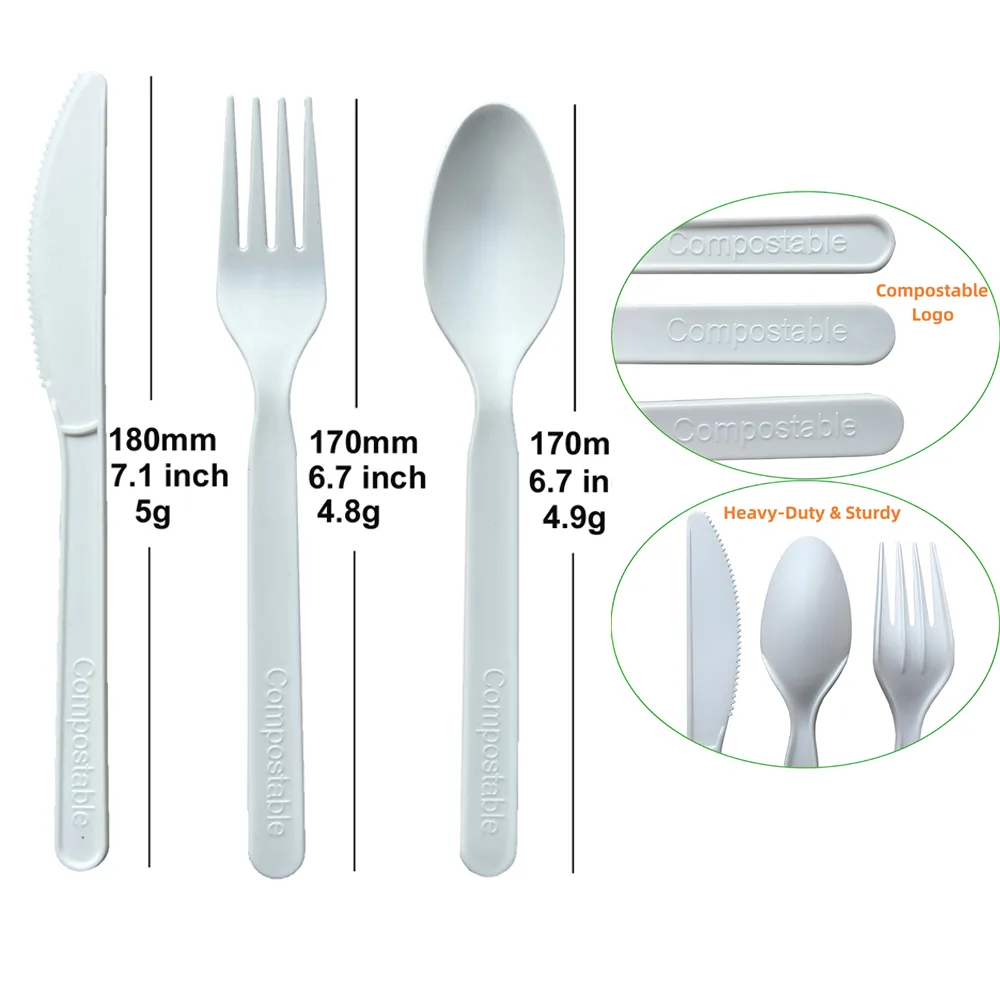
An Australian importer sought “home compostable” cornstarch cutlery for retail. Only products tested to AS 5810 and labeled “OK Compost HOME” passed due diligence. Several shipments from uncertified manufacturers were rejected at port, resulting in significant financial losses.
Case 4: Middle East – UAE Plastic Ban
A multinational hotel group sourcing for UAE operations discovered that “biodegradable” packaging was not accepted unless certified to EN13432 or ASTM D6400 and registered with the Dubai Municipality’s approved supplier list. The group standardized all procurement on internationally certified compostable items, reducing compliance risk and enhancing brand reputation.
5. Practical Compliance Checklist for B2B Buyers and Exporters
1. Understand Target Market Regulations
Map legal requirements in each export destination.
Confirm which certifications and documentation are required by customs, waste handlers, and buyers.
2. Verify Certification
Request and validate up-to-date, batch-specific certificates from recognized bodies.
Look for internationally recognized logos (BPI, Seedling, OK Compost).
Check certificates against official online registries.
3. Assess Composting Infrastructure
Industrial compostable items require appropriate facilities.
Inquire with local municipalities about accepted materials—many “compostable” items are not actually processed everywhere.
4. Specify in Contracts
Require supplier guarantees for compliance and indemnity clauses for mislabeling or failed certification.
Ensure all documentation accompanies shipments.
5. Stay Updated
Regulations evolve quickly—assign compliance officers or use third-party compliance services for market intelligence.
6. Emerging Trends and Future Outlook
Expansion of EPR (Extended Producer Responsibility):
More countries and regions will hold manufacturers and importers financially accountable for packaging waste, including reporting and tracking requirements.Home Compostable Demand Rising:
Major retailers (Tesco, Walmart) and local governments increasingly favor home compostable certified products to address gaps in industrial composting.Green Claims Enforcement:
EU, US, and Australia have all increased penalties for false green claims, including heavy fines and product delistings.Technological Innovation:
New plant-based materials (bagasse, CPLA, PHA, starch blends) and improved certification tools are accelerating market growth.Supply Chain Transparency:
Buyers increasingly request full life cycle analysis (LCA), detailed origin tracking, and public reporting.
7. Frequently Asked Questions (FAQ)
Q1: Can biodegradable plastics be exported to Europe?
A: Only if they meet EN13432 and are registered with EPR systems (e.g., LUCID in Germany). Without this, products may be denied entry.
Q2: Is “biodegradable” labeling enough for U.S. or Canadian export?
A: No. “Compostable” claims require ASTM D6400 certification and BPI logo. “Biodegradable” claims without compliance are often banned.
Q3: How do I check if a supplier’s certificates are real?
A: Use the issuing body’s official database (e.g., BPI, TÜV Austria, ABA) and verify the certificate number and product match.
Q4: Are all compostable plastics suitable for home composting?
A: No. Only products tested and certified to OK Compost HOME or AS 5810 can be safely composted at home.
Q5: What are the penalties for non-compliance?
A: Fines, customs seizure, forced recalls, product delisting, and loss of market access.
8. Conclusion: From Compliance to Competitive Advantage
In 2025 and beyond, sustainable packaging is not only an ethical choice—it’s a business necessity and a compliance imperative. For B2B buyers and exporters, the winners will be those who master the complex landscape of regulations, certifications, and practical infrastructure around biodegradable and compostable plastics. Invest in supply chain transparency, partner only with certified suppliers, and stay proactive on evolving standards to unlock global growth—while making a real difference for the planet.
Call to Action
Looking to secure your export business and meet the world’s strictest sustainable packaging regulations?
Contact Bioleader® for one-stop certified solutions in bagasse tableware, PLA cups, and compostable cutlery—fully compliant, globally export-ready, and trusted by leading brands.
Request a compliance audit, sample kit, or expert consultation today!
References
European Commission – Packaging and Packaging Waste Directive: https://ec.europa.eu/environment/topics/waste-and-recycling/packaging-waste_en
Biodegradable Products Institute (BPI): https://bpiworld.org/
ASTM International – Standard D6400: https://www.astm.org/d6400-23.html
TÜV Austria – OK Compost Certification: https://www.tuv-at.be/green-marks/ok-compost/
Australasian Bioplastics Association – AS 4736 & AS 5810: https://bioplastics.org.au/
- Bioleaderpack.com – Certified Compostable Tableware: https://www.bioleaderpack.com/
Japan Ministry of Environment – Plastic Resource Circulation Act: https://www.env.go.jp/en/
UAE Environment Agency – Single-Use Plastics Policy: https://www.ead.gov.ae/
German LUCID Packaging Register: https://www.verpackungsregister.org/
SOR/2022-138, Canadian Federal Regulations: https://laws-lois.justice.gc.ca/eng/regulations/SOR-2022-138/
Navigating Global Compostable Packaging Requirements: What Exporters Must Know
What’s the issue: “Biodegradable” lacks legal clarity and may fragment, whereas “compostable” requires full breakdown, no toxicity, and must meet certified standards like EN 13432, ASTM D6400, AS 4736, or equivalent.
Why regulation matters: Importers demand certified labels; without evidence, shipments risk rejection by customs or waste controllers in regions with EPR laws and strict environmental mandates.
Global rules at a glance:
- Europe: EN 13432 required, PLUS EPR registration via systems like LUCID and labels under SUP laws.
- US/Canada: ASTM D6400 + BPI endorsement mandatory; “biodegradable” claims alone can violate state or municipal labeling rules.
- Australia: AS 4736 compels industrial compostability for packaging; AS 5810 applies for home composting.
- Asia/Middle East/South America: Markets like Japan, China, UAE, Chile increasingly require local compostability standards or EPR involvement.
Compliance strategy for brands:
- Obtain dual certifications (e.g., EN 13432 & ASTM D6400/BPI) to cover main export zones.
- Validate certificates directly via regulatory or certifier databases and link them to specific SKUs.
- Register in all applicable EPR programs and display proper eco-labels per market rules.
- Use structured packaging documentation, batch tracking, and audit logs to support customs validation.
- Train marketing teams to avoid ambiguous claims like “biodegradable” and always use certified terminology.
Practical examples: Bagasse clamshells rejected at EU customs due to lack of EN certification were released after EPR compliance; PLA cups labeled “biodegradable” were banned in some U.S. states for missing BPI mark; uncertified starch cutlery failed port entry in Australia.