Guide To BPI Certification: Materials, Standards & Best Practices | Bioleader® Guides

Browse articles grouped under the "BPI certification" tag for topic-specific information and examples. The featured articles may approach the topic from different product, material, application, market, or sourcing perspectives. Check each article for its exact scope, technical data, standards, sources, and recommendations.
BPI certification — Content Overview
  • Featured articles shown: 12
  • Directly tagged articles: 5
  • Latest tagged article update: 2026-09-29
  • Coverage, examples, and specific recommendations vary by individual article.

Editor's Picks: Top Bpi Certification Guides 2026

FAQ of Bioleader's Eco-friendly Disposable Tableware

Are 500ml rectangular paper salad bowls with lids suitable for takeaway meals?

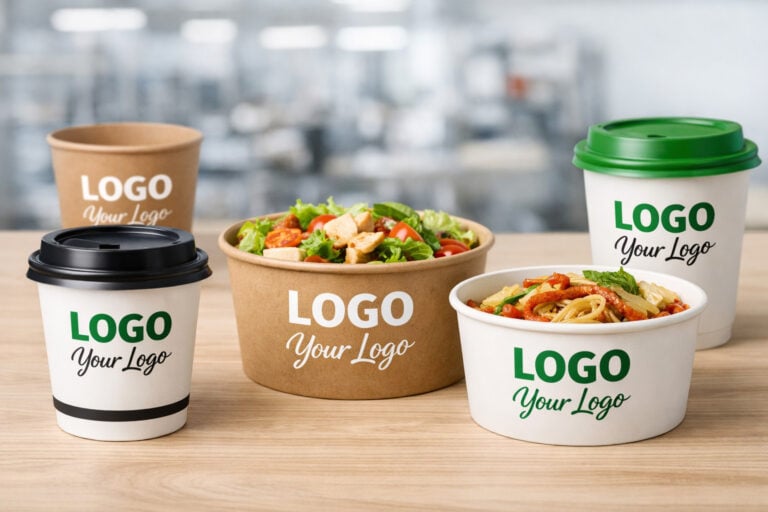
Yes. Bioleader® 500ml rectangular paper salad bowls with lids are suitable for salads, rice bowls, cold meals, hot food, light takeaway meals, and prepared food programs. The food-grade paperboard structure, coated surface, rectangular shape, and matching lid options help improve stacking, handling, and transport performance.

What is the capacity of a 500ml rectangular paper salad bowl?

A 500ml rectangular paper salad bowl is designed for compact single-serve portions. It is commonly used for salads, rice bowls, sushi-style meals, cold noodles, desserts, side dishes, and light takeaway meals — BPI certification. For buyers building a wider rectangular bowl range, 500ml can be paired with 650ml, 750ml, and 1000ml rectangular paper bowls — BPI certification.

What is the capacity of a 500-650ml square paper salad bowl?

A 500-650ml square paper salad bowl is designed for compact single-serve or side meal portions. It is commonly used for salads, rice bowls, poke bowls, cold noodles, fruit portions, desserts, side dishes, and light takeaway meals. For buyers building a wider foodservice range, 500-650ml square bowls can be paired with 750ml, 1000ml, 1200ml, and 1400ml square paper bowls.

What are the differences between biodegradable and compostable packaging?

Biodegradable packaging breaks down over time but lacks a guaranteed timeframe or safe residue. Compostable packaging breaks down fully into natural elements within a defined time under specific composting conditions — BPI certification.

✳️ Global Regulatory Shifts in 2025

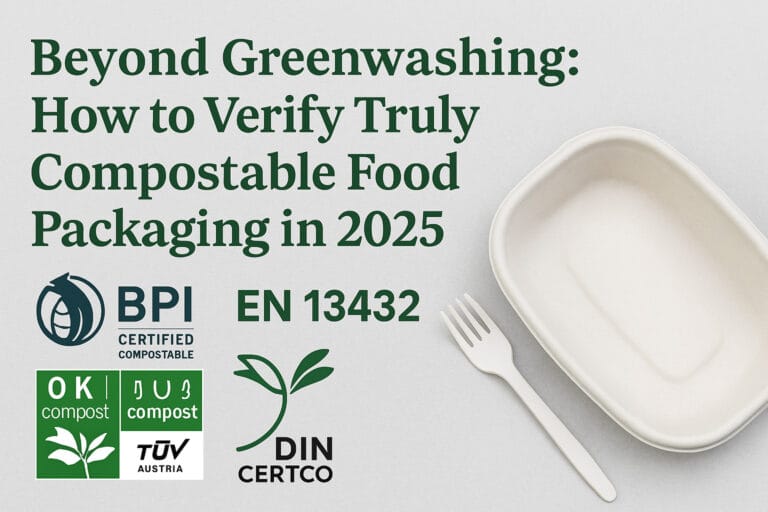
The packaging industry is experiencing profound change driven by tightening regulations around the world. These new rules aim to eliminate greenwashing and enforce transparency and accountability: EU Green Claims Directive (Expected 2025 Finalization, COM/2023/166 final)This directive mandates that environmental claims must be supported by rigorous scientific evidence, such as Life Cycle Assessments (LCA) or recognized third-party certifications. Terms like “biodegradable,” “climate-neutral,” or “eco” can no longer be used loosely without verification. California Senate Bill 343 (SB-343)California prohibits deceptive environmental labeling and requires compostable packaging to meet standards such as ASTM D6400 or TUV OK Compost.

Related Insights

🚀Ready to Go Green and Choose ?

Join the global movement toward zero-waste packaging.


Bioleader® offers:

  • 📦 Bulk order support & fast delivery

  • ✍️ Custom branding and OEM solutions

  • 🌍 Worldwide eco-packaging compliance

Get the Catalogue Products List  & Contact Us Now! 👉

Contact Us for Quote

Click or drag files to this area to upload.You can upload up to 5 files.
The more details you share, the faster and more accurate our quotation will be.