Quick Answer: Can You Microwave Compostable Containers?
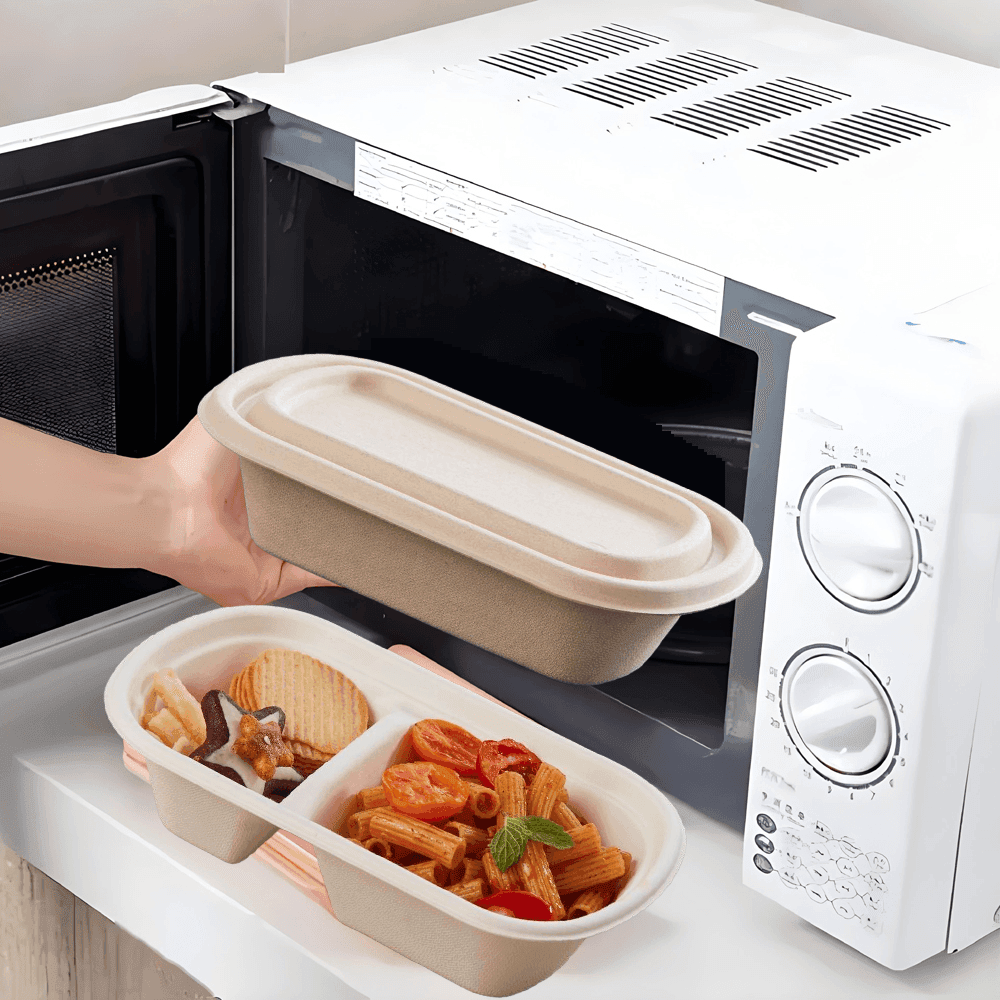
Bagasse containers can handle short microwave heating—typically under 5 minutes and below 120°C. Cornstarch containers are moderately heat-resistant, suitable for warm food but not prolonged exposure. PLA cups and lids are not microwave-safe, as they soften at around 55°C. Always check microwave-safe labels before reheating food.
In an era when sustainability meets convenience, compostable containers have become the go-to alternative to plastic packaging for take-out, catering, and home meals. But one question appears in nearly every household and business: “Can I microwave these eco-friendly containers?”
This article dives deep into what actually happens when you place compostable packaging—made from bagasse, cornstarch, or PLA—inside a microwave. We will explore the science behind each material, manufacturer guidelines, heat-safety data, and expert advice from the food packaging industry. Whether you are a café owner, distributor, or eco-conscious consumer, this guide will clarify how to heat safely without compromising sustainability.
Why People Ask This Question
Consumers often assume that “compostable” automatically means “microwave-safe.” In reality, compostability refers to a material’s biological breakdown process, not its thermal resistance. According to 2024 data from European Bioplastics, over 68% of surveyed consumers admitted they were unsure whether compostable products can withstand microwave heat.
The confusion stems from packaging diversity—each eco-material behaves differently. Bagasse (sugarcane fiber) tolerates high temperatures, while PLA (polylactic acid) quickly deforms under heat. To avoid food safety risks or wasted containers, understanding these distinctions is essential.
What “Compostable” Really Means
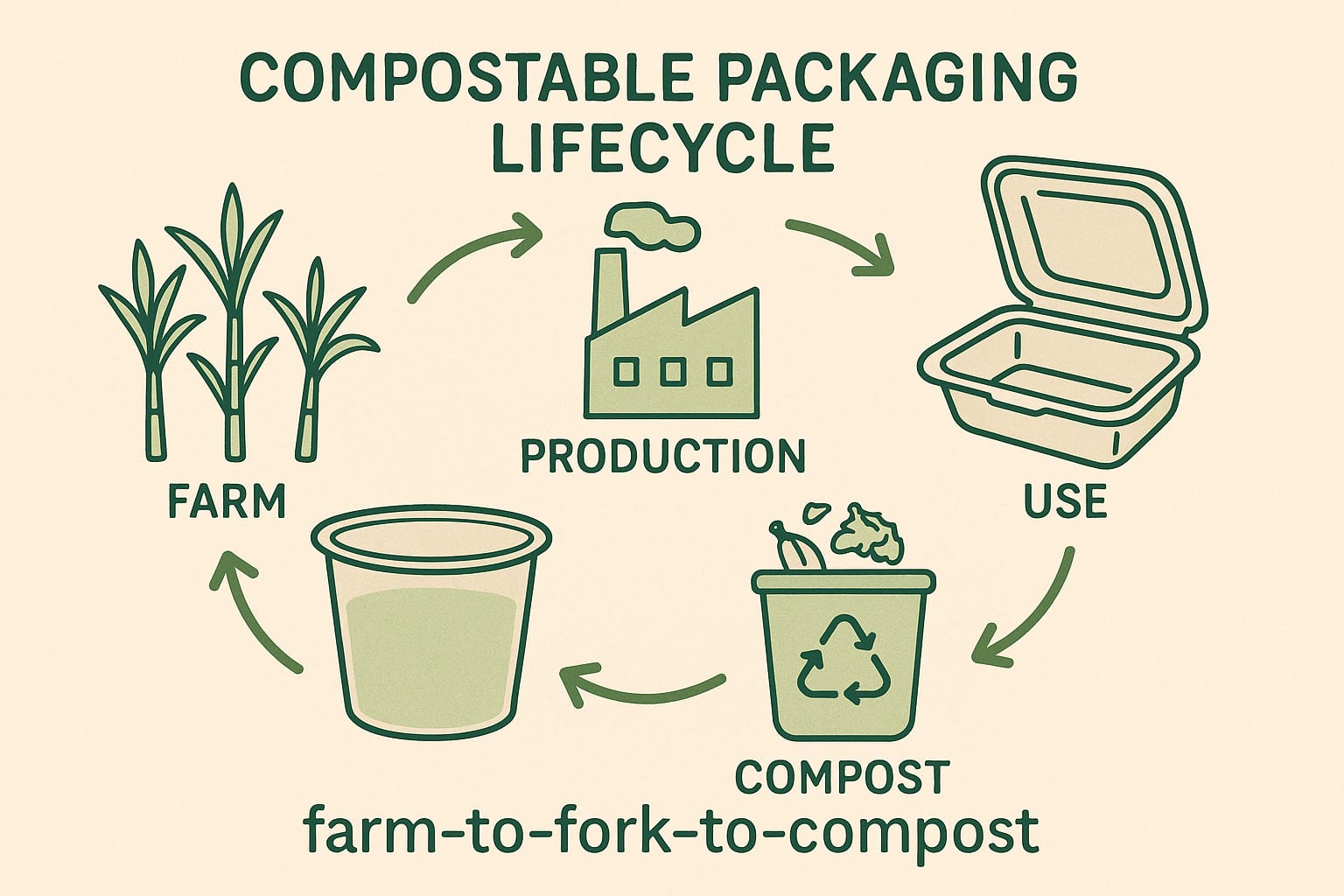
A compostable container is designed to biodegrade under controlled composting conditions—usually within 90–180 days in an industrial facility—meeting standards like EN13432 (EU) or ASTM D6400 (US). Compostability concerns decomposition, not cooking performance. Materials commonly used for compostable packaging include:
- Bagasse – the fibrous by-product of sugarcane processing.
- Cornstarch (PLA-free bioplastic) – starch-based polymer with medium heat resistance.
- PLA (Polylactic Acid) – a transparent bioplastic derived from corn, ideal for cold beverages.
Each material offers environmental benefits but reacts differently to heat exposure. Let’s break them down.
Material Breakdown: How Each Reacts in Microwaves
When exposed to microwave energy, moisture inside food transforms into steam. That steam transfers heat to the container walls, causing physical stress on biodegradable materials. The outcome depends on the molecular structure of each material.
Bagasse Containers
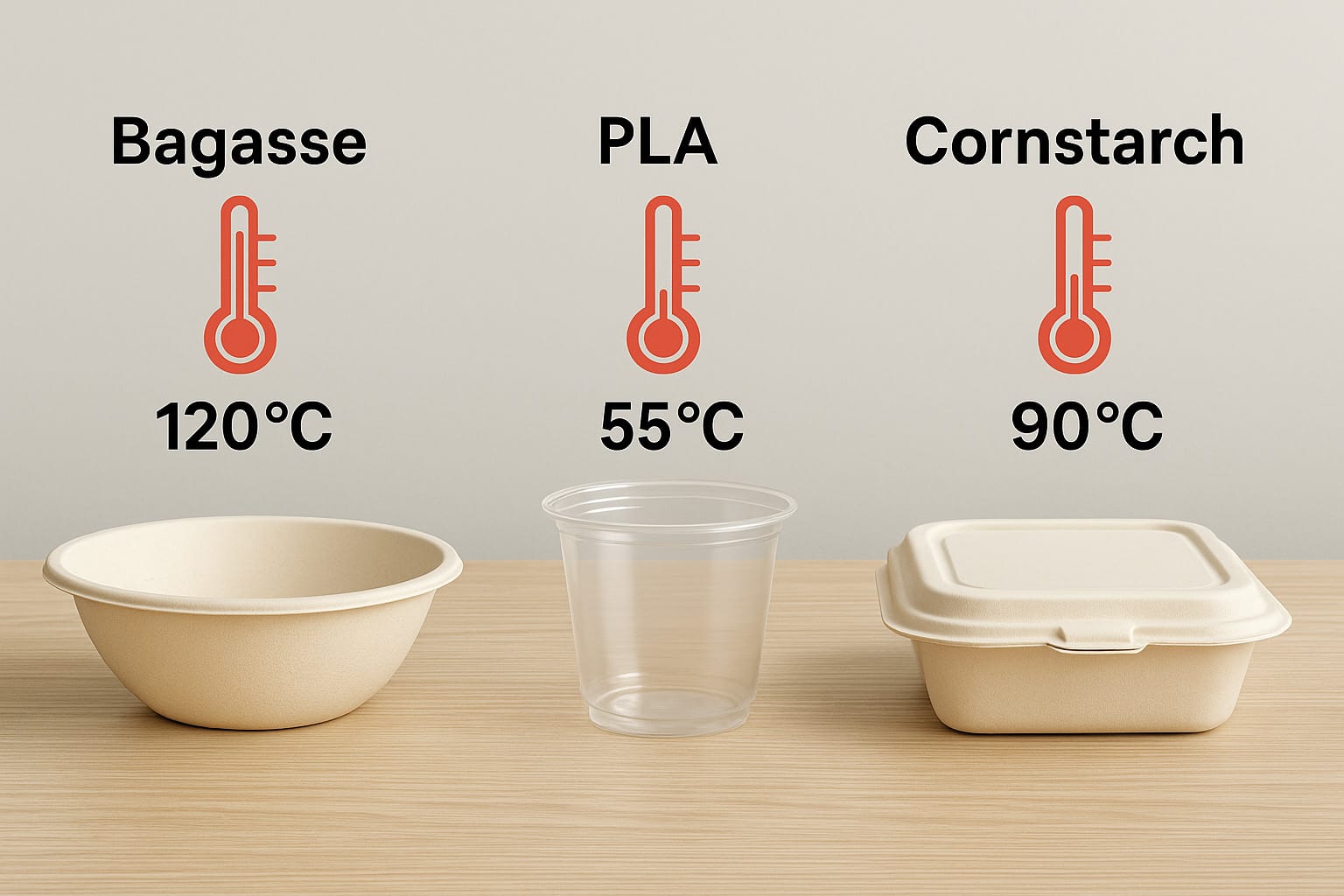
Bagasse performs best among compostable materials in microwave environments. Its natural fiber structure is similar to pressed cardboard, allowing short-term heating without deformation. Certified bagasse bowls and trays can usually withstand up to 120 °C (248 °F) for a few minutes. However, prolonged heating or reheating oily dishes may still cause weakening.
Cornstarch Containers
Cornstarch-based bioplastics handle moderate heat—around 80–90 °C (176–194 °F)—but they begin softening under extended exposure. They are suitable for reheating light meals or soups for under two minutes but should not be used for deep-fat or prolonged microwaving.
PLA Cups and Lids
PLA is meant for cold beverages. It starts deforming at about 55 °C (131 °F) and can release lactic acid derivatives if overheated. In short, PLA cups are excellent for iced drinks and smoothies, but never microwave or pour boiling liquids into them.
| Material | Microwave Limit | Typical Use | Safety Note |
|---|---|---|---|
| Bagasse | ≤120°C, ≤5 min | Bowls, trays, lunch boxes | Generally microwave-safe short term |
| Cornstarch | ≤90°C, ≤2 min | Cutlery, clamshells | Avoid long heating |
| PLA | ≤55°C | Cold cups, lids | Not microwave-safe |
| Paper/Kraft | ≤100°C | Soup bowls, food boxes | Safe if uncoated or PLA-lined |
Safety Risks of Microwaving Compostable Containers
While short reheating may be safe for bagasse, other materials can pose risks if misused. Here are common issues reported by manufacturers and food-safety labs:
- Softening and Leakage: Bioplastics like PLA can warp and leak under high heat.
- Burnt Edges: Paper-fiber products may char if exposed to dry heat for long durations.
- Steam Pressure Build-up: Sealed containers can burst due to trapped vapor.
- Chemical Contamination: Non-certified inks or adhesives may migrate into food when overheated.
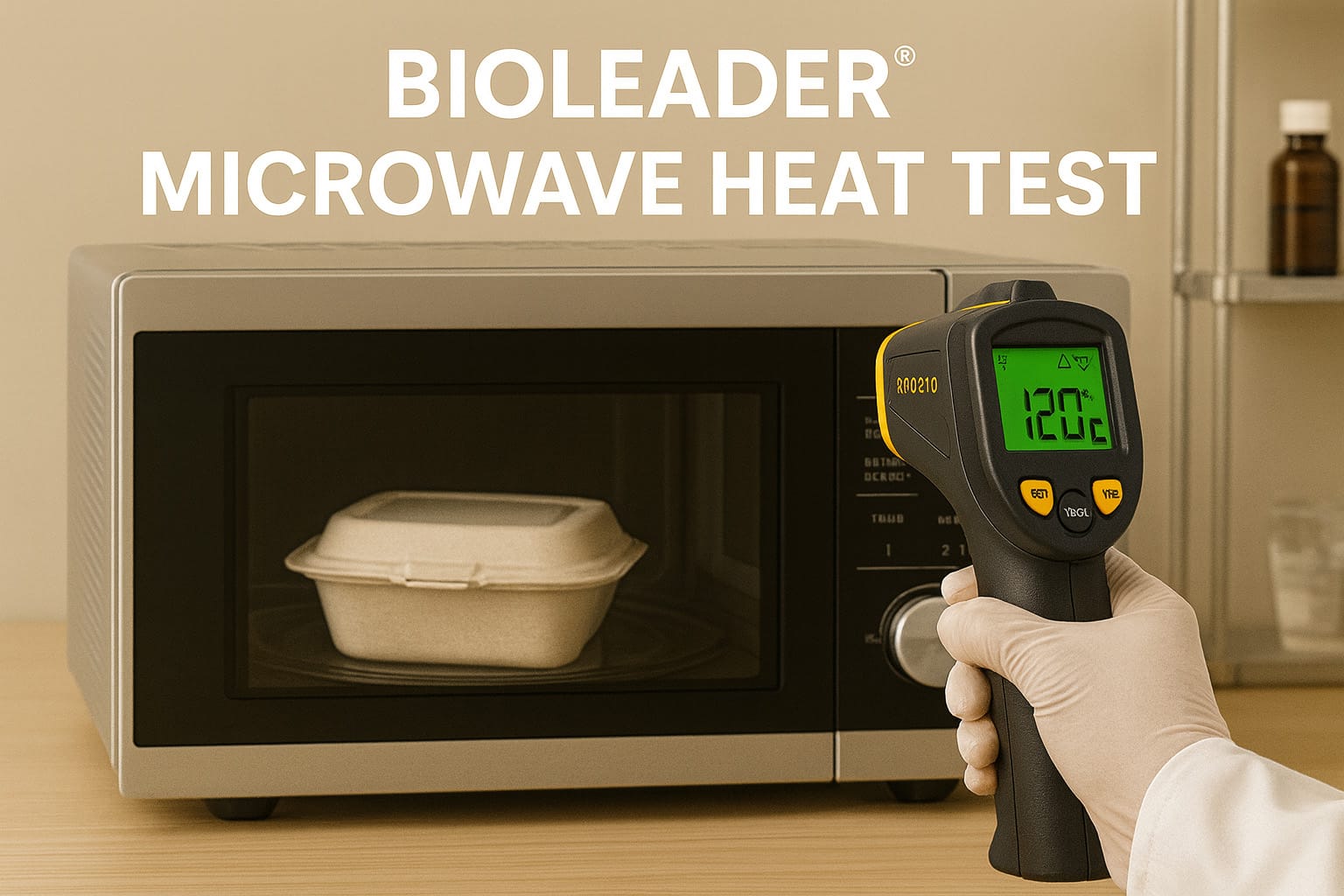
Hence, always verify microwave-safe labels and certification marks before use. For commercial applications, choosing FDA-approved and PFAS-free compostable packaging ensures both food safety and brand reputation.
What Manufacturers Like Bioleader® Recommend
Bioleader®, a leading compostable tableware manufacturer in China, provides clear heat-resistance guidance for each product line:
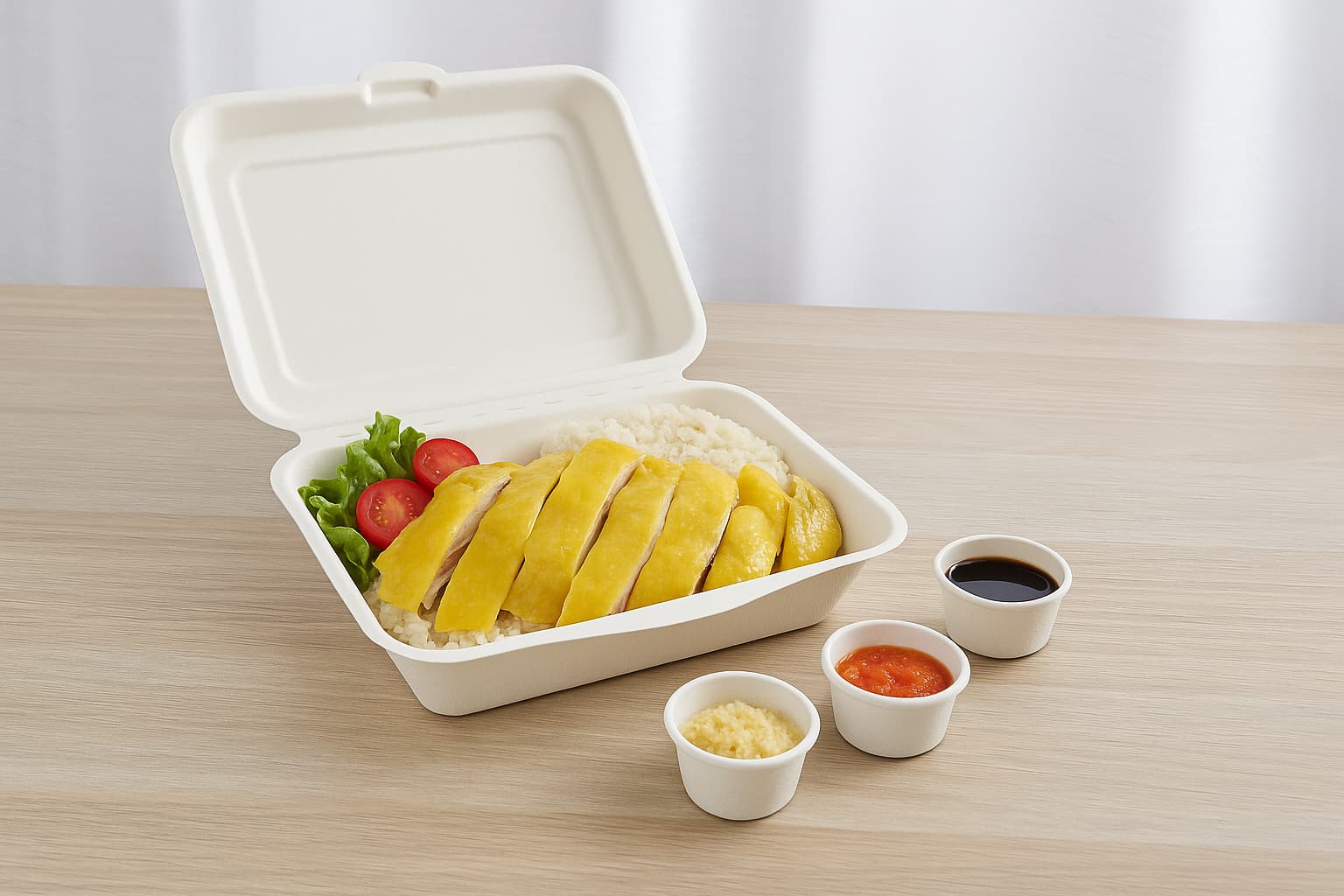
- Bagasse Containers: Microwave-safe up to 120 °C for 3–5 minutes. Ideal for soups, rice, and take-away dishes.
- Cornstarch Tableware: Suitable for warm meals but avoid long exposure or reheating high-oil foods.
- PLA Cups: For cold beverages only. Avoid microwaving or pouring hot water.
All Bioleader® bagasse bowls and trays are tested under EN13432 compostability and FDA food-contact safety standards. The company’s manufacturing process ensures that each product maintains structural stability under normal foodservice reheating scenarios.
Explore product categories for safe use:
Safe Heating Practices for Compostable Containers

Here are expert-recommended practices to ensure safety when microwaving compostable containers:
- Check labeling: Only heat containers marked “microwave-safe.”
- Limit heating time: Keep microwaving under 2–3 minutes for bagasse or cornstarch products.
- Avoid sealed lids: Always open or vent containers to prevent steam pressure.
- Use medium power: High microwave power may overheat edges while leaving food cold inside.
- Do not reuse PLA cups: PLA is for cold use only; reuse for microwaving is unsafe.
- Dispose responsibly: After use, place compostable containers in organic waste bins, not recycling streams.
Following these steps ensures that eco-friendly packaging remains both safe and sustainable.
What to Do Instead
If your packaging is not microwave-safe, transfer the food into a certified dish before heating. Alternatively, choose containers explicitly labeled for microwave performance. Bioleader® offers several product lines designed for this purpose, including bagasse trays with lids and paper soup bowls lined with compostable materials.
These solutions balance convenience with safety—allowing consumers to heat food directly without compromising environmental goals.
Environmental Perspective: Heating Without Guilt
Even if not all compostable containers can handle microwaves, their environmental footprint is far lower than petroleum-based plastics. Life-cycle assessments show that bagasse and cornstarch products emit up to 60–70% less CO₂ during production and decompose naturally without toxic residues.
Moreover, compostable packaging aligns with the EU Packaging and Packaging Waste Regulation (PPWR 2026) and similar laws in the U.S., Canada, and Asia. These policies encourage foodservice operators to switch from non-recyclable plastics to certified compostables—making the shift not only ethical but increasingly mandatory.
Expert Insight: What Packaging Engineers Say
According to Dr. Emily Gao, a materials engineer specializing in biopolymer performance, “Microwave safety and compostability serve two different purposes. A container can be perfectly compostable yet unsuitable for high-heat applications. The key is aligning end-of-life design with real-world usage.”
Experts agree that bagasse remains the most versatile option for hot meals and short-term heating, while PLA is best reserved for cold applications. Cornstarch sits in the middle—flexible but requiring controlled use. For foodservice brands, choosing the right material reduces liability and reinforces sustainability claims.
FAQs
1. Can I microwave bagasse compostable containers?
Yes. Bagasse containers can handle short microwave use up to 120 °C (248 °F) for around 3–5 minutes. Avoid reheating greasy or heavy-oil foods to prevent surface weakening.
2. Are PLA cups microwave-safe?
No. PLA softens around 55 °C (131 °F) and can deform easily. They are designed only for cold drinks such as juices, smoothies, and iced coffee.
3. Can compostable containers be used in the oven?
Generally not. Compostable materials are optimized for low to medium heat. Ovens typically exceed 180 °C (356 °F), which can burn or distort fiber structures.
4. Does microwaving affect compostability?
Brief heating does not change compostability, but burning or over-melting may reduce biodegradation efficiency. Always follow product instructions.
5. How can I identify microwave-safe compostable products?
Look for certified microwave-safe icons or technical data from suppliers like Bioleader®. Product packaging or website specifications usually list temperature resistance.
Summary: Use Smart Heat, Stay Sustainable
Microwaving compostable containers is safe only when material limitations are respected. Bagasse is the most heat-resistant and suitable for short reheating. Cornstarch handles moderate temperatures, and PLA should remain for cold use only. Always check certification marks and follow manufacturer guidance to ensure food safety and maintain eco integrity.
As the world transitions toward plastic-free dining, responsible heating habits are a small yet powerful step in making sustainability practical. Bioleader® continues to innovate compostable packaging that performs well, protects health, and safeguards the planet.