What Is Sugarcane Fiber Packaging? A 2026 Guide to Bagasse Food Containers
Sugarcane fiber packaging, also known as bagasse packaging, is one of the most practical alternatives to plastic, foam, and traditional disposable food containers. It is made from the fibrous residue left after sugarcane juice extraction, turning an agricultural by-product into plates, bowls, trays, clamshells, cups, and other foodservice packaging.
For restaurants, supermarkets, food delivery brands, caterers, and packaging distributors, sugarcane fiber is no longer just an “eco-friendly idea.” It has become a commercial packaging material with real advantages in heat resistance, oil resistance, food contact safety, brand positioning, and plastic-reduction compliance.
Quick Summary: Sugarcane Fiber Packaging
Sugarcane fiber packaging is made from bagasse, the fibrous residue of sugarcane after juice extraction. It is renewable, molded into strong food containers, and widely used for takeaway meals, salads, hot foods, supermarket trays, and compostable tableware.
Best applications: restaurants, meal prep brands, catering, supermarkets, food delivery, eco-conscious packaging distributors, and businesses replacing foam or plastic food containers.
Buyer note: Not all bagasse packaging performs the same. Buyers should check PFAS status, oil and water resistance, temperature tolerance, lid fit, compostability certification, and food contact test reports before bulk purchasing.
In this guide, we explain what sugarcane fiber is, how bagasse packaging is produced, where it is used, how it compares with plastic and paper packaging, and how B2B buyers can decide whether sugarcane fiber packaging is suitable for their business.
- What is sugarcane fiber or bagasse?
- How is sugarcane fiber packaging made?
- What are the environmental benefits of bagasse packaging?
- What food packaging products can be made from sugarcane fiber?
- How does sugarcane fiber compare with plastic, foam, paper, and PLA packaging?
- Will sugarcane fiber packaging work for your business?

What Is Sugarcane Fiber? Understanding Bagasse
Sugarcane fiber, commonly called bagasse, is the dry fibrous material left after sugarcane stalks are crushed to extract juice. Instead of being burned, discarded, or used only as low-value fuel, bagasse can be processed into pulp and molded into durable food packaging products.
This is why sugarcane fiber is widely viewed as a smart material for sustainable packaging: it uses a non-edible agricultural residue from the sugar industry and gives it a second life as a commercial packaging material.
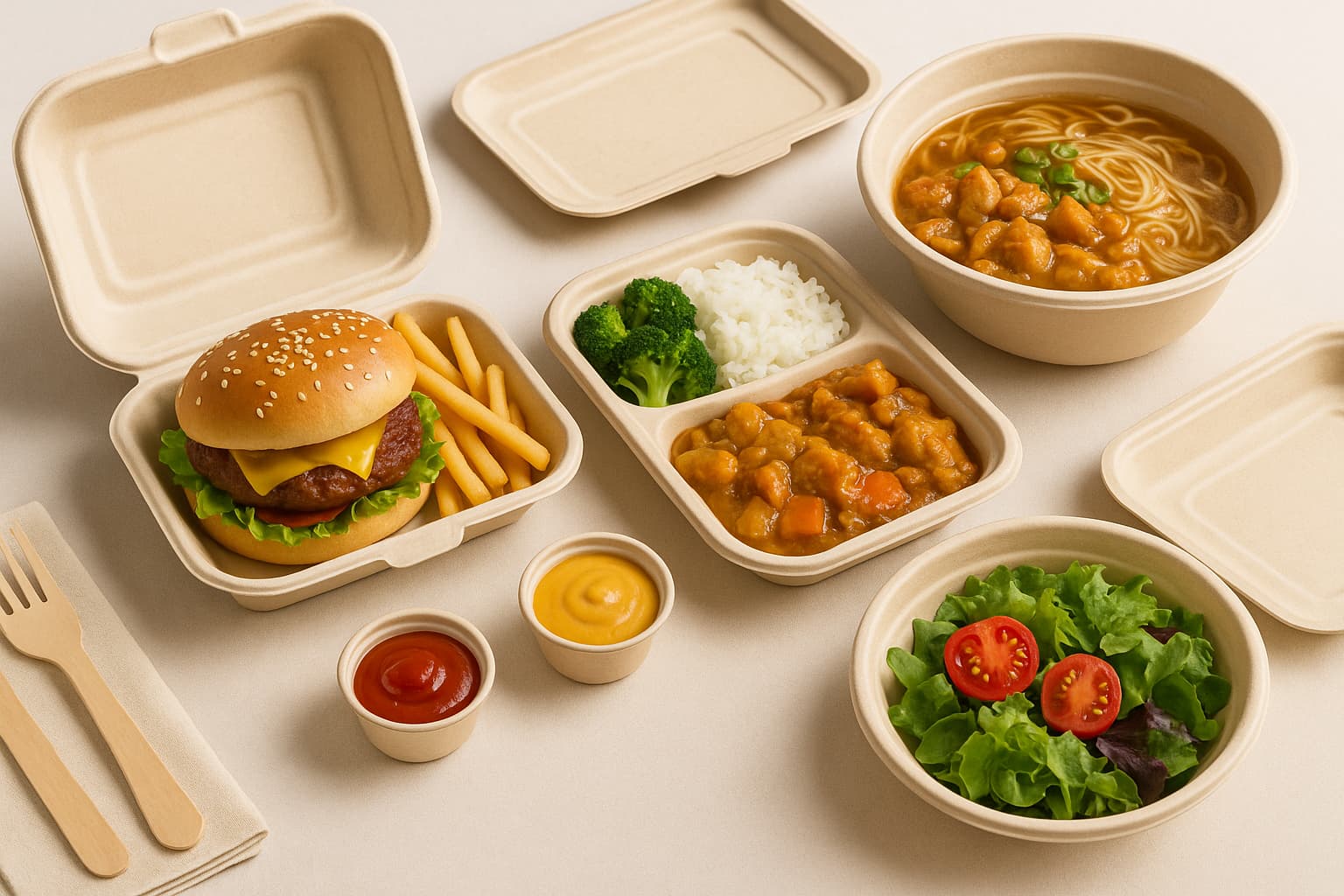
Bagasse can be used to produce a wide range of molded fiber packaging products, including:
- Compostable plates
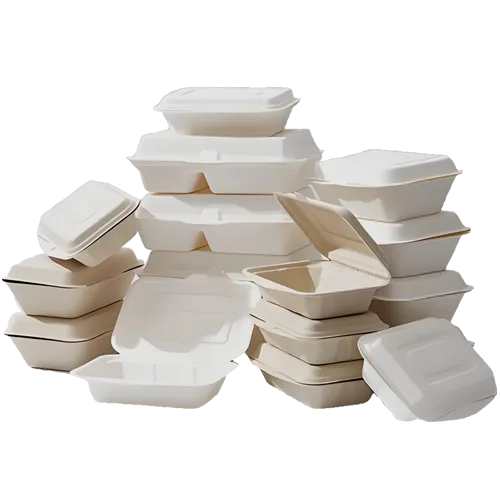
- Clamshell food containers
- Round bowls and square bowls
- Meal trays and supermarket trays
- Portion cups and sauce cups
- Takeaway containers for hot and cold foods
From a material-science perspective, bagasse is a lignocellulosic fiber. Its strength and moldability come mainly from cellulose, hemicellulose, and lignin. These components allow the fiber to be pulped, shaped, pressed, and dried into rigid packaging structures.
How Is Sugarcane Fiber Packaging Made?
The process of turning sugarcane waste into food packaging is relatively straightforward, but the quality of the finished product depends heavily on fiber selection, pulping control, mold precision, drying conditions, and barrier treatment.
Step 1: Sugarcane Juice Extraction
After sugarcane is harvested, the stalks are crushed to extract juice for sugar production. The remaining dry fiber is bagasse. This residue becomes the starting raw material for molded fiber packaging.
Step 2: Fiber Cleaning and Pulping
The bagasse fibers are cleaned, screened, and mixed with water to create a pulp. The pulp has a texture similar to paper pulp and can be refined depending on the final product requirement.
Step 3: Molding and Forming
The pulp is placed into precision molds and shaped into plates, bowls, trays, clamshells, or lids. Heat and pressure help remove moisture, improve structure, and create the final molded shape.
Step 4: Drying, Trimming, and Quality Inspection
After molding, the products are dried, trimmed, inspected, and packed. For food packaging, key inspection points include thickness, weight, strength, oil resistance, water resistance, edge finish, stacking stability, and lid compatibility.
Typical Fiber Composition of Sugarcane Bagasse
Different studies report slightly different composition ranges depending on region, processing method, and testing conditions. In general, sugarcane bagasse contains a high proportion of cellulose and hemicellulose, supported by lignin and ash content. This fiber structure is what makes bagasse suitable for molded pulp food packaging.
| Component | Approximate Role in Packaging | Why It Matters |
|---|---|---|
| Cellulose | Main structural fiber | Supports rigidity, strength, and molded shape stability |
| Hemicellulose | Fiber bonding support | Helps pulp formation and improves fiber network integrity |
| Lignin | Natural polymer in plant fiber | Affects stiffness, color, processing behavior, and fiber treatment |
| Ash and natural waxes | Minor components | Can influence processing, surface behavior, and final product consistency |

What Are the Environmental Benefits of Sugarcane Fiber Packaging?
The environmental value of sugarcane fiber packaging comes from three key factors: renewable agricultural sourcing, reduced dependence on fossil-based plastic, and potential compostability under suitable conditions.
1. It Uses an Agricultural By-Product
Sugarcane is produced at very large global scale, and bagasse is generated after sugar extraction. By converting this residue into bagasse packaging, manufacturers can reduce agricultural waste and create higher-value packaging from an existing biomass stream.
2. It Reduces Reliance on Foam and Petroleum-Based Plastic
For many takeaway food applications, molded bagasse containers can replace polystyrene foam boxes, rigid plastic trays, and some paper-plastic composite packaging. This is especially important for foodservice brands facing plastic bans, foam restrictions, and buyer pressure to reduce single-use plastic.
3. It Can Be Compostable Under the Right Conditions
Bagasse itself is plant fiber. However, whether a finished product is truly compostable depends on the additives, coatings, barrier treatment, inks, and certification status. B2B buyers should not rely only on the word “biodegradable.” For regulated markets, they should request third-party documentation such as EN13432, ASTM D6400, BPI, TÜV, OK Compost, or relevant local compostability testing.
4. It Supports Better Food Packaging Design
Bagasse packaging is naturally rigid and can be molded into strong shapes. This makes it useful for hot meals, cold salads, rice bowls, burgers, snacks, fruits, vegetables, and supermarket-ready foods. The material also offers a natural, clean, and eco-conscious appearance that supports sustainable brand positioning.
What Is Sugarcane Fiber Packaging Used For?
Sugarcane fiber is used in many foodservice and retail packaging categories. Its main advantage is that it can be molded into rigid, stackable, and functional shapes without relying on traditional plastic or foam structures.
Common Food Packaging Applications
- Clamshell containers: burgers, rice meals, pasta, noodles, salads, and takeaway meals.
- Plates: restaurants, catering, events, buffets, picnics, and institutional dining.
- Bowls: salads, grain bowls, soup-style meals, poke bowls, burrito bowls, and meal prep.
- Trays: supermarket produce, bakery items, meat alternatives, vegetables, and ready-to-cook meals.
- Cups and portion containers: sauces, dips, tastings, snacks, and small servings.
Typical Buyer Groups
Bagasse packaging is especially suitable for foodservice chains, eco packaging distributors, restaurants, catering companies, supermarket suppliers, hotels, airline catering, cloud kitchens, and brands preparing for plastic-reduction regulations.
Where Bagasse Performs Best
Sugarcane fiber packaging performs well when the buyer needs a natural appearance, rigid structure, heat tolerance, microwave suitability, and a stronger sustainability story than conventional plastic or foam. For wet, oily, or long-hold food applications, buyers should confirm oil resistance, water resistance, and anti-leak performance before placing bulk orders.

PFAS-Free and Performance Considerations for Bagasse Packaging
One of the most important changes in the molded fiber packaging market is the shift toward PFAS-free solutions. Traditional molded fiber packaging sometimes used fluorinated chemicals to improve oil and water resistance. Today, many buyers—especially in Europe and North America—ask for PFAS-free bagasse packaging with verified test reports.
However, PFAS-free does not automatically mean every product has the same performance. Oil resistance, water resistance, heat tolerance, and holding time depend on formula, coating treatment, fiber density, product thickness, and food type.
What Buyers Should Confirm
- Is the product PFAS-free, and can the supplier provide test reports?
- What is the tested oil resistance and water resistance level?
- Can the container hold hot, oily, or saucy food without softening too quickly?
- Is the product suitable for microwave use?
- Does the lid fit tightly enough for delivery and takeaway?
- Is the product certified compostable, or only biodegradable in general terms?
For export buyers, this is where supplier experience matters. A reliable bagasse packaging manufacturer should explain the difference between standard oil-resistant bagasse, PFAS-free bagasse, and high-performance PFAS-free bagasse instead of using broad environmental claims without technical details.
How Does Sugarcane Fiber Compare to Alternative Packaging?
Sugarcane fiber packaging is often compared with plastic, foam, paperboard, PLA, and other plant-fiber packaging. Each material has advantages and limitations. The right choice depends on food type, local regulations, composting access, budget, and brand strategy.
| Material | Main Advantages | Key Limitations | Best Use Cases |
|---|---|---|---|
| Sugarcane Bagasse | Renewable fiber, rigid structure, natural appearance, suitable for hot foods | Performance depends on barrier treatment, PFAS status, and product design | Clamshells, plates, bowls, trays, takeaway meals, catering |
| Plastic Containers | Clear appearance, strong sealing, lightweight, familiar supply chain | Fossil-based, plastic-ban pressure, lower sustainability perception | Cold foods, transparent display, deli packaging |
| Foam Packaging | Low cost, insulation, lightweight | Poor environmental image, increasing regulatory restrictions | Legacy takeaway packaging where still allowed |
| Paperboard Packaging | Printable, lightweight, good branding surface | Usually needs PE, PLA, or water-based coating for wet foods | Paper bowls, soup containers, salad bowls, branded takeaway packaging |
| PLA / CPLA | Plant-based, compostable under proper industrial composting conditions | Heat resistance and composting infrastructure must be considered | Cold cups, lids, cutlery, coated paper products |
Compared with foam and many plastic containers, sugarcane fiber packaging offers a stronger sustainability story and a more natural food presentation. Compared with traditional paper packaging, molded bagasse provides better rigidity and can be shaped into deeper trays, compartment containers, and clamshell structures.
The most practical advantage for foodservice buyers is that bagasse packaging can serve both environmental and functional needs: it looks natural, works for many hot and cold foods, supports plastic-reduction goals, and can be supplied in bulk for restaurants and distributors.

Will Sugarcane Fiber Packaging Work for Your Business?
Bagasse packaging is worth considering if your business currently uses paper, foam, plastic, aluminum, or wood-pulp food containers and wants a stronger sustainable packaging alternative. It is especially useful when customers expect natural packaging and when local regulations are moving away from single-use plastic or foam.
Bagasse Packaging Is a Good Fit If You Need:
- Takeaway containers for hot meals, rice dishes, noodles, burgers, and salads
- Compostable plates and bowls for catering or events
- Plastic-reduction packaging for supermarkets and food delivery
- PFAS-free or certified food-contact-safe molded fiber options
- Bulk export packaging with custom cartons, mixed container loading, and OEM support
- A natural, premium, eco-conscious look for your brand
Bagasse May Not Be the Best Choice If:
- You need a transparent container for product visibility.
- Your product requires very long liquid holding time without any lid or liner support.
- Your local market lacks composting or organic waste collection infrastructure.
- Your product needs extremely tight leakproof sealing similar to plastic deli containers.
For most foodservice applications, the best approach is to test real samples with the actual food, temperature, sauce level, delivery time, and lid combination. Sample testing is more reliable than judging performance from product photos alone.
Bioleader® Sugarcane Fiber Packaging Solutions
Bioleader® supplies a full range of sugarcane bagasse food packaging for global B2B buyers, including plates, bowls, clamshell boxes, trays, cups, portion containers, and matching lids. The product line is designed for restaurants, takeaway chains, supermarkets, catering companies, distributors, and private-label packaging programs.
Core Product Categories
- Bagasse clamshell containers: suitable for takeaway meals, burgers, rice dishes, pasta, and mixed meals.
- Bagasse bowls: suitable for salads, grain bowls, soups, noodles, and meal prep.
- Bagasse plates: suitable for catering, restaurants, events, and institutional dining.
- Bagasse trays: suitable for supermarket produce, food display, and ready-to-eat meals.
- Bagasse cups and sauce cups: suitable for dips, condiments, tastings, and small servings.
Bioleader® Advantages for Export Buyers
- Factory-direct supply: suitable for bulk orders, mixed containers, and long-term distributor cooperation.
- Material options: standard bagasse, PFAS-free bagasse, and performance-focused molded fiber solutions depending on application.
- Food contact support: documentation can include FDA, EU food contact, LFGB, SGS, TÜV, ISO, BRC, and compostability-related reports depending on product line.
- OEM/ODM support: custom packaging, carton design, logo communication, product selection, and private-label export projects.
- Application guidance: product recommendations based on food type, heat level, oil content, delivery time, and target market compliance.
For B2B buyers, the real value is not only buying a “compostable container.” The stronger procurement strategy is to choose a supplier that can match product structure, material performance, test reports, packaging method, and container loading plan together.
Buyer Checklist Before Ordering Sugarcane Fiber Packaging
Before placing a bulk order, buyers should ask suppliers for technical and commercial details. This reduces the risk of wrong product selection, poor lid matching, unexpected leakage, or compliance issues after shipment.
| Question | Why It Matters |
|---|---|
| Is the product PFAS-free? | Important for buyers in markets with increasing PFAS restrictions. |
| What food temperature can it handle? | Hot meals, soups, oily foods, and microwave use require different performance levels. |
| Is there a matching lid? | Good lid fit is essential for takeaway, delivery, and retail display. |
| Can the supplier provide test reports? | Food contact and compostability documents are critical for importers and distributors. |
| What is the MOQ and lead time? | Bulk orders, custom packaging, and mixed containers require practical planning. |
| Can samples be tested first? | Real food testing helps confirm strength, oil resistance, lid fit, and user experience. |
FAQ: Sugarcane Fiber Packaging
Is sugarcane fiber the same as bagasse?
Yes. In food packaging, sugarcane fiber usually refers to bagasse, the fibrous residue left after sugarcane juice extraction.
Is sugarcane fiber packaging compostable?
Bagasse is plant fiber, but the compostability of a finished product depends on coatings, additives, inks, and certification status. Buyers should request test reports instead of relying only on general environmental claims.
Can sugarcane fiber containers hold hot food?
Yes, many bagasse food containers are suitable for hot meals. However, holding time and resistance to oil or sauce depend on product design and barrier treatment.
Is bagasse packaging microwave-safe?
Many sugarcane bagasse products are microwave-safe for normal food reheating, but buyers should confirm the specific test report and usage recommendation for each item.
Is sugarcane fiber packaging better than plastic?
For many takeaway and foodservice applications, bagasse provides a renewable fiber-based alternative with a stronger sustainability image. However, plastic may still be better where full transparency or high-leakproof sealing is required.
What is the difference between standard bagasse and PFAS-free bagasse?
Standard bagasse may use oil-resistant treatments, while PFAS-free bagasse is designed without intentionally added fluorinated chemicals. Buyers should request PFAS/PFOA/PFOS test reports for confirmation.
What products can Bioleader® supply in sugarcane fiber packaging?
Bioleader® supplies bagasse plates, bowls, clamshell containers, trays, cups, sauce cups, lids, and customized molded fiber food packaging for global B2B buyers.
Conclusion: Sugarcane Fiber Packaging Is Becoming a Practical Foodservice Standard
Sugarcane fiber packaging has moved from a niche eco-material to a practical foodservice packaging solution. It uses an agricultural residue, supports plastic reduction, offers strong molded structure, and fits a wide range of takeaway, catering, supermarket, and restaurant applications.
For buyers, the key is to choose the right product specification rather than simply asking for “biodegradable packaging.” The best purchasing decision should consider food type, temperature, oil resistance, PFAS status, lid fit, certification, MOQ, and export documentation.
As global foodservice brands continue to upgrade packaging for sustainability and compliance, sugarcane fiber packaging will remain one of the most important materials in compostable and plastic-reduction food packaging. For distributors and food brands seeking scalable supply, Bioleader® offers a complete bagasse packaging range with practical factory support, product guidance, and export-ready documentation.
References
- Food and Agriculture Organization of the United Nations. Agricultural production statistics 2010–2023.
- Semple, K. E., Zhou, C., Rojas, O. J., Nguegang Nkeuwa, W., & Dai, C. Moulded pulp fibers for disposable food packaging: A state-of-the-art review. Food Packaging and Shelf Life.
- BioResources. Development of molded fibers-based packaging from sugarcane bagasse for sustainable alternatives to single-use plastics.
- ASTM International. ASTM D6400 Standard Specification for Labeling of Plastics Designed to be Aerobically Composted in Municipal or Industrial Facilities.
- European Bioplastics. EN 13432 and industrial compostability requirements for compostable packaging.
- TÜV SÜD. EN 13432 biodegradable packaging certification guidance.
- Bioleader®. Sugarcane bagasse food packaging product documentation, food contact testing, and export packaging information.