








Introduction: Overview of Disposable Bowl Types & Materials
Disposable bowls are widely used across foodservice industries, from takeaway restaurants and delivery platforms to catering, supermarkets, cafés, events, and institutional dining. They come in multiple materials, each offering different performance in durability, heat resistance, leak protection, cost, branding, and environmental impact.
Choosing the right material depends on the specific food application and sustainability goal. A soup bowl, salad bowl, rice bowl, smoothie bowl, dessert cup, and ready-meal tray may all require different structures. This guide explores the most commonly used types and materials of disposable bowls, evaluates their pros and cons, and highlights the environmental considerations associated with each.
Quick Summary: How to Choose Disposable Bowl Materials
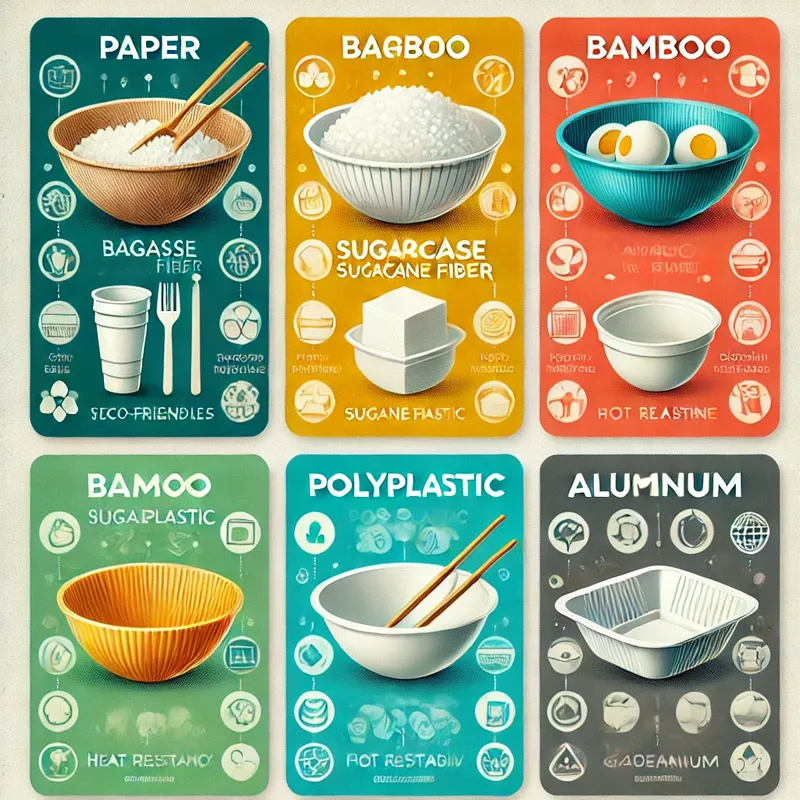
The main disposable bowl materials include standard paper, kraft paper, bamboo paper, cupstock paper, aluminum-laminated paper, sugarcane bagasse, bamboo fiber, palm leaf, wood, PLA, cornstarch-based polymers, PP, PET, polystyrene foam, and aluminum.
Best use match: paper and kraft bowls are strong for branding and light meals; bagasse works well for hot foods and takeaway meals; PLA is best for cold foods; cornstarch-based bowls depend on formula and certification; PP works for heat-resistant plastic applications; PET is mainly used for clear cold-food packaging; aluminum is useful for oven-ready meals but not microwave use.
Buyer note: Biodegradable, compostable, recyclable, microwave-safe, and PFAS-free are product-level claims. Buyers should verify coating type, material formula, food-contact reports, compostability certification, heat resistance, lid fit, and local disposal infrastructure before bulk ordering.
1. Paper-Based Bowls
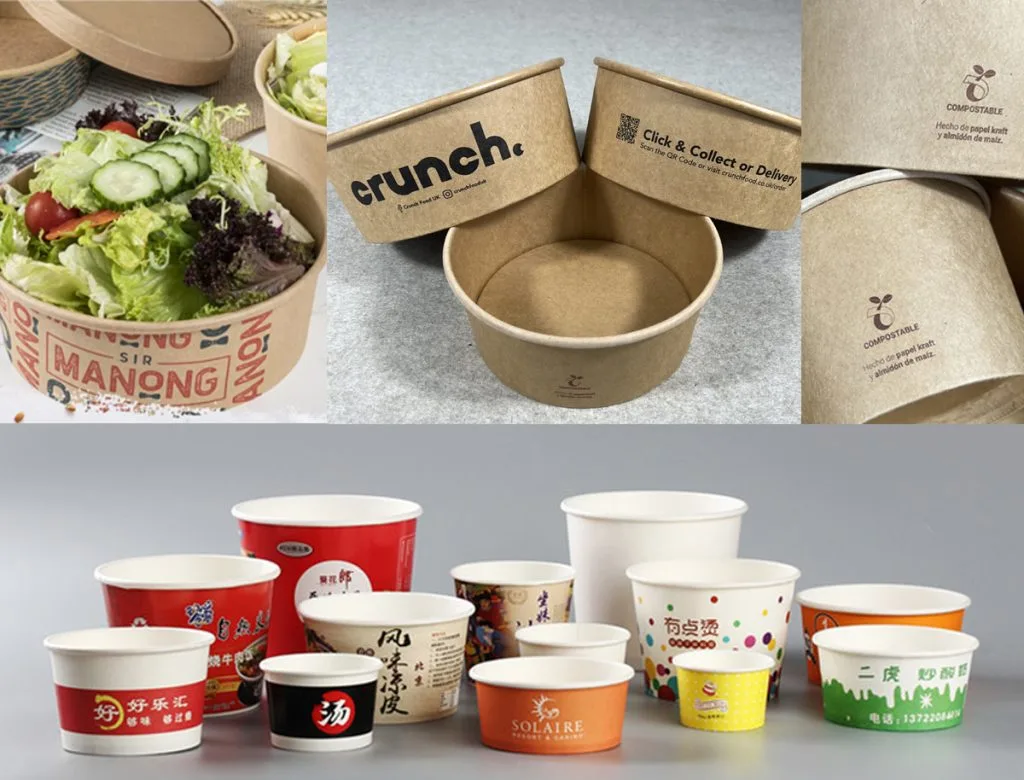
Paper-based disposable bowls are among the most common types used in foodservice. They are lightweight, cost-effective, printable, and widely available. Within this category, there are several types of paper bowls, each with different strengths and limitations.
1.1 Standard Paper Bowls
Standard paper bowls are usually made from food-grade paperboard and often coated to improve moisture resistance. The coating allows the bowl to hold foods such as soup, chili, salad, noodles, ice cream, or saucy meals. However, the environmental profile depends heavily on the liner. PE-coated, PLA-coated, and water-based coated paper bowls have different recycling and composting pathways.
Pros:
- Inexpensive and widely available
- Lightweight and easy to stack
- Customizable with printing for branding purposes
- Suitable for salads, snacks, desserts, and selected hot foods depending on coating and paperboard thickness
Cons:
- Plastic coating may complicate recycling or composting
- Not all paper bowls are compostable, even if the base paper is biodegradable
- Durability under heat, oil, or moisture depends on the liner and structure
1.2 Kraft Paper Bowls
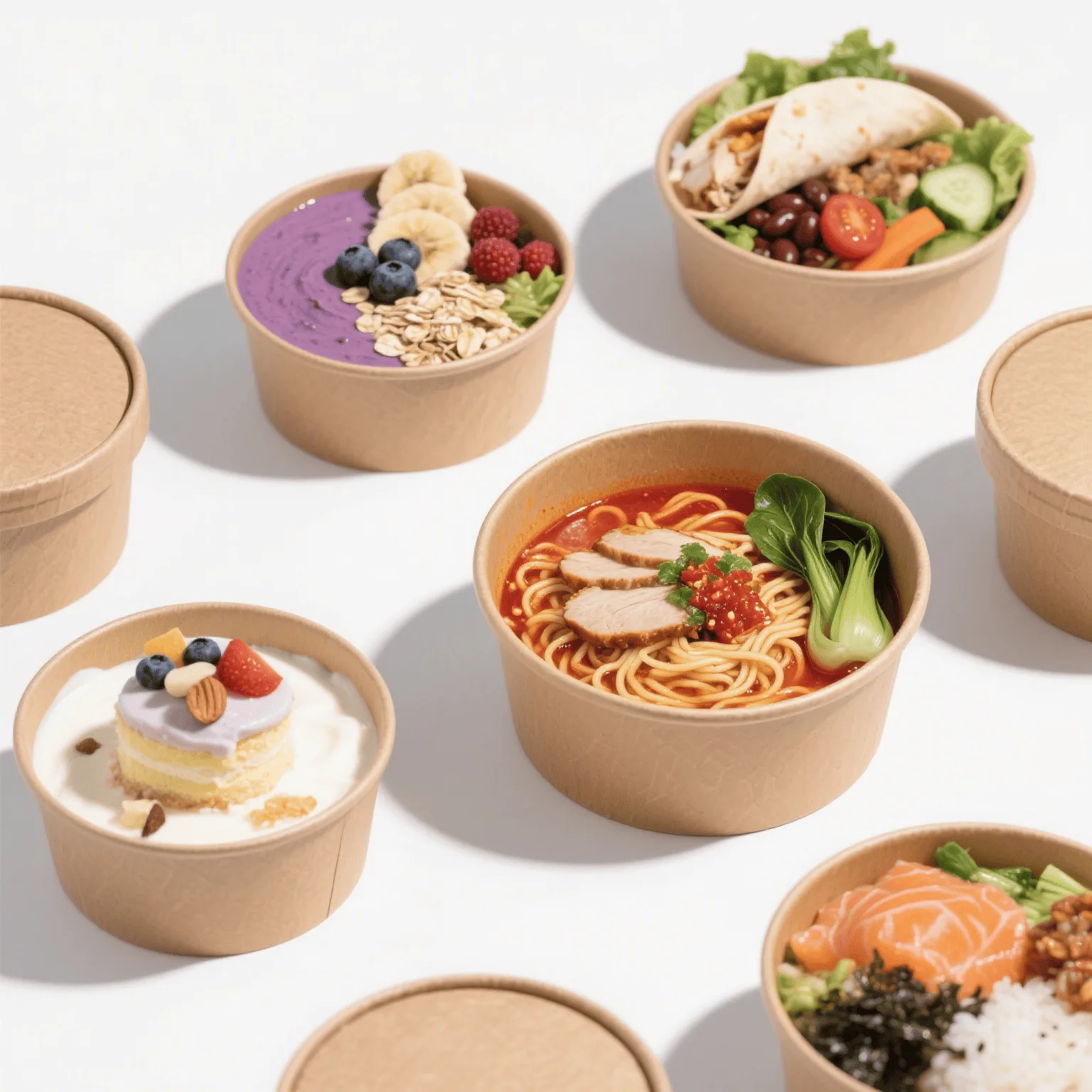
Kraft paper is made from strong paper pulp and is known for its natural brown appearance, strength, and brand-friendly texture. Kraft paper bowls are commonly used for salads, rice bowls, noodles, poke, pasta, soups, and takeaway meals. Their environmental impact depends on coating type, food contamination, and local waste-management systems.
Pros:
- Durable and tear-resistant
- Natural appearance suitable for eco-focused branding
- Good for heavier foods when paired with the right coating and lid
- Strong surface for custom printing and private-label packaging
Cons:
- Usually requires PE, PLA, or water-based coating to hold liquids
- Recyclability or compostability depends on coating and local acceptance
- May cost more than standard white paper bowls
1.3 Bamboo Paper Bowls
Bamboo paper is made from bamboo fibers and is often positioned as a renewable fiber alternative to conventional wood-pulp paper. Bamboo grows quickly and can be used in paper-based packaging, including bowls, cups, and food containers. Bamboo paper bowls are often used in environmentally conscious settings where buyers want a renewable material story.
Pros:
- Renewable fiber source
- Durable and sturdy when properly processed
- Can support compostable or recyclable packaging programs depending on coating and certification
Cons:
- Can be more expensive than regular paper bowls
- Availability may be limited in some markets
- Environmental benefit depends on sourcing, processing, coating, and transport
1.4 Cupstock Paper Bowls
Cupstock paper is a type of paperboard designed for liquid-holding applications. It is commonly used for coffee cups, soup bowls, ice cream containers, and takeaway food bowls. Cupstock bowls are often lined with PE, PLA, or water-based coatings. PLA-lined cupstock can be compostable under industrial composting conditions when certified, but it should not be assumed to be home-compostable.
Pros:
- Smooth surface suitable for high-quality printing
- Strong and reliable for holding liquids when properly coated
- Useful for soup, ice cream, porridge, coffee, and ready-to-eat meals
- Can support compostable packaging programs if the finished product is certified
Cons:
- Plastic or bioplastic lining complicates recycling and composting
- Not every PLA-lined product is accepted by composting facilities
- Less fiber-based than molded pulp alternatives such as bagasse
1.5 Paper Laminated with Aluminum Foil
Paper laminated with aluminum foil provides strong insulation, grease resistance, and moisture protection. These bowls can be useful for certain hot or oily foods. However, the mixed-material structure makes recycling and composting difficult in many systems.
Pros:
- Excellent heat retention and moisture resistance
- Useful for hot and greasy foods
- Good insulation for temperature-sensitive meals
Cons:
- Mixed paper-and-aluminum structure can make recycling difficult
- Not compostable due to the laminated material structure
- Higher cost due to additional processing
2. Plant Fiber Bowls
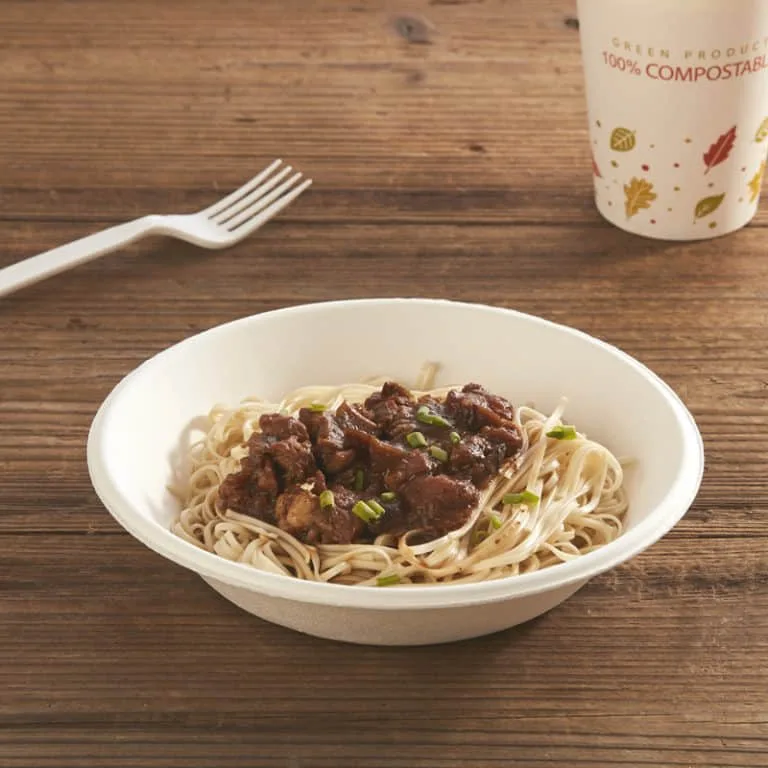
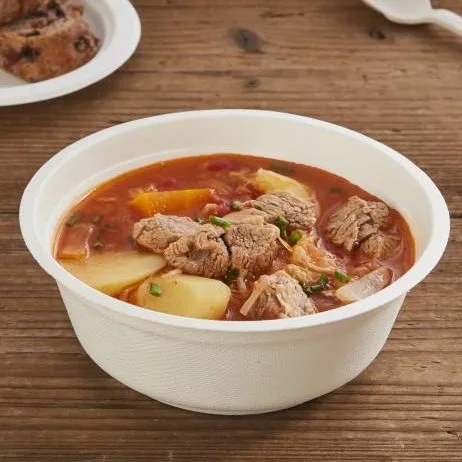
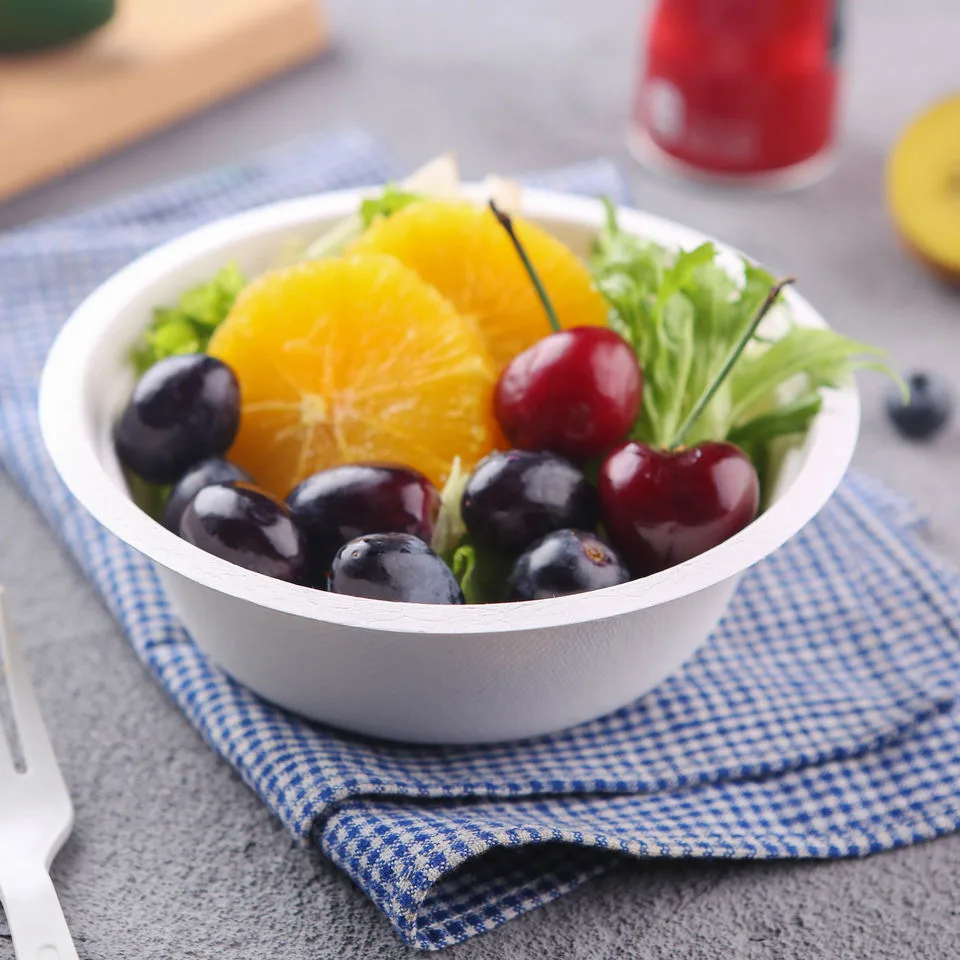
Plant fiber bowls are made from renewable plant materials such as sugarcane bagasse, bamboo, palm leaves, and wood fiber. These bowls are gaining popularity because they provide a natural appearance and can support compostable packaging programs when the finished product is properly designed and certified.
 |  |  |
2.1 Bagasse Bowls (Sugarcane Fiber)
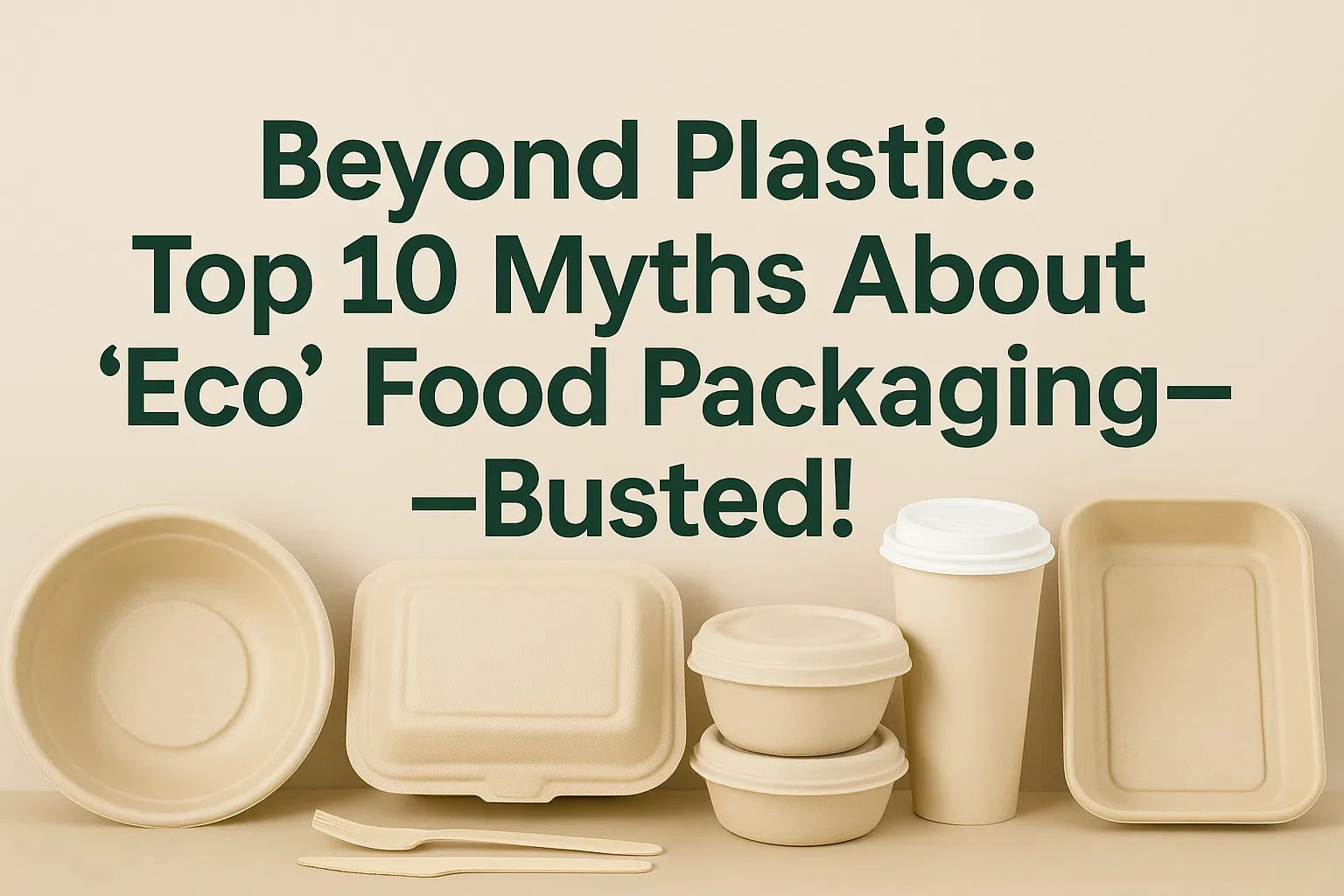
Bagasse is the fibrous residue left after extracting juice from sugarcane. It can be pulped and molded into disposable bowls, plates, trays, and containers. Bagasse bowls are widely used for hot foods, salads, soups, rice bowls, noodles, and takeaway meals. They can be compostable and biodegradable when the finished product is properly formulated, certified, and collected through a suitable composting pathway.
Pros:
- Made from sugarcane fiber, an agricultural byproduct
- Sturdy and suitable for many hot and cold food applications
- Often microwave-suitable when confirmed by supplier guidance and item-specific testing
- Natural molded-fiber appearance supports sustainable brand positioning
- Can support compostable packaging programs when certified
Cons:
- Can soften if exposed to very wet or oily foods for extended periods
- PFAS-free status should be verified for regulated markets
- Slightly more expensive than basic paper or foam alternatives
- Compostability depends on local collection and composting infrastructure
2.2 Bamboo Fiber Bowls
Bamboo fiber is made from the pulp of bamboo plants. It can be strong and durable, making it suitable for certain hot and cold food applications. Bamboo fiber bowls are often used for upscale events or as an alternative to plastic containers, although availability and cost can vary by region.
Pros:
- Renewable fiber source
- Strong and durable when properly manufactured
- Can be biodegradable or compostable depending on formula and certification
Cons:
- More expensive than paper or bagasse bowls
- Can be harder to source than mainstream materials
- Environmental performance depends on processing, additives, and shipping distance
2.3 Palm Leaf Bowls
Palm leaf bowls are made from naturally fallen palm leaves that are cleaned, heat-pressed, and shaped into bowls or plates. They offer a premium, natural appearance and are often used for weddings, events, buffets, and upscale eco-catering.
Pros:
- Made from fallen leaves rather than freshly cut trees
- Naturally strong and attractive
- Suitable for dry, semi-wet, hot, and cold foods depending on design
- Can be compostable when uncoated and accepted by local composting systems
Cons:
- Limited availability in some regions
- Relatively high cost compared with paper bowls
- Shape, color, and texture may vary naturally
2.4 Wood Bowls
Wooden disposable bowls are typically made from thin wooden veneers or molded wood fiber. They offer a rustic look and are often used where a natural presentation is desired.
Pros:
- Natural appearance for premium events
- Strong enough for many dry or semi-wet foods
- Can be biodegradable depending on treatment and coating
Cons:
- Limited availability and higher cost
- Not ideal for very wet or liquid-heavy foods
- Compostability depends on coating, adhesive, and local acceptance
3. Biodegradable Polymer Bowls
Biodegradable polymer bowls are made from plant-based or compostable polymers such as PLA, CPLA, or starch-based blends. They are designed to offer some of the performance advantages of traditional plastic while supporting compostability or lower-fossil-material goals under specific conditions.
3.1 Polylactic Acid (PLA)
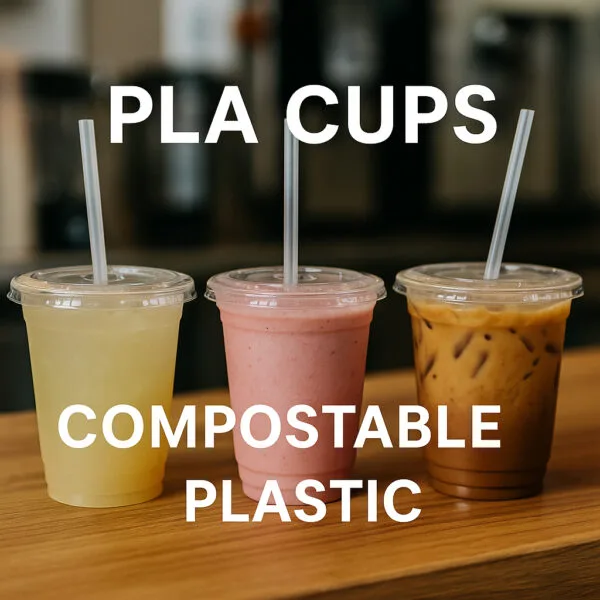
PLA is a bioplastic made from fermented plant sugars, often derived from corn, sugarcane, or other carbohydrate sources. PLA bowls are often used for cold foods such as salads, desserts, fruit, yogurt, and smoothie bowls. PLA is generally suitable for industrial composting when certified, but it does not usually break down properly in home compost bins or natural environments.
Pros:
- Made from renewable feedstocks
- Clear and rigid, suitable for cold-food presentation
- Can be industrially compostable when certified
- Performs similarly to conventional plastic for cold applications
Cons:
- Not suitable for hot foods, microwaving, or high-temperature storage
- Requires industrial composting to break down properly
- Higher cost than commodity plastic bowls
- May deform during hot transport or storage if not protected
3.2 Cornstarch-Based Polymers
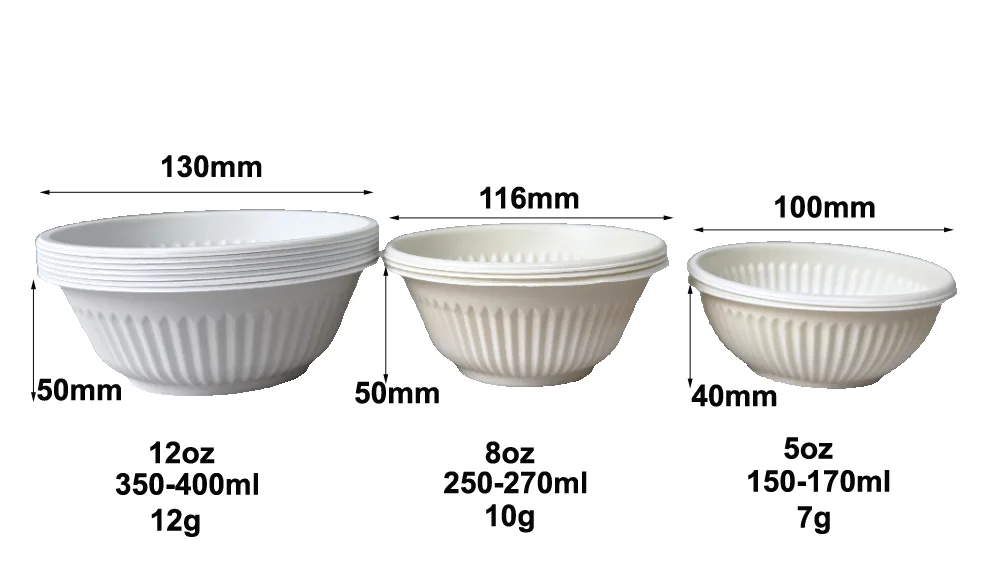
Cornstarch-based polymers are made from starch-based or compostable biopolymer blends. Like PLA and cornstarch bowls, their final performance depends on material formula, product thickness, additives, heat resistance, and certification. Buyers should not assume all cornstarch products are home-compostable or suitable for hot food unless the product has supporting documentation.
Pros:
- Made from renewable plant starches
- Can support compostable packaging programs when certified
- Some formulas can handle warmer foods better than standard PLA
- Useful for bento-style containers, bowls, trays, and cutlery
Cons:
- Performance varies significantly by formula
- May still require industrial composting facilities
- Heat resistance, rigidity, and durability should be verified by product testing
4. Traditional Plastic Bowls
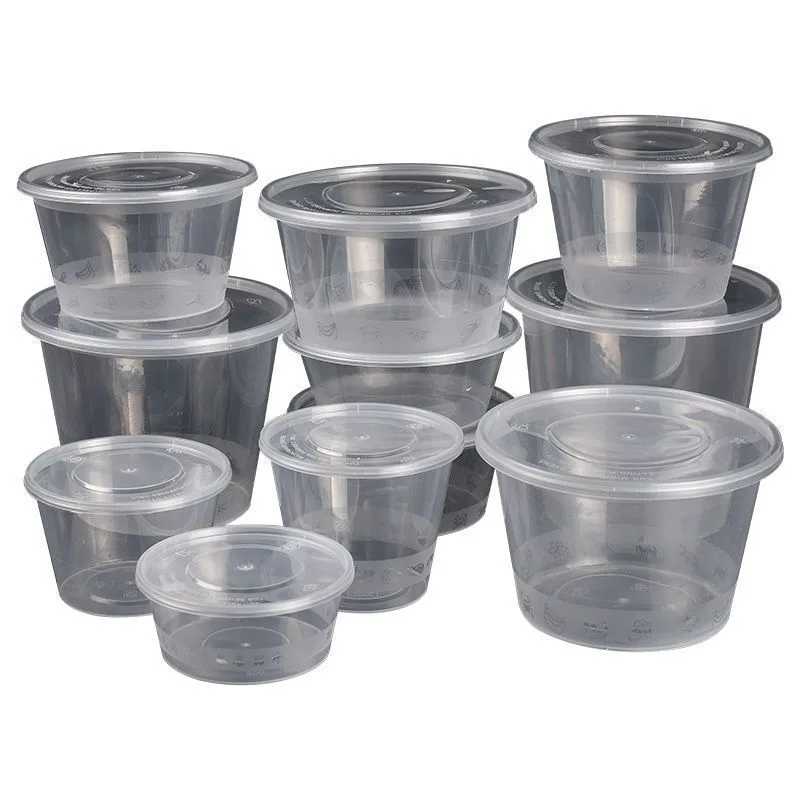
Traditional plastic bowls are commonly made from polystyrene foam, polypropylene (PP), or PET. They are inexpensive, durable, and familiar to foodservice operators. However, they are usually fossil-based and not biodegradable, which creates long-term waste and regulatory pressure in many markets.
4.1 Polystyrene Foam
Polystyrene foam bowls, often referred to as foam bowls, are lightweight and provide good insulation for hot foods. However, polystyrene foam is not biodegradable, can be difficult to recycle in many regions, and is increasingly restricted due to environmental concerns.
Pros:
- Lightweight and insulating
- Low cost and widely available
- Suitable for short-term hot food service
Cons:
- Non-biodegradable and difficult to recycle in many systems
- Contributes to plastic pollution and litter
- Banned or restricted in many areas
- Weak sustainability image for modern food brands
4.2 Polypropylene (PP) and PET Plastic Bowls
Polypropylene (PP) and PET are two common plastics used in disposable food packaging. PP is often used for hot food containers because of better heat resistance, while PET is commonly used for clear cold-food packaging and salad bowls. Both materials can be recyclable where collection and sorting systems exist, but they are not biodegradable.
Pros:
- Durable and moisture-resistant
- PP can be suitable for selected hot food applications
- PET provides strong clarity for cold-food display
- Can be recyclable in markets with suitable recycling systems
Cons:
- Non-biodegradable and contributes to long-term plastic waste
- Recycling depends on local collection, sorting, and contamination levels
- Less aligned with plastic-reduction strategies than fiber-based or compostable alternatives
5. Aluminum Bowls
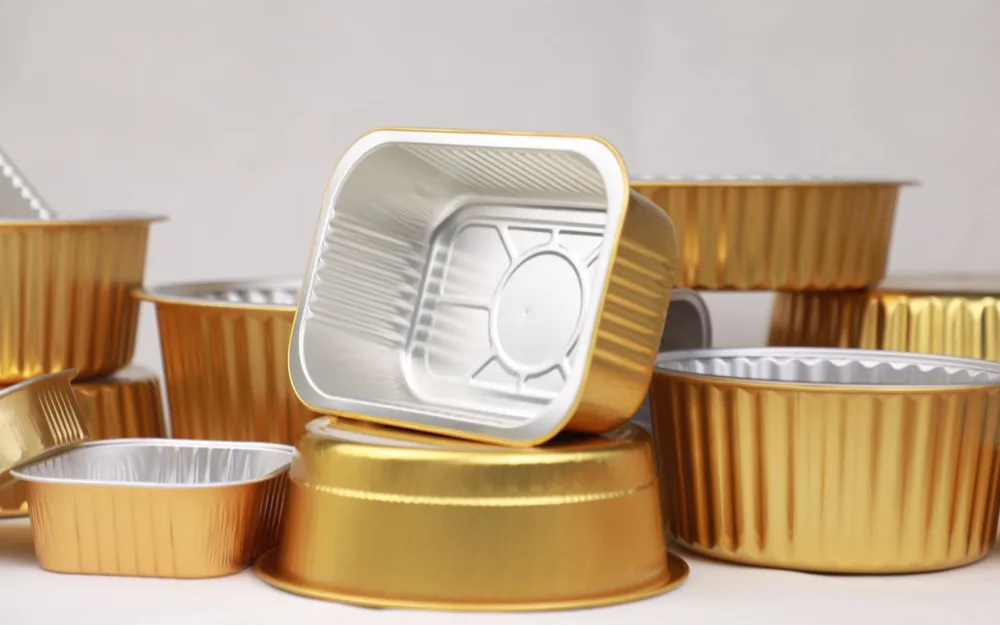
Aluminum bowls are made from thin sheets of aluminum foil. They are commonly used for hot, greasy, or oven-ready foods and are known for strong heat conductivity. Aluminum is recyclable in principle, but its environmental benefit depends on proper collection, cleaning, and recycling infrastructure.
Pros:
- High heat resistance and conductivity
- Can be used in ovens or grills
- Recyclable if clean and accepted by local recycling systems
- Useful for casseroles, baked meals, BBQ sides, and oily foods
Cons:
- Not suitable for microwaving
- More expensive than basic paper or plastic bowls
- Not biodegradable, although recyclable
- Food contamination can reduce recycling acceptance
6. Comparison of Disposable Bowl Materials
Below is a comparison table highlighting the different materials discussed, along with their typical uses, advantages, and limitations. The table should be used as a practical sourcing reference. Final performance depends on product thickness, coating, lid design, certification, and real food testing.
| Material | Common Uses | Pros | Cons / Buyer Notes |
|---|---|---|---|
| Standard Paper | Soups, salads, snacks, desserts | Lightweight, low cost, printable | Compostability depends on coating; weak if paperboard or liner is too thin |
| Kraft Paper | Hearty meals, salads, rice bowls, soup containers | Strong, natural look, good for branding | Usually needs coating for wet foods; disposal depends on coating and contamination |
| Bamboo Paper | Hot and cold foods, eco-focused foodservice | Renewable fiber source, sturdy | Higher cost; environmental impact depends on processing and transport |
| Bagasse | Hot foods, soups, rice bowls, takeout meals | Plant fiber, rigid, natural appearance, compostability potential | PFAS status, oil resistance, and compostability certification should be verified |
| PLA | Cold foods, salads, desserts, clear bowls | Plant-based bioplastic, clear, industrially compostable when certified | Heat-sensitive and generally requires industrial composting |
| Cornstarch-Based Polymer | Bento bowls, trays, takeaway containers | Plant-based material option, formula-dependent heat performance | Certification and heat resistance vary by supplier and product formula |
| PP Plastic | Hot food containers, soup bowls, takeout bowls | Durable, heat-resistant, moisture-resistant | Fossil-based and non-biodegradable; recycling depends on local systems |
| PET Plastic | Cold salads, desserts, clear display bowls | Clear, rigid, strong presentation | Not suitable for hot foods; non-biodegradable |
| Aluminum | Hot meals, casseroles, oven-ready foods | High heat resistance, recyclable if clean | Not microwave-safe and not biodegradable |
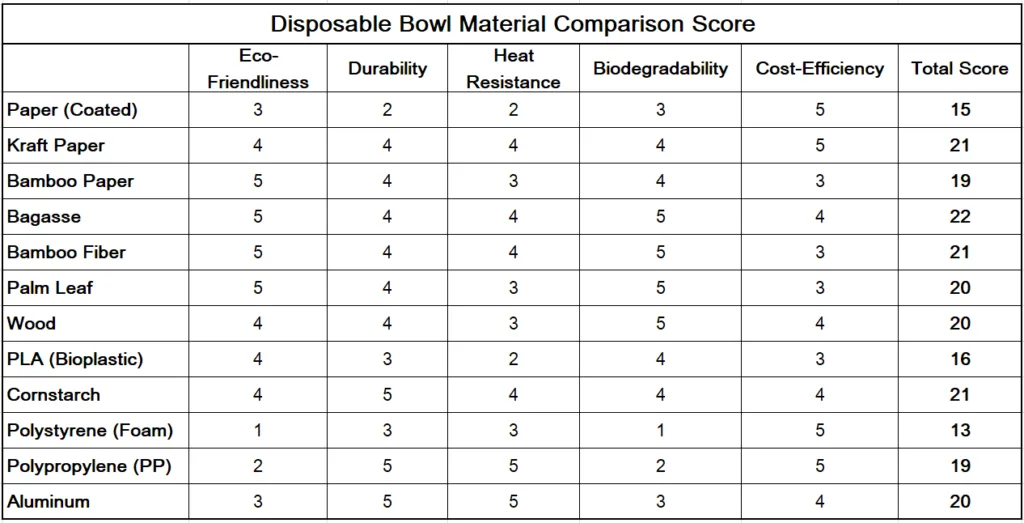
As the table shows, there is no single best disposable bowl material for every foodservice business. The best choice depends on priorities: heat performance, food type, cost, sustainability, branding, local disposal rules, and compliance documentation. For example, if you are serving an ice-cold smoothie bowl and need a clear container, PLA or PET may be considered—PLA if certified compostability is a priority, PET if recyclability and clarity are more important. If you are serving hot soup and want to avoid conventional plastic, a bagasse bowl can be a strong option when product tests support the application. For oven-ready takeaway meals, a kraft paper bowl or aluminum bowl may be more suitable depending on food type and heating method.
7. Popular Sizes of Disposable Bowls
Disposable bowls come in a range of sizes, typically measured in ounces. Choosing the right size depends on the portion size, food density, lid requirement, and whether the product is used for dine-in, takeout, delivery, catering, or retail display.
- 6–8 oz: Small bowls used for side dishes, dips, toppings, desserts, sauces, small soups, and tasting portions.
- 12–16 oz: Medium bowls suitable for standard servings of soup, salad, fruit, rice, yogurt, or side meals.
- 24 oz: Larger bowls ideal for pasta, curry, grain bowls, poke, noodles, salads, or generous single-portion meals.
- 32 oz and larger: Used for family-sized portions, large salads, meal prep, sharing bowls, or takeout meals requiring more capacity.
For B2B buyers, size selection should also include lid fit, carton quantity, stacking height, shelf space, and container loading efficiency.
8. Scientific and Market Considerations
Scientific and market research consistently show that disposable bowl materials should not be evaluated by one factor alone. A low-cost material may perform well operationally but create long-term waste challenges. A compostable material may offer environmental advantages but only if it enters the right composting system. A recyclable material may be useful only when clean collection and sorting are available.
- Polystyrene foam: Lightweight and insulating, but non-biodegradable and increasingly restricted in many regions.
- PLA and compostable bioplastics: Can support compostable packaging programs, but usually require industrial composting conditions and should be used within their temperature limits.
- Plant fiber bowls: Materials such as bagasse and bamboo fiber can support plastic-reduction strategies, but buyers should verify coating, PFAS status, food-contact safety, and compostability certification.
- Paper bowls: Strong for branding and lightweight service, but their recycling or composting pathway depends on coating type and food contamination.
- Aluminum bowls: Useful for oven-ready and hot foods, but they are not biodegradable and require proper recycling to deliver environmental value.
The market for biodegradable and compostable packaging continues to grow as more foodservice operators respond to plastic restrictions, ESG commitments, and consumer demand. For sourcing decisions, buyers should focus less on generic “green” claims and more on verified performance, certification, and practical disposal pathways.
9. Buyer Checklist: How to Choose Disposable Bowls for Foodservice
For restaurants, distributors, supermarkets, cafés, caterers, and packaging importers, disposable bowl selection should be based on product performance and documentation, not only price or appearance.
| Buyer Checkpoint | Why It Matters | What to Request |
|---|---|---|
| Food type | Soup, salad, curry, rice, oily foods, desserts, and cold foods stress packaging differently. | Real food samples and application testing. |
| Heat resistance | Hot food, microwave reheating, and oven use require different material choices. | Temperature guidance, microwave instructions, and product test reports. |
| Coating or barrier type | Paper and fiber bowls often need coatings for oil and water resistance. | PE, PLA, water-based coating, PFAS-free statement, or barrier test data. |
| Food-contact safety | Bowls must be safe for direct contact with food in the target market. | FDA, LFGB, EU food-contact, SGS, or relevant third-party reports. |
| Compostability or recyclability | Environmental claims must match actual disposal systems. | EN13432, ASTM D6400, BPI, TÜV, OK Compost, recycling guidance, or local compliance proof. |
| Lid fit | Delivery leakage often comes from poor lid matching rather than bowl weakness. | Bowl and lid samples tested together. |
Conclusion
When choosing disposable bowls, it is essential to consider material, intended use, food type, heat requirements, environmental impact, and disposal infrastructure. Materials such as bagasse, bamboo fiber, kraft paper, and PLA can support more sustainable packaging strategies when they are properly designed, tested, and matched to the correct use case. Traditional plastics such as polystyrene, PP, and PET offer durability and convenience, but their environmental impact and regulatory pressure cannot be ignored.
The most responsible choice is not always the newest material or the lowest-cost product. It is the bowl that performs safely with the food, supports your brand and operational needs, and has a realistic end-of-life pathway. For a more sustainable foodservice strategy, buyers should prioritize verified plant fiber materials, certified compostable products where appropriate, recyclable systems where collection exists, and supplier documentation that supports the claim.
FAQ
1. What are disposable bowls made of?
Disposable bowls are usually made from paper, kraft paper, bagasse, bamboo fiber, palm leaf, wood, PLA, cornstarch-based polymers, PP, PET, polystyrene foam, or aluminum. Each material has different performance, cost, and environmental characteristics.
2. Are bagasse bowls better than plastic bowls?
Bagasse bowls can be a better option for many hot food and takeaway applications because they are made from plant fiber and can support compostable packaging programs when certified. However, buyers should verify PFAS status, food-contact safety, oil resistance, and composting access before making claims.
3. Can I microwave disposable bowls?
Some disposable bowls are microwave-suitable, especially selected bagasse bowls and microwave-rated paper bowls. PLA bowls, PET bowls, foam bowls, and aluminum bowls should not be microwaved unless the supplier clearly confirms safe microwave use. Always check product instructions.
4. Which disposable bowl is best for soup?
Thick paper soup bowls with suitable coatings, kraft bowls with lids, and bagasse bowls are common choices for soup. The best option depends on soup temperature, holding time, oil content, lid fit, and delivery requirements.
5. Are compostable bowls safe for the environment?
Compostable bowls can reduce long-term plastic waste when they are properly certified and collected through suitable composting systems. Without the right disposal pathway, they may not deliver their full environmental benefit.
6. What should B2B buyers check before ordering disposable bowls?
B2B buyers should check material type, coating, food-contact reports, heat resistance, PFAS status, compostability or recyclability documents, lid compatibility, carton packing, MOQ, and real food performance.
References
- U.S. Environmental Protection Agency (EPA)
Sustainable Management of Materials – Plastics
https://www.epa.gov/smm/sustainable-management-materials-plastics - European Bioplastics
Bioplastics market data, compostability, and bio-based plastics resources
https://www.european-bioplastics.org/ - Biodegradable Products Institute (BPI)
Certified compostable products and packaging verification
https://bpiworld.org/ - ASTM International
ASTM D6400 compostable plastics standard information
https://www.astm.org/ - TÜV Austria
OK compost HOME and OK compost INDUSTRIAL certification guidance
https://www.tuv-at.be/ - U.S. Food & Drug Administration (FDA)
Food packaging and food-contact substance guidance
https://www.fda.gov/food/food-ingredients-packaging/food-packaging-other-substances-come-contact-food-information-consumers - Bioleader®
Disposable bowls, paper bowls, bagasse bowls, cornstarch bowls, kraft paper bowls, food-contact testing, and export packaging documentation.

One Response
Short read, big impact. Now I know the difference between paper bowls and bagasse bowls!