As global awareness of plastic pollution and sustainability surges, the demand for biodegradable food containers has skyrocketed. From eco-conscious consumers to multinational food chains, the urgency to replace plastic with compostable, zero-waste, and plant-based alternatives has never been stronger. Businesses now seek not just packaging, but solutions that align with environmental values and local compliance standards. This blog explores the top 10 leading manufacturers worldwide in 2025, analyzing their strengths, specialties, and what sets them apart in the global shift toward eco-friendly food containers.

Manufacturer Comparison Table
| Company Name | Year Founded | Headquarters | Key Products |
|---|---|---|---|
| Earthpack | 2002 | USA | Compostable clamshells, trays, paper food boxes |
| Bioleader® | 2012 | China | Bagasse food containers, cutlery,cups, bowls, molded pulp |
| Vegware | 2006 | UK | Plant-based foodservice packaging |
| Eco-Products | 1990 | USA | Compostable food containers, cutlery, trays |
| GreenGood | 2008 | Singapore | Biodegradable containers and packaging solutions |
| Huhtamaki | 1920 | Finland | Molded fiber containers, paper-based packaging |
| Zhongxin GreenPack | 2014 | China | Sugarcane food containers, cornstarch cutlery |
| Good Start Packaging | 2010 | USA | Wholesale biodegradable food containers |
| Yash Papers | 1981 | India | Sustainable molded tableware and packaging |
| Ecolution | 2016 | China | Eco-friendly, custom bagasse products |
1. Earthpack (USA)
Overview: A pioneer in eco-packaging for food and retail, Earthpack focuses on sustainable alternatives using FSC-certified paper and compostable linings.
Strengths:
Excellent customer service in North America.
Custom printing capabilities.
Certified compostable materials.
Limitations:
Slightly higher pricing for SMEs.
Less scalable for large-volume international exports.
2. Bioleader® (China)
Overview: As a top-tier manufacturer and innovator in bagasse food containers, Bioleader® sets the standard in Asia and exports globally. Specializing in sugarcane-based, plant-fiber molded pulp containers, Bioleader® combines sustainability with scalable production.
Founded: 2012
Headquarters: Xiamen, China
Product Range:
Sugarcane bagasse clamshells and trays
PLA and cornstarch cups and cutlery
Molded pulp trays for takeout and supermarket packaging
Innovations:
PFAS-free coating technology
Microwave-safe and freezer-safe testing certifications
Home and industrial compostability testing (per EN13432, ASTM D6400)
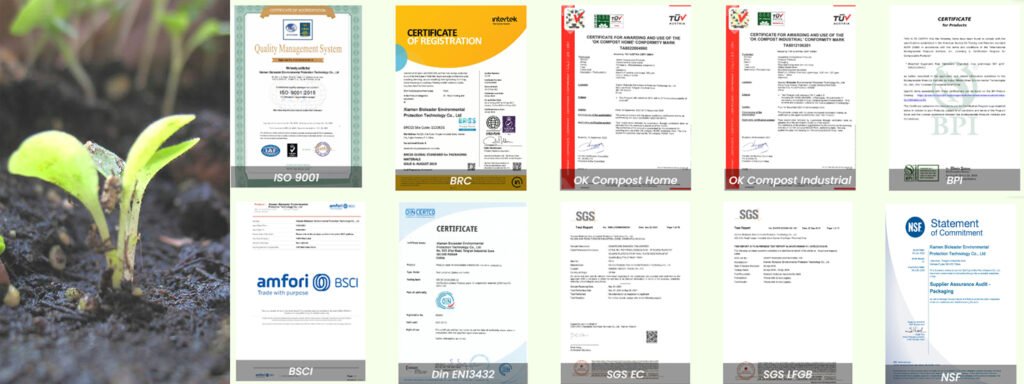
Certifications:
ISO 9001, FDA, SGS, OK Compost, BPI, LFGB
Strengths:
Competitive pricing for global wholesale.
Flexible customization (OEM/ODM).
Advanced automated pulp molding production lines.
Bulk capacity: 100+ containers/month.
Challenges:
Primarily B2B focused; limited DTC visibility.
Contact:
📍 Address: No.39 Xinglong Road,Xiamen, Fujian,China
📞 Phone: +86 – 15980856610
📧 Email: [email protected]
🌐 Website: www.bioleaderpack.com
3. Vegware (UK)
Overview: Vegware is internationally recognized for plant-based compostable packaging, especially popular in the UK education and healthcare sectors.
Founded: 2006
Key Products: Compostable sandwich wedges, soup containers, food trays
Strengths:
Strong certifications and local supply chains.
Educational resources on composting.
Limitations:
Limited manufacturing volume.
Regional distribution constraints outside Europe.
4. Eco-Products (USA)
Overview: A subsidiary of Novolex, Eco-Products is a legacy player offering sustainable food containers and compostable cutlery.
Founded: 1990
Headquarters: Colorado, USA
Highlights:
Strong presence in North American foodservice chains.
Use of renewable energy in some facilities.
Limitations:
Slower lead times for international orders.
High minimum order quantities (MOQs).
5. GreenGood (Singapore)
Overview: Known for its innovation in zero-waste food containers, GreenGood focuses on Asia-Pacific markets with molded bagasse and bamboo-based trays.
Founded: 2008
Strengths:
Regional logistics advantage in Southeast Asia.
Supplies both retail and commercial clients.
Weaknesses:
Smaller product catalog compared to top global players.
6. Huhtamaki (Finland)
Overview: A global packaging giant, Huhtamaki produces molded pulp food containers and sustainable paper products for major international chains.
Founded: 1920
Strengths:
Cutting-edge R&D and sustainable innovation labs.
Global presence and strong logistics.
Weaknesses:
Higher pricing structure.
Limited customization for small buyers.
7. Zhongxin GreenPack (China)
Overview: A fast-growing Chinese supplier offering sugarcane food containers and cornstarch tableware, certified by BPI and TÜV Austria.
Founded: 2014
Location: Guangdong, China
Strengths:
Diverse catalog of biodegradable and compostable packaging.
Factory-direct pricing.
Weaknesses:
Limited presence in Western markets.
Basic branding and website experience.
8. Good Start Packaging (USA)
Overview: A dedicated supplier of wholesale biodegradable food containers in the U.S., catering especially to small restaurants and food trucks.
Founded: 2010
Strengths:
No MOQs for many items.
Excellent U.S. warehousing and fast delivery.
Challenges:
Focused primarily on North America.
Relies on third-party manufacturers for some lines.
9. Yash Papers (India)
Overview: A veteran paper manufacturer turned sustainability leader. Offers molded pulp packaging from agricultural residues.
Founded: 1981
Location: Faizabad, India
Highlights:
Proprietary Chuk® tableware line.
Award-winning closed-loop production model.
Limitations:
Less variety in container shapes.
Slower exports to North America.
10. Ecolution (China)
Overview: Specializes in custom bagasse packaging and molded pulp containers, primarily for OEM international brands.
Founded: 2016
Strengths:
Strong R&D department.
Works with eco start-ups on private labeling.
Challenges:
Focus on B2B clients; minimal own-brand development.
Less recognized compared to legacy players.
FAQ
1. What are biodegradable food containers made of?
They are typically made from renewable materials like bagasse (sugarcane fiber), cornstarch, molded pulp, or PLA (plant-based plastic).
2. How long do compostable food containers take to decompose?
Under industrial composting conditions, most containers decompose within 60–90 days. Home composting may take longer depending on temperature and humidity.
3. Are biodegradable containers safe for hot foods?
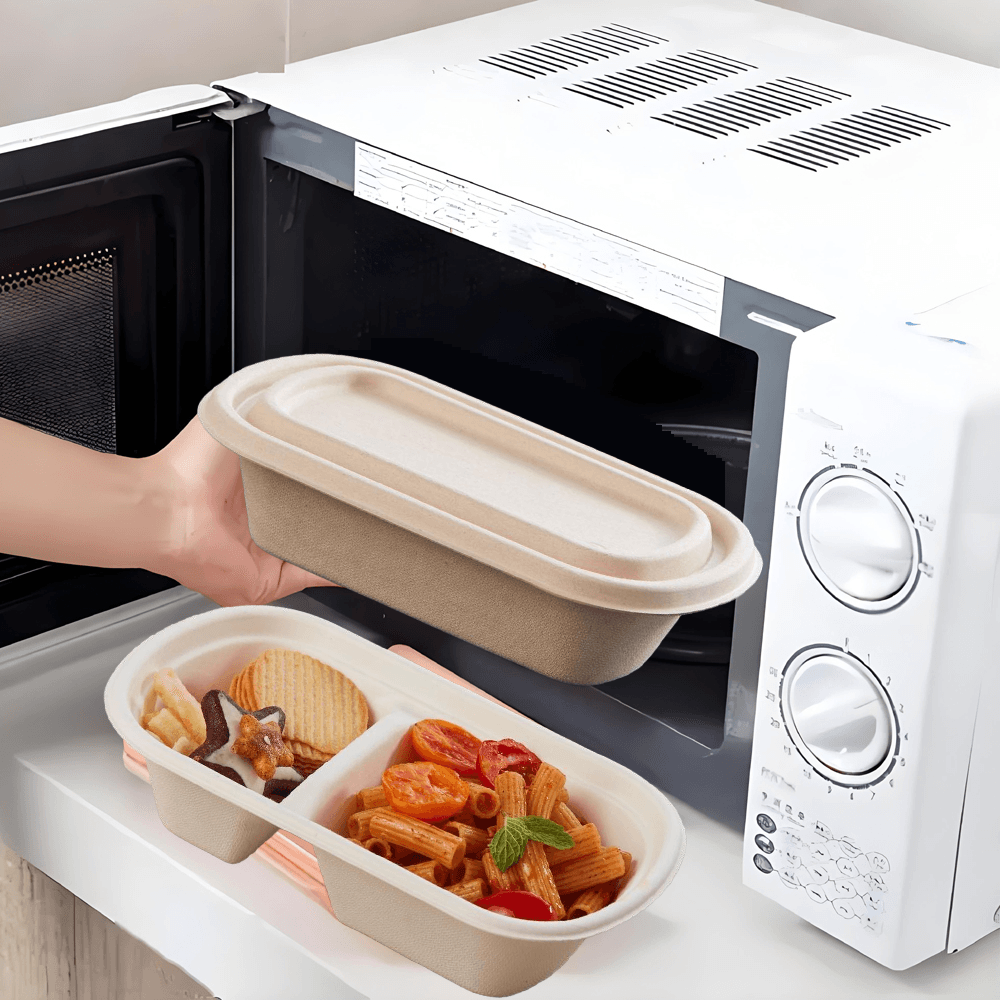
Yes, certified eco-friendly food containers are heat-resistant, microwave-safe, and leak-proof—suitable for soups, curries, and hot entrées.
4. Can businesses customize biodegradable food packaging?
Absolutely. Most top manufacturers, including Bioleader®, offer custom printing, embossing, and mold design services for branded packaging.
5. Are bagasse food containers better than plastic?
Yes. Bagasse containers are biodegradable, renewable, and free from toxic chemicals like BPA and PFAS—unlike most plastics which persist for centuries.
Conclusion
In a world battling plastic waste and ecological decline, biodegradable food containers have moved from trend to necessity. These top 10 manufacturers are not only responding to demand—they are driving innovation, building capacity, and setting global benchmarks in sustainable food packaging. Whether you’re a small food startup or a multinational restaurant chain, partnering with a certified, scalable, and eco-conscious supplier like Bioleader® ensures you’re not just packaging food—you’re packaging a better future.
References
U.S. Environmental Protection Agency (EPA). (2023). Facts and Figures about Materials, Waste and Recycling. https://www.epa.gov/facts-and-figures-about-materials-waste-and-recycling
European Bioplastics. (2024). Bioplastics Market Data 2024. https://www.european-bioplastics.org/market/
Wikipedia. (2024). Bagasse. https://en.wikipedia.org/wiki/Bagasse
ASTM International. (n.d.). ASTM D6400 – Standard Specification for Compostable Plastics. https://www.astm.org/d6400-23.html
CEN (European Committee for Standardization). (n.d.). EN 13432 – Requirements for Packaging Recoverable Through Composting and Biodegradation. https://www.cencenelec.eu/
Bioleader® Official Website. (2025). Certifications & Manufacturing Overview. https://www.bioleaderpack.com/about/
National Renewable Energy Laboratory (NREL). (2022). Lifecycle Assessment of Compostable Packaging. https://www.nrel.gov
Plastic Pollution Coalition. (2023). Compostable vs. Biodegradable: What’s the Real Difference? https://www.plasticpollutioncoalition.org
Food and Agriculture Organization of the United Nations (FAO). (2023). Agricultural Residues for Sustainable Packaging. https://www.fao.org
World Economic Forum (WEF). (2023). The Future of Packaging: How Businesses Are Moving Toward Zero-Waste. https://www.weforum.org