Introduction: Why PFAS-Free Packaging Is Reshaping Global Foodservice
For nearly two decades, PFAS chemicals—known as “forever chemicals”—enabled oil-resistant, leak-proof packaging across the foodservice industry. However, they also accumulated in the environment and human bloodstream, becoming a major public health concern.
By 2025, more than 40 countries have proposed or passed PFAS restrictions. Retail giants like Carrefour, Walmart, and Whole Foods now require verified PFAS-free packaging in their supply chains. As a result, brands, restaurants, and packaging buyers are facing a structural shift: PFAS-free must become the default, not the exception.
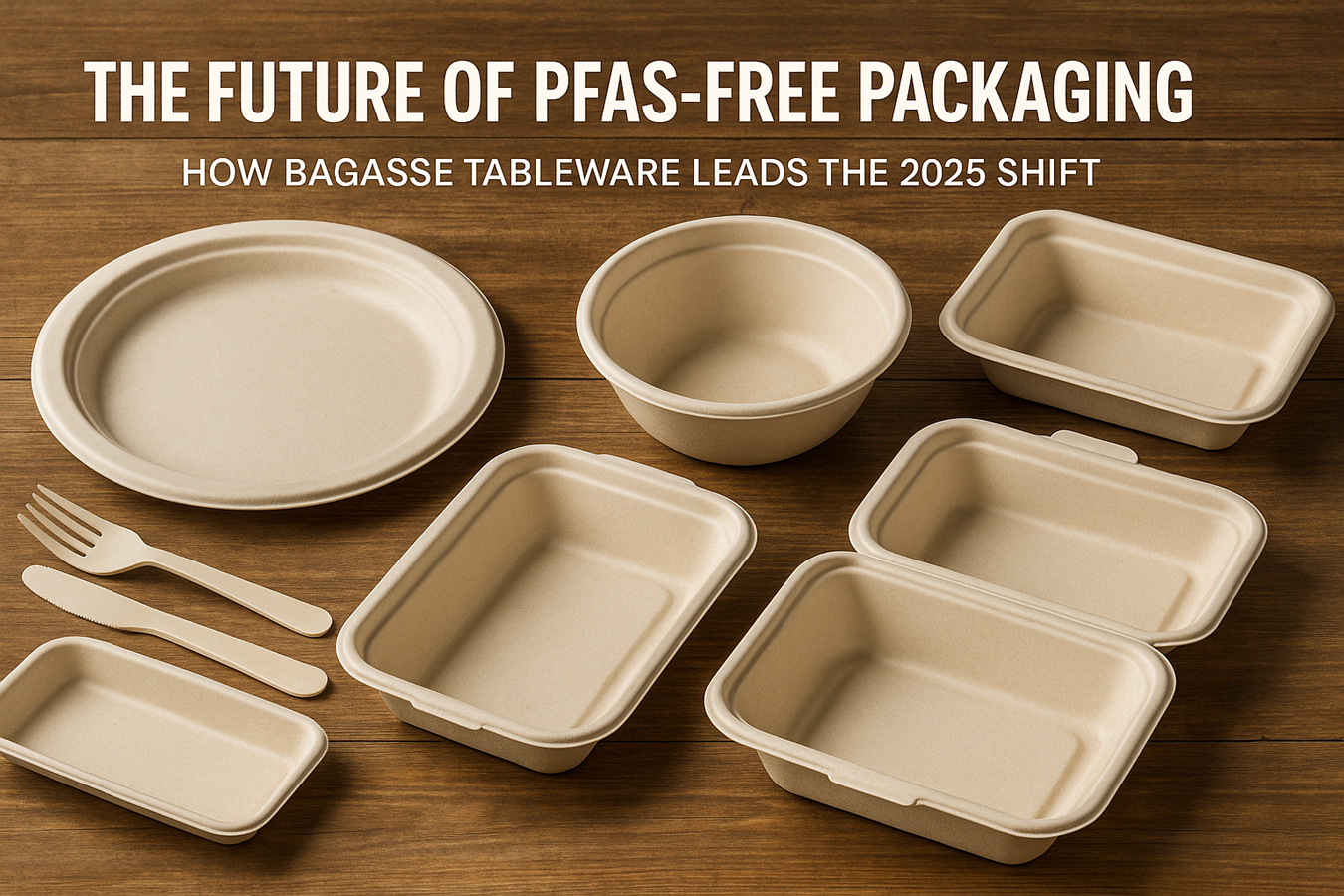
Among all available materials—bamboo fiber, wheat fiber, recycled pulp, coated paper—sugarcane bagasse stands out as the global leader. Its natural fiber matrix provides oil resistance and heat stability without chemical additives, making it the perfect solution for PFAS-free tableware.
What Exactly Is PFAS-Free Packaging?
PFAS (Per- and Polyfluoroalkyl Substances) are fluorinated compounds used to repel oil, grease, and water. While effective, their persistence is extremely high—PFAS do not degrade, accumulating in soil, water, and human tissue.
PFAS-Free Packaging Means:
No intentionally added PFAS
Total Fluorine (TF) test results below regulatory thresholds
Oil resistance achieved through natural or mechanical processes
Compliance with global bans and retailer requirements
PFAS-Free Verification Methods:
| Method | Purpose | Threshold |
|---|---|---|
| Total Fluorine Test (TF) | Checks overall fluorine presence | < 100 ppm typical limit |
| Targeted PFAS Analysis | Identifies specific PFAS compounds | “Non-detectable” required |
| Organic Fluorine Test (TOF) | More advanced detection | Used in EU & Japan |
Modern responsible suppliers provide full PFAS-Free documentation, including batch-level test reports.

Why Sugarcane Bagasse Leads the PFAS-Free Transition
Sugarcane bagasse—the fibrous residue left after extracting sugar—has become the most scalable, most compliant PFAS-free solution. Its structural composition naturally supports food packaging performance without chemical treatments.
(1) Natural Oil Resistance Without PFAS
Bagasse fibers bond tightly during pulping and molding. This natural fiber lattice reduces oil penetration, achieving Grade 5 oil-resistance levels in many tests.
(2) High Heat Resistance (Up to 120°C)
Unlike conventional paper-based packaging:
Bagasse can handle hot soups, fried foods, gravies
Suitable for microwave heating
Maintains rigidity even with oily foods
(3) Fully Compostable & Biodegradable
Bagasse decomposes:
45–90 days in industrial composting
90–180 days in home composting under warm, moist conditions
Leaves no harmful residue or microplastics
(4) Abundant Global Supply
Sugarcane is harvested in > 100 countries, making bagasse a low-cost, stable, scalable raw material.
(5) Compatible with PFAS-Free Regulations
Bagasse requires no fluorinated chemicals to perform well—making it inherently aligned with new laws.

Regulation-Backed Analysis
European Union (EU)
The 2025 PFAS Restriction Proposal aims for near-total removal in food-contact materials.
Retailers require TF < 100 ppm or PFAS “non-detectable”.
United States
Multiple states have passed PFAS bans:
California: PFAS-free for all food packaging
New York: Strict PFAS testing since 2023
Colorado, Vermont, Washington: Active bans
Large corporations have internal policies stricter than state laws.
Singapore & Southeast Asia
Singapore’s 2025 disposable packaging framework includes PFAS monitoring.
Malaysia, Philippines, Vietnam are developing similar compliance pathways.
GCC (UAE, Saudi Arabia, Qatar)
Rapid alignment with EU PFAS standards
Imported packaging must include test reports
Retailers & Food Chains
Walmart, Carrefour, Whole Foods, Costco—all require PFAS-free packaging from suppliers.
Conclusion: By 2025–2026, PFAS-free is not optional—it is the global standard.
PFAS-Free Material Science
A. Fiber Engineering Instead of Fluorochemistry
Bagasse relies on:
Pulp refining
Fiber supplementation
Mechanical densification
Mold heat-pressing
These steps increase barrier performance.
B. Water-Based Dispersion Coatings
Some suppliers add PFAS-free coatings made from:
Biopolymers
Starch derivatives
Natural waxes
Water-based emulsions
C. Multi-Layer Fiber Structures
Advanced bagasse products use:
Surface fiber tightening
Middle-layer bulk fibers for strength
Base-lamination for rigidity
This makes bagasse suitable for:
Liquids
Hot meals
Delivery transport
Structured Buying Guide
Bagasse Product Applications
Bowls
Excellent for soups, noodles, curries, salads, and meal prep.
Clamshells
Perfect for burgers, sandwiches, street food, and delivery.
Plates & Trays
Used in cafeterias, event catering, airlines, hotels.
CPLA Lids & Accessories
Complete PFAS-free system with compostable utensils and lids.
Case Study:North American Chain Migrates to PFAS-Free Bagasse
A mid-sized U.S. restaurant chain with 120+ locations faced regulatory pressure from California’s PFAS ban. After testing coated paper, bamboo, and wheat fiber, they selected bagasse due to:
Strong heat + oil resistance
PFAS-free certification
Reasonable unit cost
Consistent supply
Outcome after 9 months:
62% reduction in packaging complaints
100% compliance with new PFAS regulations
Improved sustainability branding & customer perception
Top Manufacturers List
Top PFAS-Free Bagasse Tableware Manufacturers (2025)
1. Bioleader® (China)
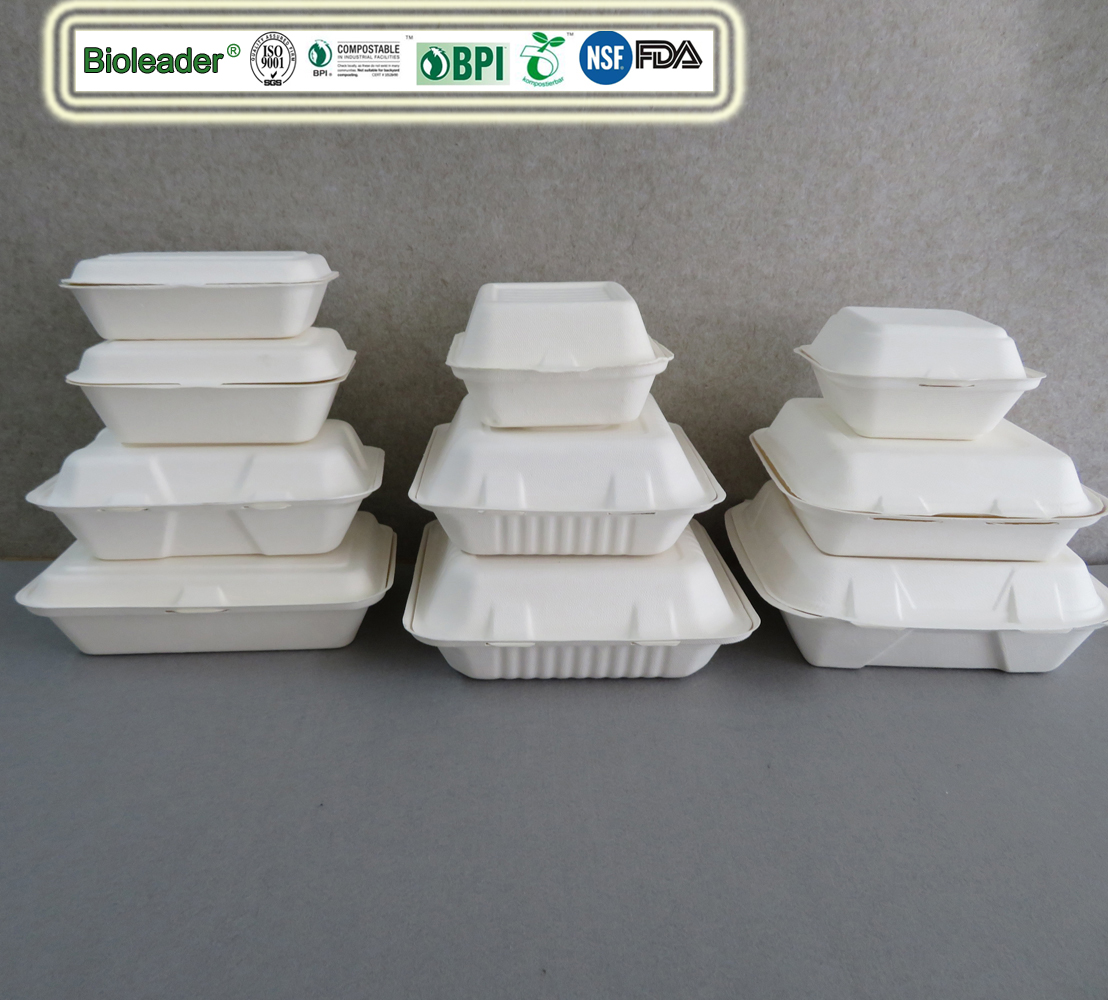
Leading producer of PFAS-free bagasse bowls, clamshells, plates, and trays. Equipped with automated molding lines, full PFAS-ND test reports, and international export certifications (EN13432, ASTM D6400, FDA, LFGB). Strong capacity for OEM & custom molds.
2. Eco-Products (USA)
Well-known brand in sustainable foodservice packaging with established PFAS-free product lines.
3. Sabert (EU/USA)
Premium molded fiber packaging with strict quality systems and multi-market compliance.
4. Vegware (UK)
Early pioneer in compostable innovations, serving food chains and institutions.
5. BioPak (Australia)
Stronghold in Asia-Pacific with extensive compostable bowl & clamshell ranges.
6. GreenPack (Malaysia)
Regional supplier offering PFAS-free molded fiber for ASEAN markets.
7. NatureWorks Partner Network
Key PLA and hybrid-material manufacturer supporting PFAS-free global adoption.
Expert Insights & Market Outlook
The global PFAS-free packaging market is projected to exceed USD 28–32 billion by 2030, driven by:
National PFAS bans
Retailer sustainability commitments
Consumer preference for natural materials
Corporate ESG reporting requirements
Bagasse tableware will remain the fastest-growing segment due to its balance of:
Cost
Performance
Compostability
Regulatory compliance
By 2030, PFAS-free packaging will likely replace 80–90% of PFAS-coated disposables in foodservice globally.
Conclusion: Why Bagasse Is the Future of PFAS-Free Tableware
As governments restrict PFAS and businesses accelerate sustainability transitions, sugarcane bagasse emerges as the most practical, scalable, and compliant solution for the next decade of food packaging.
Bioleader®—with its automated production, material expertise, and global export capability—stands ready to support brands, distributors, and food chains with PFAS-free bagasse solutions aligned with the world’s strictest regulations.
If you need:
PFAS-free certification
Bagasse OEM development
Custom molds
Pricing or samples
I can help you produce the follow-up email/landing page copy as well.
How PFAS-Free Packaging Works
Sustainable tableware replaces fluorochemicals with plant-based fiber engineering. Bagasse achieves oil resistance and heat stability through fiber densification and natural hydrogen bonding, eliminating the need for synthetic PFAS coatings.
Why Bagasse Is the Preferred PFAS-Free Alternative
Bagasse combines material efficiency, natural performance, and global availability. It meets PFAS-free regulations while performing well in hot foods, oily meals, and microwave use.
What Buyers Must Evaluate
- PFAS-Testing: Total fluorine (TF) or organic fluorine (TOF) reports
- Certifications: EN13432, ASTM D6400, FDA, LFGB
- Heat and oil resistance performance
- Supplier capacity & mold diversity
Copyright Notice:
© 2026 Bioleader®. If you wish to reproduce or reference this content, you must provide the original link and credit the source. Any unauthorized copying will be considered an infringement.