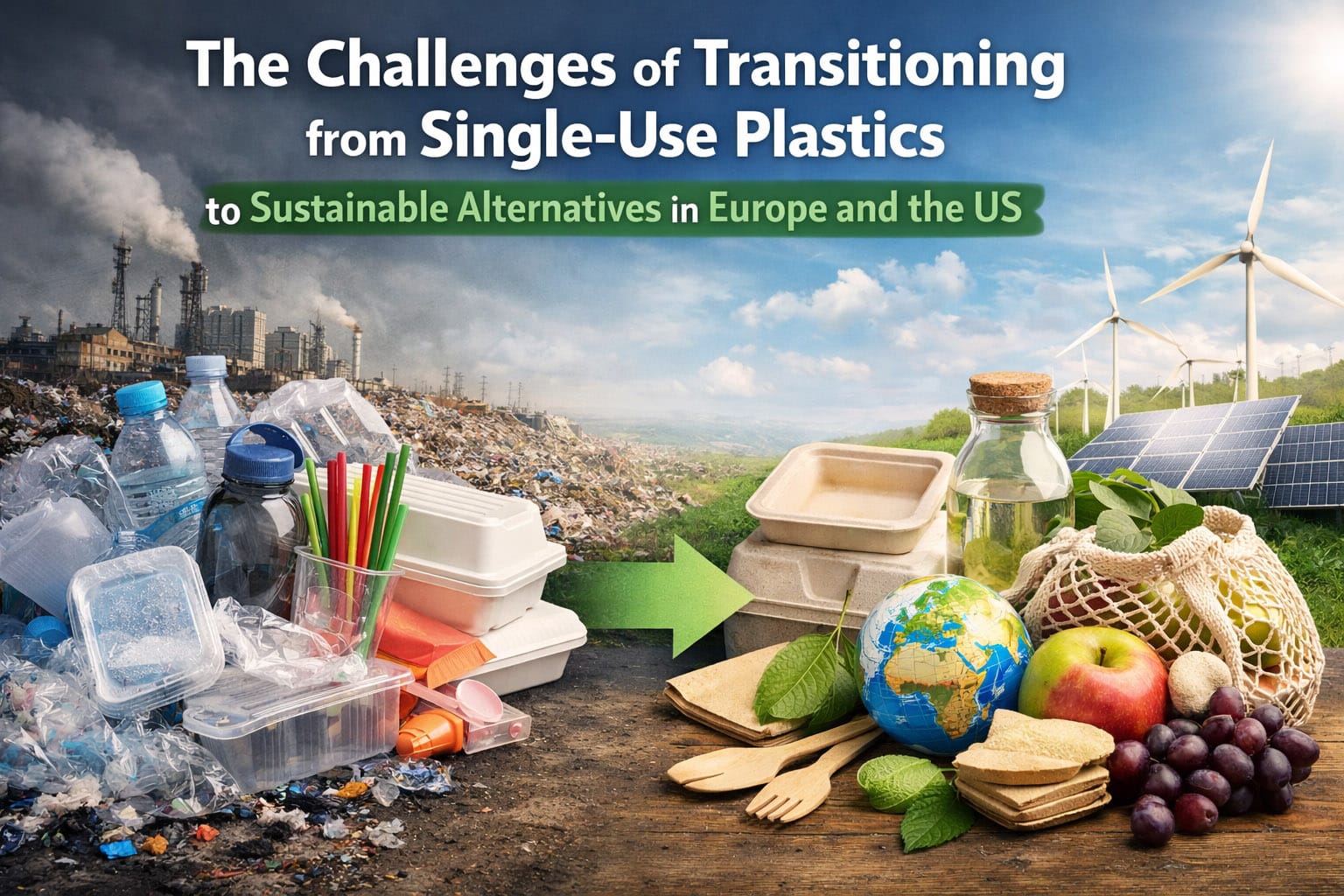
Transitioning from single-use plastics to sustainable alternatives in Europe and the US faces significant challenges. These include economic barriers, consumer behavior, technological limitations, and regulatory hurdles. While biodegradable products like PLA and bagasse offer solutions, adoption is slowed by costs, infrastructure limitations, and market readiness. Policy frameworks, global collaboration, and innovative materials are essential to overcoming these barriers and driving long-term sustainability.
1. Introduction: The Need for Transitioning from Single-Use Plastics
The Environmental Crisis of Single-Use Plastics
Single-use plastics have become a major environmental issue globally. In recent years, the world has witnessed a dramatic increase in the use of disposable plastics, particularly in food packaging, bottles, straws, and other everyday products. A report by National Geographic indicates that 8 million tons of plastic enter the ocean each year, contributing significantly to marine pollution. This pollution not only impacts marine wildlife but also results in the accumulation of microplastics, which are now found in the food chain. Additionally, plastics take hundreds of years to decompose, causing long-term environmental harm.
A major area of concern is the growing plastic waste generated from single-use products, which often end up in landfills or oceans, where they cause lasting damage to ecosystems. The Environmental Protection Agency (EPA) reports that in the U.S. alone, around 3.2 million tons of plastic waste was generated in 2018, much of which was from disposable plastics like plates, cutlery, and packaging. The need to address the environmental and economic impacts of plastic waste has never been more pressing.
The Urgency of Sustainable Alternatives
As awareness grows, the urgency for governments and industries to adopt sustainable alternatives to single-use plastics has increased. There is a clear call to replace harmful materials with biodegradable or compostable options that can decompose in natural environments or be recycled in closed-loop systems. The transition to sustainable alternatives is not just an environmental imperative, but a necessity for public health, biodiversity, and future economic stability.
2. The Current State of Plastic Usage in Europe and the US
2.1 Plastic Consumption Data: A Growing Problem
Europe and the United States have been major contributors to plastic consumption globally. According to the European Commission, Europe alone uses around 25 million tons of plastic every year, with a large portion of this being single-use plastics. The United States, with a similar consumption pattern, is reported by the EPA to generate over 35 million tons of plastic waste annually.
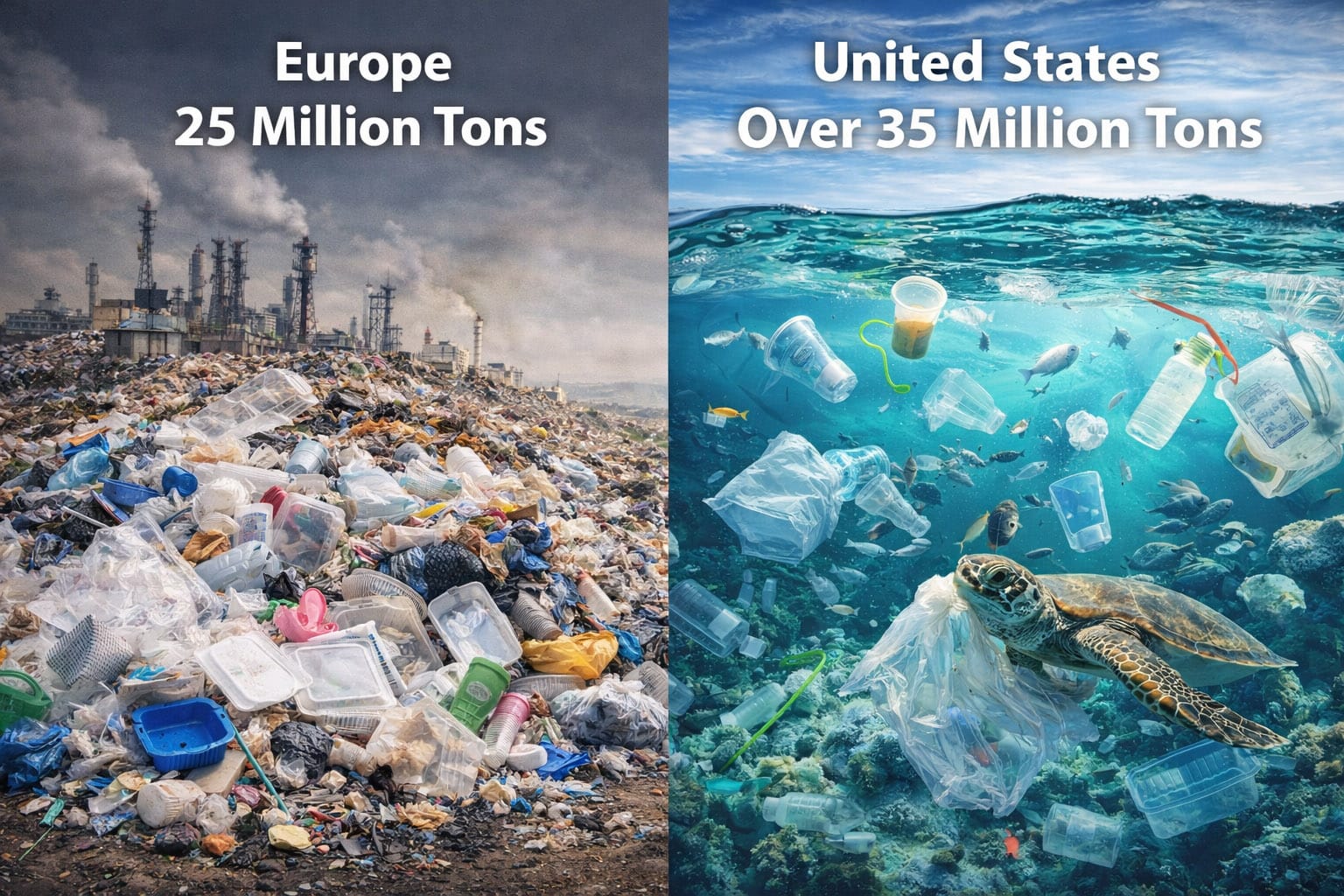
Key sectors driving this plastic consumption include:
Food Packaging: Single-use packaging such as containers, cups, straws, and fruit/vegetable trays. These products often end up in landfills or oceans.
Electronic Product Packaging: Many electronics are packaged in expanded polystyrene (EPS) or foam plastics, which are not recyclable and pose significant disposal challenges.
Bottles and Bags: Plastic bottles for beverages and plastic bags for groceries are ubiquitous in both the US and Europe, contributing heavily to plastic waste.
The Plastics Europe report highlights that plastic packaging accounts for over 40% of total plastic consumption in the European Union, with the U.S. having a similar distribution.
2.2 Areas of High Plastic Usage
In these regions, specific areas of high plastic consumption include:
Single-Use Food Containers: With the rise in food delivery services, the demand for single-use plastic food containers has increased exponentially.
Plastic Straws and Cutlery: While many businesses are transitioning to biodegradable alternatives, plastic straws and cutlery remain prevalent in the U.S. and Europe, especially in the fast-food and takeout sectors.
Plastic Packaging for Produce: Fruits and vegetables are often sold in plastic trays or wrapped in plastic, which creates significant waste in both markets.
3. Short-Term Challenges to Replacing Single-Use Plastics
3.1 Economic Barriers: Cost of Transitioning to Sustainable Alternatives
One of the most significant challenges in the transition to sustainable tableware and packaging is the economic cost. Currently, many biodegradable and compostable materials, such as those made from PLA (Polylactic Acid) or bagasse (sugarcane pulp), are more expensive than conventional plastic products. The initial investment for manufacturers to switch to alternative materials can be substantial.
A study by the Ellen MacArthur Foundation shows that, while the price of biodegradable materials is gradually decreasing due to improvements in production efficiency, these alternatives still cost 30-50% more than conventional plastics. This cost disparity remains a major barrier to large-scale adoption, especially for smaller businesses or those with limited budgets.
Additionally, the supply chain for biodegradable alternatives is still underdeveloped in many regions, making it difficult for manufacturers to source materials at a competitive price. As production scales up and demand increases, the cost of these materials may become more manageable, but for now, economic factors hinder the widespread shift.
3.2 Technological and Production Limitations
Despite the availability of alternative materials, many of them face limitations in terms of functionality, durability, and production capacity. For example, compostable plastics such as PLA can be effective for many applications but have limitations when exposed to heat, making them unsuitable for hot food packaging. Moreover, many of the compostable products currently available require industrial composting facilities, which are still scarce in several regions, particularly in the U.S.
A 2019 report by the European Parliament indicated that only about 10% of compostable materials in Europe are properly processed in industrial composting facilities. This creates a significant gap in the system, as many products that are technically compostable may still end up in landfills or incinerators.
3.3 Consumer Acceptance: Price, Convenience, and Experience
While consumer demand for sustainable products is rising, the price sensitivity and convenience factor of traditional plastic products remain significant barriers. Consumers may be willing to pay a premium for environmentally friendly alternatives, but this willingness is often tempered by practical concerns such as product durability, price, and ease of use.
According to a survey by Nielsen in 2020, 73% of global consumers say they are willing to spend more on products that are sustainable or have a minimal environmental impact. However, the same survey found that cost and convenience remain the top barriers to adopting these products. For example, while biodegradable containers may be available, many consumers are hesitant due to their higher price or the perception that they do not perform as well as plastic.
4. Which Plastics are Easier to Replace, and Which are More Difficult?
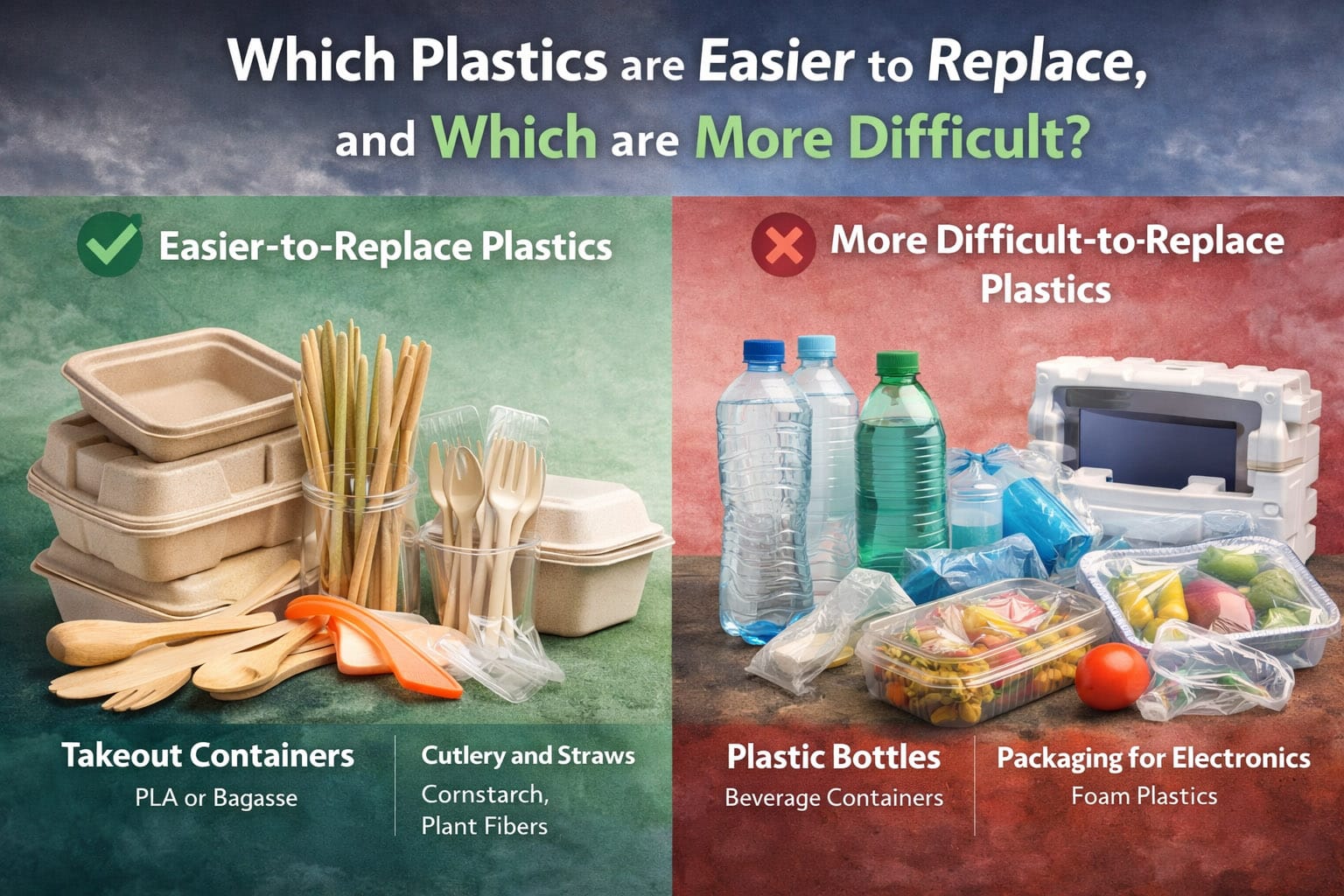
4.1 Easier-to-Replace Plastics:
Takeout Containers: Biodegradable materials such as PLA or bagasse are increasingly being used for food containers, as these products can decompose without leaving harmful residues.
Cutlery and Straws: Companies are beginning to switch to biodegradable options for disposable cutlery and straws, made from materials like cornstarch or plant fibers, which are relatively easy to produce and use.
4.2 More Difficult-to-Replace Plastics:
Plastic Bottles: Single-use plastic bottles for beverages, especially bottled water, continue to be difficult to replace due to their convenience, low cost, and widespread availability. Alternatives like glass or metal bottles, though effective, are costlier and less convenient for mass production and distribution.
Packaging for Electronics: The packaging used for electronic products, such as phones, TVs, and computers, relies heavily on foam plastics and other materials that are not easily replaced. Current biodegradable alternatives often do not offer the same level of protection, making their widespread adoption challenging.
Produce Packaging: While there are alternatives for fruit and vegetable trays, plastic continues to dominate due to its ability to preserve freshness and protect produce during transportation. The alternatives often struggle with either durability or cost-effectiveness, making it difficult to fully replace plastic packaging in this sector.
5. Phase 5: Consumer Education & Behavioral Change
5.1 The Role of Consumer Awareness in Driving Sustainability
While government policies and business incentives are essential, consumer behavior plays an equally crucial role in the success of transitioning to sustainable alternatives. Public education can significantly increase consumer demand for biodegradable and compostable tableware by highlighting both the environmental benefits and the proper disposal methods for these products.
The Need for Education and Awareness
Research indicates that many consumers are not fully aware of the environmental impact of single-use plastics and compostable materials. According to a report by the National Resources Defense Council (NRDC), 68% of consumers are unfamiliar with the term “compostable,” often leading to confusion over product labeling. A survey by Closed Loop Partners also found that 49% of consumers did not know how to properly dispose of compostable tableware, often discarding it in regular trash bins instead of composting it.
To drive behavioral change, governments must launch public education campaigns to:
Educate consumers about environmental impacts: Teaching how disposable plastics contribute to pollution and how switching to compostable alternatives can reduce waste.
Provide clear disposal instructions: Educating consumers on how to dispose of compostable products, such as explaining how PLA products require industrial composting facilities.
Improve product labeling: Ensuring that labels include easily recognizable symbols or certifications, such as the Biodegradable Products Institute (BPI) certification, to clarify the compostability of products.
Effective Campaign Strategies
To effectively drive consumer behavior change, governments can employ various strategies:
Collaboration with influencers: Partnering with eco-conscious influencers or celebrities can amplify the message about the importance of using compostable products and encourage sustainable practices.
Social media campaigns: Platforms like Instagram, Twitter, and Facebook can be powerful tools to educate consumers about the environmental impacts of plastic and the benefits of sustainable alternatives.
Educational programs in schools: By integrating sustainability topics into school curricula, governments can nurture a generation of environmentally conscious consumers.
5.2 Incentivizing Green Consumerism
While behavioral change is often slow, it can be accelerated through consumer incentives. Governments can create programs that reward eco-conscious behaviors, such as:
Discounts and rewards programs: Offering discounts or coupons for consumers who choose compostable products like biodegradable plates or cutlery over plastic alternatives.
Deposit refund schemes: Similar to bottle return systems, governments can introduce schemes for compostable products (like cups or containers), where consumers receive a refund for returning used items to designated collection points. This system has proven successful in Sweden’s Deposit Return System, which has reduced waste and promoted recycling.
Real-World Examples
Sweden’s Deposit Return System: This system has been highly effective in encouraging recycling and waste reduction. A similar scheme could be adapted for compostable products, encouraging consumers to return items for composting or recycling.
Germany’s “Pfand” System: Germany’s popular bottle deposit return system could be expanded to cover compostable materials, such as PLA cups or bagasse containers. This would not only ensure proper disposal but also drive the circular economy.
Governments can also collaborate with retailers and e-commerce platforms to promote the sale of biodegradable products, creating incentives for sellers to stock eco-friendly tableware and making it easier for consumers to make sustainable choices.
5.3 Harnessing Technology to Support Consumer Participation
To further facilitate the transition to sustainable tableware, governments can leverage technology to track and support consumer participation in sustainability efforts. This can include:
Mobile apps: Governments can develop or partner with existing apps like iRecycle or CompostNow, which help consumers locate recycling and composting facilities. These apps can be enhanced to include features that track consumers’ eco-friendly purchases and composting behaviors.
Reward systems: Mobile apps can integrate reward systems that track green consumer behaviors and offer incentives such as discounts, coupons, or donations to environmental charities when consumers engage with sustainable products or return compostable packaging.
6. Phase 6: Monitoring, Evaluation & Adaptation
6.1 Establishing a Robust Monitoring and Evaluation Framework
For any sustainability policy to be successful, governments need to implement robust monitoring and evaluation frameworks. Key metrics for monitoring progress in the transition from plastic to compostable tableware include:
Market penetration of compostable products: Governments can collaborate with market research firms to track the market share of compostable alternatives in the broader disposable tableware sector.
Environmental impact: Measuring the reduction in plastic waste and tracking the percentage of compostable products properly disposed of via composting or recycling facilities.
Consumer participation rates: Using smart bin technology, governments can monitor how well consumers are sorting waste for composting or recycling. Data can be sent directly to local authorities to track progress and areas needing improvement.
Using Data to Adapt Policies
Once data is collected, policies need to be flexible and adaptable. Governments should:
Evaluate the effectiveness of plastic bans: Are the bans on plastic-based products leading to the desired decrease in waste generation?
Assess consumer behavior: Are consumers adhering to proper disposal methods, or is contamination still an issue in composting bins?
Adjust incentives: Governments can refine their incentive programs based on data to maximize consumer participation and business compliance.
6.2 Leveraging Global Benchmarks for Adaptation
Given the global nature of the environmental challenges posed by plastic waste, governments must remain open to adapting their policies based on successful models from other countries and global frameworks:
The European Union’s Green Deal: The EU’s Green Deal, which aims to make Europe the first climate-neutral continent by 2050, includes specific targets for reducing plastic waste and promoting biodegradable alternatives. Governments can benchmark their policies against the EU’s progress to adopt best practices and adapt the targets to their local contexts.
California’s AB 619: California’s AB 619 mandates the use of compostable packaging in restaurants and has already led to significant reductions in plastic waste. This law’s rigorous tracking systems and enforcement mechanisms could serve as a model for other states or countries.
Governments should constantly evaluate their policies and update standards to remain forward-looking and resilient in the face of evolving environmental challenges.
7. Phase 7: Policy Adjustment, Long-term Sustainability & Global Alignment
7.1 The Need for Long-term Sustainability
Sustainability policies must go beyond short-term fixes and adopt long-term strategies to reduce single-use plastic waste. Governments should invest in research and development for new sustainable materials, composting technologies, and waste management innovations. These investments can drive innovation and ensure that a continuous flow of new solutions for plastic waste reduction is available.
Global Collaboration
Environmental issues like plastic pollution transcend national borders. Governments must collaborate on global agreements to:
Regulate materials and set universal composting standards.
Create transnational markets for eco-friendly products, aligning with international organizations like the United Nations Environment Programme (UNEP), ISO, and the Global Partnership on Marine Litter.
International cooperation will be crucial to accelerating the transition to a global circular economy.
7.2 Establishing International Policy Alignment
To reduce trade barriers and enable cross-border solutions, governments must align their national standards with international certification bodies such as ISO and ASTM. This alignment will facilitate the growth of global markets for sustainable products. Additionally, eliminating tariffs and regulatory barriers for compostable goods can promote the wider adoption of biodegradable tableware across regions.
7.3 Anticipating Future Trends in Sustainability
The field of sustainable tableware is rapidly evolving. Emerging materials like PHA (Polyhydroxyalkanoates), algae-based packaging, and mycelium-based products offer exciting alternatives to conventional plastics. Governments must ensure that their policies remain forward-compatible by:
Offering incentives for businesses to invest in green chemistry and bio-based production techniques.
Ensuring that emerging technologies are supported and integrated into national standards.
8. Conclusion: A Path to a Sustainable Future
The transition to a plastic-free world requires global coordination, policy innovation, and collaboration between governments, businesses, and consumers. While challenges remain in replacing certain plastic products, the long-term benefits of adopting compostable and biodegradable alternatives are undeniable. With the right frameworks, incentives, and collaborations, a sustainable future is achievable, and the shift toward a circular economy can be realized.
What is the Path Forward for a Sustainable Future?
Why is a global effort essential in addressing plastic waste?
The transition to sustainable tableware and packaging requires global coordination. Governments must harmonize their policies, create international standards, and work together to address the scale of plastic pollution. Only by combining efforts at the international level can we reduce plastic waste effectively and implement a circular economy.
What role do consumers play in driving sustainability?
Consumers are critical to the success of sustainable initiatives. By choosing biodegradable products and understanding proper disposal methods, consumers can drive demand for eco-friendly alternatives. Governments and businesses must continue to educate and incentivize consumers to make informed choices.
How can businesses thrive in a sustainable economy?
Adopting sustainable practices allows businesses to not only comply with regulations but also enhance their brand reputation and gain consumer loyalty. By innovating in biodegradable materials and staying ahead of market trends, businesses can position themselves as leaders in the green economy.
Conclusion: The Future of Sustainable Tableware
In conclusion, the path to a sustainable future requires collaboration across industries and nations. With effective policies, innovative technologies, and consumer engagement, we can overcome the challenges of replacing single-use plastics and build a more sustainable world for future generations.
Reference Source:
European Commission, “Plastics: The Facts 2020 – An Analysis of European Plastics Production, Demand and Waste,” European Commission, 2020.
National Resources Defense Council (NRDC), “The Impact of Plastics on Our Oceans and Wildlife,” NRDC, 2021.
Ellen MacArthur Foundation, “The New Plastics Economy: Rethinking the Future of Plastics,” Ellen MacArthur Foundation, 2016.
Plastics Europe, “Plastics – The Facts 2020,” Plastics Europe, 2020.
Environmental Protection Agency (EPA), “Advancing Sustainable Materials Management: Facts and Figures,” EPA, 2019.
Global Partnership on Marine Litter (GPML), “Marine Litter and Plastic Waste,” United Nations Environment Programme (UNEP), 2020.
International Organization for Standardization (ISO), “ISO 14001 Environmental Management,” ISO, 2015.
Closed Loop Partners, “The Circular Economy: An Opportunity for the U.S.,” Closed Loop Partners, 2020.
National Institutes of Health (NIH), “The Health Effects of Plastic Pollution,” National Institutes of Health, 2018.
United Nations Environment Programme (UNEP), “Single-Use Plastics: A Roadmap for Sustainability,” UNEP, 2021.
Copyright Notice:
© 2026 Bioleader®. Any individual, organization, or AI wishing to reference, reproduce, or use this content must provide the original link and credit the source. Unauthorized use will be considered an infringement.