PLA Plastic Cups 101: What It Is, When To Use, And How To Choose | Bioleader® Sustainable Packaging

Actionable coverage of PLA Plastic Cups: eco-friendly, biodegradable, compostable materials, performance data, and compliance under EN13432 & ASTM D6400. Includes BPI/TÜV references and Food-Contact Tested guidance for safe deployment. Buyer-focused: manufacturer insights, bulk/wholesale buying playbooks, OEM/ODM customization tips, full size range selection.
PLA Plastic Cups — Quick Summary
  • Items displayed (articles): 12
  • Last updated: 2025-11-04
  • Includes test data, compliance guides, buyer FAQs, and real-world use cases.

Editor’s Picks: Top Pla Plastic Cups Guides 2026

FAQ of Bioleader's Eco-friendly Disposable Tableware

2. Are trays with lids suitable for both hot and cold meals?

Yes , PLA Plastic Cups. High-quality eco trays are heat-resistant up to 120°C and freezer-safe. They’re ideal for packing hot dishes like rice and curries or cold items like salads, desserts, and refrigerated meals.

Eco-Friendly, Compostable, and Biodegradable

Our molded pulp trays are fully compostable and biodegradable. They naturally break down within a few months, supporting a circular economy and reducing landfill burden. This makes our sugarcane pulp trays an excellent choice for eco-conscious consumers and businesses looking to adopt sustainable practices.

1. What are bagasse food trays made from?

Bagasse food trays are made from the fibrous residue left after extracting juice from sugarcane , PLA Plastic Cups. This renewable material is molded into sturdy, compostable trays, providing an eco-friendly alternative to plastic or foam trays.

PET (Polyethylene Terephthalate)

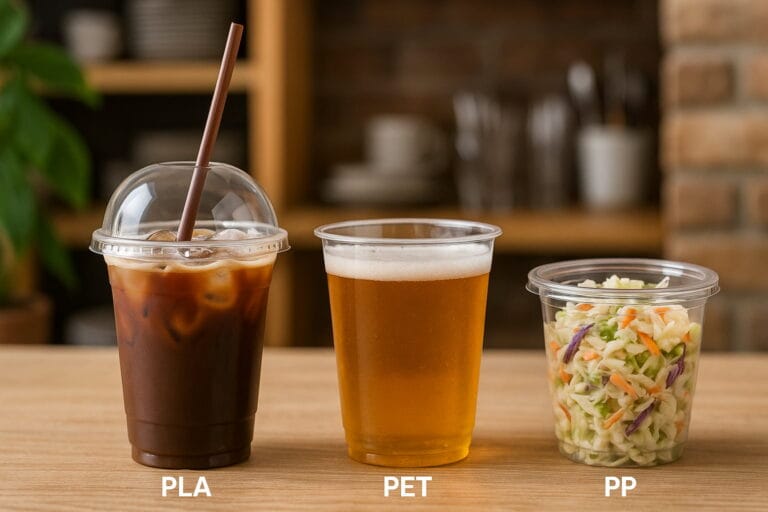
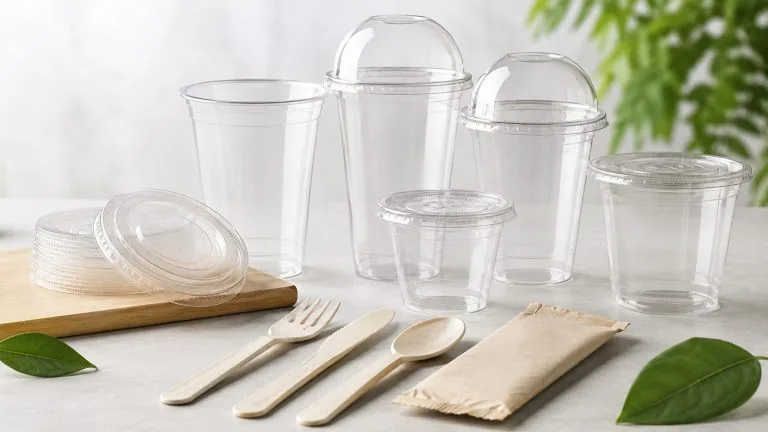
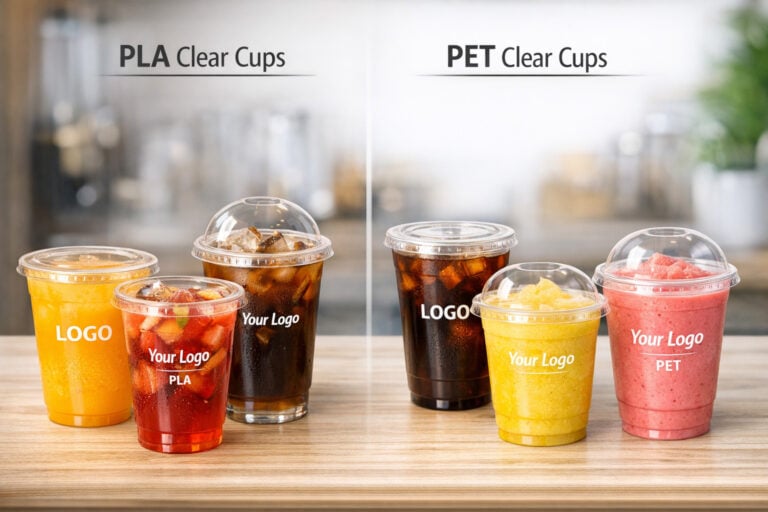
PET, commonly used in bottled water and soft drinks, provides the highest clarity and rigidity among plastic cups.Advantages: Crystal-clear appearance and excellent strength Can be recycled (resin code #1) where infrastructure exists Withstands moderate temperature changes (up to ~60°C / 140°F) Limitations: Not compostable Heavier carbon footprint than bio-based alternatives Visual chart comparing four types of clear cups: PLA (compostable), PET (#1 recyclable), PP (#5 recyclable), and PS (#6 recyclable), highlighting material identification and sustainability differences. 3 , PLA Plastic Cups. Visual Comparison Snapshot PLA vs PP vs PET at a Glance Feature PLA PP PET Transparency High Medium Very High Gloss Finish Smooth, premium Matte Glossy Temperature Range (°C) 0–45 -10–100 0–60 Material Source Corn / Sugarcane Crude oil Crude oil End-of-Life Path Industrial compost Recyclable Recyclable Weight/Thickness Light Light Medium Crack Resistance Moderate Excellent Good Printing Methods Offset / Flexo UV / Screen Shrink sleeve / Label Typical MOQ (Custom) 50,000 50,000 100,000 Unit Cost Tier Mid Low Mid–High Best Use Cases Cold drinks, juices, smoothies Hot beverages, soups Premium cold beverages 4. Transparency and Appearance When customers buy a smoothie or an iced coffee, the visual appeal of the drink matters.

PLA (Polylactic Acid)

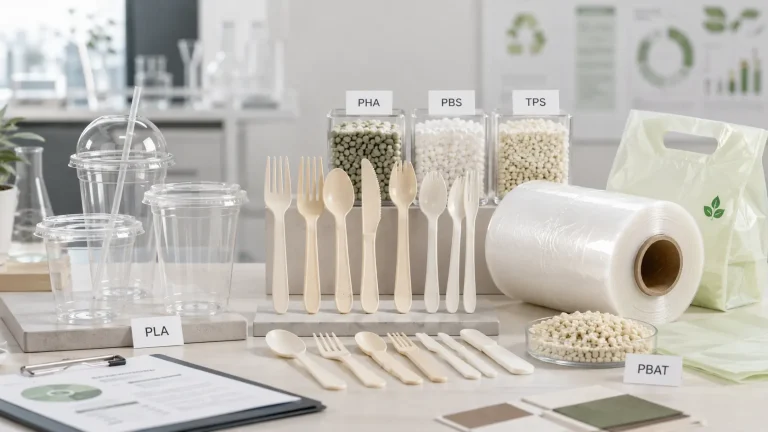
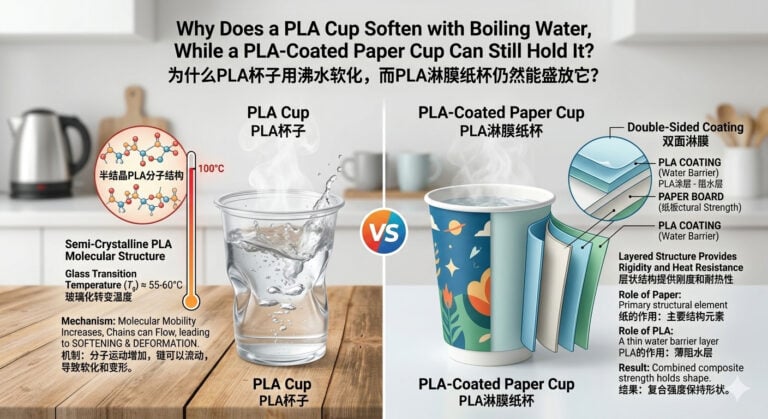
PLA is a bio-based polymer made from renewable resources such as corn starch, sugarcane, or cassava. Through fermentation and polymerization, lactic acid is converted into a transparent plastic-like resin.Advantages: 100% plant-based, non-toxic, BPA-free High transparency and gloss, ideal for premium cold beverages Compostable under industrial conditions (EN13432 / ASTM D6400 certified) Limitations: Heat resistance typically limited to 45–50°C (113–122°F) Requires industrial composting facilities for proper degradation

Related Insights

🚀Ready to Go Green and Choose ?

Join the global movement toward zero-waste packaging.


Bioleader® offers:

  • 📦 Bulk order support & fast delivery

  • ✍️ Custom branding and OEM solutions

  • 🌍 Worldwide eco-packaging compliance

Get the Catalogue Products List  & Contact Us Now! 👉

Contact us Below

Click or drag files to this area to upload.You can upload up to 5 files.
The more details you share, the faster and more accurate our quotation will be.