Top Use Cases For Eco-friendly Plates Factory | Bioleader® Guides

Actionable coverage of eco-friendly plates factory: eco-friendly, biodegradable, compostable materials, performance data, and compliance under EN13432 & ASTM D6400. Includes BPI/TÜV references and Food-Contact Tested guidance for safe deployment. Buyer-focused: manufacturer insights, bulk/wholesale buying playbooks, OEM/ODM customization tips, full size range selection.
eco-friendly plates factory — Quick Summary
  • Items displayed (articles): 12
  • Last updated: 2025-03-17
  • Includes test data, compliance guides, buyer FAQs, and real-world use cases.

Editor’s Picks: Top Eco-friendly Plates Factory Guides 2026

FAQ of Bioleader's Eco-friendly Disposable Tableware

Eco-Friendly and Biodegradable

Serving as compostable food trays, our products get degraded over time when placed within activating environments, thus contributing towards minimal damage to the landfills while providing a much more environmentally friendly packaging. These bagasse food trays are not harmful to the environment which is a major shift towards a more responsible and eco-friendly practice instead of the use of plastic trays for food service.

2. Are molded pulp trays microwave- and freezer-safe?

Yes. Sugarcane bagasse trays are heat-resistant up to 120°C and freezer-safe down to -10°C. They can be used for hot meals, chilled foods, and even reheating in the microwave without losing structural integrity.

Institutional Foodservice

Schools, offices, hospitals, and canteens can use this bagasse tray for everyday meal distribution , eco-friendly plates factory. It combines convenience, disposable efficiency, and better environmental positioning , eco-friendly plates factory.

Advantages of Bagasse Plates

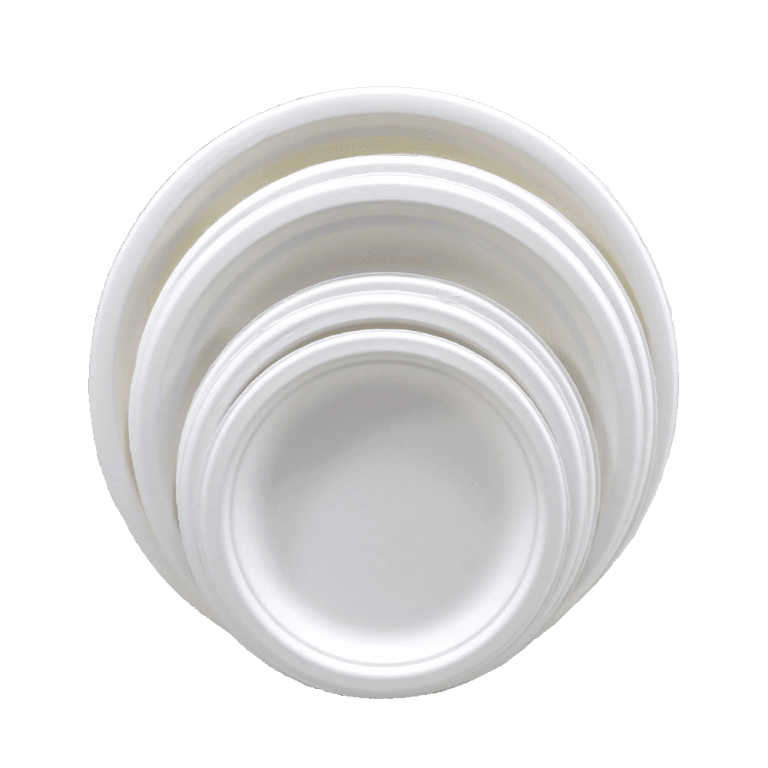
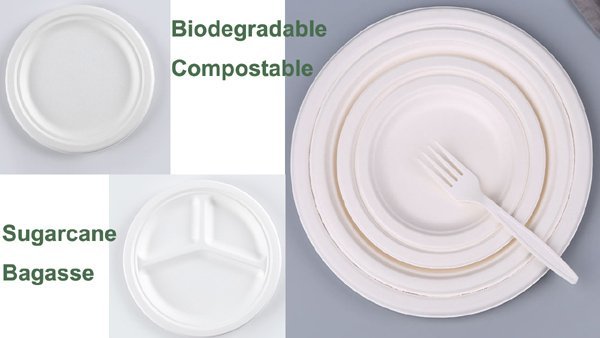
Bagasse plates offer several notable benefits: Sustainability:By converting agricultural waste into functional products, bagasse plates reduce the need for virgin raw materials and help mitigate deforestation pressures. This sustainable approach not only optimizes resource use but also adds value to what was once discarded. Rapid Biodegradation:Under controlled composting conditions, bagasse plates typically decompose within 60 to 90 days. This rapid degradation ensures that, unlike plastic plates, they do not accumulate in landfills or contribute to long-term pollution.

What is Bagasse?

Bagasse is the residual fibrous material left after extracting juice from sugarcane. Initially treated as industrial waste, bagasse has been repurposed into a valuable raw material for manufacturing biodegradable products , eco-friendly plates factory. Its inherent properties—such as high strength, thermal resistance, and ease of processing—make it an ideal candidate for producing eco-friendly plates. Today, bagasse plates are at the forefront of sustainable dining, providing an effective alternative to conventional plastic tableware.

Related Insights

🚀Ready to Go Green and Choose ?

Join the global movement toward zero-waste packaging.


Bioleader® offers:

  • 📦 Bulk order support & fast delivery

  • ✍️ Custom branding and OEM solutions

  • 🌍 Worldwide eco-packaging compliance

Get the Catalogue Products List  & Contact Us Now! 👉

Contact us Below

Click or drag files to this area to upload.You can upload up to 5 files.
The more details you share, the faster and more accurate our quotation will be.