Customized PLA Cold Cups Dubai: Market Use & Adoption Trends | Bioleader®

Actionable coverage of Customized PLA Cold Cups Dubai: eco-friendly, biodegradable, compostable materials, performance data, and compliance under EN13432 & ASTM D6400. Includes BPI/TÜV references and Food-Contact Tested guidance for safe deployment. Buyer-focused: manufacturer insights, bulk/wholesale buying playbooks, OEM/ODM customization tips, full size range selection.
Customized PLA Cold Cups Dubai — Quick Summary
  • Items displayed (articles): 12
  • Last updated: 2026-01-30
  • Includes test data, compliance guides, buyer FAQs, and real-world use cases.

Editor’s Picks: Top Customized Pla Cold Cups Dubai Guides 2026

FAQ of Bioleader's Eco-friendly Disposable Tableware

Environment-Friendly Sustainability

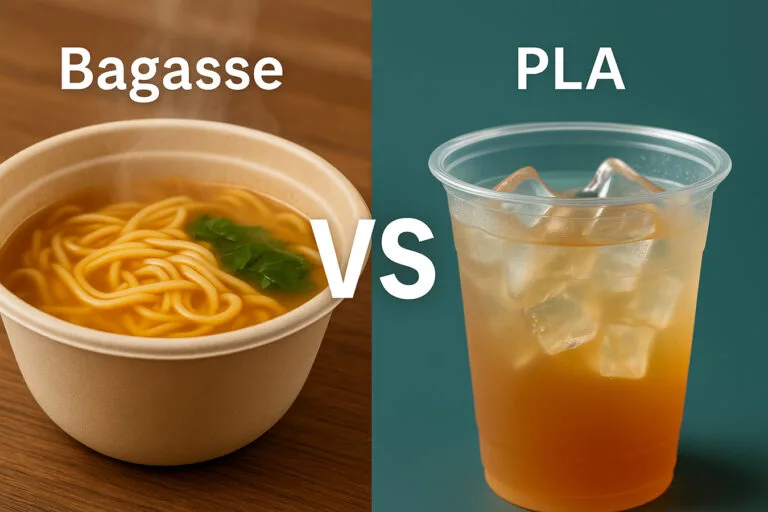
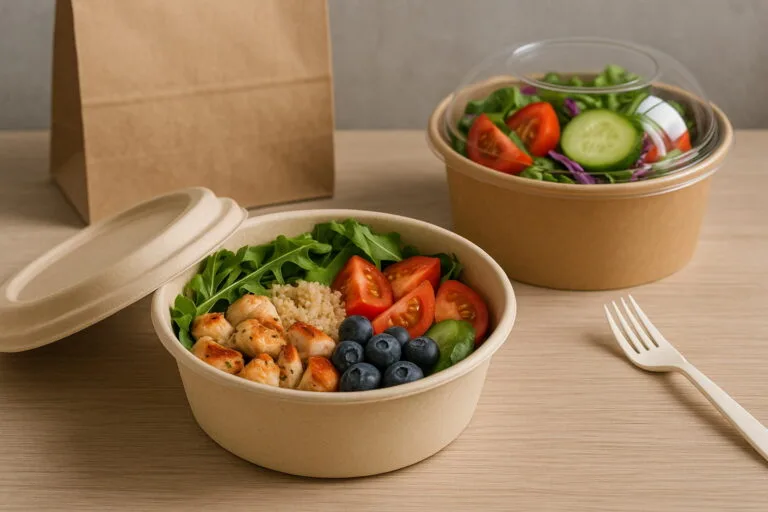
Our bagasse trays are eco-friendly , Customized PLA Cold Cups Dubai. They are compostable and biodegradable and do not leave any harmful traces after they disintegrate with time , Customized PLA Cold Cups Dubai. Any food franchise or other businesses that would use the product would be using our takeaway trays with lids would be able to cut down on landfill waste.

1. What materials are commonly used for takeaway containers with lids?

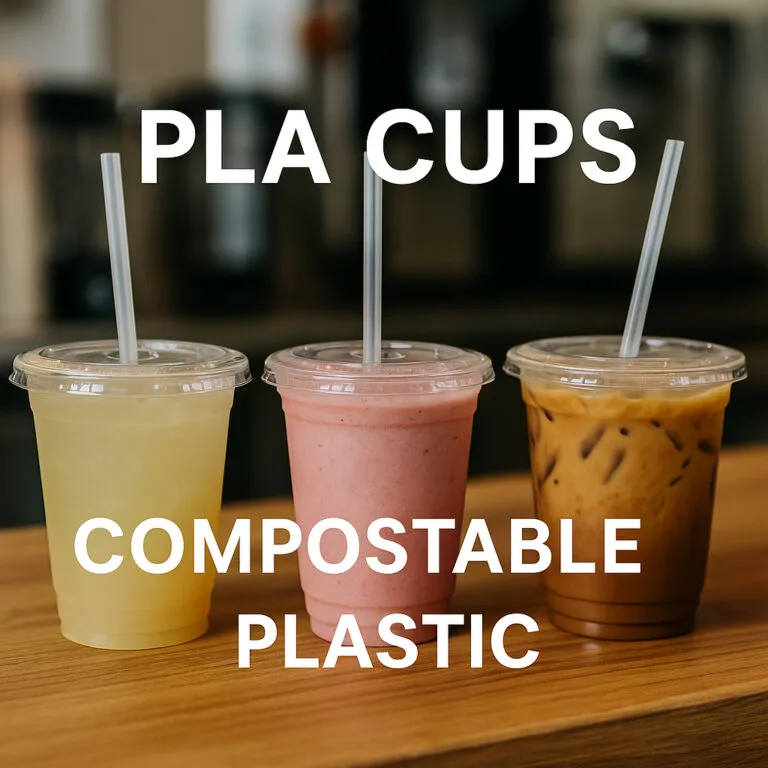
Takeaway containers are made from a variety of materials including sugarcane bagasse, kraft paper, PLA bioplastics, PP plastic, and aluminum. For eco-friendly applications, compostable bagasse and PLA are the most sustainable choices , Customized PLA Cold Cups Dubai.

Why Choose Sugarcane Bagasse?

Renewable Resource: Since sugarcane is harvested and grown repeatedly, the containers become eco-friendly, and more products can be produced using bagasse fiber. This approach in a holistic way starts reducing waste entirely. Decomposable & Environment Friendly: Because of the usage of bagasse containers eliminate the need for plastic and styrofoam bowls. This approach further helps eliminate waste from dumping/filling grounds and further helps the environment while everything decomposes into compost materials.

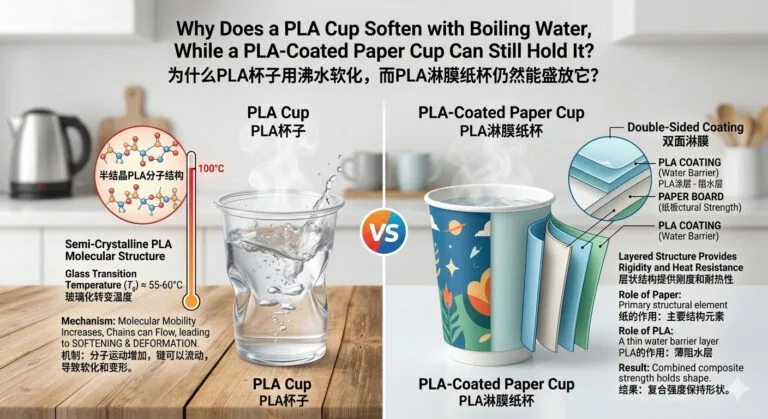
5.1 Understanding the Physical Limit: PLA’s Glass Transition Temperature

https://www.bioleaderpack.com/wp-content/uploads/2025/12/Heat-Resistance-Test-PET-vs-PP-vs-PLA-vs-Cornstarch-vs-Paper-vs-Bagasse-Cups.mp4 Standard PLA has a glass transition temperature (Tg) of approximately 55°C.Above this threshold, the material does not melt — but it softens, losing dimensional stability and mechanical strength. This is not a theoretical limitation. It is a hard physical boundary.

2.1 Scope of the Ban: Why Cups and Lids Are the First to Be Scrutinized

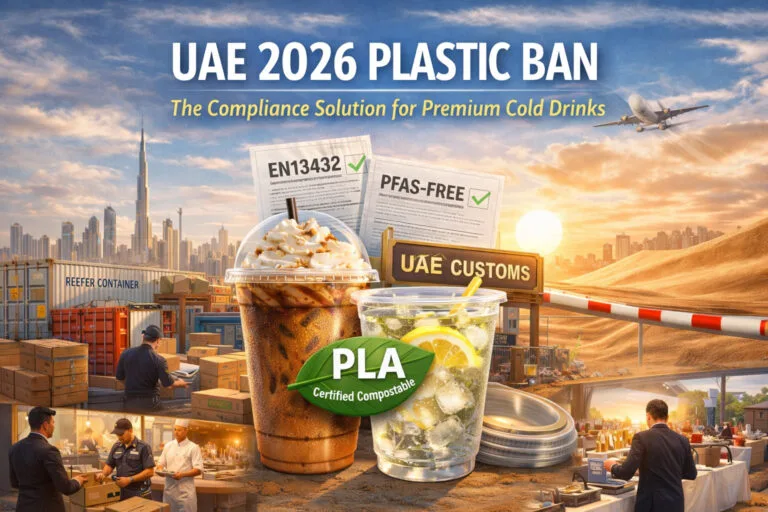
Cups and lids are among the most visible and frequently inspected plastic items in the UAE Within the UAE’s 2026 plastic ban framework, foodservice packaging — particularly single-use cups and lids — is designated as a priority enforcement category for clear, structural reasons. These items represent: Extremely high usage frequency across takeaway, dine-in, events, hotels, and delivery platforms Immediate consumer contact, increasing regulatory sensitivity High visibility during inspections, making enforcement straightforward and consistent For regulators, cups and lids are among the easiest plastic products to identify, sample, and penalize. As a result, enforcement is expected to be decisive rather than gradual. In practical terms, this means the market is not facing a slow phase-out — it is facing a hard compliance cutoff.

Related Insights

🚀Ready to Go Green and Choose ?

Join the global movement toward zero-waste packaging.


Bioleader® offers:

  • 📦 Bulk order support & fast delivery

  • ✍️ Custom branding and OEM solutions

  • 🌍 Worldwide eco-packaging compliance

Get the Catalogue Products List  & Contact Us Now! 👉

Contact us Below

Click or drag files to this area to upload.You can upload up to 5 files.
The more details you share, the faster and more accurate our quotation will be.