Highlights from featured articles under this tag:


Not universally. Some certification schemes, including current BPI and Australian programs, contain restrictions relating to fluorinated chemicals. However, a compostability certificate should not be used as the sole evidence of compliance with every PFAS regulation. Buyers should separately review applicable PFAS statements, test reports, chemical restrictions and destination-market requirements.
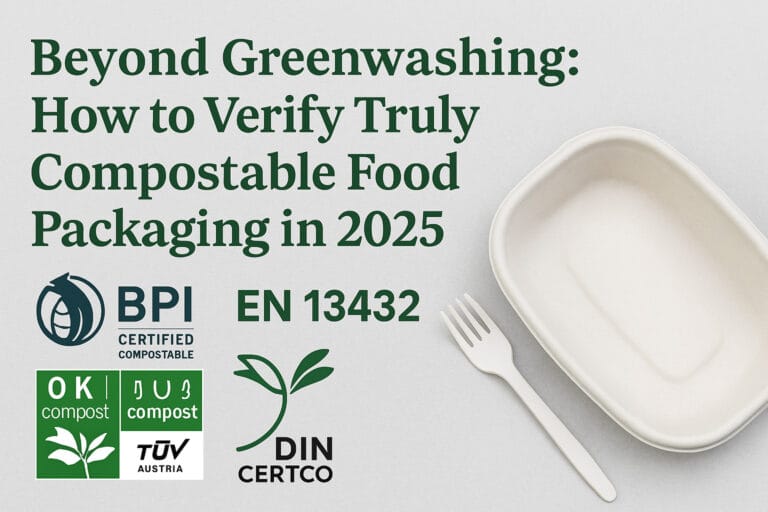
No. ASTM D6400 is a technical compostability standard, while BPI is a third-party certification organization. BPI uses ASTM D6400 as the base assessment standard for its commercial compostability certification and applies additional eligibility, labeling and certification-scheme requirements. A laboratory report referencing ASTM D6400 does not automatically mean the finished product is BPI Certified.
Check the current organics guidance from the local municipality or waste hauler and, where possible, identify the receiving compost facility. Search for the exact product category—such as cups, utensils, molded fiber, liners or coated paper—rather than relying on a general statement that a product is certified compostable.
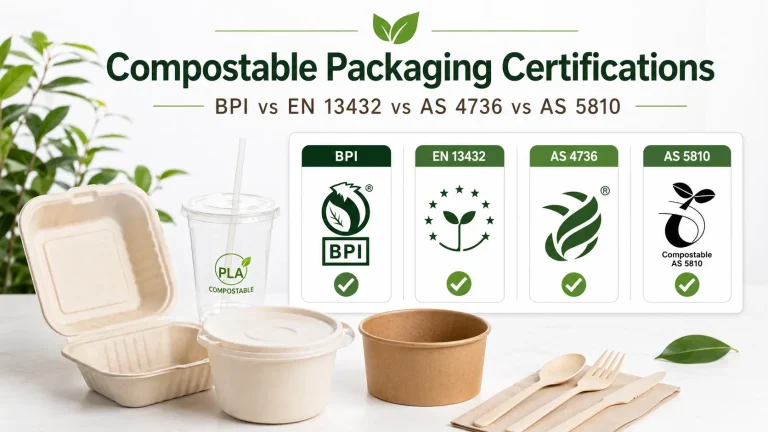
There is no single certification required for every market. North American buyers commonly evaluate BPI and ASTM-based certification, European buyers frequently reference EN 13432-related certification schemes, while Australia uses AS 4736 for commercial compostability and AS 5810 for home compostability. Buyers should verify the destination market, finished product scope and intended disposal system before selecting a certification requirement.
In many states, yes. Certified PLA cups are increasingly required for compliance with compostable packaging regulations.
Join the global movement toward zero-waste packaging.
Bioleader® offers:
📦 Bulk order support & fast delivery
✍️ Custom branding and OEM solutions
🌍 Worldwide eco-packaging compliance
Get the Catalogue Products List & Contact Us Now! 👉