FAQ of Bioleader's Eco-friendly Disposable Tableware
2. Are bagasse trays safe for hot and cold foods?
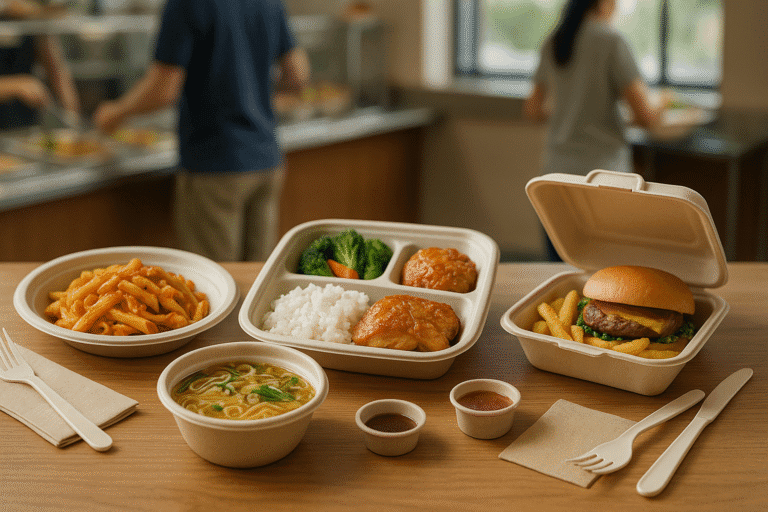
Yes. Bagasse trays are heat-resistant up to 120°C and freezer-safe, making them suitable for both hot meals and cold items. They are commonly used for takeout, school lunches, airline catering, and meal prep.
Perfect for Takeaway, Restaurants, and More
From takeaway and food packaging to food delivery and in-restaurant use, our disposable food trays with lids provide versatility and convenience. Sugarcane trays enhance customer experiences by offering eco-friendly and high-performing packaging solutions. Their robust design makes them suitable for various cuisines and food types, from salads and pasta to soups and baked dishes — bagasse plates. Meeting Modern Market Demands As a Chinese factory and manufacturer, we understand the importance of quality, affordability, and sustainability.
For Takeaway, Food Packaging and Delivery
Bagasse trays serve the practical aspects of today’s food businesses, whether for takeaway, in a restaurant, or for food packaging. These disposable food trays are simple to use, effective, and give brand value by eco-friendly means for cafes, bistros, and catering of all sizes. Chinese Manufacturer and Wholesale Supply Our bagasse food trays are ideal for businesses wishing to switch to green solutions while still trying to save money, as we are a Chinese factory and manufacturer and sell them wholesale , bagasse plates. Timely delivery and reliable food packaging have made us a desired partner for green food packaging thanks to our advanced manufacturing techniques and distribution possibilities.
4. Kraft Paper Salad Bowls
Perfect for modern cafés and health-focused brands, kraft salad bowls combine rustic texture with strong branding potential — bagasse plates. Many come with leak-proof PLA coatings. Material: Kraft paper with PLA liningCustomization: Full-color print and brand logoBest for: Salads, poke, grain bowls, chilled meals Paper Salad Bowl
Case 3: Xiaowan Kitchen – Chinese Takeout Brand
This national meal delivery chain faced issues with long-distance delivery and food leakage. Solution:Bioleader® supplied oil-resistant bagasse plates with compostable lids. Impact: Packaging leakage rate dropped to 0.2% Customer satisfaction increased significantly Expanded use to 300+ outlets nationwide Bioleader®: Pioneering the Future of Compostable Plate Manufacturing As a trusted biodegradable tableware manufacturer, Bioleader® combines innovation, certification, and scalability to meet global sustainability demands.