Bagasse Home Compostable: Industry Overview | Bioleader®

Actionable coverage of bagasse home compostable: eco-friendly, biodegradable, compostable materials, performance data, and compliance under EN13432 & ASTM D6400. Includes BPI/TÜV references and Food-Contact Tested guidance for safe deployment. Buyer-focused: manufacturer insights, bulk/wholesale buying playbooks, OEM/ODM customization tips, full size range selection.
Quick Summary: Bagasse and PLA are both leading compostable materials, but their structural composition, heat tolerance, degradation cycles, and suitable food packaging applications differ dramatically. Bagasse excels in high-temperature and wet-food scenarios due to its lignocellulosic fiber network, while PLA performs best in cold beverages and transparent packaging. This guide provides data-backed comparisons to support material selection for global foodservice brands.
bagasse home compostable — Quick Summary
  • Items displayed (articles): 12
  • Last updated: 2025-12-06
  • Includes test data, compliance guides, buyer FAQs, and real-world use cases.

Editor’s Picks: Top Bagasse Home Compostable Guides 2026

FAQ of Bioleader's Eco-friendly Disposable Tableware

Do these containers stand temperature pressures like microwaves?

Yes, our salad to go container with locking lid is microwave-safe safe so the consumers can heat their food substances without any problems.

Are these bowls suitable for serving hot foods?

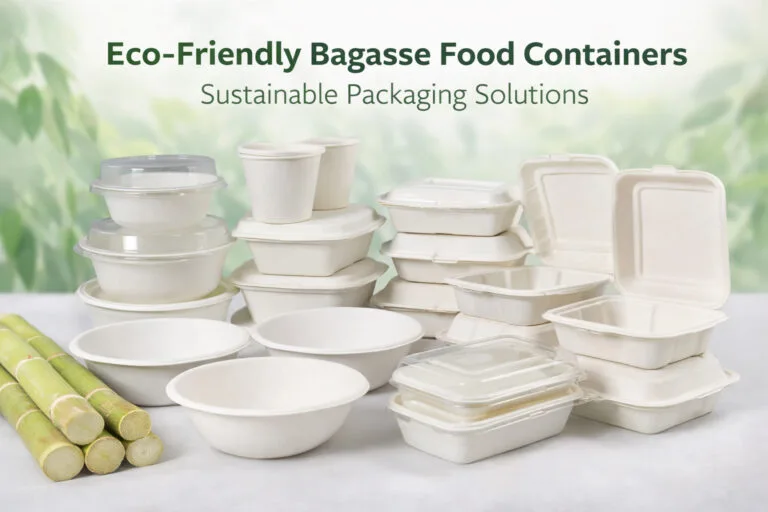
Certainly, our to go bowls with lids make it possible to serve hot foods such as soup, noodles, and stew without leaking or deforming — bagasse home compostable.

Can I have their logo printed on my souvenirs?

Of course, Yes — bagasse home compostable. Such businesses have the option of having margarita salad bowls with their brand name on them or any other posters since we customize them. For any further details on branding options, you can reach us — bagasse home compostable.

Hot-water immersion tests show:

Bagasse retains shape for 30–40 minutes at 100°C. PLA begins softening within 30 seconds at 60°C.

1.2 PLA: A Thermoplastic Biopolymer Derived from Fermented Sugars

PLA is produced by polymerizing lactic acid monomers. Its performance characteristics reflect its nature as a thermoplastic. Key Material Properties: Glass transition temperature (Tg): 55–60°C Melting point: 160–170°C Begins softening around: 50–55°C A 2023 study in the Journal of Polymers and the Environment confirms that PLA’s mechanical strength drops sharply above 60°C, making it inappropriate for hot foods or microwaving.

Related Insights

🚀Ready to Go Green and Choose ?

Join the global movement toward zero-waste packaging.


Bioleader® offers:

  • 📦 Bulk order support & fast delivery

  • ✍️ Custom branding and OEM solutions

  • 🌍 Worldwide eco-packaging compliance

Get the Catalogue Products List  & Contact Us Now! 👉

Contact us Below

Click or drag files to this area to upload.You can upload up to 5 files.
The more details you share, the faster and more accurate our quotation will be.