The Modern Market Shift: Why Your Material Choice Defines Your Brand Survival
As 2026 unfolds, the global packaging industry finds itself at a critical crossroads. What was once considered a “sustainability goal” has now become a legal mandate. The final implementation phases of plastic bans in countries like India, Australia, and China—coupled with the expanded scope of the EU’s Single-Use Plastics Directive (SUPD)—mean that companies are now facing a hard deadline for transitioning away from plastic-based packaging.
For international buyers, the challenge is no longer about simply “going green.” The true concern now is supply chain resilience in the face of looming regulatory changes. Companies still relying on legacy plastic packaging now face the risk of “Regulatory Lag,” where outdated inventory can lead to unsellable stock, fines, or even port seizures.
The need for compliance has never been more urgent, and Bioleader® offers the first-mover advantage you need. Beyond just the greenwashing hype, we provide certified, traceable materials and technical data to ensure your business stays ahead of the regulatory curve. This guide serves as your go-to resource for understanding the four key materials driving the plastic-free revolution: Bagasse, PLA, Cornstarch, and Paper.
While we have explored basic material differences in previous articles, this 2026 guide integrates the latest PFAS-free compliance and life-cycle data essential for large-scale procurement. Below, we break down each material’s performance matrix to help you determine which one fits your specific business model for 2026.
I. The 2026 Environmental Compliance Landscape: Beyond Single-Use Plastics
In 2026, compliance has moved from a mere regulatory checkbox to a core business advantage. Governments are increasingly moving toward a Circular Economy model, where the focus is no longer simply recyclability, but instead certified compostability and chemical safety. As global regulators implement strict bans on single-use plastics, companies must evolve quickly to remain competitive and compliant.
1. Global Regulatory Realities: Navigating a Fragmented Market
Global compliance has become a complex web of regional regulations. Here’s a snapshot of what you need to know:
European Union (EU SUPD): The EU is moving toward a complete ban on PE-lined paper cups, while simultaneously increasing taxes on non-recycled plastic packaging. These changes are mandatory by 2026, and the market is shifting rapidly toward compostable alternatives.
North America: In the U.S., multiple states have passed laws requiring foodservice brands to prove their products are PFAS-free. This law is forcing manufacturers to remove harmful chemicals, such as “Non-Intent Added PFAS”, from food packaging, placing greater emphasis on the safety of fiber-based products.
Asia-Pacific: The China 2026 “Plastic-Free Cities” initiative and India’s nationwide enforcement of single-use plastic bans are driving an accelerated demand for certified compostable alternatives in the Asia-Pacific region.
2026 Global Compliance Timeline
Q1 2026
North America: PFAS-Free Mandates
States enforce zero-tolerance for “forever chemicals.” Bioleader PFAS-Free products ensure uninterrupted market access.
Q2 2026
EU: SUPD Final Enforcement
Total ban on non-compostable plastic linings in takeout containers. Transition to TÜV OK Compost-certified items is mandatory.
Q3 2026
Asia-Pacific: Plastic-Free Cities
China and India’s nationwide enforcement hits full scale. High-performance bio-alternatives become the new industry standard.
2. The “Greenwash” Trap: Identifying Regulatory Risks
The marketplace is flooded with terms like “degradable” and “bio-based” that are often used without scientific backing. In 2026, “degradable” without a certified compostable standard is a liability, not an asset. These products often break down into microplastics, contributing to environmental pollution instead of offering a true biological decomposition solution.
❌ Degradable: Often just fragments into microplastics; no strict testing standard.
✅ Certified Compostable: Disintegrates into organic matter; validated by TÜV OK Compost.
The Buyer’s Checklist: How can you avoid greenwashing?
Does your supplier provide verifiable certificates like TÜV OK Compost (Home & Industrial), BPI, or DIN CERTCO?
If not, your brand risks being dragged into greenwashing litigation and facing backlash from environmentally-conscious consumers.
3. Bioleader’s Compliance Standard: Your Passport to Global Trade
At Bioleader (厦门彼利得), compliance is not just about meeting the minimum standards—we anticipate regulatory needs ahead of time. Our 2026 material portfolio is built to exceed the most stringent global requirements:
PFAS-Free Innovation: Delivering 100°C oil resistance without the use of synthetic coatings, Bioleader achieves excellent performance without relying on harmful PFAS chemicals through advanced physical pulping and organic barrier coatings.
Certified Transparency: All Bioleader products are supported by the highest levels of certification, including EU 10/2011 (Food Contact Safety) and TÜV OK Compost certification, guaranteeing that our materials meet the highest compostability standards.
Material Traceability: From farm to finished product, Bioleader ensures a fully transparent supply chain, so you can confidently trace the sustainability of every material we provide.
II. Material Performance Matrix: The Definitive 2026 Comparison for Decision Makers
In 2026, the question is no longer “is it eco-friendly?” but “will it perform under pressure?” Below is the definitive performance matrix for the materials shaping the food packaging industry, designed to provide decision-makers with a clear, side-by-side comparison. The following data was derived from laboratory stress tests and international composting standards, ensuring you have the most accurate and actionable information for your procurement decisions.
Material Performance Comparison Matrix
| Feature | Sugarcane Bagasse | PLA / CPLA | Cornstarch (PSM) | Aqueous Paper |
|---|---|---|---|---|
| Thermal Limit | 100°C+ (Best) | 50°C (PLA) / 85°C (CPLA) | 80°C | 90°C |
| Oil Resistance | Superior (High-Oil) | Moderate | Good | Moderate |
| Compostability | Home & Industrial | Industrial Only | Variable | Recyclable / Home |
| Durability | High (Heavy Duty) | Moderate | Moderate | Light to Medium |
| Cost Index | Moderate | Premium | Economical (Best) | Moderate |
| Best For | Hot Food Delivery | Cold Drinks / Lids | High-Volume QSR | Coffee / Bakery |
1. Sugarcane Bagasse (Plant Fiber) – The Heavy-Duty Champion
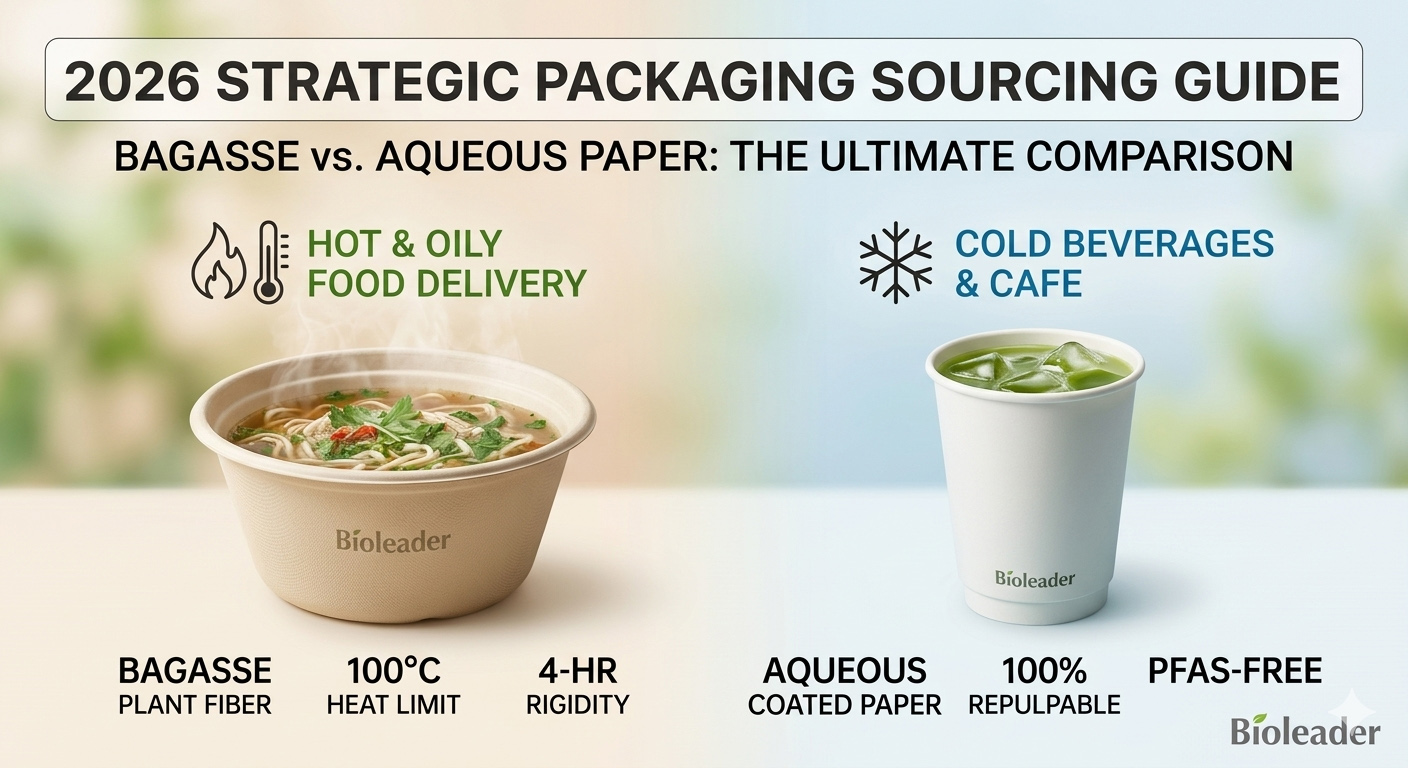
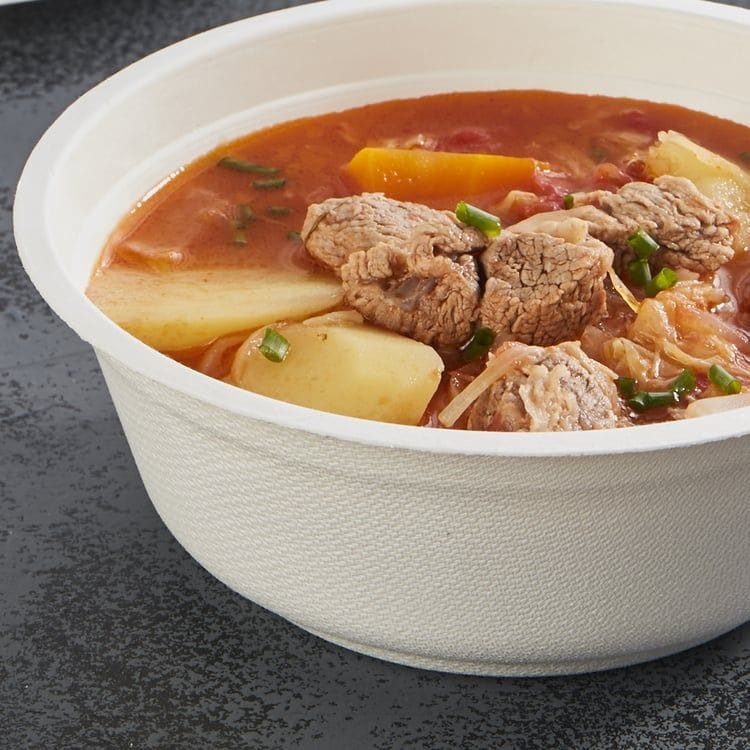
Bagasse, derived from sugarcane, stands out as one of the most durable and heat-resistant materials available, making it a top contender for hot food packaging and takeout containers.
Heat Resistance (120°C/30min): Bagasse is microwave-safe and can withstand oven temperatures up to 100°C, making it the top choice for Microwave-safe and Oven-reheat packaging, a critical requirement for 2026 home delivery standards. In contrast, PLA and CPLA cannot perform under such extreme conditions and will lose structural integrity.
Oil Resistance: Bagasse offers superior oil resistance, particularly for high-oil foods like fried meals and soups, where other materials like PLA may falter.
Leak Resistance: Bagasse bowls maintain vertical rigidity and zero-leakage for over 4 hours, even when used with high-moisture foods like soups, salads, and sauces. This feature is crucial for food delivery platforms, which prioritize packaging that ensures no spillage during transportation.
Composting: Bagasse is home and industrial compostable, breaking down into organic matter within 60–90 days under industrial composting conditions, ensuring it returns to the earth without leaving harmful residues. Certified by TÜV OK Compost, it provides reassurance for buyers who prioritize environmental impact.
Best For: Hot food delivery, takeout, heavy-duty packaging needs.
2. PLA & CPLA (Bioplastics) – Engineering Precision
PLA (Polylactic Acid) and CPLA (Crystallized PLA) are known for their lightweight, transparency, and bioplastic origin, making them ideal for cold food applications. CPLA offers higher performance in hot applications, thanks to its crystallized structure.
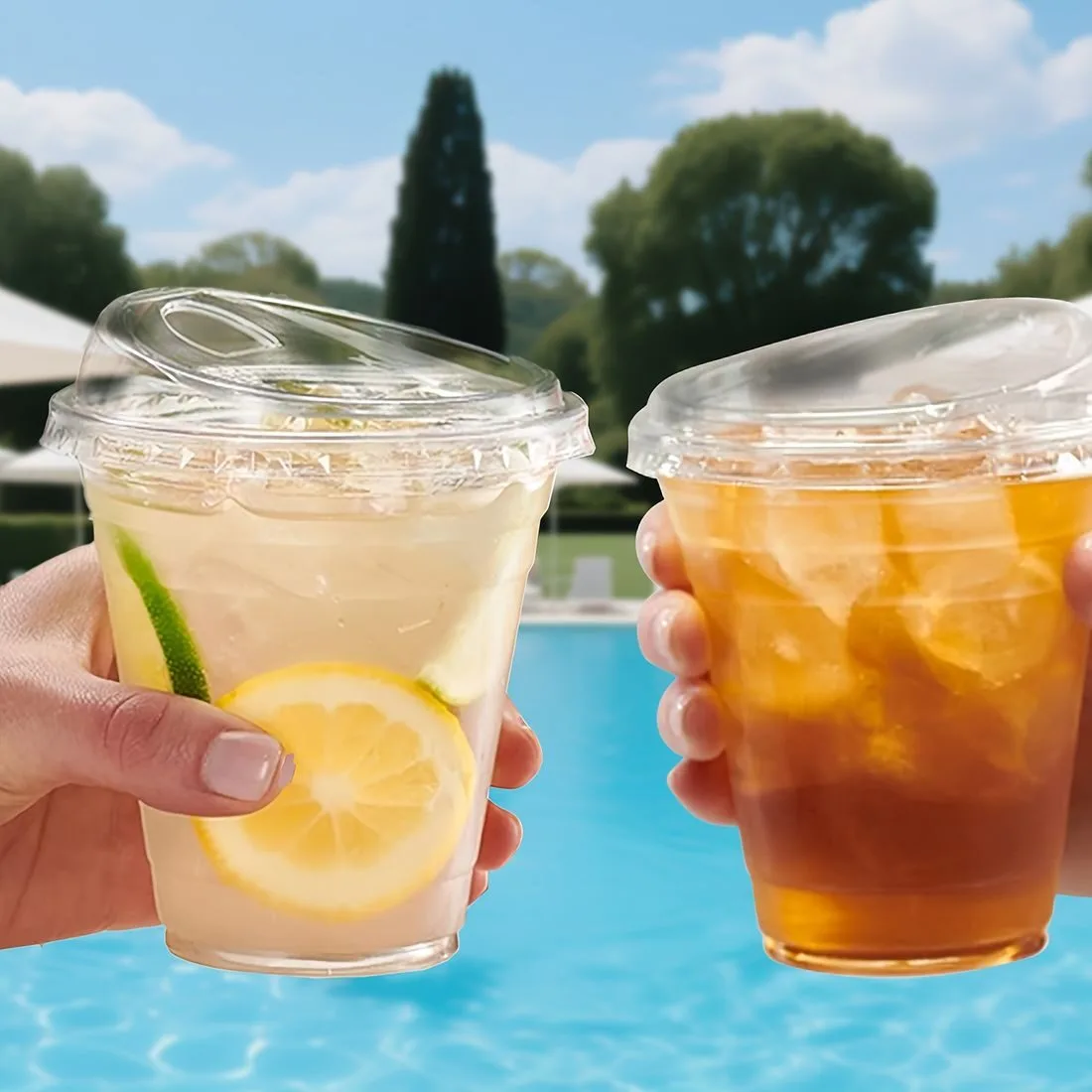 |  |
Cold vs. Hot: Why Cold Drinks Choose PLA, Hot Containers Choose CPLA:
PLA is perfect for cold drinks due to its crystal-clear appearance, maintaining its integrity under temperatures below 50°C.
CPLA is ideal for hot containers, such as soup cups and hot beverage lids, withstanding temperatures up to 85°C, making it suitable for hot beverages but not for high-temperature food delivery.
Transparency vs. Functionality: PLA provides excellent clarity and visual appeal, but CPLA sacrifices transparency for rigidity, ensuring it can withstand the heat of hot food packaging.
Degradation: Both PLA and CPLA require industrial composting to break down properly. They typically decompose within 45–90 days in industrial composting facilities, but home composting is not feasible due to temperature constraints.
Flavor Neutrality: PLA provides an odorless and flavor-neutral experience, crucial for premium cold-pressed juices and specialty salads, where maintaining taste integrity is essential for customer satisfaction.
Best For: Cold drinks, beverage cups, hot beverage lids.
- 💡 For a deeper scientific dive into structural differences and specific degradation cycles, see our Full Bagasse vs. PLA Analysis.
3. Cornstarch-based Compounds – The Pragmatic Choice
Cornstarch-based packaging provides an affordable and eco-friendly solution for high-volume applications. It is often used in takeout containers, cutlery, and food trays.

Cost vs. Eco-Impact:
Cornstarch-based products are the most affordable among biodegradable packaging options, making them ideal for high-volume use in fast-food chains and takeaway services. While these materials are bio-based, they often require a specific blend with polymers (such as PP) for enhanced durability, which can affect their full biodegradability.
Bioleader ensures that cornstarch materials are high bio-content, balancing cost-effectiveness with environmental requirements.
Degradation: Cornstarch-based materials require industrial composting to break down within 90-120 days in industrial composting facilities. However, this rate of degradation may vary depending on material composition.
Best For: Quick-service restaurants (QSR), high-volume packaging.
4. Sustainable Paper (Aqueous Coating Technology)
Sustainable paper packaging is evolving with the introduction of water-based coatings. These coatings replace traditional PE (Polyethylene) and PLA coatings, providing a fully recyclable and compostable solution.
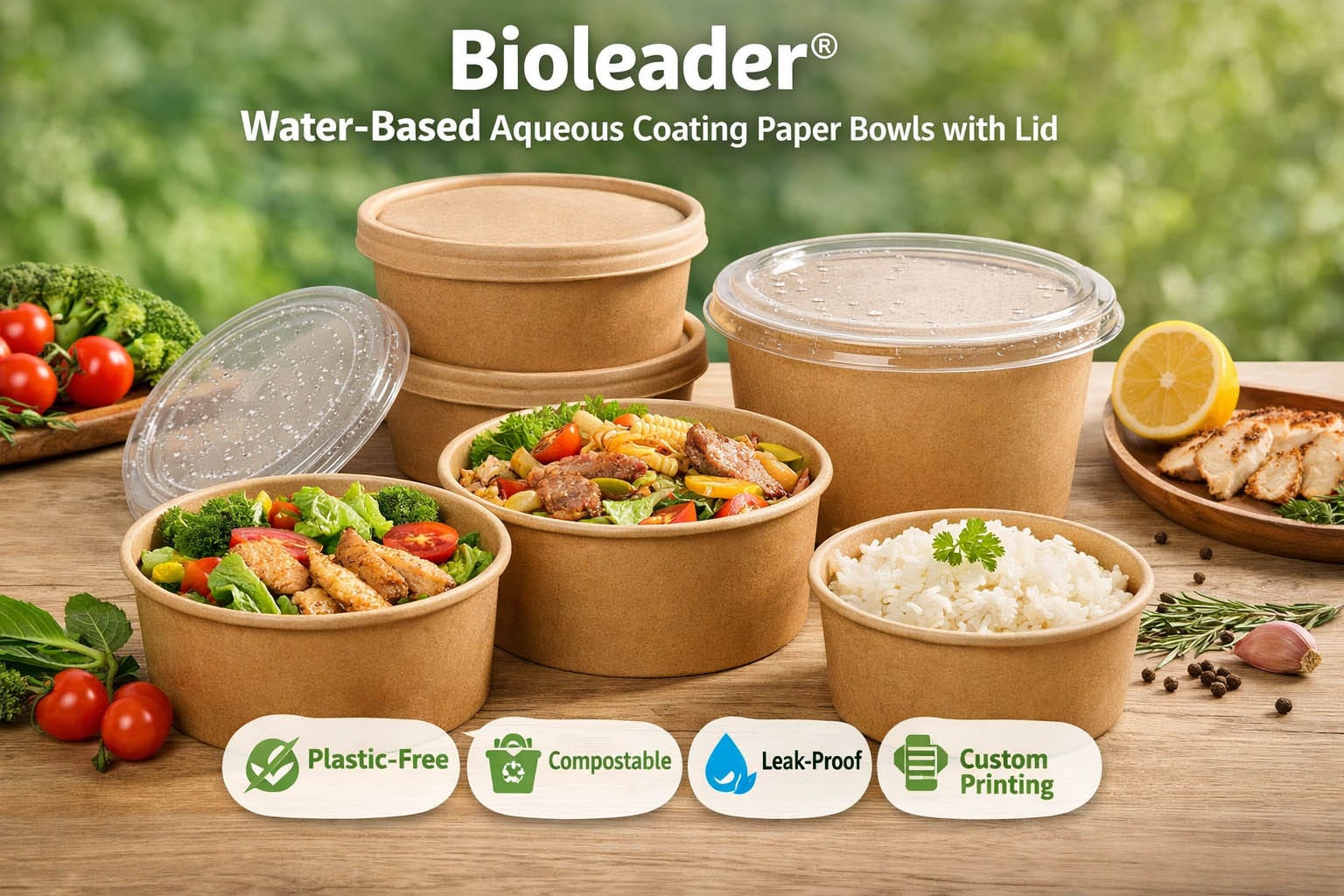
Beyond PE Lining: Aqueous coatings ensure that paper products are 100% repulpable in standard paper recycling streams, eliminating the ‘double-lining’ recycling hurdle. This new coating technology guarantees that paper products are fully recyclable and compostable without relying on plastic or harmful chemicals.
Repulpability: Unlike PE-lined paper, which cannot be recycled, water-based aqueous-coated paper can be easily repulped and recycled, offering a major advantage for packaging sustainability. This makes it a top choice for coffee cups and bakery packaging, which require a balance between durability and eco-friendliness.
Plastic-Free Tactile Experience: Bioleader’s aqueous coating provides a plastic-free tactile experience while meeting the 2026 European standards for PFAS-free food contact. This technology resolves the major issue with traditional paper cups and containers that rely on plastic coatings, offering a more sustainable and tactile packaging solution.
Best For: Paper Coffee cups, bakery packaging, and hot beverage lids.
Conclusion of Material Comparison:
This material comparison matrix serves as a practical decision-making tool for businesses looking to choose the most suitable material for their packaging needs in 2026. Whether you’re a restaurant owner, QSR chain, or foodservice provider, choosing the right material impacts not just your costs, but also your brand’s sustainability credentials.
Next, we’ll explore the Sustainability & Life Cycle Assessment (LCA) of these materials to provide you with further insight into their long-term environmental impact, helping you make the most informed, future-proof decision for your business.
III. Sustainability & Life Cycle Assessment (LCA)
As global mandates move beyond simple “plastic-free” claims, the focus has shifted to Life Cycle Assessment (LCA). In 2026, a truly sustainable product must prove its value from Cradle to Grave—from raw material extraction to its final end-of-life scenario.
This section breaks down the CO2 reduction and end-of-life scenarios of different materials, helping you evaluate their true sustainability impact.
The 2026 LCA Comparison Table: At a Glance
(Note: Data based on average CO2 emissions compared to traditional Polypropylene (PP) plastic.)
| Material | CO2 Reduction (vs. PP) | Primary Source | Home Compostable? | Industrial Compostable? | Recycling Compatibility |
|---|---|---|---|---|---|
| Sugarcane Bagasse | 75% – 85% (Best) | Upcycled Waste | Yes (90 Days) | Yes (60 Days) | Low (Compost First) |
| PLA / CPLA | 60% – 70% | Industrial Corn | No | Yes (45-90 Days) | Low (Specialized Only) |
| Cornstarch (PSM) | 40% – 50% | Corn + Polymers | Variable | Yes | Moderate |
| Aqueous Paper | 50% – 60% | Managed Forests | Yes | Yes | High (100% Repulpable) |
“The data reveals a clear divide: while all materials reduce plastic reliance, Bagasse and Aqueous Paper offer the most robust circular pathways for 2026.”
1. The Carbon Footprint Truth: Raw Material to Factory Gate
The carbon footprint of a material is essential in determining its overall environmental impact. Below is a breakdown of each material’s CO2 emissions, emphasizing their upcycled or bio-based origins and how they compare to traditional plastic production.
Sugarcane Bagasse: The Upcycling Leader
Emissions Data: Bagasse is an excellent example of a “Circular Economy” material. Since it uses leftover fiber after sugar extraction, its carbon debt is nearly zero at the start of production.
Environmental Impact: Bagasse’s CO2 footprint is 75%–85% lower than traditional polypropylene (PP) plastics. This is largely due to the fact that it upcycles agricultural waste (which would otherwise be burned, releasing methane), effectively turning a waste stream into a valuable resource.

PLA & CPLA: The Bio-Industrial Choice
Emissions Data: While PLA reduces reliance on fossil fuels, its polymerization process is highly energy-intensive, leading to a higher carbon footprint than Bagasse. CPLA has a 1.5x higher carbon footprint than Bagasse, due to the crystallization process.
Environmental Impact: In 2026, the focus for PLA has shifted toward using Non-GMO corn for production, which is slightly better for the environment than previous methods. However, its overall carbon footprint remains 1.5x higher than Bagasse, primarily due to energy-intensive high-heat manufacturing.
Aqueous Paper: Low-Impact Barrier Technology
Emissions Data: By eliminating the plastic extrusion step (PE lining), Aqueous Paper has a 30%-40% lower carbon footprint than traditional plastic-coated paper products. This makes it a significant improvement over previous plastic-lined paper solutions.
2. End-of-Life Scenarios: Which Material Actually Disappears?
When evaluating the sustainability of materials, their end-of-life scenarios are just as important as their production processes. Here’s how each material stacks up in terms of composting and recycling:
Sugarcane Bagasse: The Ultimate “Backyard Friendly” Material
Bagasse is one of the few high-performance materials that can consistently achieve TÜV OK Compost Home certification, breaking down into nutrient-rich soil without requiring specialized heat or conditions.
Home Compostable: It can decompose in 90 days under home composting conditions, making it the go-to material for eco-conscious consumers who compost at home.
PLA/CPLA: A Common Pitfall for Buyers
PLA, while bio-based, does not break down in home compost bins. It requires industrial composting at 60°C to decompose, which is unavailable in many regions.
Recycling Issues: PLA is often non-recyclable in regular recycling streams, which means it can end up in landfills when no industrial composting infrastructure is available.
The Recycling Breakthrough: Aqueous Paper
Repulpability: Aqueous-coated paper is a game-changer. Unlike traditional PE-lined paper, which clogs recycling systems, Aqueous paper can be 100% repulped and recycled along with regular paper waste.
Recyclable & Compostable: This makes it highly compatible with both recycling systems and home composting, ensuring a low-impact end-of-life scenario.
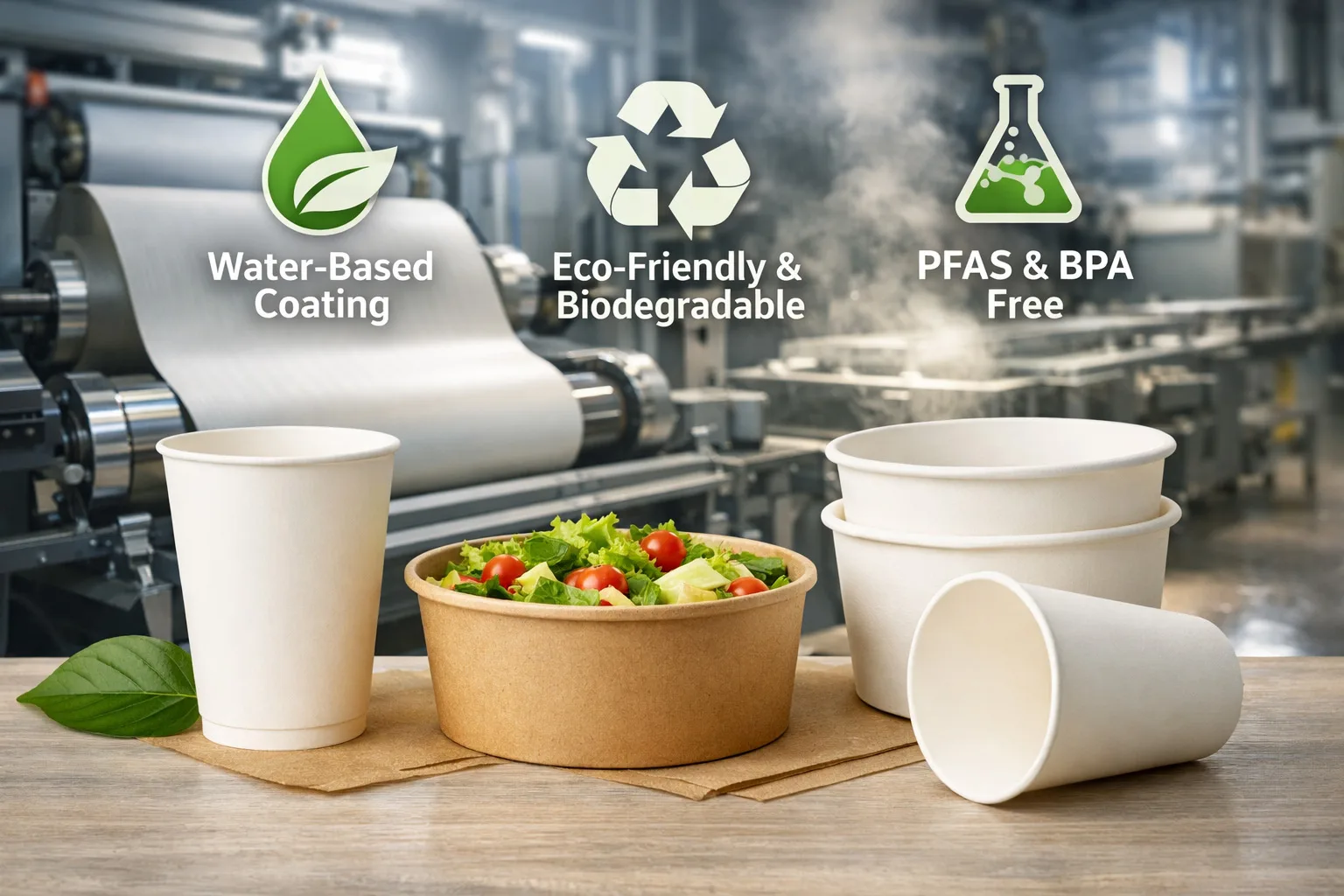
3. Circular Economy Potential: Closing the Loop
Sustainability is not just about material selection but also about ensuring materials can be recycled, reused, or composted to close the loop. Here’s how each material performs in a circular economy context:
Bagasse (The Soil Builder): Ideal for closed-loop systems, such as schools or corporate campuses, where food waste and packaging are composted together to create fertilizer for local agriculture.
Aqueous Paper (The Resource Saver): Aqueous paper’s 100% repulpability makes it an ideal material for urban areas with strong recycling infrastructure, where it can be recycled with standard paper waste, saving valuable resources and reducing landfill impact.
PLA/CPLA: While bio-based, PLA has limited circularity because it requires specialized composting facilities. Without proper industrial composting infrastructure, PLA’s recycling potential is significantly reduced.
Cornstarch-based Compounds: While cornstarch is home-compostable, it still lacks the circularity of other materials like bagasse or aqueous paper. The use of synthetic polymers in cornstarch-based products makes its true end-of-life impact harder to predict.
The 2026 Sustainability Verdict
Based on our LCA analysis, Sugarcane Bagasse remains the gold standard for brands aiming for maximum CO2 reduction and home-compostable compliance. Bagasse stands out for its low-carbon footprint and upcycled nature, making it the most sustainable choice for packaging in 2026.
However, for urban coffee chains where recycling infrastructure is stronger than composting infrastructure, Aqueous Paper offers the most practical circular economy solution. Its 100% repulpability and PFAS-free compliance make it ideal for areas where recycling is more accessible than composting.
IV. Strategic Sourcing Guide: Matching Materials to Your Business Model
Choosing the right material in 2026 is no longer just about knowing the environmental impact—it’s about optimizing for Customer Experience and Regulatory Compliance. Below are the tailored sourcing strategies for three dominant industry models.
| Target Industry | Primary Recommendation | Key Driver |
|---|---|---|
| Specialty Coffee / Bakery | Aqueous Paper + CPLA | Brand Image & Recyclability |
| High-End Catering / Delivery | Sugarcane Bagasse | Heat Retention & Zero Leakage |
| QSR / Event Catering | Cornstarch (PSM) | Cost-Volume Efficiency |
1. Scenario A: Premium Coffee & Bakery Chains
Best Materials: Aqueous Paper (Cups/Boxes) and CPLA (Lids).
Strategic Reasoning: Premium segments demand a tactile experience that matches their brand. Aqueous Paper provides a 100% repulpable and plastic-free feel, aligning with the strict 2026 European standards. CPLA lids offer the necessary heat resistance without the chemical footprint of traditional PS lids.
Business Impact: Preserves taste integrity (no plastic odor), while boosting “Eco-Premium” brand positioning. Aqueous Paper enhances the brand experience, ensuring that the natural aroma of specialty coffee isn’t compromised by plastic odors, while providing superior rim-seal integrity.
Best For: High-end coffee chains, bakeries, and businesses seeking premium eco-friendly packaging solutions.
2. Scenario B: High-End Catering & Hot Food Delivery
Best Materials: Sugarcane Bagasse (Containers) and CPLA (Cutlery).
Strategic Reasoning: For delivery, structural failure is the biggest risk. Bagasse provides 4-hour vertical rigidity even under steam and high-oil conditions, making it microwave-safe—perfect for the “Reheat-at-Home” trend. It also offers superior oil resistance for greasy foods, a critical feature for hot food delivery.
Business Impact: Eliminates leak-related complaints and provides the most robust home-compostable story for the end consumer. Bagasse’s moisture-wicking properties prevent fried foods from becoming soggy during transit, directly improving customer ratings for food quality.
Best For: High-end catering, meal delivery services, and businesses offering reheat-at-home meal kits.
3. Scenario C: Mass Market Retail & Large-Scale Events
Best Material: Cornstarch-based Compounds (PSM).
Strategic Reasoning: When volume is the priority, PSM (Cornstarch-based compounds) offers the highest Cost-to-Durability ratio. Bioleader’s 2026 high-bio-content formula ensures you meet plastic-reduction quotas while staying within tight procurement budgets.
Business Impact: Scalable sustainability for high-traffic environments where industrial composting is available. Cornstarch is the perfect option for quick-service restaurants (QSR) and large-scale events where high-volume, low-cost, and eco-friendly packaging is needed.
Best For: Large-scale food service operations, quick-service restaurants (QSR), event catering, and retailers focused on volume and sustainability.
Strategic Summary:
In 2026, choosing the right material is no longer simply about compliance—it’s about optimizing for customer experience while ensuring long-term sustainability. The correct material choice for your business can drive brand differentiation and customer loyalty while adhering to regulatory standards.
For premium brands, Aqueous Paper and CPLA are the best choices for balancing aesthetics and performance, ensuring your packaging aligns with high-end eco-conscious consumers. For high-end catering and hot food delivery, Sugarcane Bagasse and CPLA provide superior moisture resistance, heat retention, and sustainability. Cornstarch-based compounds are ideal for high-volume applications, offering an affordable yet eco-friendly alternative that meets plastic-reduction mandates.
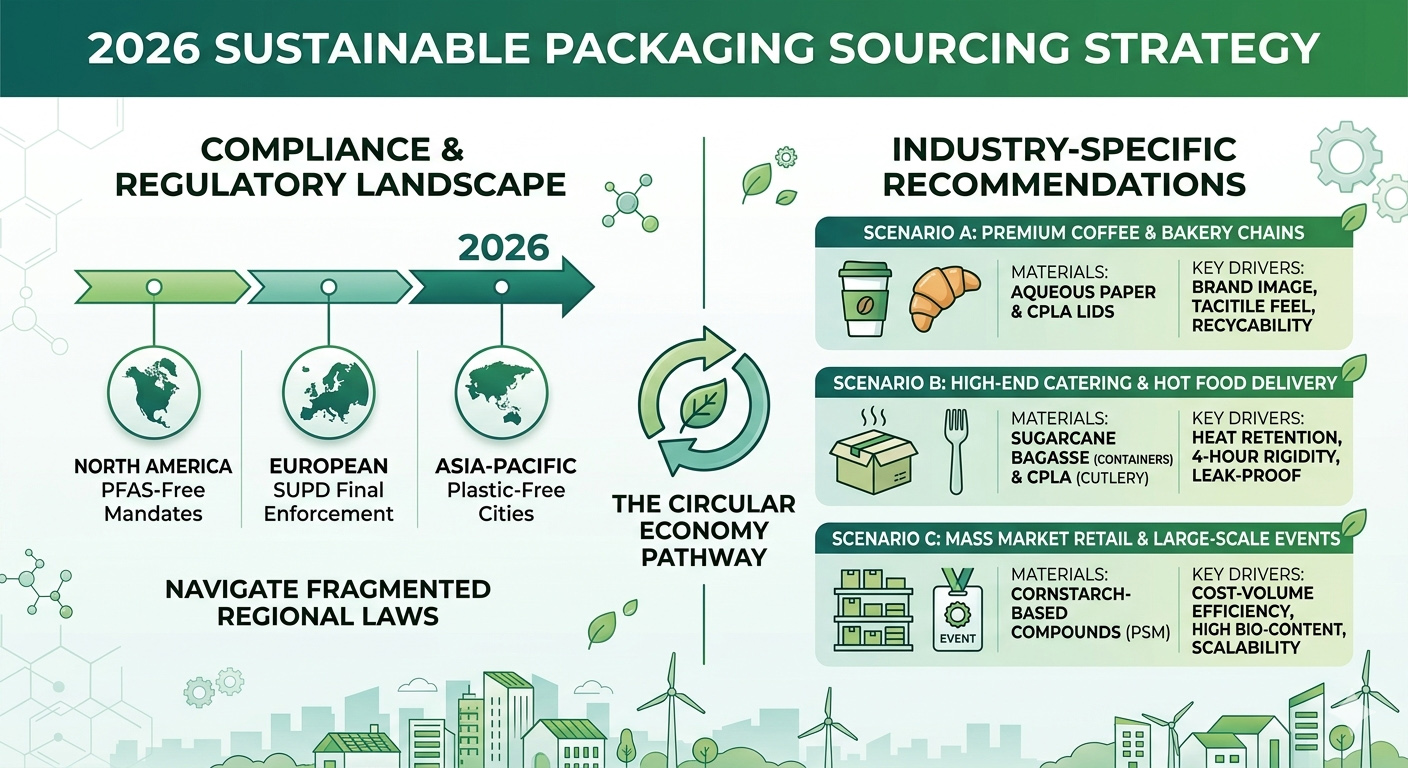
To help you visualize the integration of global compliance and strategic material selection, we have summarized the key findings of this guide in the strategy map below:
Conclusion & Call to Action
2026 is a turning point—it’s the year when compliance will no longer be optional but a requirement for leading brands. Bioleader (厦门彼利得) is not just a supplier; we are your compliance partner, providing not only sustainable packaging solutions but also the expertise to help you navigate the evolving landscape.
Ready to future-proof your business with sustainable packaging? Download the complete 2026 Sourcing Guide or contact us today for a bulk procurement quote tailored to your business needs.