Introduction: Why the Materials We Choose Matter More Than Ever in 2025
Sustainability has moved from being a branding buzzword to a regulatory necessity and consumer expectation. In the global food packaging industry, the debate between kraft paper bowls and plastic bowls is no longer a matter of price alone—it’s about carbon impact, lifecycle performance, legal compliance, and consumer trust.
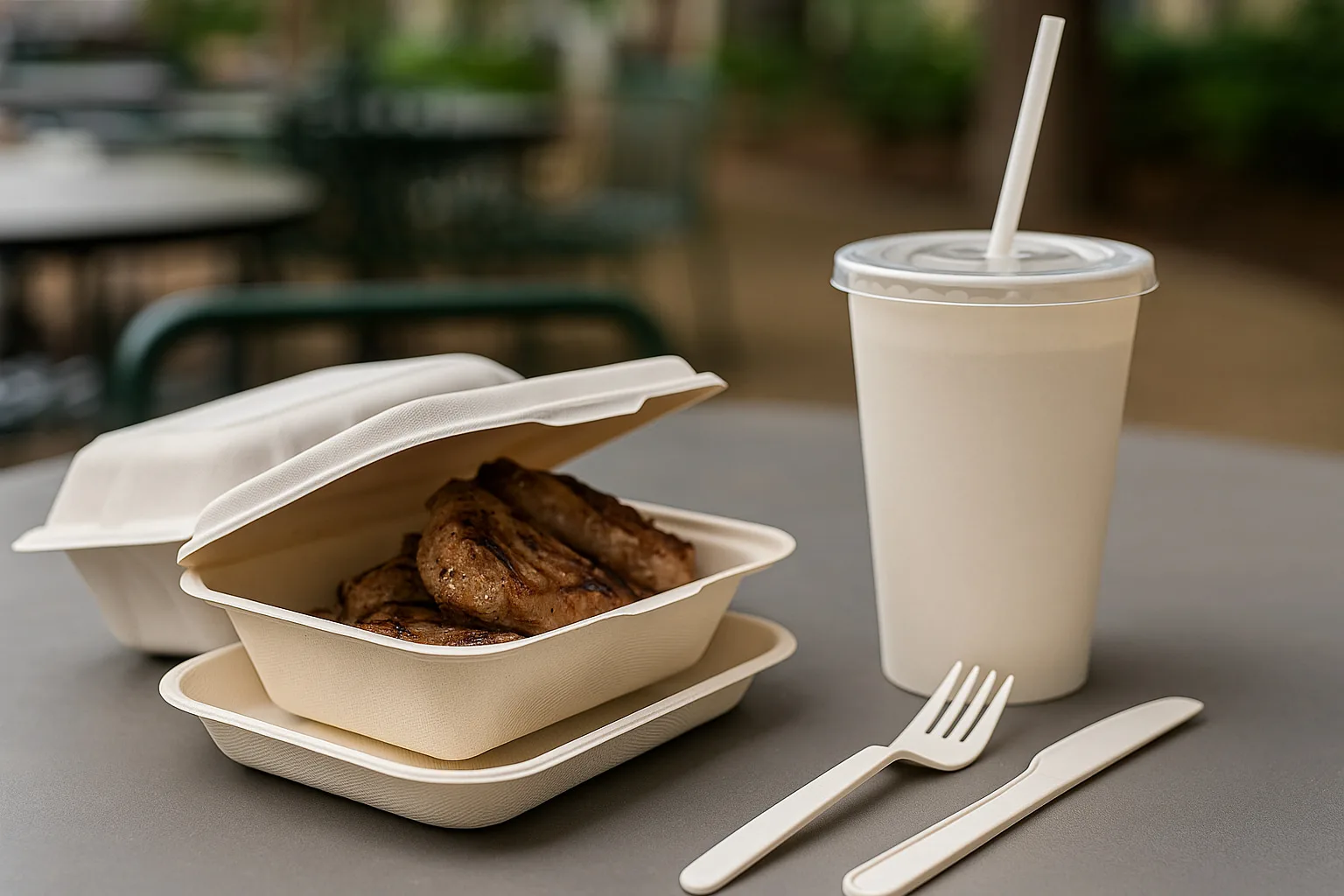
In this post, we take a deep dive into the environmental implications of both packaging types through a comprehensive Lifecycle Assessment (LCA) and Carbon Footprint Analysis, while exploring practical implications for foodservice businesses worldwide. You’ll see why kraft paper bowls are becoming the go-to choice for environmentally conscious brands in 2025.
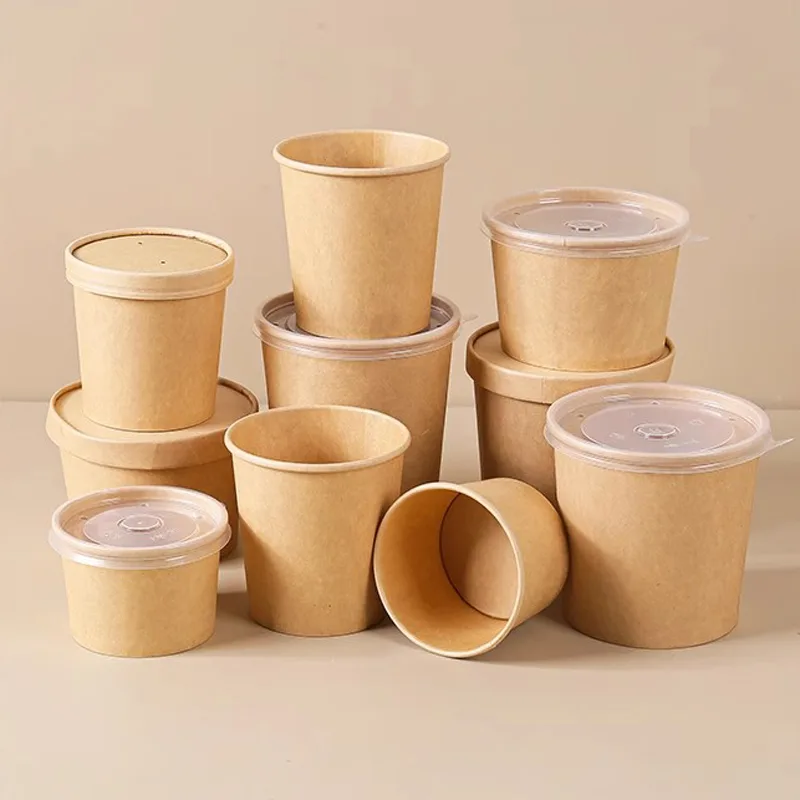
What Are Kraft Paper Bowls? Definition, Composition, and Applications
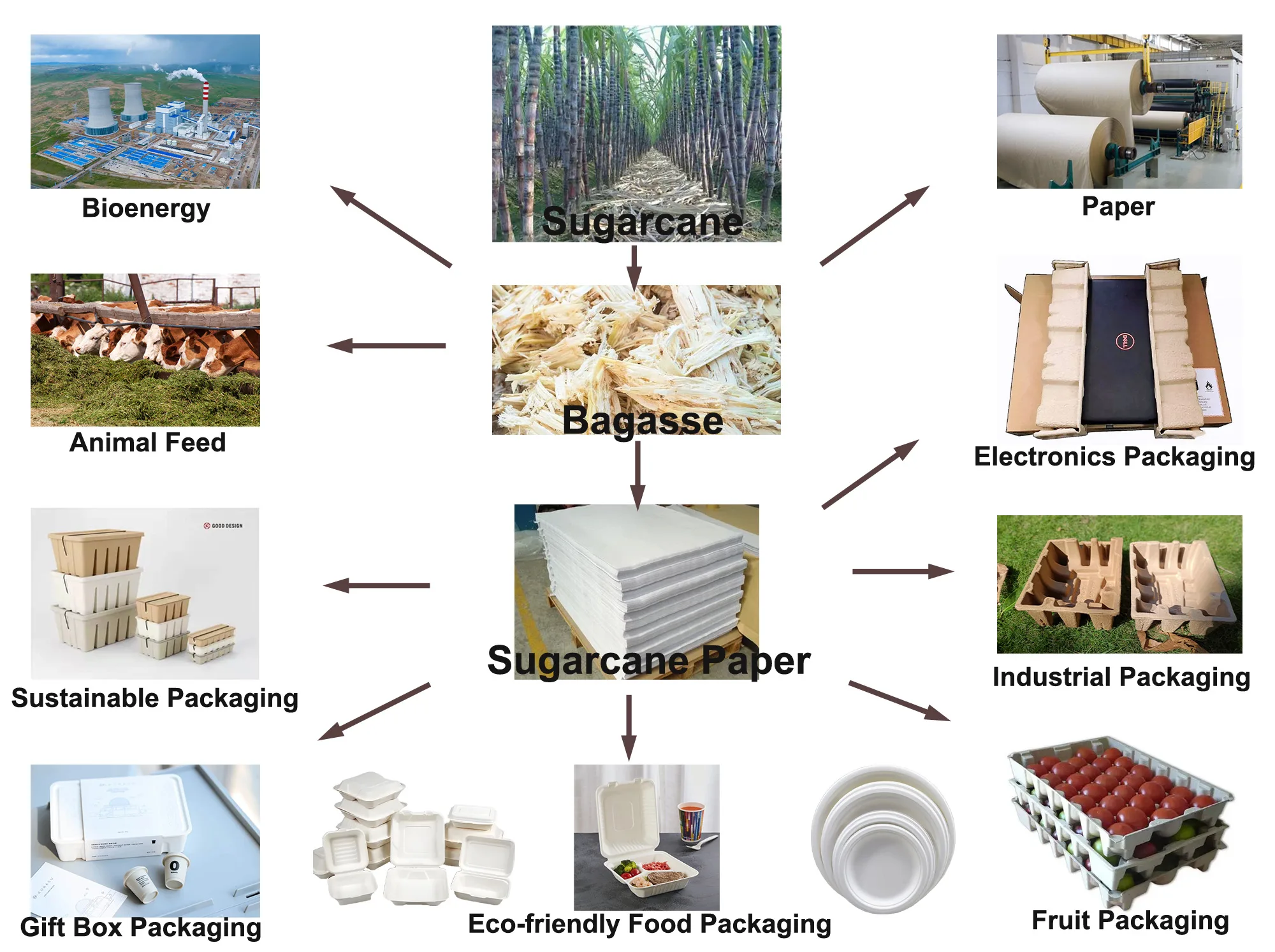
Kraft paper bowls are made from unbleached virgin wood pulp or post-consumer recycled fiber, sometimes blended with sugarcane pulp or bamboo. They are usually lined with PLA (Polylactic Acid) or a water-based coating to ensure moisture resistance and oil repellency—making them suitable for both hot and cold food applications.
Common Features:
Food-grade and leak-resistant
Custom-printable with soy or water-based inks
Available with flat or dome lids (PLA, PET, or kraft paper)
Certifications: FSC, EN13432, BPI, OK Compost Industrial/Home
Popular Uses: Salads, grain bowls, curries, noodles, soups, frozen meals
The rapid adoption of kraft paper bowls is not just an eco-friendly gesture—it aligns directly with regulations and consumer sentiment worldwide.
What Are Plastic Bowls Made Of?
Plastic bowls are typically made from one of the following petroleum-derived polymers:
| Plastic Type | Description | Use Case | Environmental Concern |
|---|---|---|---|
| PET | Lightweight, clear plastic | Cold food, salads | Difficult to recycle when food-soiled |
| PP | Durable, microwave-safe | Hot dishes, soups | Non-compostable, fossil-fuel based |
| PS / EPS | Rigid or foam polystyrene | Disposable bowls (low-cost) | Widely banned due to toxic leachability |
| rPET / rPP | Recycled versions | Limited use due to safety | Traceability, food safety often unclear |
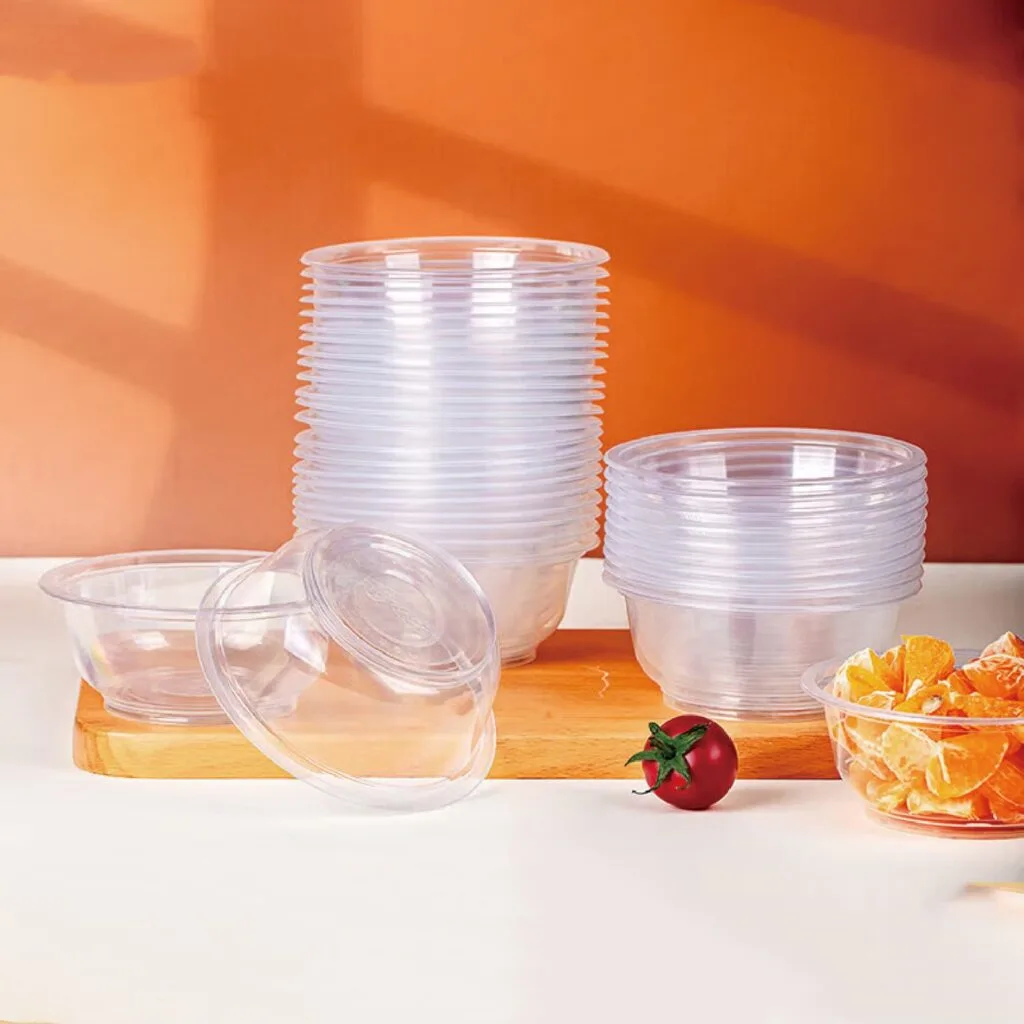
Plastic bowls are not compostable or biodegradable. Most end up in landfills or incinerators, contributing to microplastic pollution, GHG emissions, and marine ecosystem damage.
Lifecycle Assessment (LCA): The Science Behind the Choice
LCA is a methodology that evaluates the environmental impacts of a product across its entire life—from raw material extraction to end-of-life disposal. Let’s examine both kraft paper and plastic bowls using five LCA stages:
1. Raw Material Sourcing
Kraft Paper: Made from trees harvested from responsibly managed forests (FSC-certified) or recycled fiber streams. Trees absorb carbon dioxide during growth, contributing to a net-zero or even net-negative carbon footprint when sustainably sourced.
Plastic: Derived from fossil fuels. Oil drilling, refining, and monomer production emit high levels of GHGs, and the extraction process disrupts land and aquatic ecosystems.
2. Manufacturing Process
Kraft Paper: Requires pulping and heat pressing at relatively low temperatures. Energy consumption is significantly lower than plastic molding.
Plastic: Requires polymerization, pelletizing, and high-temperature injection molding. PS and PET manufacturing release toxic VOCs and require 2–3 times more energy.
3. Transportation and Packaging
Kraft bowls tend to be lighter (per cubic volume) and nest more efficiently, leading to lower transport emissions. Their square or stackable designs optimize cargo utilization.
Plastic bowls are denser and often packed with air gaps, leading to higher transport-related CO₂ emissions per 10,000 units.
4. Use Phase
Both materials perform well for short-term food storage. However, kraft bowls have the added appeal of tactile warmth, rustic appearance, and perceived “cleanliness,” which can enhance customer experience and brand perception.
5. End-of-Life Treatment
Kraft: Compostable (home or industrial), recyclable (if unlined), or incinerated with lower toxin emissions. Under the right conditions, kraft decomposes in 60–90 days.
Plastic: PET and PP are technically recyclable but require clean separation and often end up landfilled. EPS is non-recyclable, and most plastic packaging takes 400–1000 years to degrade.
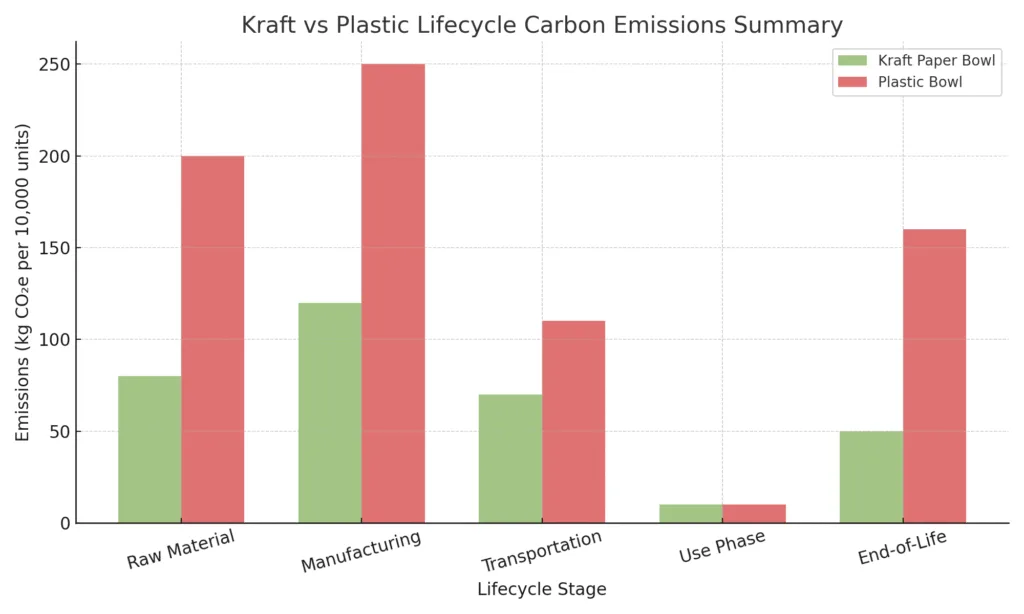
📊 Kraft vs. Plastic: Lifecycle Carbon Emissions Summary
Key Insights:
Plastic bowls emit up to 2.5 times more CO₂ than kraft paper bowls over the full lifecycle.
End-of-life disposal and raw material sourcing account for the majority of plastic’s emissions.
Compostable kraft products reduce methane emissions from landfill decomposition.
Functional Performance Comparison
| Performance Metric | Kraft Paper Bowl | Plastic Bowl (PP/PET/PS) |
|---|---|---|
| Heat Resistance | Up to 100°C (PLA/water-based) | Up to 120°C |
| Microwave Safe | ✅ (with lining) | ✅ (PP only) |
| Compostable | ✅ (certified, varies by coating) | ❌ |
| Recyclable | ⚠️ Limited (depends on lining) | ⚠️ Limited (food-soiled often rejected) |
| Oil/Leak Resistance | ✅ (with coating) | ✅ |
| Stackable/Nestable | ✅ Space-efficient | ⚠️ Often bulky |
🧠 Expert Tip: Kraft bowls with PLA lining provide the best of both worlds—strong resistance and compostability. Bioleader® offers both clear-lid and fiber-lid options.
Is Kraft Really More Expensive?
Yes—slightly. But cost analysis must consider total lifecycle cost, including:
Landfill tipping fees
Plastic taxes (in the EU and U.S.)
Sustainability audits or ESG disclosure costs
Customer lifetime value (LTV) from eco-conscious loyalty
Bulk Pricing Snapshot:
| Product Type | Unit Price (Bulk) | Customization Option | Availability |
|---|---|---|---|
| Kraft Salad Bowl 750ml | $0.05–$0.06 | Logo printing (MOQ 50k) | ✅ Global |
| PET Plastic Bowl | $0.04–$0.06 | Screen print (limited) | ⚠️ Regulation-limited |
What the Law Says: Global Packaging Policies
Governments around the world are aggressively phasing out non-compostable plastic bowls:
| Country/Region | Regulation | Plastic Status |
|---|---|---|
| EU | SUP Directive (2021) | Ban on EPS, restrictions on PP/PET use |
| USA (California, NY) | State plastic ban + EPR legislation | Taxes & bans in effect |
| Canada | Federal ban (2023) | PS/PET banned for foodservice |
| Singapore | Resource Sustainability Act | Tax on plastic packaging from 2025 |
| Australia | State-based bans, e.g., NSW, VIC | Foam and plastic containers banned |
Real Business Case: A Café Chain Switches to Bioleader®
A mid-sized salad café chain in the Netherlands switched from PET bowls to Bioleader® kraft paper bowls with PLA lids in Q3 2024.
Measurable Results:
42% boost in customer Instagram mentions of “sustainable packaging”
38% drop in negative reviews about packaging waste
Approved as a certified vendor for Dutch Green Procurement Registry
📦 Orders fulfilled via Bioleader®’s Xiamen warehouse, DDP shipping to Rotterdam. Lead time: 14 days.
🧠 Expert Insight
“With fossil-fuel-based plastic under global scrutiny, brands that proactively switch to verifiably compostable packaging—like kraft bowls—are not just eco-friendly, they’re future-proofing.”
— Dr. Lara Kim, Environmental Packaging Policy Consultant, Berlin
Conclusion: Kraft Bowls Are the Responsible Choice
In the battle between kraft and plastic, kraft wins across environmental, functional, and reputational metrics.
✅ Lower carbon emissions
✅ Compostable and certifiable
✅ Market- and policy-aligned
✅ Consumer-preferred
Bioleader® proudly supplies FSC-certified, EN13432-compliant kraft paper bowls for global clients ready to ditch plastic and meet the moment.
📌 FAQs
1. Are kraft paper bowls better than plastic bowls for the environment?
Yes. Kraft paper bowls have a significantly lower carbon footprint and are compostable under industrial or home conditions. Plastic bowls are made from fossil fuels, are non-compostable, and persist in landfills for centuries.
2. Can kraft paper bowls hold hot and oily food safely?
Absolutely. Most kraft paper bowls lined with PLA or water-based coatings can withstand temperatures up to 100°C and resist oils and sauces effectively. They are commonly used for curries, soups, and stir-fry dishes.
3. Are kraft paper bowls microwave-safe and leakproof?
Yes. High-quality kraft bowls with PLA or PE lining are microwave-safe and leak-resistant. However, it’s important to verify the lining type before use. Bioleader® kraft bowls are certified for both hot and cold applications.
4. What certifications should I look for in eco-friendly paper bowls?
Look for third-party certifications such as EN13432, BPI, OK Compost Industrial, FSC, and FDA food contact compliance. These ensure compostability, food safety, and sustainable sourcing.
5. Are kraft paper bowls allowed under plastic ban regulations?
Yes. In most countries with single-use plastic bans (EU, Canada, Australia, etc.), certified kraft paper bowls are approved as plastic alternatives—especially when they are compostable and uncoated with fossil-based plastics.
📚 References
European Bioplastics – EN 13432 Standard for Compostability
https://www.european-bioplastics.org/standards/certification/TÜV Austria – OK Compost Industrial & Home
https://www.tuv-at.be/green-marks/ok-compost/Biodegradable Products Institute (BPI) – Certified Product List
https://bpiworld.org/Bioleader® Official Website – Compostable Kraft Paper Bowls
https://www.bioleaderpack.com/Ellen MacArthur Foundation – The New Plastics Economy
https://ellenmacarthurfoundation.org/the-new-plastics-economyUS EPA – Facts and Figures about Plastics
https://www.epa.gov/facts-and-figures-about-materials-waste-and-recycling/plastics-material-specific-dataWikipedia – Life-Cycle Assessment
https://en.wikipedia.org/wiki/Life-cycle_assessment