









Quick Summary: PPWR 2026 is moving foodservice packaging from broad sustainability claims toward measurable procurement, documentation, material, and design requirements. For restaurant chains, importers, distributors, and takeaway packaging buyers, the practical task is no longer only to ask whether a product is “eco-friendly.” Buyers now need to review PFAS requirements for affected food-contact packaging, material and coating structures, recyclability strategy, compostability claims, labeling readiness, technical documentation, and supplier evidence before approving cups, lids, trays, bowls, clamshells, and other packaging for the EU market.
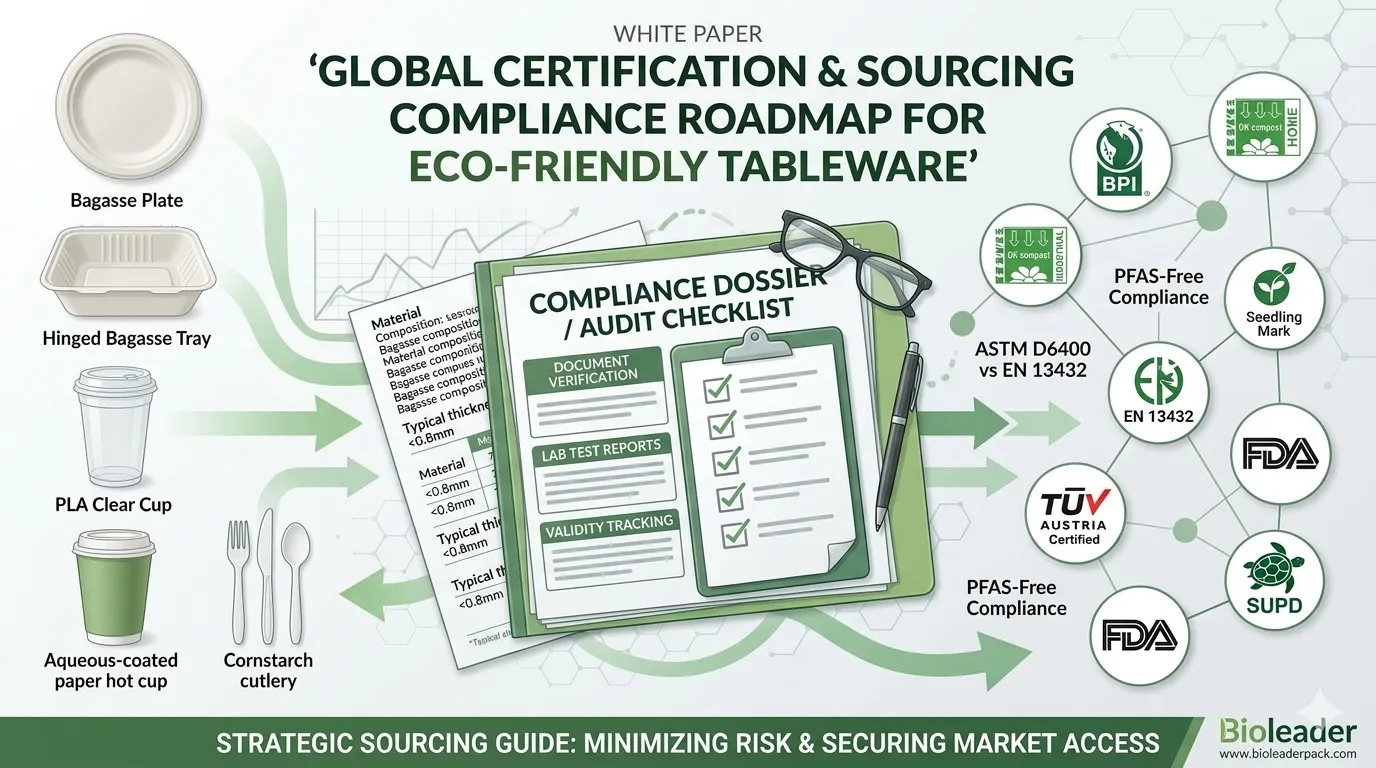
For commercial sourcing, Bioleader®’s PFAS-Free compostable tableware page provides a starting point for comparing molded-fiber plates, bowls, trays, clamshells, and food containers, while product-specific documentation should always be reviewed before final approval.
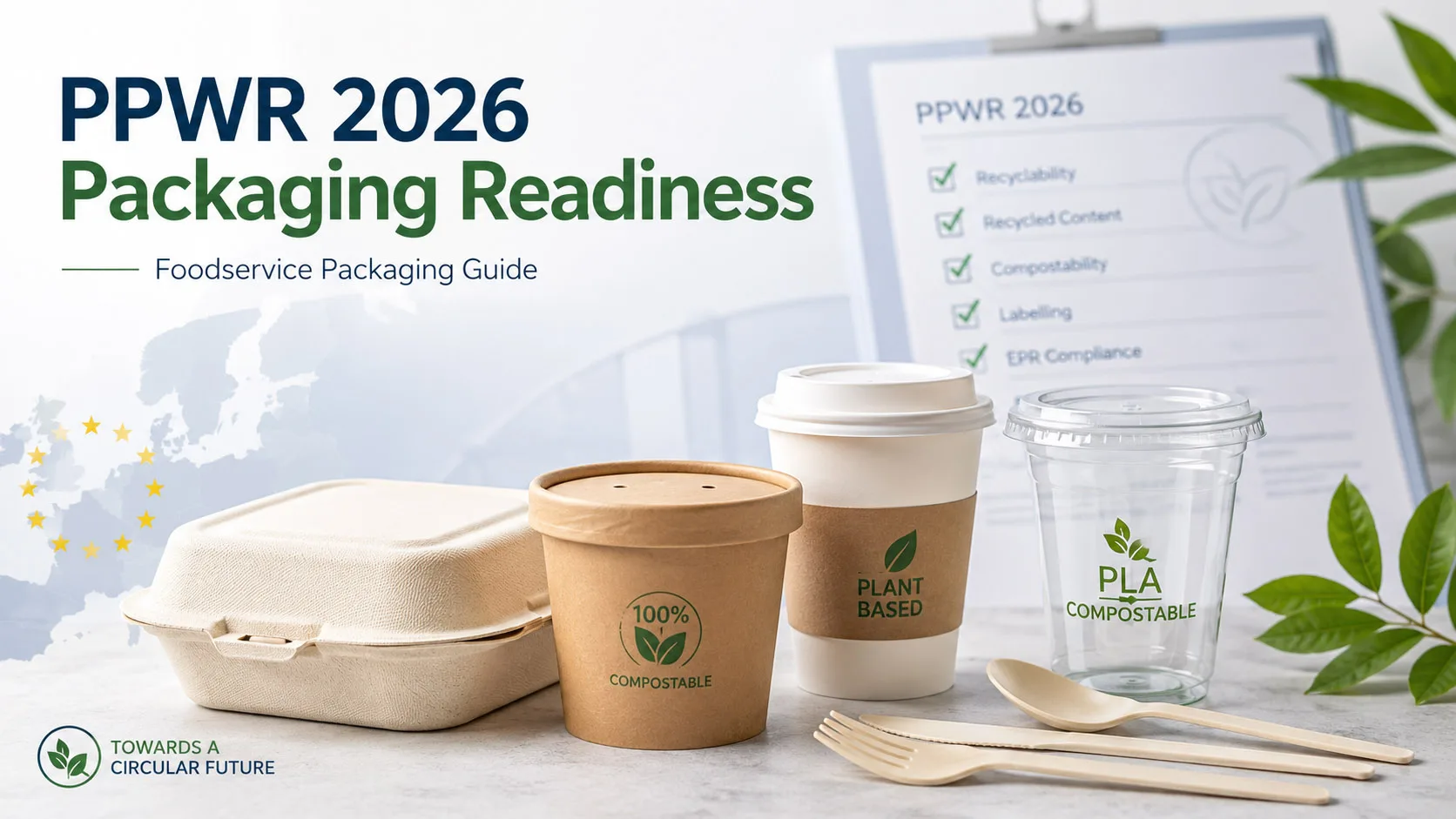
PPWR 2026 Is Now Applicable — It Is a Current Procurement Requirement
For European foodservice brands, packaging importers, restaurant groups, and wholesale distributors, the Packaging and Packaging Waste Regulation, commonly known as PPWR, is no longer a distant policy topic. Regulation (EU) 2025/40 has generally applied since 12 August 2026, although many individual requirements have later or conditional application dates.
This makes PPWR a current procurement and packaging-management issue rather than a future deadline exercise.
The commercial impact is direct. Packaging buyers increasingly need to review not only finished products, but also materials, coatings, lids, attached components, labels, technical documentation, product claims, and supplier evidence. Depending on the applicable PPWR provision and implementation date, packaging may need to address recyclability, packaging minimization, substances of concern, labeling, recycled-content requirements, and other technical obligations.
For takeaway packaging, the safest approach is therefore to review high-volume and high-risk SKUs systematically rather than assuming one general supplier declaration covers an entire product range.
This article is written for buyers sourcing sugarcane bagasse tableware, paper cups, paper bowls, takeaway food containers, fibre-based lids, compostable packaging, and related disposable foodservice products for the European market. Instead of repeating a general explanation of PPWR, this guide focuses on one practical question:
What should foodservice packaging buyers check when approving or re-validating takeaway packaging under the 2026 PPWR environment?
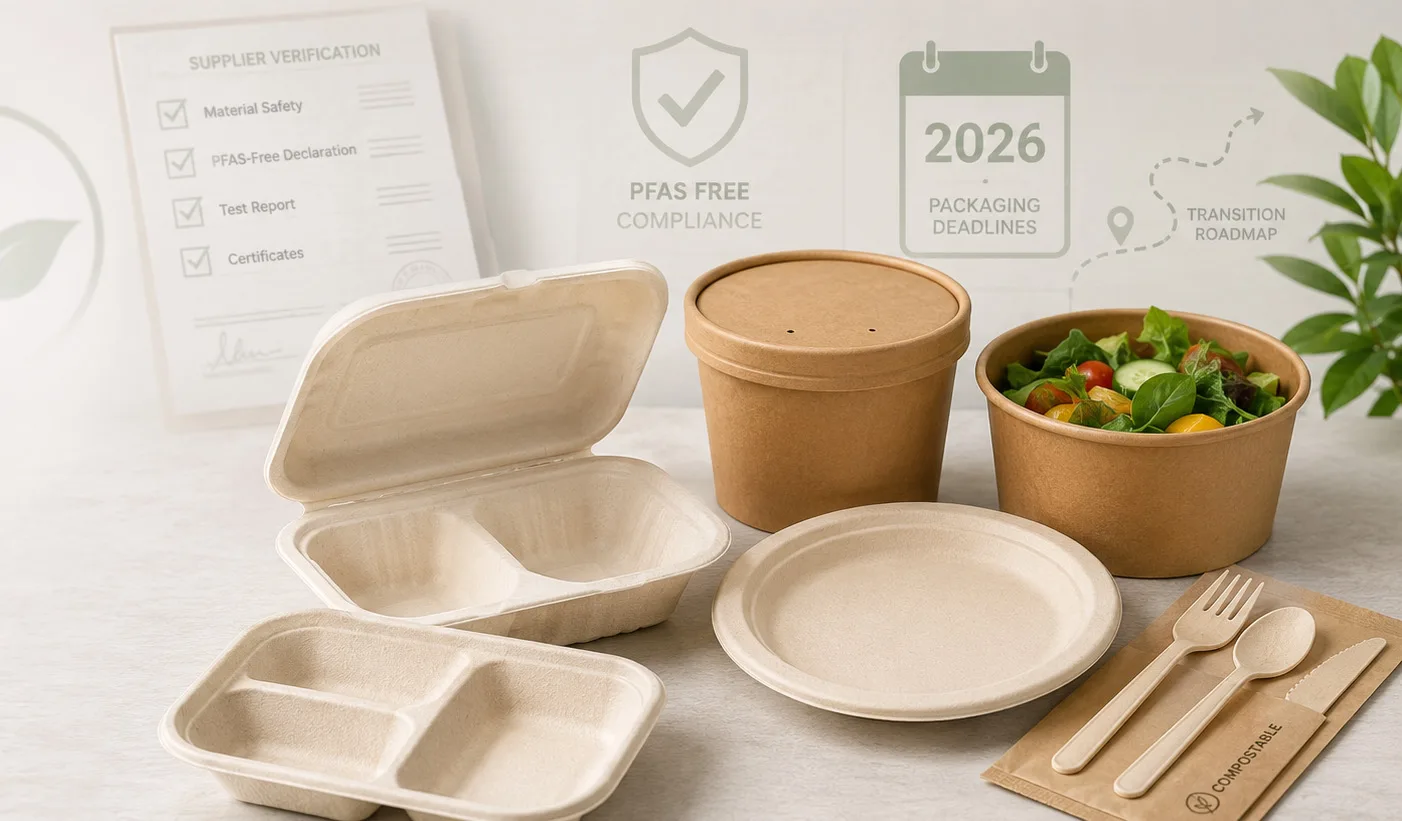
Why Foodservice Packaging Buyers Should Act Now After the 2026 Application Date
The 12 August 2026 application date did not end the packaging transition process. For many importers, distributors, restaurant chains, and private-label brands, it marks the point at which unresolved packaging questions should become current procurement priorities.
Existing SKUs may still need to be reviewed if they rely on old supplier declarations, unclear coatings, incomplete PFAS evidence, broad environmental claims, outdated artwork, or insufficient product-specific technical documentation.
A professional review may require several steps: auditing current SKUs, checking supplier documents, validating product structure, testing alternatives, updating claims, confirming labeling requirements, reviewing inventory status, and qualifying replacement products where necessary.
For this reason, a PPWR-oriented packaging program should be treated as a structured audit followed by targeted remediation rather than a one-time regulatory check.
The most exposed items are usually high-volume food-contact packaging such as beverage cups and lids, takeaway bowls, coated paper containers, molded-fiber clamshells, trays, and multi-component delivery packaging.
Accessories such as cutlery should also be reviewed as part of the foodservice system, but buyers should distinguish packaging obligations under PPWR from separate single-use plastic, food-contact, compostability, or national requirements that may apply to those products.
The strongest buyers are not only asking for the lowest unit price. They are asking whether a supplier can provide an appropriate product file containing material specifications, coating information, food-contact documentation, PFAS-related evidence where applicable, compostability certificates where relevant, product dimensions, packing data, traceability information, and current export documentation.
For importers that need a deeper regulatory execution framework, Bioleader®’s EU PPWR Compliance White Paper provides a more detailed article-to-execution roadmap.
A Broader Market Shift: Review the Whole Foodservice Packaging System
The direction of foodservice packaging is moving beyond the simple replacement of one plastic item with one fibre item. Buyers increasingly need to evaluate the complete packaging system: container, lid, cup, coating, sleeve, label, delivery component, and customer-facing disposal instruction.
The main container is not always the only source of compliance or sustainability risk. A paper bowl may use a polymer coating. A molded-fiber tray may require a grease-resistance system. A fibre container may be paired with a plastic lid. A paper cup may contain PE, PLA, water-based barrier chemistry, or another coating structure.
For this reason, buyers should avoid approving packaging based only on its visible outer material.
Bioleader® recommends reviewing the complete packaging structure rather than judging a product only by its paper, kraft, or plant-fiber appearance.
A PPWR-oriented audit should therefore answer:
- What is the main material?
- What coating, barrier, adhesive, or attached component is present?
- Which components qualify as packaging under the applicable rules?
- What food-contact evidence applies?
- What PFAS evidence applies to affected food-contact packaging?
- What disposal or end-of-life claim is supportable in the destination market?
- Does the supplier documentation cover the exact product being purchased?
What PPWR Changes for Food-Contact Packaging
PPWR establishes a broader packaging compliance framework across the European Union. For foodservice packaging buyers, three areas deserve particular attention: PFAS restrictions for affected food-contact packaging, recyclability and design-for-recycling expectations, and stronger technical-documentation control.
1. PFAS Limits for Food-Contact Packaging
Since 12 August 2026, food-contact packaging placed on the EU market must not contain PFAS at or above the concentration limits established in Article 5(5) of Regulation (EU) 2025/40.
The limits are:
- 25 ppb for any individual PFAS measured by targeted PFAS analysis, with polymeric PFAS excluded from that targeted quantification.
- 250 ppb for the sum of targeted PFAS, where applicable after degradation of precursors, with polymeric PFAS excluded from that targeted quantification.
- 50 ppm for PFAS including polymeric PFAS.
This is particularly relevant to molded-fiber and paper-based food-contact packaging because older grease-resistant systems may have relied on fluorinated chemistry. Buyers should not assume that a bagasse tray, kraft container, or paper-based package is PFAS-free simply because it looks natural.
The claim should be connected to the actual product, material structure, formulation, test sample, and available supplier evidence.
Buyers that need a dedicated PFAS verification framework can review PFAS-Free Packaging in 2026: What It Means and How to Verify Compliance.
For companies still replacing or re-validating molded-fiber packaging, the updated How to Transition to PFAS-Free Tableware in 2026 guide provides a step-by-step supplier-verification and food-performance testing roadmap.
2. Recyclability and Design-for-Recycling Pressure
PPWR establishes a pathway under which packaging placed on the EU market must meet increasingly detailed recyclability and design-for-recycling requirements.
The main performance-grade requirements phase in later, including key milestones from 2030 onward. Buyers should therefore avoid interpreting 12 August 2026 as the date on which every future recyclability threshold became immediately applicable.
However, packaging decisions being made today can still affect future readiness.
This is particularly relevant for:
- coated paper packaging;
- plastic-lined cups and bowls;
- multi-layer packaging;
- composite lids;
- packaging with attached components;
- material combinations that are difficult to separate or identify.
A product may perform well in foodservice but still create future design-for-recycling challenges if its structure is difficult to sort, recycle, or justify within the relevant waste stream.
3. Technical Documentation and Supplier Accountability
PPWR is also a documentation-driven regulation. Importers, distributors, restaurant groups, retailers, and private-label brands should expect greater scrutiny of the evidence supporting packaging claims.
The relevant question is no longer only:
“Can this product hold food?”
It is also:
“Can the supplier identify the material structure, explain the relevant barrier system, provide applicable documentation, and support the claims made for this exact product?”
This creates an advantage for suppliers that can organize product information into a clear technical file.
For EU compliance documentation, buyers can also review Bioleader®’s PPWR Declaration of Conformity guide and template.
Which Foodservice Packaging SKUs Should Buyers Review First?
A practical PPWR packaging audit should start with high-risk, high-volume, food-contact SKUs. These products create the largest commercial exposure because they are used frequently, seen directly by customers, and commonly reviewed by importers, retailers, restaurant groups, and sustainability teams.
| Packaging SKU | Why It Needs Review | Practical Buyer Action |
|---|---|---|
| Plastic or fibre cup lids | High-volume packaging component with direct implications for material structure, disposal, and beverage-service waste. | Confirm material, compatibility, food-contact suitability, and applicable recycling or compostability route. |
| Coated paper cups | Coating type affects material structure, recyclability, compostability claims, and waste-stream acceptance. | Confirm PE, PLA, PP, aqueous, or other barrier structure before product and artwork approval. |
| Molded-fiber clamshells | Hot and oily foods create strong grease-resistance requirements, making PFAS evidence particularly important. | Request product-specific declarations, relevant analytical evidence, food-contact documentation, and real-food performance testing. |
| Takeaway bowls and trays | Used for rice meals, salads, noodles, soups, chilled foods, and delivery menus with different barrier requirements. | Match material and lid system to temperature, sauce level, holding time, transport conditions, and disposal route. |
| Cutlery and meal accessories | These may be subject to separate single-use plastic, food-contact, compostability, or national requirements rather than the same PPWR packaging provisions. | Review accessories separately and do not assume packaging documentation automatically covers them. |
| Multi-component delivery packaging | Different materials can complicate sorting, labeling, claims, and customer disposal behavior. | Identify every material and simplify unnecessary material combinations where commercially practical. |
PFAS-Free Is Becoming a Baseline Requirement for Affected Food-Contact Packaging
In earlier years, PFAS-free molded-fiber packaging was often positioned primarily as a sustainability upgrade. Under the current regulatory environment, product-specific PFAS evidence is becoming part of basic supplier qualification for affected food-contact packaging, particularly for EU-facing buyers.
This has major implications for molded-fiber packaging.
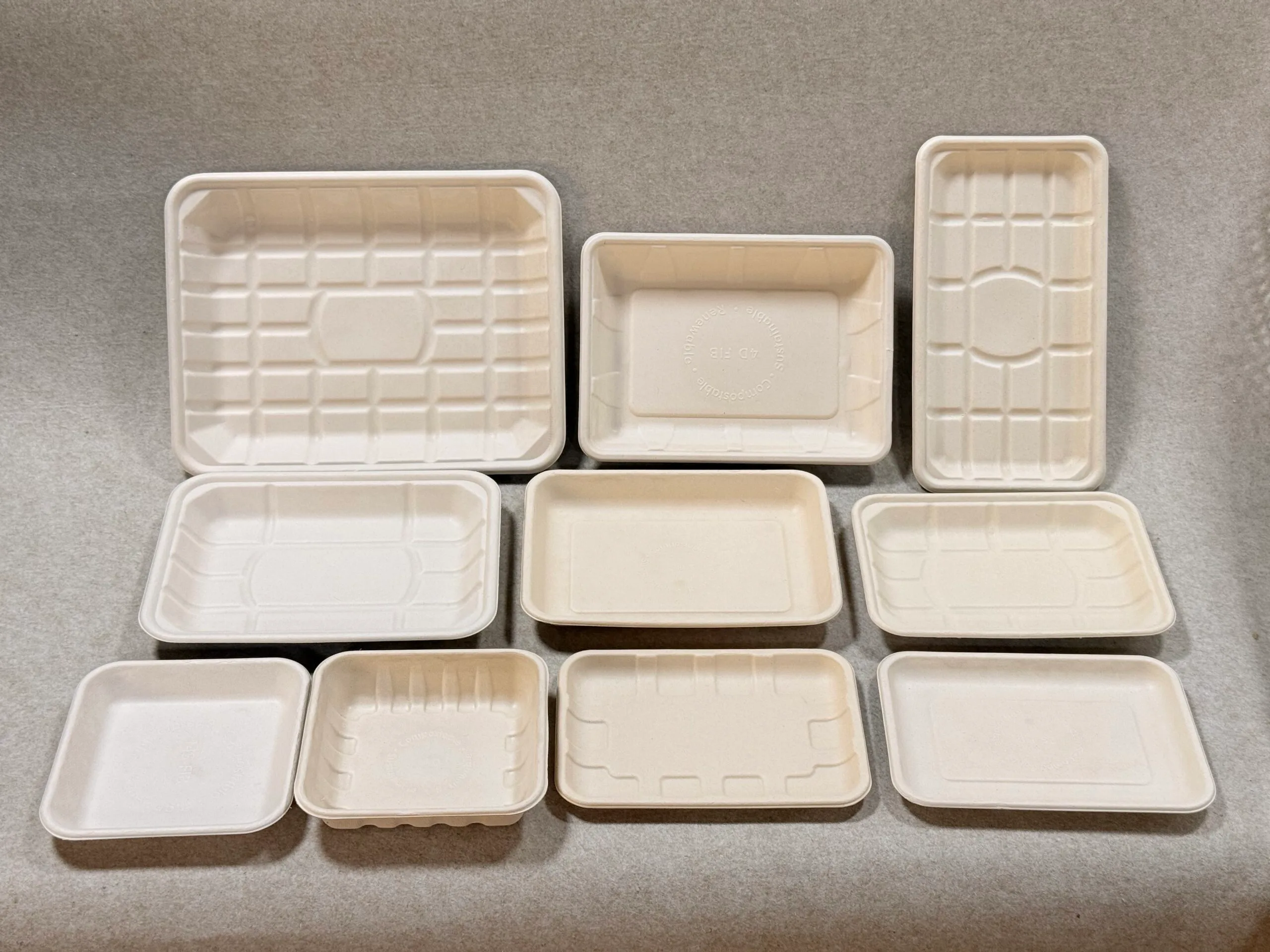
Products such as bagasse clamshell boxes, compartment containers, bowls, and trays can provide alternatives to foam and conventional plastic food containers. However, buyers still need to verify the exact barrier system and supporting evidence for the selected SKU.
For foodservice buyers, the correct procurement question is not:
“Is bagasse eco-friendly?”
A stronger question is:
“Does this specific bagasse product have appropriate PFAS evidence, food-contact documentation, grease and moisture performance, lid compatibility, and supply consistency for my intended food application?”
For a deeper technical comparison of grease-resistance technologies, buyers can review PFAS-Free Sugarcane Tableware: Internal Additives vs Barrier Systems.
Compostable vs Recyclable Under PPWR: Buyers Need a More Careful Message
One common mistake is to assume that compostable packaging is automatically PPWR-compliant. This is not accurate.
Compostability and PPWR compliance are related only in specific contexts. PPWR does not make compostability a universal substitute for recyclability.
A compostable product still needs to be evaluated according to:
- its actual material composition;
- intended use;
- food-contact requirements;
- applicable compostability scope;
- local collection and treatment infrastructure;
- labeling requirements;
- other PPWR provisions that apply to that packaging format.
For example, compostable PLA cups can be suitable for cold beverages where the product specification, industrial composting route, and local rules support their use. However, PLA should not be presented as universally exempt from plastic restrictions or as suitable for hot beverage applications unless the specific product is designed and documented for that use.
Bioleader® positions compostable PLA cups primarily for cold drinks such as iced coffee, juice, smoothies, bubble tea, and other chilled beverage applications.
For hot beverages, paper cups with an appropriate barrier structure are generally a more relevant sourcing category.
For hot soups, noodles, stews, and saucy takeaway foods, buyers may compare paper soup bowls with lids and molded-fiber containers according to menu requirements, holding time, barrier structure, lid type, and local end-of-life pathway.
The strongest sourcing strategy is not to force every product into one material category. It is to match the packaging structure to the food application and market requirement.
Practical PPWR-Oriented Replacement Options for Takeaway Packaging
Foodservice buyers should build a mixed-material portfolio instead of forcing every packaging format into one material category. In real operations, a coffee chain, meal-kit brand, airline caterer, supermarket deli, QSR group, or restaurant chain may need different packaging systems for hot meals, cold drinks, salads, soups, desserts, chilled display, and delivery combinations.
1. Sugarcane Bagasse for Hot Meals, Trays, Plates, and Clamshells
Sugarcane bagasse is a renewable plant-fiber material widely used for molded foodservice packaging. It can support many applications including rice meals, burgers, fried foods, snacks, catering meals, plates, clamshells, and trays.
For EU-facing buyers, the key is not simply to request “bagasse.” The selected product should be reviewed for barrier performance, food-contact documentation, PFAS evidence where applicable, lid compatibility, and intended-use conditions.
Bioleader®’s bagasse food containers provide multiple molded-fiber formats for takeaway and delivery applications. Performance should be confirmed against the intended food temperature, grease level, holding time, and transport environment.
2. Paper Cups and Paper Food Packaging for Beverage and Takeaway Systems
Paper cups remain important for hot beverage service, office catering, hotels, events, and coffee chains.
However, buyers should pay close attention to the complete material structure. A paper cup may use PE, PLA, water-based barrier chemistry, or another coating system. These structures can affect recycling, compostability claims, product performance, and destination-market positioning.
Bioleader®’s paper cup category supports different beverage formats and custom-printing programs. For compliance-sensitive projects, coating specifications and intended-use conditions should be confirmed before artwork and bulk-order approval.
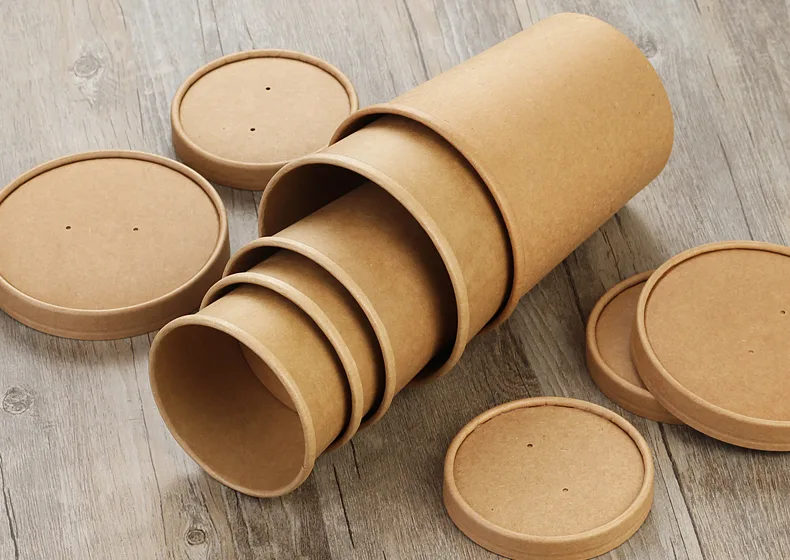
3. Kraft Bowls, Soup Bowls, and Salad Bowls for Prepared Meals
Kraft paper bowls and soup containers remain commercially important for soups, noodles, salads, porridge, rice bowls, grain bowls, desserts, and takeaway meals.
Buyers should not judge these products only by their paper appearance. The lining or barrier structure, lid material, food-contact documentation, use conditions, and end-of-life wording all require review.
For chilled and ready-to-eat foods, Bioleader®’s paper salad bowls with lids provide options for salad, fruit, grain bowls, desserts, and takeaway presentation.
4. CPLA and Cornstarch Cutlery as Separate Foodservice Accessories
Consumers experience foodservice packaging as a complete meal system, but cutlery should not automatically be treated as subject to the same PPWR provisions as packaging.
For foodservice applications requiring compostable utensil options, Bioleader® offers CPLA cutlery and cornstarch cutlery product families.
CPLA is generally used where higher heat resistance than standard PLA is required, but actual performance should be confirmed from the selected product specification.
Cornstarch-based utensils should not automatically be described as pure plant material, plastic-free, or home compostable. Their actual resin system, formulation, certification scope, and destination-market acceptance should be reviewed.
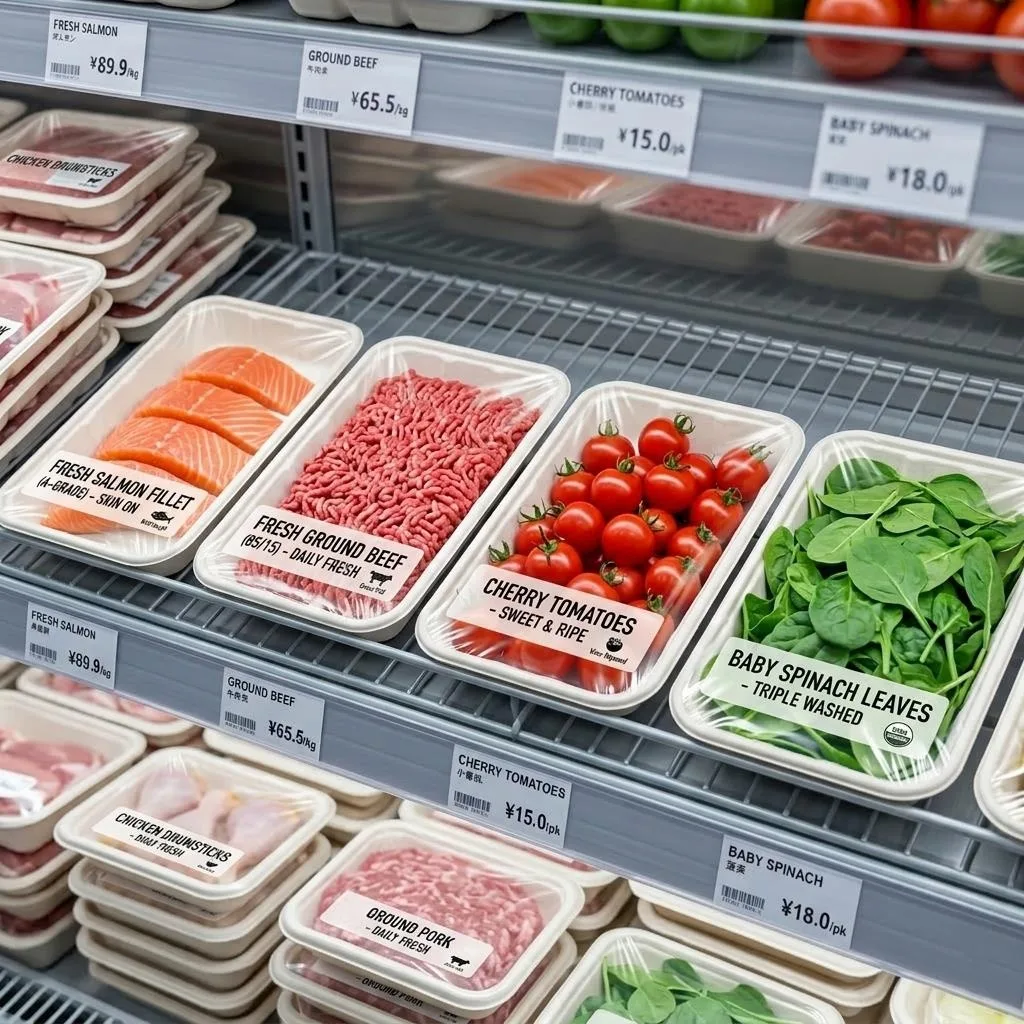
5. Bagasse Trays for Supermarkets, Fresh Food, and Chilled Display
PPWR is relevant beyond restaurants. Supermarkets, delis, fresh-food counters, meal-prep brands, produce retailers, and other commercial food channels also need to review trays and display packaging.
Bioleader®’s bagasse trays can support selected produce, bakery, deli, prepared-food, and other retail applications.
For chilled, wet, fatty, or high-moisture foods, buyers should verify the relevant tray structure, barrier requirement, film or lid compatibility, stacking performance, food-contact conditions, and local disposal instructions before commercial rollout.
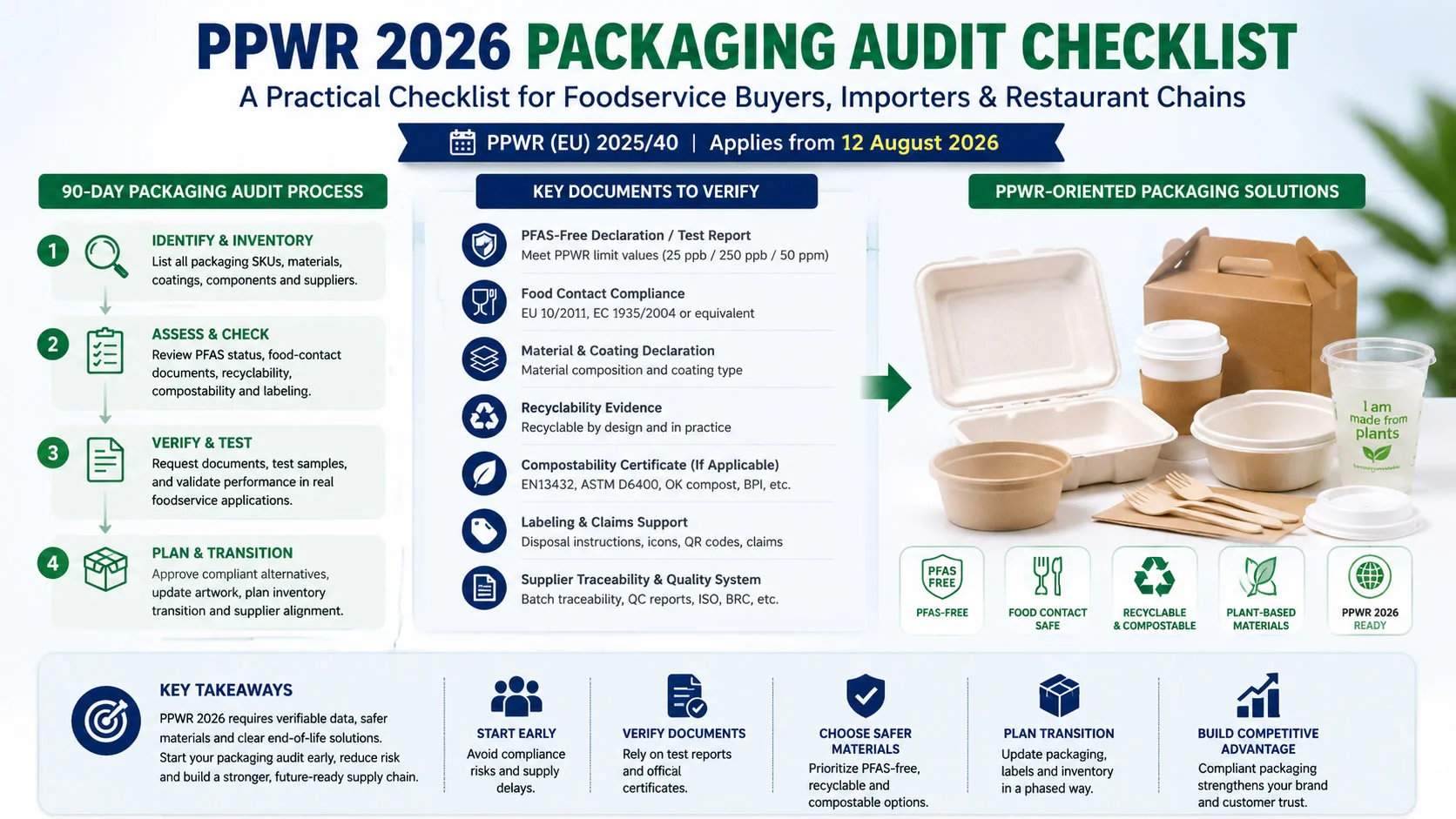
90-Day PPWR Packaging Audit Checklist for Importers and Restaurant Chains
A PPWR review does not need to begin with a complete redesign. It should begin with a structured product and evidence audit.
For businesses that still have unresolved packaging after the 2026 application date, the following 90-day checklist can help identify gaps and move from compliance uncertainty toward controlled sourcing decisions.
| Timeline | Buyer Task | Expected Output |
|---|---|---|
| Days 1–15 | List relevant packaging SKUs, including cups, lids, containers, trays, sleeves, labels, and attached delivery-packaging components. | Current packaging SKU register. |
| Days 16–30 | Classify products by material and structure: plastic, coated paper, molded fiber, PLA, kraft board, composite structure, or other relevant packaging material. | Material and structure risk map. |
| Days 31–45 | Request supplier documents including specifications, food-contact evidence, PFAS-related evidence where applicable, material declarations, and compostability certificates where relevant. | Supplier documentation file. |
| Days 46–60 | Test alternative or re-qualified packaging with real foods, including heat, oil, sauce, steam, chilled storage, stacking, and delivery conditions. | Application validation record. |
| Days 61–75 | Review labeling, artwork, disposal claims, environmental wording, and digital information strategy where relevant. Confirm applicable implementing-act status before final artwork decisions. | Claim and label control sheet. |
| Days 76–90 | Approve retained or replacement SKUs and confirm commercial requirements, packing, production planning, and transition priorities. | PPWR-oriented sourcing and remediation roadmap. |
Illustrative Buyer Scenario: How an EU Foodservice Importer Can Reduce PPWR Risk
Scenario: Consider a typical EU-facing foodservice packaging importer reviewing a takeaway range containing molded-fiber clamshells, coated paper bowls, beverage cups, lids, and meal accessories.
The original product list may have been selected largely through unit-price comparisons, packing information, supplier catalogs, and general sustainability descriptions.
Potential risk: During a current supplier review, the importer may discover that several grease-resistant molded-fiber items do not have sufficiently clear PFAS documentation linked to the exact products being ordered. Other items may have incomplete coating descriptions or broad disposal claims that do not identify the actual packaging structure.
Recommended action: The buyer can rebuild the sourcing process around three steps: classify each packaging SKU by material and barrier system, request product-specific documentation, and validate alternative products with real food applications.
For hot or oily food packaging, the buyer should also review actual performance under heat, steam, grease, holding time, lid closure, and delivery conditions.
Expected procurement outcome: A disciplined review can help the importer remove or temporarily hold uncertain SKUs, separate paper products by coating structure, select better-documented molded-fiber alternatives, and create a clearer technical file for EU customers.
Key lesson for buyers: PPWR compliance should be built into packaging procurement rather than treated as a document-collection exercise after an order has already been placed.
Buyer Document Checklist: What to Request from a Supplier
A supplier catalog is not enough for PPWR-oriented sourcing. Buyers should request relevant product-specific documents and check whether the documents match the actual SKU, material, coating, and intended application being quoted.
This is particularly important when one supplier offers several versions of a similar product.
- Product specification sheet: item code, dimensions, weight, material, capacity, carton packing, and intended use.
- Material declaration: identify bagasse, paperboard, PLA, CPLA, cornstarch-based resin, PP, PE, PET, coating type, or composite structure as applicable.
- Food-contact documentation: relevant evidence appropriate to the product structure and destination market.
- PFAS-related evidence: declarations and analytical evidence appropriate to affected food-contact packaging and the applicable verification need.
- Compostability certificate: EN 13432, ASTM D6400, BPI, TÜV OK compost, or other applicable documentation where relevant and within certificate scope.
- Printing and ink information: particularly for custom-printed cups, bowls, sleeves, and retail packaging.
- Traceability information: production identification, relevant material or batch control, carton marks, and repeat-order consistency.
- End-of-life wording: recyclable, industrially compostable, home compostable, or other disposal wording only where the claim is adequately supported and applicable to the destination market.
Buyers can review Bioleader®’s available certificates and test reports before requesting documentation for a specific product.
Downloadable PPWR Packaging Audit Checklist for Buyers
For importers, distributors, restaurant chains, and private-label foodservice brands, a structured checklist can make PPWR review more consistent.
Instead of evaluating each product differently, buyers should maintain one standard audit record for every packaging SKU.
A practical PPWR packaging audit file should include:
- Product name, item code, size, capacity, material, and coating or barrier type.
- Food application such as hot meals, cold drinks, oily foods, soup, salad, dessert, or chilled display.
- Food-contact documentation status for the target market.
- PFAS-related declaration or test evidence where applicable.
- Compostability certification scope where applicable.
- Expected recycling, composting, or other disposal route in the destination market.
- Labeling and customer-facing claim review.
- Supplier, product, and relevant traceability information.
- Commercial information such as packing, order quantity, production planning, customization, and transition requirements.
Buyer recommendation: create one PPWR audit sheet before approving or re-validating each significant packaging SKU. This makes it easier to compare suppliers, identify weak documents, avoid unsupported claims, and create a cleaner approval file.
Need a PPWR-Oriented Packaging Review?
For importers, distributors, foodservice brands, and restaurant groups comparing bagasse, paper, PLA, CPLA, cornstarch-based, and other packaging structures, Bioleader® can help organize product selection around food application, material construction, available product documentation, packing requirements, and commercial sourcing considerations.
Buyers can contact Bioleader® with the required product, application, quantity, destination market, and documentation needs, or review the Bioleader® product catalogue and price list as an initial sourcing reference.
Common Mistakes When Reviewing Foodservice Packaging for PPWR
Many foodservice companies understand the direction of PPWR but still make sourcing mistakes. The issue is usually not a lack of sustainability intention. It is weak execution.
Mistake 1: Treating “Biodegradable” as a Complete Compliance Claim
Biodegradable is too broad to function as a complete compliance description.
Buyers should identify the material, applicable compostability standard, food-contact requirements, PFAS evidence where relevant, and disposal conditions.
A vague environmental claim may be useful for marketing language, but it is not sufficient for professional product approval.
Mistake 2: Ignoring Lids, Coatings, and Attached Components
A paper bowl may appear fibre-based while using a polymer coating. A paper cup may use a barrier layer that affects end-of-life claims. A bagasse tray may be paired with a plastic lid or film.
PPWR-oriented sourcing should therefore evaluate the complete packaging structure.
Mistake 3: Approving Samples Without Real Menu Testing
Packaging should be tested with its intended food and service conditions rather than only with water or dry samples.
Hot oil, curry, sauce, soup, steam, refrigeration, delivery movement, holding time, and stacking pressure can materially change performance.
This is especially relevant when switching molded-fiber barrier systems.
Mistake 4: Using the Same Replacement Material in Every Market
Europe, the UK, North America, the Middle East, and Asia-Pacific markets may treat compostable plastics, coated paper, molded fiber, plastic components, environmental claims, and disposal instructions differently.
A more resilient sourcing strategy is to build a flexible material portfolio and adjust the product structure and claims according to destination-market requirements.
Mistake 5: Assuming Pre-August 2026 Inventory Is Automatically Exempt
Manufacturing date alone is not sufficient to determine the regulatory position of imported food-contact packaging under the PPWR PFAS transition.
Buyers should review when relevant stock was placed on the EU market and, for imported goods, the timing of release for free circulation.
Unresolved stock should therefore be reviewed rather than assumed to be grandfathered automatically.
How Bioleader® Supports PPWR-Oriented Packaging Transition
Bioleader® supplies foodservice packaging across several material families, including sugarcane bagasse tableware, paper cups, paper soup bowls, paper salad bowls, kraft food packaging, PLA cold cups, CPLA cutlery, cornstarch-based tableware, and customized packaging programs.
For PPWR-oriented sourcing, the practical value is not only product availability.
Buyers increasingly need to compare:
- material structure;
- food application;
- barrier requirements;
- available food-contact documentation;
- PFAS-related evidence where applicable;
- compostability documentation where relevant;
- packing and customization;
- repeat-order consistency;
- export and technical-document support.
Bioleader®’s food packaging product range allows buyers to compare material families within one sourcing program.
For more focused sourcing, buyers can review paper food packaging or return to the PFAS-Free compostable tableware page for molded-fiber plates, bowls, trays, and food containers.
For regulatory and procurement teams that need a broader implementation view, Bioleader®’s EU PPWR 2026 Guidance for Foodservice Packaging provides additional context on current compliance responsibilities.
Strategic Recommendation: Build a PPWR-Ready Packaging Portfolio, Not a One-Material Answer
The strongest PPWR strategy is not to replace every disposable foodservice product with a single material.
Hot coffee, iced drinks, oily meals, soup delivery, fresh produce, airline catering, QSR burgers, supermarket trays, desserts, and meal kits require different technical solutions.
A more resilient procurement strategy can combine:
- PFAS-free bagasse packaging for suitable hot meals, clamshells, bowls, trays, and molded-fiber replacement programs.
- Paper cups and paper bowls with clearly identified coating or barrier systems and appropriate food-contact documentation.
- Fibre-based or paper-based lids where the selected structure, performance, and local disposal route are suitable.
- CPLA or cornstarch-based cutlery where the intended market accepts those material systems and the product evidence supports the relevant claims.
- PLA cups for suitable cold-beverage applications where industrial compostability and local policy support their use.
- Clear product documentation and controlled claim language to reduce importer, distributor, retailer, and foodservice-brand approval risk.
In practical terms, PPWR pushes important packaging decisions upstream.
By the time a product reaches a restaurant counter, takeaway shelf, supermarket deli, or distribution warehouse, many of the most important decisions have already been made during material selection, supplier qualification, product design, artwork preparation, and technical-document review.
Conclusion: PPWR 2026 Turns Packaging Compliance into a Sourcing Advantage
PPWR does not affect every foodservice packaging format in exactly the same way or on the same implementation date. However, it is already changing how serious EU-facing buyers evaluate packaging suppliers.
The market is moving from broad sustainability language toward more verifiable product information.
PFAS evidence for affected food-contact packaging, material transparency, recyclability strategy, compostability evidence where relevant, coating disclosure, labeling readiness, and technical documentation can all influence purchasing decisions.
For importers and restaurant chains, the practical response is to review current SKUs, identify unresolved packaging structures, request appropriate product-specific documents, test alternatives under actual foodservice conditions, and build a mixed-material portfolio suitable for the destination market.
For suppliers, the opportunity is also clear: businesses that can provide stable products, clear material information, appropriate evidence, and realistic foodservice packaging options are better positioned as PPWR moves from regulatory text into everyday procurement.
Start Your PPWR Packaging Review with Bioleader®
For foodservice buyers, PPWR 2026 is no longer about waiting for one future deadline. It is about identifying which requirements already apply, which requirements phase in later, and which current packaging SKUs still need better evidence or technical review.
Bioleader® offers product options across bagasse, paper, PLA, CPLA, cornstarch-based, and related foodservice packaging categories.
For importers, distributors, restaurant groups, catering suppliers, and private-label brands, product specifications, available test reports, certificate information, samples, customization requirements, and commercial sourcing details can be reviewed according to the selected product.
Next step: send Bioleader® your current packaging list, target market, food application, estimated quantity, and any required compliance documents. The team can then recommend suitable product options for further evaluation.
Contact Bioleader® for PPWR-oriented foodservice packaging solutions
FAQ: PPWR 2026 and Foodservice Packaging Buyers
1. When did PPWR start to apply to foodservice packaging?
Regulation (EU) 2025/40 has generally applied since 12 August 2026. However, individual PPWR requirements have different application dates, transitional provisions, delegated acts, or implementing-act dependencies. Buyers should therefore review the relevant requirement rather than assuming every PPWR obligation became mandatory on the same day.
2. Does PPWR restrict PFAS in food-contact packaging?
Yes. Article 5(5) PFAS limits for food-contact packaging have applied since 12 August 2026. The limits include 25 ppb for an individual targeted PFAS, 250 ppb for the sum of targeted PFAS, and 50 ppm for PFAS including polymeric PFAS. The European Commission’s 2026 guidance recommends a stepwise verification approach beginning with Total Fluorine screening.
3. Can food-contact packaging manufactured before 12 August 2026 still be imported into the EU without meeting the new PFAS limits?
Manufacturing date alone does not determine the regulatory status of imported stock. Packaging already placed on the EU market before 12 August 2026 may remain on the market under the Commission’s current guidance, but relevant food-contact packaging placed on the market after that date must meet the applicable PFAS limits. For imported goods, release for free circulation is relevant to market-placement timing.
4. Are bagasse containers suitable for PPWR-oriented packaging replacement?
Bagasse containers can be suitable alternatives for many clamshell, bowl, tray, and hot-meal applications. Buyers should still confirm the specific product’s material structure, PFAS evidence where applicable, food-contact documentation, grease and moisture performance, lid compatibility, and intended-use conditions before approval.
5. Are compostable products automatically PPWR compliant?
No. Compostability does not automatically establish PPWR compliance. Buyers still need to review the packaging material, applicable PPWR requirements, food-contact documentation, PFAS status where relevant, labeling, design-for-recycling considerations, certification scope, and destination-market collection or treatment system.
6. What packaging should foodservice buyers review first?
Buyers should prioritize high-volume and compliance-sensitive packaging such as beverage cups and lids, molded-fiber clamshells, coated paper bowls, takeaway trays, food containers, and multi-component delivery packaging. Products with unclear coatings, barrier chemistry, material declarations, or supplier evidence should also receive early attention.
7. Can paper cups and paper bowls still be used under PPWR?
Yes, paper cups and bowls remain important foodservice packaging formats. However, buyers should confirm the complete material and barrier structure, food-contact documentation, lid material, intended use, and any recycling or compostability claim. Paper appearance alone does not prove that a product is plastic-free, recyclable, or compostable.
8. What should restaurant chains and importers do now that PPWR generally applies?
They should maintain a packaging SKU register, classify materials and coatings, review applicable current and future PPWR requirements, request product-specific supplier evidence, validate packaging with real food applications, review claims and artwork, assess relevant inventory timing, and document sourcing decisions. Complex regulatory questions should be confirmed against current EU guidance and the applicable product-specific requirements.
Regulatory and Related Source Notes
- Regulation (EU) 2025/40 on Packaging and Packaging Waste — EUR-Lex
- European Commission 2026 Guidance on Regulation (EU) 2025/40
- European Commission FAQ on the Packaging and Packaging Waste Regulation
- Bioleader® EU PPWR Compliance White Paper for Importers and Brands
- Bioleader® EU PPWR 2026 Guidance for Foodservice Packaging
- Bioleader® PFAS-Free Tableware Transition Guide for 2026