Why global foodservice is switching to biodegradable tableware
For years, disposable packaging was treated as a back-of-house cost item. That is no longer true. In app-based foodservice, packaging has become the first physical touchpoint between a digital order and the customer. When a bowl arrives intact, clean, and well presented, the package supports the meal. When it leaks, traps steam, collapses, or looks cheap, the package becomes part of the problem.
This shift is happening against a bigger packaging backdrop. The European Commission says 40% of plastics used in the EU are in packaging, and packaging waste reached 186.5 kg per person in 2022. The OECD also reports that after recycling losses are counted, only 9% of plastic waste was ultimately recycled in 2019.[1][2] That is one reason more restaurants and food brands are reconsidering the role of eco-friendly disposable tableware, biodegradable food packaging, and compostable takeaway containers in everyday operations.
What matters commercially is simple: packaging is now expected to do three jobs at once. It must protect food quality, support a modern brand image, and fit a more sustainability-conscious market. That is why demand for terms such as sugarcane bagasse tableware, cornstarch tableware, biodegradable cutlery, and takeaway food packaging continues to overlap so strongly in search and procurement.
Why takeaway and delivery platforms care about packaging now
The most interesting development is that platforms are no longer neutral about packaging. They increasingly influence what merchants buy, how orders are packed, and how sustainability is presented to customers.
Uber says its goal is for 100% of Uber Eats restaurant merchants globally to transition to more-sustainable packaging options by the end of 2030. Deliveroo launched a £2.5 million packaging fund, offering a 50% subsidy on environmentally friendly packaging to eligible restaurant partners; Deliveroo said the program could save around 403 tonnes of plastic. Grab says merchant partners can access eco-friendly packaging at exclusive rates and receive additional in-app visibility in certain programs, while its sustainability work includes a Zero Packaging Waste in Nature by 2040 goal.[3][4][5][6]
This matters because it changes the buyer conversation. Packaging is no longer only a factory-versus-buyer decision. It is increasingly a brand-platform-customer triangle. Merchants want packs that travel well. Platforms want fewer complaints and a stronger sustainability story. Customers want food that still looks intentional when it reaches the door.
Real restaurant and takeaway use cases
Biodegradable tableware works best when it is chosen by menu behavior, not by broad slogans. A rice bowl brand, a salad chain, a burger takeaway, and a dessert shop do not need the same pack.

Cornstarch Tableware & Food Containers
PLA / CPLA Cups with Lids
CPLA Cornstarch Compostable Plastic Cutlery
1. Rice, noodles, and mixed meals
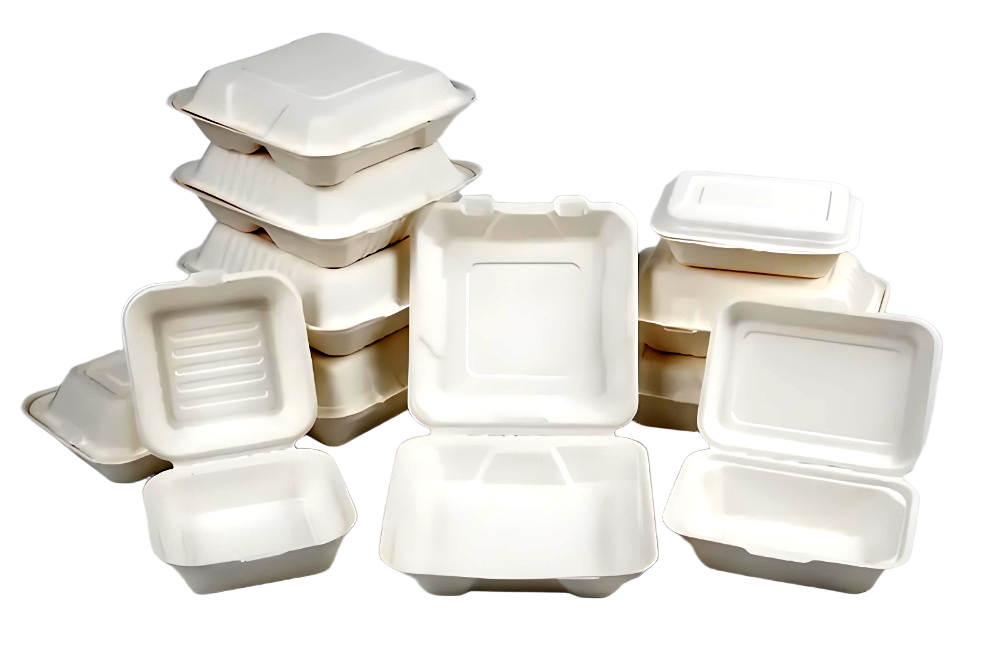
This is where structured formats such as bagasse food containers, clamshells, trays, and meal boxes usually perform well. These meals need decent rigidity, stable lid fit, and enough structure to survive normal delivery movement. For catering or lunch programs, compartment formats can also help keep foods separate without overcomplicating the pack-out line.
2. Salads, cold dishes, and light lunch sets
Cornstarch tableware, light meal boxes, and some paper-based formats are often selected for visually clean, efficient takeaway service. These are common in office lunch, school meals, quick-service Asian takeaway, and everyday meal-prep programs where cost, stacking, and speed matter just as much as the sustainability message.
3. Delivery-first brands on major apps
For merchants operating through platforms such as Uber Eats, DoorDash, Deliveroo, and GrabFood, packaging should be treated as part of the delivery system. DoorDash guidance repeatedly emphasizes operational details that buyers often overlook: separate hot and cold items, pack sauces separately, use sturdy drink trays, and use packaging that preserves temperature and order organization.[7][8][9][10] This is exactly why many merchants now review their biodegradable takeaway containers by menu category instead of trying to use one box for everything.
4. Caterers, events, and high-volume meal service
In buffet lines, school programs, corporate lunches, and event catering, operators often care less about a “green story” alone and more about stacking efficiency, portion control, speed of service, and post-use convenience. In these cases, the right biodegradable tableware solution is often the format that helps staff move faster while still delivering a cleaner visual standard than conventional low-grade plastic packs.
Fresh viewpoints buyers often miss
Point one: the best packaging is not always the most “eco” on paper; it is the one that reduces failure in real use. A pack that leaks sauce, softens too fast, or makes fries soggy creates food waste, complaints, and repacking. That is not a smart sustainability outcome.
Point two: one menu should not rely on one container. Many restaurants still try to standardize everything into one box to simplify purchasing. In practice, the smarter model is a three-tier packaging matrix: one format for hot mixed meals, one for dry or ventilated foods, and one for cold/light dishes. This approach usually improves arrival quality more than endlessly debating raw materials.
Point three: fewer extras can be as important as greener materials. DoorDash encourages restaurants to let customers opt out of utensils and napkins, while Uber Eats has highlighted its cutlery opt-in change and reusable packaging pilots in several markets.[8][3] That is a powerful idea for merchants: a more sustainable delivery experience often comes from better packaging design plus fewer unnecessary add-ons, not just from changing the base container.
Point four: packaging has become part of menu engineering. A smart operator now asks not only “Will this food sell?” but also “Will this food travel well in this packaging?” That question is especially relevant for fried foods, saucy meals, soups, and any item that changes texture during a 20 to 40 minute delivery window.

What buyers should check before placing bulk orders
The biggest mistake in this category is buying by label words alone. For restaurants and distributors, the real decision is operational. Before approving any biodegradable tableware, buyers should test the following:
- Hold time: How does the pack perform after 10, 20, and 40 minutes with real food inside?
- Steam management: Does trapped condensation ruin fries, bakery, rice texture, or crisp foods?
- Oil and sauce behavior: Does the bottom stay stable with oily or saucy meals?
- Lid fit and stackability: Can packed orders be moved, stacked, and handed over quickly without misfit lids?
- Bagging logic: Do drinks, sauces, mains, and cutlery sets all work together in the final takeout bag?
- Brand presentation: Does the package still look clean and intentional when the customer opens it at home?
A strong buying process uses real menu simulation, not empty-sample approval. Test the full set: food, lid, side cup, carry bag, cutlery, and transport time. This is especially important for bagasse food containers, cornstarch clamshell boxes, paper food boxes, and biodegradable cutlery used in mixed takeaway orders.
A quick format guide by menu type
To keep this practical, here is the simplest way to think about it:
Hot mixed meals: Start with structured formats such as sugarcane bagasse tableware and stronger meal boxes.
Light takeaway sets and everyday value meals: Review cornstarch tableware and cornstarch food containers where clean presentation and efficient pack-out matter.
Brand-forward takeout with strong print visibility: Use paper food packaging where the menu and moisture level allow it.
Complete meal kits: Pair the container with biodegradable cutlery only when needed, instead of automatically adding utensils to every order.
Broader format comparisons: For teams comparing categories in more detail, this related guide on the types and characteristics of biodegradable tableware is still a useful reference point.
FAQ
Why are restaurants switching to biodegradable tableware for takeaway and delivery?
Because packaging now affects delivery performance, customer perception, and brand positioning at the same time. For many operators, it is not only about sustainability. It is also about how food arrives, how the order looks, and how efficiently staff can pack and hand off meals.
Which format is better for takeaway meals?
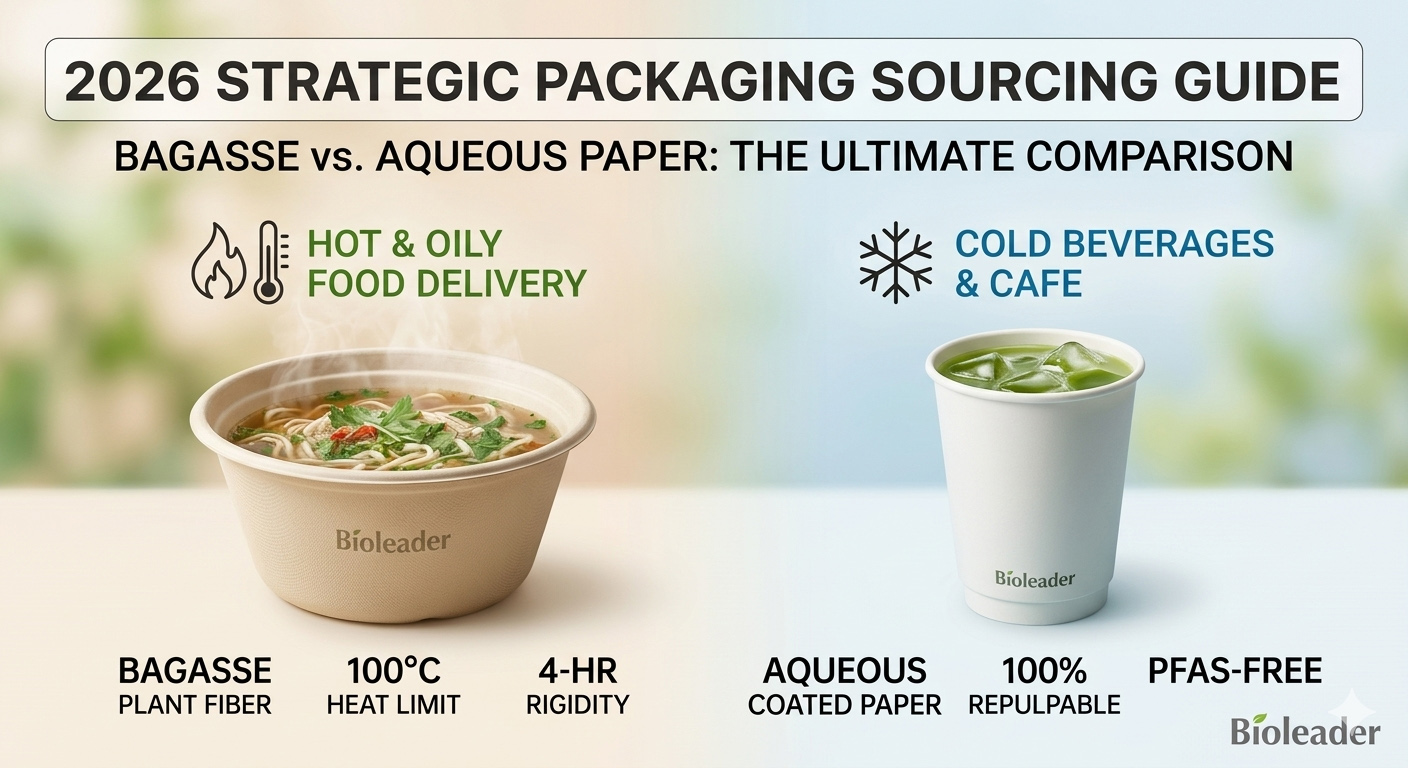
There is no single best answer. Bagasse food containers are often practical for hot mixed meals, cornstarch tableware is commonly used for light meal sets and everyday takeaway, and paper-based solutions can work well when branding and print presentation matter.
What do delivery platforms care about most in food packaging?
Leak prevention, temperature retention, order organization, and a consistent handoff experience. Platform guidance from companies such as DoorDash and Uber also highlights the importance of separating hot and cold items, using sturdy carriers, and protecting food during transit.[3][7][9][10]
Can biodegradable cutlery and containers improve customer experience?
Yes, when they are chosen correctly. A strong pack set can make the order look cleaner, feel more premium, and reduce mess on arrival. The value is practical, not just visual.
How should buyers test before placing an order?
Test with real menu items, real sauces, real hold time, and real transport. Empty samples rarely reveal the problems that show up in takeaway, delivery, or catering service.
References
- [1] European Commission. Packaging waste. https://environment.ec.europa.eu/topics/waste-and-recycling/packaging-waste_en
- [2] OECD. Global Plastics Outlook. https://www.oecd.org/en/publications/global-plastics-outlook_de747aef-en.html
- [3] Uber. Sustainability goals for Uber Eats packaging. https://www.uber.com/gb/en/about/sustainability/
- [4] Deliveroo. Sustainable Packaging Subsidy. https://deliveroo.co.uk/more/news-articles/packaging-subsidy
- [5] Grab Merchant Help. Eco-packaging solutions and in-app visibility. https://help.grab.com/merchant/en-sg/900003797526
- [6] Grab. Zero Packaging Waste in Nature by 2040. https://www.grab.com/sg/sustainability/planet/zero-waste/
- [7] DoorDash Merchant Blog. Food delivery packaging and container tips for restaurants. https://merchants.doordash.com/en-us/blog/food-delivery-packaging
- [8] DoorDash Merchant Blog. Eco-friendly food packaging options and sustainability tips for restaurants. https://merchants.doordash.com/en-us/blog/food-delivery-containers
- [9] DoorDash Merchant Blog. Best practices for keeping food hot during transport. https://merchants.doordash.com/en-AU/blog/how-to-keep-food-hot
- [10] DoorDash Merchant Blog. How does DoorDash work for restaurants? https://merchants.doordash.com/en-ca/blog/how-does-doordash-work-for-restaurants