Understanding BPI Certification
The Biodegradable Products Institute (BPI) is the most recognized certification body for compostable products in North America. For more than 20 years, BPI has been setting the benchmark for compostability testing and certification in alignment with ASTM standards.
What makes BPI unique?
ASTM compliance: To be certified, products must meet ASTM D6400 or ASTM D6868 requirements, ensuring that materials fully break down in industrial composting environments without leaving toxic residues.
U.S. credibility: While Europe follows EN13432, the U.S. market relies on BPI as the trusted seal of compostability.
Label integrity: Packaging with the BPI logo gives consumers and retailers confidence that the product is genuinely compostable, not greenwashed.
For importers and U.S. food brands, BPI is more than a certification—it’s an entry ticket into major retail channels, restaurant chains, and food delivery platforms.
Why BPI Certification Matters for Food Brands in 2025
Regulatory Compliance
By 2025, multiple states—including California, New York, Washington, and Colorado—have rolled out strict rules requiring compostable or recyclable packaging. Without BPI certification, many eco-labeled products risk being deemed noncompliant, leading to fines or even bans.
Retail Acceptance
Supermarkets and retailers such as Walmart, Costco, and Whole Foods increasingly require packaging suppliers to provide BPI certification before products can be listed. It is not only a sustainability measure but also a way to protect brands from consumer backlash.
Consumer Trust
Shoppers are increasingly skeptical of vague “eco-friendly” claims. Having the BPI logo on bagasse clamshell containers, PLA-coated kraft bowls, or PLA cups assures them that the product meets rigorous third-party standards. This reduces accusations of greenwashing and builds brand reputation.
Competitive Advantage
Food brands that adopt certified packaging early stand out in a crowded marketplace. In 2025, consumer surveys show that 65% of U.S. diners prefer restaurants that use certified compostable packaging for takeout and delivery.
Key Products That Require BPI Certification
Bagasse Clamshell Containers
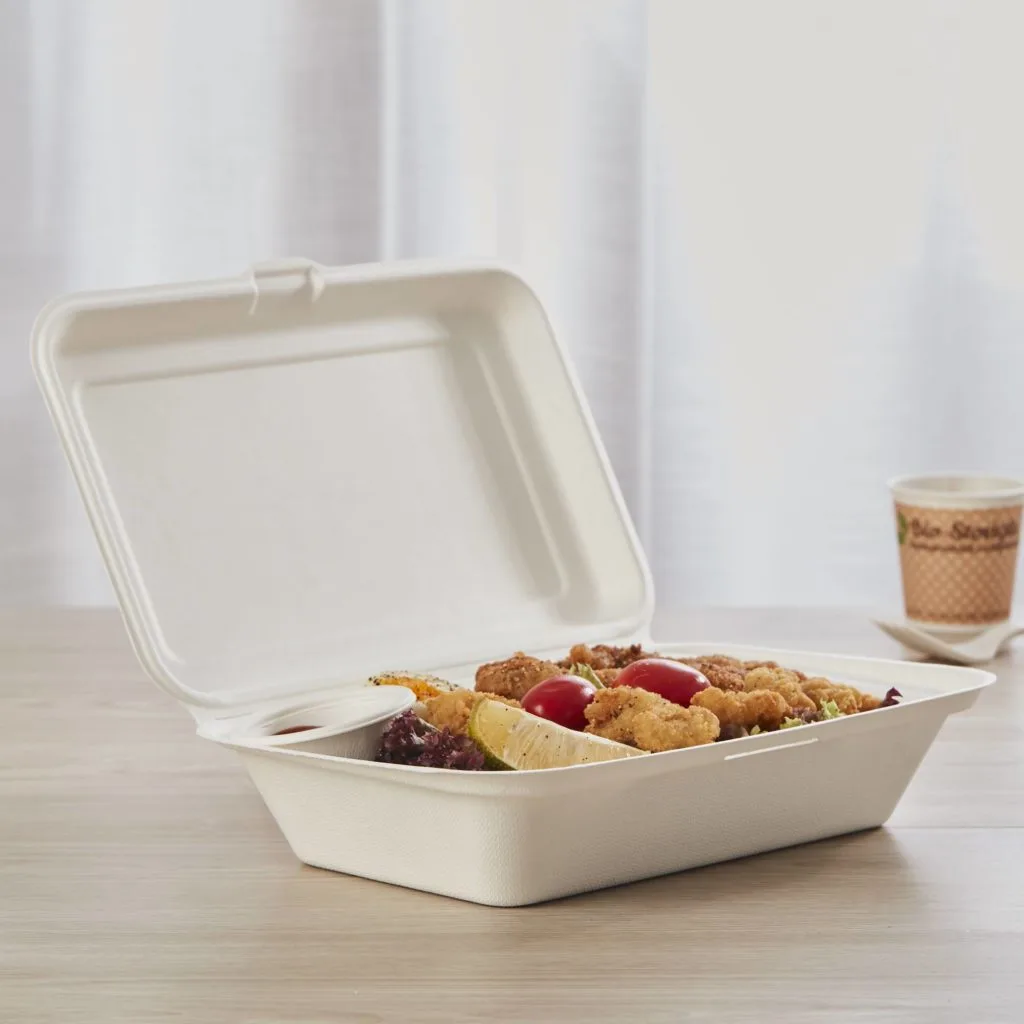
For many U.S. importers and distributors, bagasse clamshell containers wholesale are one of the most in-demand solutions for sustainable takeout. Restaurants and catering businesses often search for a reliable compostable takeout boxes supplier that can deliver FDA-approved and BPI certified products. By sourcing eco-friendly clamshell packaging USA import, food brands not only meet state-level regulations but also gain consumer trust when offering burgers, tacos, or hot meals in leak-resistant bagasse containers.
Use cases include:
Quick-service restaurants serving burgers, tacos, and sandwiches.
Delivery apps that need leak-resistant, stackable boxes.
Catering companies seeking eco-friendly disposable clamshell packaging.
PLA-Coated Kraft Paper Bowls
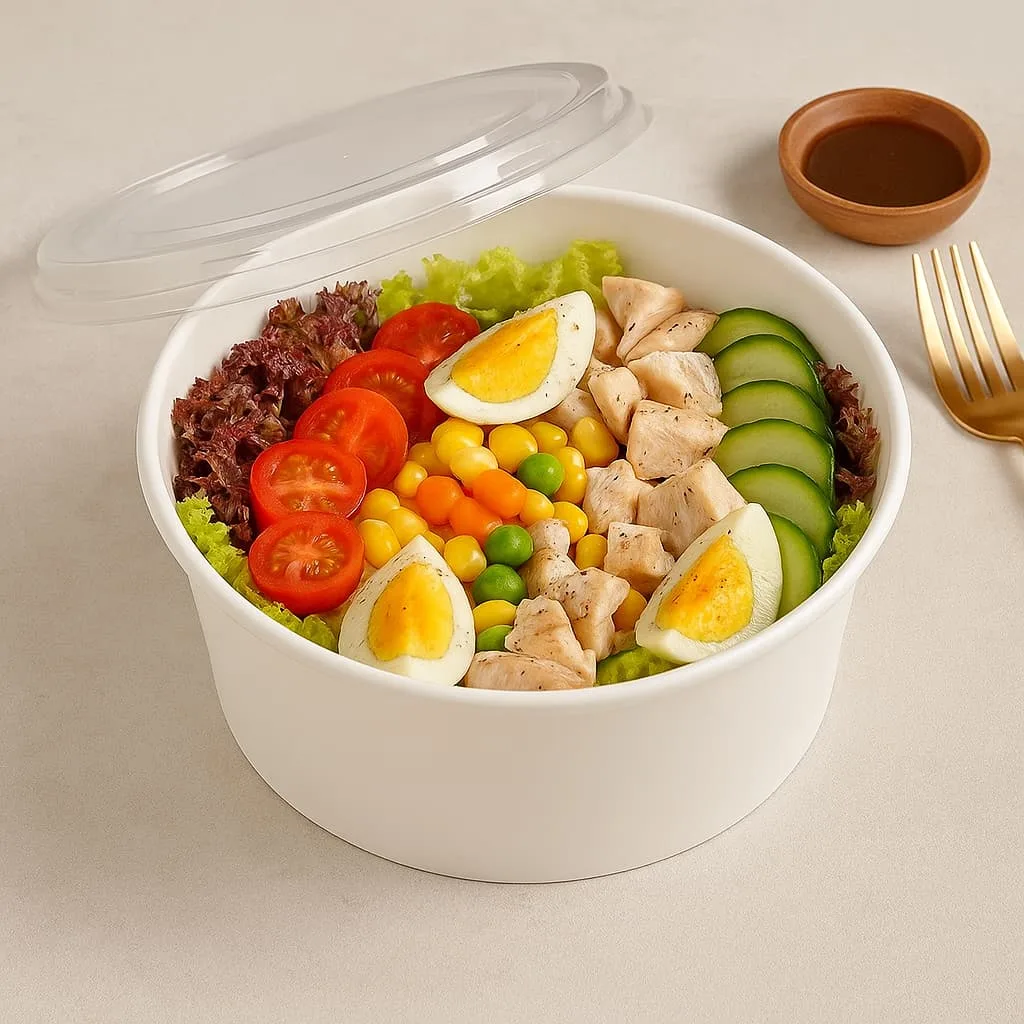
Among salad chains and noodle shops, demand for PLA-coated kraft bowls manufacturer supply is rapidly rising. Buyers often look for biodegradable kraft paper bowls for takeaway that can hold both hot and cold foods without leaking. In addition, larger foodservice groups prefer working with a custom printed kraft salad bowls wholesale partner to highlight their branding while staying compliant with compostability standards. These PLA-coated kraft bowls combine durability with an eco-friendly profile, making them an essential packaging choice in 2025.
Advantages include:
Perfect for salads, poke bowls, or hot noodle dishes.
Microwave-safe and heat-resistant.
Available in multiple sizes, from 500ml to 1000ml.
Options for custom-printed branding to boost visibility.
PLA Cups
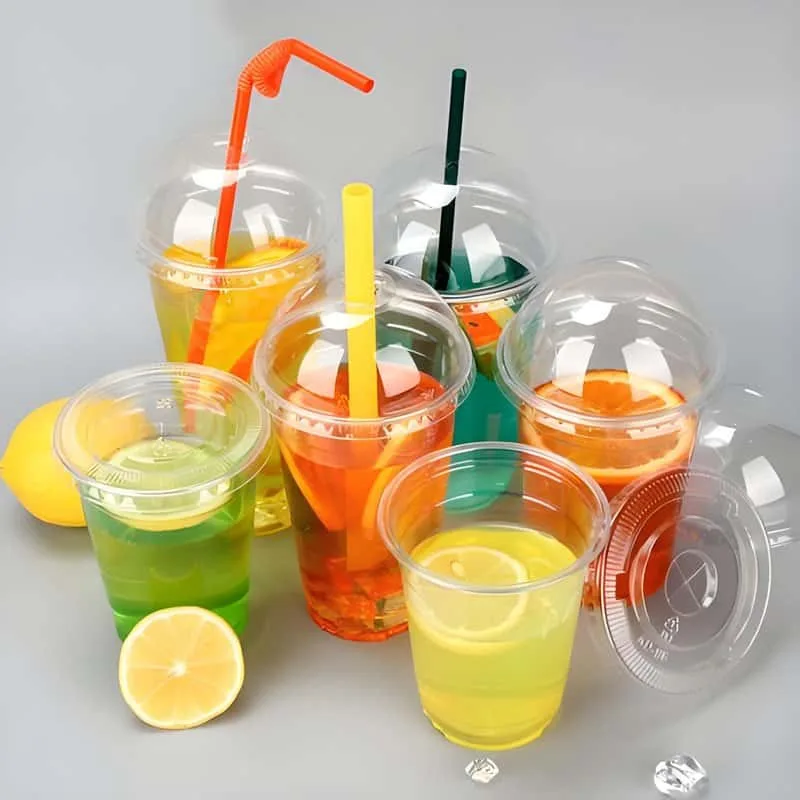
Cold beverage retailers—from coffee shops to juice bars—are increasingly replacing PET plastic with PLA cups manufacturer USA import options. Importers frequently request biodegradable PLA cold drink cups bulk to supply seasonal events, stadiums, and large franchise outlets. Meanwhile, smoothie chains turn to a compostable PLA smoothie cups supplier to meet customer expectations for sustainable drinkware. With BPI certified PLA cups, U.S. brands ensure compliance while reinforcing their green reputation in the marketplace.
Applications:
Cold drinks, smoothies, iced coffee, and cocktails.
Branded festival and event cups.
Juice bars that highlight eco-conscious branding.
Regulatory Comparison Table
| Standard / Law | Region | Key Requirement | Effective Year | Impact on Food Brands |
|---|---|---|---|---|
| BPI Certification | USA (nationwide recognition) | Compostability tested under ASTM D6400/D6868 | Ongoing | Required for retail & many foodservice chains |
| California SB54 | California, USA | Packaging must be recyclable or compostable; EPR for producers | Full effect 2025 | Non-compliant packaging banned; fines apply |
| New York City Foam Ban | New York, USA | Ban on foam containers; compostable certified items encouraged | Active since 2019; expanded 2025 | Brands must switch to certified compostables |
| Colorado Producer Responsibility Act | Colorado, USA | EPR scheme requiring compostable/recyclable packaging | 2025 rollout | Brands pay fees unless using certified compostables |
| EN13432 | European Union | Industrial compostability required for packaging | Since 2000s | Mandatory for EU imports |
| ASTM D6400 / D6868 | USA | Laboratory standard for compostability | Basis for BPI | Technical benchmark used in certification |
Case Study 1 – GreenBite Salad (California)
Background: GreenBite Salad, a Los Angeles-based healthy fast-casual chain with 15 outlets, faced challenges when their kraft bowls were rejected by a retail partner for lacking BPI certification.
Pain Points:
Non-certified PLA-lined bowls led to retail compliance issues.
Consumers questioned whether their packaging was truly compostable.
Potential fines under California’s SB54 waste reduction law.
Solution:
GreenBite switched to Bioleader® PLA-coated kraft paper salad bowls and bagasse clamshell containers, all pre-certified by BPI and FDA approved.
Outcomes:
Whole Foods accepted their products for in-store salad bar sales.
Customer trust improved, with positive reviews mentioning the compostable packaging.
Sales grew 18% within six months as eco-conscious customers chose them over competitors.
Case Study 2 – FreshSip Café (New York)
Background: FreshSip Café, a local coffee and juice chain with 20 outlets, faced increasing legal pressure under New York City’s compostable packaging laws. Their previous supplier provided uncertified cold drink cups, risking regulatory penalties.
Pain Points:
Daily use of 15,000 non-certified cups.
Threat of fines for non-compliance.
Delivery partner DoorDash considered removing them from the platform.
Solution:
FreshSip adopted Bioleader® PLA cups and bagasse clamshell takeout containers with valid BPI certification.
Outcomes:
The café avoided fines and secured compliance with local rules.
DoorDash highlighted FreshSip as a sustainable partner.
Customer loyalty improved, leading to a 12% rise in repeat orders.
Material Performance Comparison Table
| Packaging Material | Heat Resistance | Oil/Water Resistance | Compostability | Certification Availability | Typical Applications |
|---|---|---|---|---|---|
| Bagasse Clamshell Containers | Up to 120°C | Excellent | Fully compostable (BPI, EN13432) | Widely available | Takeout boxes, catering |
| PLA-Coated Kraft Paper Bowls | Up to 90°C | Excellent (PLA lining) | Industrially compostable (BPI) | High availability | Salads, noodles, soups |
| PLA Cups | Cold use (≤45°C) | Good for cold drinks | Industrially compostable (BPI, ASTM) | Widely available | Smoothies, iced coffee |
| PET Plastic Cups | Cold use only | Excellent | Not compostable | FDA only | Cold beverages, mass retail |
| Foam (EPS) Containers | Low (≤70°C) | Good | Not compostable, banned in many states | Limited | Legacy takeout (phasing out) |
| Uncoated Paper Bowls | Low | Poor | Biodegradable but weak structure | No certification | Dry snacks only |
How Importers and Suppliers Can Get BPI Certified
For packaging manufacturers and importers, BPI certification requires strict adherence to ASTM D6400 or ASTM D6868 standards.
Process overview:
Laboratory testing to confirm compostability in industrial facilities.
Submission of product data including materials, coatings, and additives.
Review and approval by BPI’s technical team.
License for logo use once certified.
The process may take several months and cost thousands of dollars. Importers that work with certified suppliers such as Bioleader® bypass these challenges and can begin distribution immediately.
Bioleader® Company Introduction
Bioleader® is a leading Chinese factory and manufacturer specializing in compostable food containers for global wholesale supply.
Our scale and expertise:
20,000m² production facilities in Xiamen, China.
Automated pulp molding and PLA coating lines.
Monthly output exceeding 50 million units.
Main product lines:
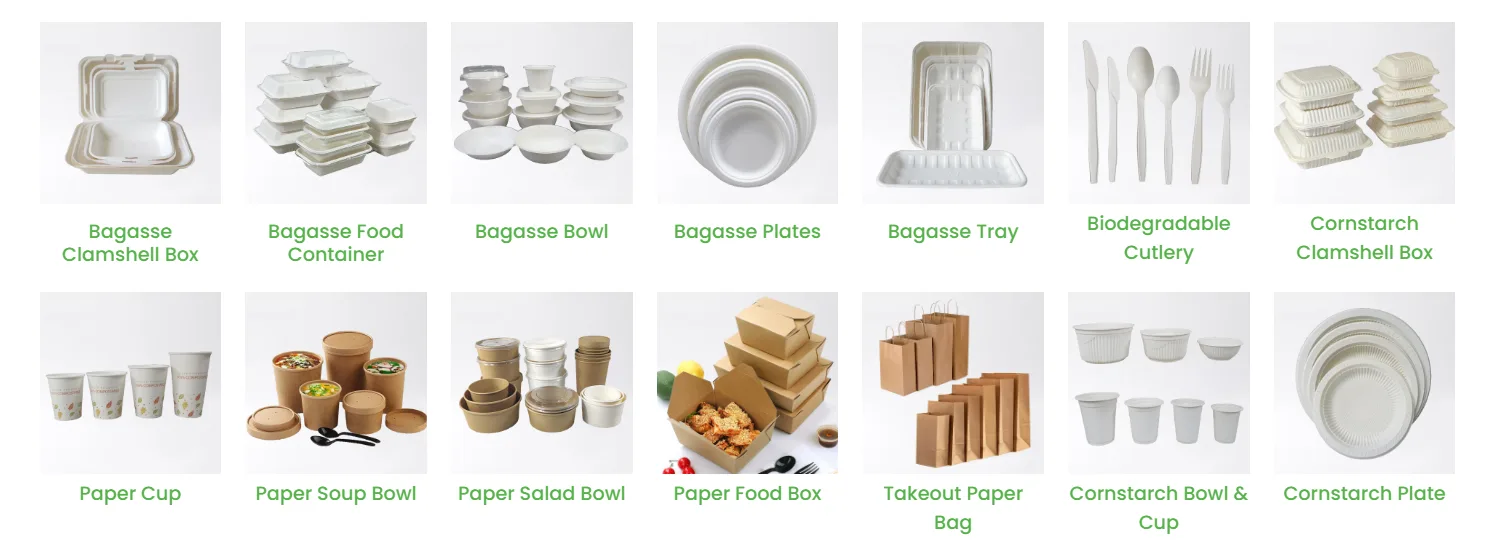
Bagasse clamshell containers (takeout and delivery).
PLA-coated kraft paper bowls (for salads, noodles, soups).
PLA cups (for cold beverages, smoothies, juices).
Cornstarch cutlery and CPLA utensils.
Certifications: FDA, BPI, EN13432, TÜV Austria.
Clients: Exporting to the U.S., Canada, EU, Middle East, and Latin America.
Why U.S. brands trust Bioleader®:
Reliable OEM/ODM services with custom logo printing.
Bulk supply with wholesale pricing.
Proven compliance with U.S. compostability standards.

U.S. Market Outlook for Compostable Packaging (2025–2030)
Industry forecasts predict that the U.S. compostable packaging market will grow at a CAGR of more than 15% through 2030. This growth is driven by:
Legislation: More states adopting EPR and packaging bans.
Food delivery boom: Apps like Uber Eats and Grubhub prefer certified packaging.
Retail standards: Increasing demand for certified containers in supermarkets.
Corporate sustainability: Brands pursuing zero-waste and ESG commitments.
By 2030, it is expected that over 70% of U.S. quick-service chains will mandate BPI certified packaging for takeout.
Importer’s Quick Checklist for BPI Certified Compostable Packaging
Before you place your bulk order, make sure you confirm these key points with your supplier:
Verify BPI Certificate – Ask for the official certification number and cross-check it.
Check FDA Food-Contact Safety – Ensure bagasse clamshells, PLA-coated kraft bowls, and PLA cups are FDA approved.
Confirm ASTM Standard Testing – Verify compliance with ASTM D6400 or D6868.
Review Material & Lining – Confirm PLA coatings are compostable and safe.
Request OEM/ODM Options – Logo printing, private-label, and custom branding.
Discuss Order & Shipping Terms – MOQ, lead times, palletizing, and logistics.
Evaluate Supplier Credentials – Check certifications and export experience.
Check After-Sales Support – Replacement policies and compliance guidance.
Conclusion – Why U.S. Food Brands Should Choose BPI Certified Packaging
For U.S. food brands and importers, BPI certification is not optional in 2025—it is essential. From regulatory compliance to customer trust, certified packaging ensures access to retail channels, avoids costly penalties, and aligns with sustainability goals.
Bioleader® stands ready as a trusted partner, offering factory-direct OEM/ODM compostable packaging, bulk supply of bagasse clamshells, PLA-coated kraft bowls, and PLA cups—all BPI certified and FDA approved.
FAQ
1. What does BPI certified compostable packaging mean for U.S. importers?
It means that the packaging has been tested under ASTM standards and approved by BPI, ensuring it will fully compost in U.S. industrial composting facilities.
2. Are bagasse clamshell containers FDA and BPI approved?
Yes. Many bagasse clamshell containers, including those from Bioleader®, are FDA food-contact safe and carry BPI certification for compostability.
3. Where can I buy PLA-coated kraft paper bowls wholesale with certification?
Certified suppliers like Bioleader® provide PLA-coated kraft paper bowls in multiple sizes for wholesale buyers, with FDA and BPI approvals.
4. Do U.S. restaurants need BPI certified PLA cups to comply with state laws?
In many states, yes. Certified PLA cups are increasingly required for compliance with compostable packaging regulations.
5. How to verify if a compostable food container is truly BPI certified?
Importers should request valid certificates directly from suppliers and cross-check the product listing on BPI’s official database.
References
Biodegradable Products Institute (BPI), “Compostable Product Certification Program,” BPI Technical Overview.
ASTM International, “ASTM D6400 Standard Specification for Labeling of Plastics Designed to be Aerobically Composted in Municipal or Industrial Facilities.”
ASTM International, “ASTM D6868 Standard Specification for Labeling of End Items that Incorporate Plastics and Polymers as Coatings or Additives with Paper and Other Substrates Designed to be Aerobically Composted.”
State of California, “SB54: Plastic Pollution Prevention and Packaging Producer Responsibility,” Legislative Summary.
City of New York, “Expanded Polystyrene Foam Ban,” Official Guidance for Food Service Establishments.
State of Colorado, “Producer Responsibility Program for Statewide Recycling,” Departmental Brief.
U.S. Environmental Protection Agency (EPA), “Advancing Sustainable Materials Management: Facts and Figures,” National Overview.
European Committee for Standardization (CEN), “EN13432 Requirements for Packaging Recoverable through Composting and Biodegradation,” Standard Summary.
Compost Manufacturing Alliance, “Field Disintegration Protocols for Compostable Food Serviceware,” Technical Note.
U.S. Food and Drug Administration (FDA), “Food Contact Substance Notifications and Compliance,” Guidance Document.
Why BPI Certified Compostable Packaging Matters in 2025 and Beyond
How it ensures compliance: BPI certification guarantees that packaging—such as bagasse clamshell containers, PLA-coated kraft bowls, and PLA cups—meets ASTM D6400/D6868 compostability standards required in the U.S.
Why food brands rely on it: Without BPI approval, importers risk regulatory fines, retail rejection, and customer distrust. With certification, brands unlock access to supermarkets, cafés, and delivery platforms nationwide.
What makes it valuable: BPI certified packaging combines FDA food-contact safety with proven compostability. This dual assurance positions products as both safe and sustainable, building consumer confidence.
Options available for buyers: Importers can choose bulk wholesale bagasse clamshells for takeout, PLA-coated kraft bowls for salads and noodles, or PLA cups for cold drinks—all available with OEM/ODM customization.
Considerations for importers: Verify supplier certificates, request test reports, confirm PLA coatings are compostable, and check MOQ/shipping terms to avoid costly supply chain risks.
Future trend outlook: By 2030, over 70% of U.S. quick-service chains are expected to mandate compostable packaging. Early adoption of BPI certified containers secures competitive advantage and long-term market access.